To save content items to your account,
please confirm that you agree to abide by our usage policies.
If this is the first time you use this feature, you will be asked to authorise Cambridge Core to connect with your account.
Find out more about saving content to .
To save content items to your Kindle, first ensure no-reply@cambridge.org
is added to your Approved Personal Document E-mail List under your Personal Document Settings
on the Manage Your Content and Devices page of your Amazon account. Then enter the ‘name’ part
of your Kindle email address below.
Find out more about saving to your Kindle.
Note you can select to save to either the @free.kindle.com or @kindle.com variations.
‘@free.kindle.com’ emails are free but can only be saved to your device when it is connected to wi-fi.
‘@kindle.com’ emails can be delivered even when you are not connected to wi-fi, but note that service fees apply.
Despite increasing dilapidation, many of Rome’s ancient buildings survived in a form to impress visitors. During the Middle Ages a number of them – Hildebert of Lavardin, Master Gregorius, Benjamin of Tudela – left a brief record of the favourable impression the ruins made upon them. More widespread, however, were the legendary accounts, as found most extensively in the Mirabilia Urbis Romae, of the history and function of a number of the ruins of the pagan past. Such fables can be seen as forerunners of later ruin-mindedness in their attempt to explain the original role in the urban fabric of what was now ruinous and puzzling.
The eighth chapter pursues the urge among artists to imaginatively reconstruct the original structures that became ruins, and not just of individual buildings but of the whole ancient city. Reconstructions are to be seen in two-dimensional ‘flat’ art (paintings, drawings, watercolours, engravings, panoramas) and in three-dimensional architectural models. These occasionally inspired the erection of modern buildings which realised the reconstructed image. Modern reconstructions employ digital and computer-generated imagery. In the twentieth century three-dimensional models of ancient Rome were constructed, and imaginative visions of Rome were devised for cinema and television.
The first chapter presents evidence in support of the claim that an interest in ruins was never widespread. It had to begin somewhere and at some time. There had also to be certain factors, which are set out in the chapter, that facilitated the interest. The main evidence for a lack of interest in ruins is seen in the motives for tourism in ancient Greece and Rome – indeed, tourism is one of the leading themes of the whole work. The indifference of the Greeks and Romans to ruins is also found in other cultures, notably China’s. What seems to be needed for the ruins of any culture to arouse interest and to make a favourable impression is a gap in the continuity of that culture, such as occurred in Roman culture from late antiquity to the early Middle Ages in Europe. Someone aiming to bridge that gap – a tourist, say – who surveys past Roman culture with a sympathetic eye and an understanding of its achievements is in a position to find the ruins, the material remains of Roman culture, as interesting as any of its other monuments.
Such was the aesthetic appeal of a Roman ruin that English grand tourists began to decorate their parkland back home, now landscaped in a sort of ‘faux-naturalism’, with sham ruins. The eighteenth-century fashion for the English garden swept over continental Europe, and many gardens, surprisingly even in Rome itself, have sham Roman ruins after the English fashion. The fashion for sham ‘Roman’ ruins continued into the twentieth century and was extended to the United States and Japan.
The chief interest of the antiquarian in Rome’s ruins was topographical, identifying them if possible with structures known and described in Latin literature. Attempts to picture the layout of the ancient city generated numerous maps and disquisitions, which gradually morphed into guidebooks for tourists, many of which focussed on only the ancient remains to the exclusion of the modern city. The development of tourism is one of the capital outcomes of the fascination with the ruins of Rome. There does not seem to have been any other city or site in the world that was visited for the sake of its ruins. Topographical studies were, however, hampered by their reliance on more (or in one case, less) ancient texts in which buildings and their locations were mentioned, not always reliably. It became clear in due course that the only way forward lay in archaeological excavation.
Petrarch initiated ruin-tourism, and that flowered in the period of the eighteenth-century Grand Tour. Arguably, the ruins of Rome were the first to generate the production of a considerable variety of souvenirs, portable objects manufactured expressly for visitors to take away. Now a souvenir is only desirable if the object it represents is deemed attractive: the ruin-aesthetic was so well established by the time of the Grand Tour that ruins moved from the background of paintings into the foreground; they became the subject. In the engravings of Piranesi the ruins of Rome reached their peak of aesthetic appeal. The aesthetic validation of ruins is to the fore, since the English decorated the interiors of their houses with scenes of ruination. They also brought home architectural models of ruins in cork or marble for display; their porcelain and fans were decorated with ruin motifs.
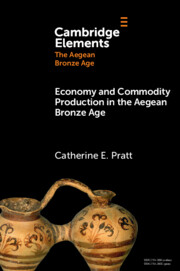
This Element does not discuss every aspect of the economy. Rather, it focuses on the first stage of an economic cycle − that of production. Two of the major guiding questions are: What products were the Bronze Age palatial states concerned with producing in surplus? And how did the palatial states control the production of these essential commodities? To answer these questions, the Element synthesizes previous work while interspersing its own conclusions on certain sub-topics, especially in light of recent archaeological data that help to fill out a picture incomplete based on textual evidence alone. With these goals in mind, this Element brings together both textual and archaeological data to reconstruct the internal economy and the production of commodities under the purview of Minoan and Mycenaean palatial states.
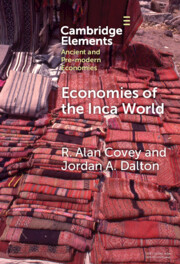
The Inca Empire (c. 1400–1532) was the largest Indigenous state to develop in the Americas, spanning the extraordinarily rich landscapes of the central Andes. Scholarly approaches to Inca-era economies initially drew on Spanish colonial documents that emphasized royal resource monopolies, labor tribute, and kin-based land tenure. Anthropologists in recent decades have emphasized local economic self-sufficiency and the role of reciprocity in Inca economics. This Element adds to the existing literature by reviewing recent archaeological research in the Inca capital region and different provinces. The material evidence and documents indicate considerable variation in the development and implementation of Inca political economy, reflecting an array of local economic practices that were tailored to different Andean environments. Although Inca economic development downplayed interregional trade, emerging evidence indicates the existence of more specialized trading practices in Inca peripheral regions, some of which persisted under imperial rule.
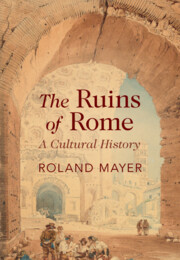
The beguiling ruins of Rome have a long history of allure. They first engaged the attention of later mediaeval tourists, just as they do today. The interest of travellers was captured in the Renaissance by artists, architects, topographers, antiquarians, archaeologists and writers. Once the ruins were seen to appeal to visitors, and to matter for their aesthetic quality, their protection and attractive presentation became imperative. Rome's ruins were the first to be the object of preservation orders, and novel measures were devised for their conservation in innovative archaeological parks. The city's remains provided models for souvenirs; paintings of them decorated the walls of eighteenth-century English country houses; and picturesque sham Roman ruins sprang up in landscape gardens across Europe. Writers responded in various ways to their emotional appeal. Roland Mayer's attractive new history will delight all those interested in the remarkable survival and preservation of a unique urban environment.
Provides a multi-scalar synthesis of Nordic Bronze Age economies (1800/1700–500 BCE) that is organized around six sections: an introduction to the Nordic Bronze Age, macro-economic perspectives, defining local communities, economic interaction, conflict and alliances, political formations, and encountering Europe. Despite a unifying material culture, the Bronze Age of Scandinavia was complex and multi- layered with constantly shifting and changing networks of competitors and partners. The social structure in this highly mobile and dynamic macroregional setting was affected by subsistence economies based on agropastoralism, maritime sectors, the production of elaborate metal wealth, trade in a wide range of goods, as well as raiding and warfare. For this reason, the focus of this book is on the integration and interaction of subsistence and political economies in a comparative analyses between different local constellations within the macro-economic setting of prehistoric Europe. This title is also available as Open Access on Cambridge Core
Poised as middlemen between the Ancient Near East and the Aegean, writers of Cypro-Minoan, the undeciphered Late Bronze Age script of Cyprus, borrowed and transformed writing practices from their neighbors and invented new ones. Bits and pieces of the script are found throughout the Mediterranean, but there are few clay tablets, characteristic of neighboring scribal-based, administrative writing traditions. Instead, Cypro-Minoan writers wrote on mercantile objects, outside of scribal schools. As the administrative centers of the eastern Mediterranean collapsed c. 1177 BCE administrative writing systems went with them. Cypro-Minoan remained in use, presaging the spread of the Phoenician alphabet. This Element explores the role of writing and trade during the collapse period and introduces readers to the Cypro-Minoan script, its history, and approaches to its decipherment, showing that writers of an undeciphered script can still communicate when we take the care to look for them.
Ancient Maya Economies synthesizes the state of the art across seven components: geographical and historical background, ritual economy, households, specialization, exchange, political economies, and future directions. Other Elements case studies use many of the same components, making it easy to compare and contrast ancient Maya economies with systems of production and consumption in other parts of the world. The time is right for this Elements case because knowledge of ancient Maya economies has undergone a revolution in the last few decades, resulting in a complex panorama of new economic information. Aerial laser scanning has revealed higher amounts of intensive agriculture and research on the ground has turned up better evidence for marketplaces. Maya economies feature specialized production, trade of both bulk goods and luxury goods, close integration with ritual and religion, and a carnival parade of political economies.