To save content items to your account,
please confirm that you agree to abide by our usage policies.
If this is the first time you use this feature, you will be asked to authorise Cambridge Core to connect with your account.
Find out more about saving content to .
To save content items to your Kindle, first ensure no-reply@cambridge.org
is added to your Approved Personal Document E-mail List under your Personal Document Settings
on the Manage Your Content and Devices page of your Amazon account. Then enter the ‘name’ part
of your Kindle email address below.
Find out more about saving to your Kindle.
Note you can select to save to either the @free.kindle.com or @kindle.com variations.
‘@free.kindle.com’ emails are free but can only be saved to your device when it is connected to wi-fi.
‘@kindle.com’ emails can be delivered even when you are not connected to wi-fi, but note that service fees apply.
Chapter 4, Cultural Practices and Ritual Lives of Potters in the Workshop, uses the archaeology of these workplaces to reconstruct daily life in the workshop. More than simply an economic hub of manufacturing, the workshop comes to be seen as a place of social experience and meaning to its occupants.
Chapter 2, Workshops: Models versus Practice, relates the archaeological evidence of pottery workshops from the eastern Mediterranean within several well-established socioeconomic models of production organization. Then, drawing on more recent theoretical approaches, it considers alternative arrangements as reflecting important cultural practices.
Chapter 6, Socially Embedded Technologies and Local Technological Styles, looks at the technologies of production, particularly pottery wheels and kilns, in order to contextualize the technological choices and innovations made in the workshops of the eastern provinces.
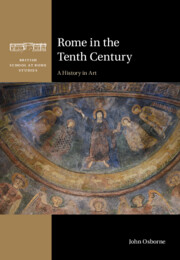
This is the third and final volume in a series examining the history of Rome in the early Middle Ages (700–1000 CE) through the primary lens of the city's material culture. The previous volumes examined the eighth and the ninth centuries respectively. John Osborne uses buildings (both religious and domestic), their decorations, other works of painting and sculpture, inscriptions, manuscripts, ceramics, metalwork, and coins as 'documents' to supplement what can be gleaned from more traditional written sources such as the Liber pontificalis. The overall approach is particularly appropriate for tenth-century Rome, which has traditionally been considered a 'dark age', given recent research on standing monuments and the large amount of new material brought to light in archaeological excavations undertaken over the last four decades. This magnificent and beautifully illustrated volume provides a triumphant conclusion to a series which will be indispensable for all those interested in early medieval Rome.
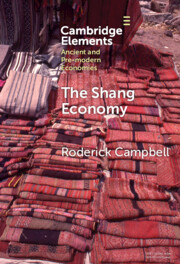
This Element constitutes a systematic attempt to preliminarily reconstruct the Shang economy based on contemporary archaeological and textual evidence. At the same time, the rapid pace of Chinese archaeological discovery and the increasing deployment of archaeological science means that there is a wealth of new information making a new synthesis both challenging and necessary. This synthesis was written from the perspective that the study of ancient economy necessarily proceeds from the construction of models and the systematic exploration of principal economic components, including their articulation and change over time. Setting the Shang in comparative context with other ancient economies in this series, those principal components are the domestic and institutional economy, specialization, forms of exchange, and diachronic developments. It is hoped that with this organization, comparison with other ancient economies can be more easily made and the significance of the Shang case more clearly seen.
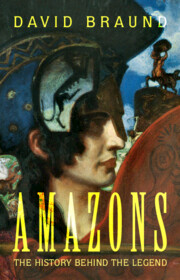
The idea of the Amazons is one of the most romantic and resonant in all antiquity. Greeks were fascinated by images and tales of these fierce female fighters. At Troy, Achilles' duel with Penthesilea was a clash of superman and superwoman. Achilles won the fight, but the queen's dying beauty had torn into his soul. This vibrant new book offers the first complete picture of the reality behind the legends. It shows there was much more to the Amazons than a race of implacable warrior women. David Braund casts the Amazons in a new light: as figures of potent agency, founders of cities, guileful and clever as well as physically impressive and sexually alluring to men. Black Sea mythologies become key to unlocking the Amazons' mystery. Investigating legend through history, literature, and archaeology, the author uncovers a truth as surprising and evocative as any fiction told through story or myth.
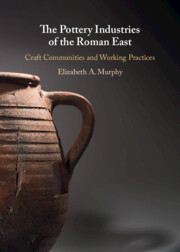
What was the social experience of work in the ancient world? In this study, Elizabeth Murphy approaches the topic through the lens offered by a particular set of workers, the potters and ceramicists in the eastern provinces of the Roman Empire. Her research exploits the rich and growing dataset of workshops and production evidence from the Roman East and raises awareness of the unique features of this particular craft in this region over several centuries. Highlighting the multi-faceted working experience of professionals through a theoretically-informed framework, Murphy reconstructs the complex lives of people in the past, and demonstrates the importance of studying work and labor as central topics in social and cultural histories. Her research draws from the fields of archaeology, social history and anthropology, and applies current social theories --- communities of practice, technological choices, chaîne opératoire, cultural hybridity, taskscapes – to interpret and offer new insights into the archaeological remains of workshops and ceramics.
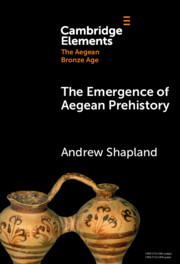
This Element focusses on the emergence of Aegean Prehistory as a discipline, starting with the first recorded encounters with prehistoric monuments and artefacts and ending with the decipherment of Linear B in 1952. It broadens the history of Aegean Bronze Age archaeology as told in popular accounts as a series of excavations of great men, particularly Heinrich Schliemann at Troy and Mycenae and Sir Arthur Evans at Knossos. Though their work is of fundamental importance for the discipline, here it is placed within wider political, institutional and intellectual frameworks. This Element also provides an overview of the work of many other archaeologists across the Aegean and the regional and historical context in which they operated. It provides a brief but comprehensive history of the formative stages of the study of Aegean Prehistory.
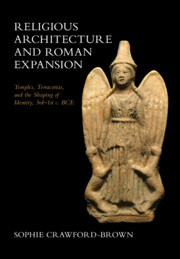
Religious Architecture and Roman Expansion uses architectural terracottas as a lens for examining the changing landscape of central Italy during the period of Roman military expansion, and for asking how local communities reacted to this new political reality. It emphasizes the role of local networks and exchange in the creation of communal identity, as well as the power of visual expression in the formulation and promotion of local history. Through detailed analyses of temple terracottas, Sophie Crawford-Brown sheds new light on 'Romanization' and colonization processes between the 3rd and 1st centuries BCE. She investigates the interactions between colonies and indigenous communities, asking why conquerors might visually emulate the conquered, and what this can mean for power relations in colonial situations. Finally, Crawford-Brown explores the role of objects in creating cultural memory and the intensity of our need for collective history-even when that 'history' has been largely invented.
Chapter 7 offers concluding thoughts on the afterlives of architectural terracottas and on their lingering symbolic power even after they had fallen from use in Italic temple architecture.