To save content items to your account,
please confirm that you agree to abide by our usage policies.
If this is the first time you use this feature, you will be asked to authorise Cambridge Core to connect with your account.
Find out more about saving content to .
To save content items to your Kindle, first ensure no-reply@cambridge.org
is added to your Approved Personal Document E-mail List under your Personal Document Settings
on the Manage Your Content and Devices page of your Amazon account. Then enter the ‘name’ part
of your Kindle email address below.
Find out more about saving to your Kindle.
Note you can select to save to either the @free.kindle.com or @kindle.com variations.
‘@free.kindle.com’ emails are free but can only be saved to your device when it is connected to wi-fi.
‘@kindle.com’ emails can be delivered even when you are not connected to wi-fi, but note that service fees apply.
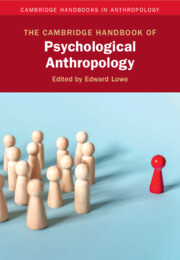
Bringing together contributions from a global team of renowned scholars, this Handbook provides a comprehensive guide to the dynamic field of psychological anthropology. It is divided into five parts and includes a critical updating of the theoretical foundations for psychological anthropology, covering cognitive, psychodynamic, linguistic, and phenomenological views. It provides the first-ever lifespan perspective on human development in culture from the perspective of anthropology and also contains sections that connect the biological dynamics involved in human experience through to social, cultural, and historical perspectives. It considers important political-economic concerns for psychocultural studies, including Indigenous perspectives and expert voices from the global south. By showing how researchers can break out of the disciplinary silos that separate important fields in the human sciences, like anthropology and psychology, it emphasizes the importance of working collaboratively together in order to enrich our understanding of the human condition.
Towards the end of his al-Ghayth al-Musajjam fī Sharḥ Lāmīyat al-ʿAjam, Khalīl ibn Aybak al-Ṣafadī (d. 1363/764) aims a peculiar slight at his sometime teacher Ibn Taymiyya (d. 1328/728), likening him to two famous executed heretics, al-Suhrawardī (d. circa 1191/587) and Ibn al-Muqaffaʿ (d. 759/142), in their shared ‘lack of reason’. Though often cited as evidence that al-Ṣafadī held his famous contemporary’s intelligence in low regard, the insult is more specifically aimed at his lack of discretion. In this article, I examine how Ibn Taymiyya is portrayed across the Sharḥ and argue that, when paired with insights from the book about al-Ṣafadī’s own language-centred hermeneutics, we gain a number of interesting insights into this prolific historian and adīb. The first is that he was closely familiar with and even mimicked aspects of the culture of ‘esoteric disclosure’, including in his criticism of Ibn Taymiyya and his indiscretion. Al-Ṣafadī also emerges as something of an exemplar of what Thomas Bauer has called Islam’s ‘cultural ambiguity’, whose final criticism of Ibn Taymiyya and of the heretics to whom he is likened is not any specific one of their beliefs, but rather their inability to exercise discretion in expressing them.
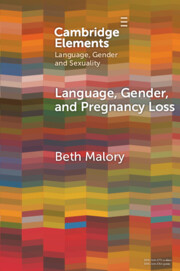
This Element explores the gendered dimensions of the ways language used to describe, define, and diagnose pregnancy loss impacts experiences of receiving and delivering healthcare in a UK context. It situates experiences of pregnancy loss language against the backdrop of gender role expectations, ideological tensions around reproductive choice, and medical misogyny; asking how language both reflects and influences contemporary gender norms and understandings of maternal responsibility. To do this, the Element analyses 10 focus group transcripts from metalinguistic discussions with 42 lived experience and healthcare professional participants, and 202 written metalinguistic contributions from the same cohorts. It demonstrates the gendered social and symbolic meanings of diagnostic terminology such as miscarriage, incompetent cervix, and termination or abortion in the context of a wanted pregnancy, as well as clinical discourses, on the experience of pregnancy loss and subsequent recovery and wellbeing. This title is also available as Open Access on Cambridge Core.
Since the 1990s, Chinese parents of people with intellectual and developmental disabilities (PWIDD) have been founding rehabilitation service non-governmental organizations (NGOs) to fill the social welfare gaps in disability services in their local areas. More recently, however, a new form of mutual aid organization – the parent organization, which focuses on family empowerment and advocacy – has emerged and diffused trans-locally, along with two national networks’ organizational incubation initiatives. Following an institutional approach to organizational studies and drawing on ethnographic fieldwork conducted between 2019 to 2023, this study traces the trans-local expansion of this novel organizational form in the emerging field of Chinese NGOs. We argue that parent organizations strategically orchestrate a form of institutional work – network entrepreneurship – characterized by three organizational processes: vertical connections between national networks and local member organizations, horizontal interactions among senior and new parent organizers, and the creative translation and adaptation of local parent organizations. Together, these three processes facilitate the trans-local diffusion of organizational resources, identity, ideas and practices. The findings make theoretical contributions by highlighting the institutional implications of peer organization networks, especially through the emerging subject position of “parent of PWIDD,” in the incubation and diffusion of a novel organizational form trans-locally.
This article examines the interrelations between the political economies of the Ottoman Empire and the administration of justice for European merchants in Ottoman cities during the seventeenth century. By focusing on the sultan’s court of justice, the Imperial Council (divan-ı hümayun), and the Venetian merchants who appealed to it, this piece illustrates how Ottoman commercial interests and political concerns influenced the production and application of Islamic law (Sharia) in Ottoman courts for European merchants. To promote international trade, Ottoman political and legal authorities introduced new norms and procedures in matters of legal evidence and court jurisdiction in commercial cases between Venetian and Ottoman subjects, and they encouraged settlements in favor of foreign merchants and Ottoman-Venetian trade. These politics of justice, I argue, demonstrate the dynamism of the Ottoman legal system in the sixteenth and seventeenth centuries, a period characterized by global commercial development and Ottoman military and political ascendancy in the Mediterranean.
Drawing on the dynamic and historically layered relationships among Africa, China, and the West, a “triangular system” serves as an analytical framework for understanding the evolution of studies of African literature in China. Tracing a four-stage periodization reveals how Western epistemologies have shaped Chinese interpretations of African literature. At the same time, it also illuminates China’s efforts to assert intellectual autonomy. A fluid, geometry-based triangulation model that accommodates multiplicity, foregrounds African agency, and fosters direct Afro-Chinese literary engagement is essential for meaningful South-South collaboration in literary studies, which must resist epistemic dependency and nationalist instrumentalization, and instead emphasize mutual learning and structural transformation.
Atop El Castillo, the largest pyramid within the Maya site of Chichen Itza, in Mexico’s Yucatan Peninsula, stand two ruined columns that once portrayed the feathered serpent deity K’uk’ulkan. 3D-imaging technologies have identified scattered sculptural fragments belonging to these columns, allowing a digital reconstruction that opens new possibilities for their conservation.
This article argues that the environmental contexts of memory are vulnerable to Artificial Intelligence (AI)-generated distortions. By addressing the broader ecological implications for AI’s integration into society, this article looks beyond a sociotechnical dimension to explore the potential for AI to complicate environmental memory and its role in shaping human–environment relations. First, I address how the manipulation and falsification of memory risks undermining intergenerational transmission of environmental knowledge. Second, I examine how AI-generated blurring of boundaries between real and unreal can lead to collective inaction on environmental challenges. By identifying memory’s central role in addressing environmental crisis, this article places emerging debates on memory in the AI era in direct conversation with environmental discourse and scholarship.
New research at Ciepłe, a unique early-medieval centre in northern Poland, reveals a Piast-era complex with three strongholds, elite chamber graves and far-reaching connections. Founded in the late tenth century AD, Ciepłe challenges traditional models of Pomeranian integration, offering fresh perspectives on early medieval state formation, frontier strategy and cross-cultural interactions.
This article redefines the concept of the Achaemenid ‘Royal’ Road using GIS-based route modelling to reconstruct possible roads between Susa and Persepolis. By integrating logistical and environmental parameters, it shows how royal mobility required a specialised infrastructure—distinct from ancillary roads—tailored to the operational scale of the Achaemenid court.
This comparative article examines the iterative interactions between the French conception of guerre contre-révolutionnaire and the (re-)legitimation of modern torture techniques from the late nineteenth to the early twenty-first centuries. Based on a threefold argument, and drawing on multilingual historical sources and museal artifacts, it argues that the ideological campaign against the “revolutionary war” was a specifically military-intellectual approach to dealing with real or imagined subversive enemies. This dispositif promoted torture as a method of obtaining information and intimidating victims. First, this article shows how torture and the corresponding knowledge production can be traced back to colonial Indochina. There, archaic techniques were peculiarly blended, often with other experiences and indigenous practices. Later, leading military officers believed that the resulting doctrine of counterrevolutionary warfare was successful largely because of the use of methods of torture that left no trace. This key feature facilitated the export of its techniques to other regions. Therefore, in a second step, this article shows how this intertwined knowledge system was applied to the Algerian War, where it was widely employed and exploited. Subsequently, the fear of the spread of global communism facilitated the emergence of torture as a covert science of the Cold War. Third, this essay demonstrates how leading French theorists globalized their teachings by influencing their South American counterparts through their cross-continental interactions from the 1960s onward. Since the end of the Cold War, traces of this savoir-faire have remained potent, culminating in their influence on U.S. American counterinsurgency doctrine.
In the wake of the 2015 attacks claimed by the Islamic State on the satiric magazine Charlie Hebdo, the Bataclan theater, cafés in Paris, and the Stade de France in Saint-Denis, survivors were granted reparation based on an already existing legal framework. This article traces the history of compensation for terrorism in France back to a previous campaign of bombings carried out by Lebanese Hezbollah on iconic Parisian sites in 1985–1986 and, beyond the conjuncture of the late 1980s, to the Algerian War of Independence (1954–1962). While genealogies of human rights have so far focused on the aftermath of World War II and the history of the Holocaust, the paper uncovers the wars of decolonization as a key historical conjuncture for the emergence of contemporary humanitarianism and for the structuring of its fundamentally ambivalent discourse. A review of the successive arguments over how to draft, amend, and rewrite the reparation statutes in the late 1950s reveals how compensation was weaponized as an integral part of the “war on terror.” The paper then brings the analysis into the 1980s and the creation of a compensation fund as part of the 1986 Prevention of Terrorism Act. Reparations for terrorism emerge not only as a form of humanitarian intervention but also as a tool of counterinsurgency warfare in its own right. On a historiographical level, I draw on David Scott’s concept of “problem-space” to analyze the late 1950s and 1980s as imbricated conjunctures bearing an exceptional testimony to the history of the present.
Widowers make occasional appearances in Icelandic sagas of the thirteenth and fourteenth centuries and—even though Old Norse did not even have a word for them—they exhibit some distinctive behavioral patterns. This article uses the framework of bereavement studies to examine the interplay of gender, affect, and small-scale politics in the wake of the loss of a wife. It proposes two archetypes of dysfunctional bereaved husband, observable in the medieval Norse world which the sagas describe (ca. 800–1300): the widower on the warpath and the widower on the bridal path. Both followed cultural scripts for widowers’ conduct, but did so imperfectly, in a manner that exposes their society’s constructions of masculinity, its prescriptive family codes, and the clandestine channels linking private emotional turmoil with public socio-political disruption. My typology of maladjusted Norse widowers offers heuristic tools for further study of bereaved husbands in other periods and places, as well as for comparison with bereaved wives and with men in other life-stages.