To save content items to your account,
please confirm that you agree to abide by our usage policies.
If this is the first time you use this feature, you will be asked to authorise Cambridge Core to connect with your account.
Find out more about saving content to .
To save content items to your Kindle, first ensure no-reply@cambridge.org
is added to your Approved Personal Document E-mail List under your Personal Document Settings
on the Manage Your Content and Devices page of your Amazon account. Then enter the ‘name’ part
of your Kindle email address below.
Find out more about saving to your Kindle.
Note you can select to save to either the @free.kindle.com or @kindle.com variations.
‘@free.kindle.com’ emails are free but can only be saved to your device when it is connected to wi-fi.
‘@kindle.com’ emails can be delivered even when you are not connected to wi-fi, but note that service fees apply.
This paper assesses the impact of federal grants for research and development (R&D) on state R&D investment in the United States. We find that federal grants for academic R&D do not significantly influence state allocations to academic institutions from 2006 to 2021. By contrast, R&D performed by agencies of the state government is estimated to grow by $0.35 with each additional dollar of federal support. We argue that these divergent results reflect the localized nature of benefits generated from R&D performed by state government agencies compared to university-based research. A computational text analysis of recent federal R&D awards to academic institutions and state agencies corroborates this hypothesis.
This comment interrogates the methods and conclusions of Working with AI, a recent report conducted under the auspices of Microsoft, which identified historians as the profession with the second-highest ‘AI applicability’. It finds that the authors’ conclusions are based on an erroneous simplification and misrepresentation of a historian’s typical professional tasks, which have been publicly amplified by extensive media coverage. This comment then offers a wider provocation about the report’s conception of a professional historian, and whether it is related to the public application of ‘historian’ to a number of different practitioners with varied training and qualifications. In particular, it seeks to highlight a paradox which the report exposes: that we cannot defend the specialist training and expertise of professional historians against the encroachment of AI without also separating the academic skills and qualifications of historians from those engaged in more popular forms of historical writing and communication. The comment questions how we might grapple with this paradox without reverting to academic elitism.
As the planet confronts an interconnected meta-crisis linked to natural, political, social, and psychological challenges, there are some pedagogical tendencies that should be challenged within university education. Drawing on the philosophical literature of the Ecological University, this article uses an eco-philosophical framework for considering mainstream university pedagogy. We emphasise that the increasing mental health challenges of so many young people at university is both a symptom and a feature of the meta-crisis and a key consideration for how we might respond as university educators. We argue that many of the existing neoliberal and liberal tendencies in university can be interpreted as “Miserable Pedagogies” — which typically fail to engage with the meta-crisis as a threat to the planet’s psychological, social, political, or natural ecosystems. We suggest that our “pedagogies of misery” need to be disrupted and radically contested with an ecological world-view we describe as “Anthropocene Intelligence.” After setting out the key features of Anthropocene Intelligence, we consider how an alternative teaching approach, used by one of the authors, reflects such an ecological worldview and potentially provides a basis for more meaningful and active ways of being and learning on this finite planet.
This chapter explores how undergraduate students’ purpose and motivation for attending postsecondary education contribute to their retention, persistence, and graduation. As a lens for understanding these dynamics, this chapter provides an overview of the Interdisciplinary Theory of College Student Success, which posits that students ask several key questions that determine whether they stay in higher education; one of those questions pertains to their purpose for pursuing a degree and remaining at their current institution. According to this framework, there is not a single “best” type of purpose, since students have different motivations that can drive them to persist in the face of challenges and setbacks. The theory also highlights the role of educational intentions as a key driver of college decision-making. This chapter then discusses research that has directly explored students’ purposes for attending college, which often suggests that the development of purpose and educational intentions are informed by students’ identities and socialization.
Globalization’s emphasis on the knowledge economy gradually shifted universities’ objectives away from fostering social cohesion towards developing market skills. What kind of citizenship has emerged from this process? Using a staggered difference-in-differences design, I study the political economy legacy of the largest ever market-oriented transformation in higher education – the Bologna Process – for European millennials. I find evidence for a ‘neoliberal hypothesis’: the reform substantially increased the perceived importance of achieving status and wealth. By contrast, I find no evidence for a ‘humanist hypothesis’: The reform did not change the perceived importance of global equality and environmental issues. Ironically, the Bologna Process heightened the perceived importance of status and wealth without delivering long-run gains in income and employment. My findings dispute that universities indoctrinate students into left-wing politics, and suggest that market-friendly institutional change constructs the ‘student customer’.
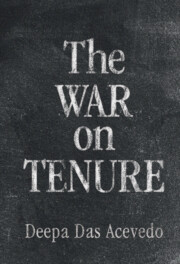
As academia increasingly comes under attack in the United States, The War on Tenure steps in to demystify what professors do and to explain the importance of tenure for their work. Deepa Das Acevedo takes readers on a backstage tour of tenure-stream academia to reveal hidden dynamics and obstacles. She challenges the common belief that tenure is only important for the protection of academic freedom. Instead, she argues that the security and autonomy provided by tenure are also essential to the performance of work that students, administrators, parents, politicians, and taxpayers value. Going further, Das Acevedo shows that tenure exists on a spectrum of comparable employment contracts, and she debunks the notion that tenure warps the incentives of professors. Ultimately, The War on Tenure demonstrates that the job security tenure provides is not nearly as unusual, undesirable, or unwarranted as critics claim.
As climate change accelerates, its most devastating impacts fall on those already marginalised, deepening existing inequalities. This underscores the need for climate change education to attend not only to the scientific but also to social, cultural and ethical dimensions. Like science fiction, climate fiction (cli-fi) has often reinforced colonial, patriarchal and anthropocentric worldviews. However, some contemporary cli-fi narratives challenge these paradigms by offering alternative visions that centre climate justice and the voices of those most affected by climate change. In this paper, we examine two contemporary Australian cli-fi narratives — Merlinda Bobis’s Locust Girl and Alexis Wright’s The Swan Book — and their potential role in climate education. Integrating these cli-fi into a cross-disciplinary higher education curriculum can enrich climate change education by encouraging critical, ethical and imaginative engagement and prepare students to navigate and respond to the crisis in transformative ways. Not only do these texts critique climate inequalities but they imagine alternative ways of being, positioning characters in relational entanglements with climate, cultures and place. We conduct an ecocritical analysis, applying a critical posthumanist and ecofeminist lens, to examine how these narratives disrupt anthropocentric and patriarchal logics and advocate for relational, justice-centred approaches to climate issues. Climate change concepts that emerged from this analysis act as a guide for educators.
This study aims to detect the ability of professors to distinguish design assignments generated by students with and without using AI. Ten students were recruited to undertake a conceptual design task twice, one with and one without the help of AI. 105 higher-education associate, assistant and full professors from industrial and product design programmes were recruited to assess the generated designs using a 7-point Likert Scale with nine indexes. The results indicate that assessors have moderate ability to distinguish between design assignments of students using AI and those where students did not use AI. Three cues to suggest the risk of the design assignment is made with AI instead of students who did not use AI were identified. By considering the three cues, lecturers distinguish design assignments generated by students with or without AI.
Limited research has explored the delivery of sustainable design in higher education globally. Therefore, the aim of this paper is to investigate educational practices on the topic. Through an online survey, we investigated numerous aspects of units of study exposing topics related to sustainable design with a focus on contents, teaching methods and educational objectives. The survey was accessed by almost 400 educators in the field of sustainable design. The data show that a variety of teaching methods are used, with a critical role played by project-based learning in addition to traditional lectures. Most respondents rated all investigated intended learning outcomes as relevant or very relevant. In terms of contents and methods treated by the respondents, product eco-design and design for X are the most frequently taught methods. Educational approaches and teaching objectives are poorly affected by the discipline of the degree in which units of study are taught. In terms of contents, design degrees include approaches to sustainable design at the spatio-social level more frequently than engineering degrees do.
This chapter analyzes the participation of the University of Charcas in public affairs. It shows that following the Jesuit expulsion in the 1760s, the claustro (academic senate) became a center of university life. This body held annual elections to appoint the rector and allocated academic chairs on the basis of public tenders. The faculty forcefully defended its newly acquired autonomy from ecclesiastical and royal authorities, and its representative practices were instrumental in consolidating a culture of dissent that helped destabilize the unanimity principle underlying the monarchical imaginary, a principle that deemed nonconforming opinions a social pathology incompatible with the sovereign’s will and the common good. The chapter delves into the highly acrimonious election of the main local leader Juan Jose ́Segovia as university rector in 1785. The dispute stemmed from two sources of conflict that had been engulfing the university and the city at large. The first was a contest between religious and secular sectors vying for control of the university. The second was the political conflicts between the city council and the audiencia of Charcas and the Buenos Aires viceroy that followed the July 1785 riot. The chapter shows that there was an inextricable connection between the two confrontations.
Prison has long been recognized as a racialized institution in America, where race determines myriad aspects of life—from where individuals sleep to those with whom they live, eat, and socialize during incarceration. However, there is little evidence on how to effectively remediate prisons’ deep racial divisions—a question that is imperative given that interracial animus in prisons can be both a result and a determinant of racial conflict and violence. In this study, we argue that higher education in prison has significant potential to improve racial attitudes and foster racial integration by providing a “contrasting context” for interracial interaction in the classroom within an otherwise racially segregated institution. Using administrative data on college-level course completion, an original longitudinal survey of prison college students, and in-depth qualitative interviews with prison college alumni, we show evidence of shifts in racial attitudes and self-reported behavior as students move through their college career. Our results demonstrate the potential for prison higher education to shift race-based norms and offer a framework through which to analyze prison education that prioritizes outcomes of interest beyond recidivism.
This article examines the impact of generative artificial intelligence (GAI) on higher education, emphasizing its effects in the broader educational contexts. As AI continues to reshape the landscape of teaching and learning, it is imperative for higher education institutions to adapt rapidly to equip graduates for the challenges of a progressively automated global workforce. However, a critical question emerges: will GAI lead to a more inclusive future of learning, or will it deepen existing divides and create a future where educational access and success are increasingly unequal? This study employs both theoretical and empirical approaches to explore the transformative potential of GAI. Drawing upon the literature on AI and education, we establish a framework that categorizes the essential knowledge and skills needed by graduates in the GAI era. This framework includes four key capability sets: AI ethics, AI literacy (focusing on human-replacement technologies), human–AI collaboration (emphasizing human augmentation), and human-distinctive capacities (highlighting unique human intelligence). Our empirical analysis involves scrutinizing GAI policy documents and the core curricula mandated for all graduates across leading Asian universities. Contrary to expectations of a uniform AI-driven educational transformation, our findings expose significant disparities in AI readiness and implementation among these institutions. These disparities, shaped by national and institutional specifics, are likely to exacerbate existing inequalities in educational outcomes, leading to divergent futures for individuals and universities alike in the age of GAI. Thus, this article not only maps the current landscape but also forecasts the widening educational gaps that GAI might engender.
Chapter 5 identifies disability-based educational inequality, which occurs in teacher bias, social stigma, classroom access, disability diagnosis, and school discipline. It attends to the education policy demands of disability justice activists and identifies dis/ability critical race studies (“DisCrit”) and critical race spatial analysis (CRSA) as two emerging intersectional research methods that can contribute to the intergroup analysis of stratification economics. Chapter 5 considers proposals for a federal baby bonds program and identifies program mandates and antidiscrimination requirements that would be necessary to guarantee equitable designation of eligible funds for college and university tuition.
The conventional three-stage model of human life – from childhood to adulthood to old age – is being upended by social and economic changes that the 100-year life will likely amplify. If law does not adapt to new life patterns, it will worsen existing inequalities. Higher education, family and inheritance, and retirement illustrate how lives are already diverging from assumptions embedded in law about the life cycle while suggesting needed reforms.
The history of student activism during the twentieth century in both K-12 and higher education contexts has a robust literature base; however, Native American student activism has largely been overlooked by historians of education. Predating the well-known American Indian Movement (AIM) by nearly a decade, the National Indian Youth Council (NIYC) successfully created an organizing base during the 1960s from which other Indigenous activist movements emerged, many of which still operate today. By focusing their efforts on student-run publications, direct action, and community-run education, the Indigenous college students and young adult activists constituting the NIYC contributed significantly to a larger social movement opposing and ultimately upending the federal policies of termination imposed on American Indian tribes that lasted from 1953 to 1970.
Interventions to foster inclusive learning environments may benefit college STEMM instructors (NASEM, 2019). We investigated the impact of a social inclusion intervention (SII) on scientific self-efficacy, identity, community values, and persistence intentions in a large and diverse sample of biomedical college instructors (n = 116) in the USA. The results indicated that the SII group developed stronger scientific community values than the control group, and the effect was the strongest for instructors who had initially expressed lower values. From a mentoring perspective, the intervention helps boost feelings of community values, which is linked to increased persistence in STEMM careers.
This chapter examines the redefinition of “youth” that occurred during World War II as a result of young men’s conscription and the rise of the United States as the global superpower, as well as its consequences for young Americans. It specifically looks at the creation and implementation of federal educational programs for soldiers, such as the Army Specialized Training Program and the educational provisions of the 1944 G. I. Bill of Rights. The chapter also demonstrates how these programs built upon the framework that had been developed in earlier decades, which categorized youth according to their value for national security and established military service as a “democratic” educational opportunity.
This final chapter summarizes the key points discussed in the previous chapters. It illuminates how diverse adults in the United States helped to build the link between youth, education, and national security from World War I to World War II. The chapter also discusses how this connection both changed and influenced developments in the second half of the twentieth century, when the Cold War changed American ideas about who should serve militarily. Nonetheless, the relationship between youth, education, and national security has remained powerful and continues to influence young Americans today.
This chapter provides readers with an overview of the book, as well as its major argument. It argues that, while historians have traditionally treated war and military issues as temporary issues that affected American society only during wartime and had little impact on society during peacetime, the issues were, in fact, fundamental to political and cultural changes in American society during the first half of the twentieth century. The chapter also outlines how the remainder of the book will support this argument by focusing on how the relationship formed during this time between national security, education, and the cultural conception of “youth” strongly influenced young people’s educational experiences and had significant social consequences that still exist today.
Although military issues are not often included in accounts of American society in the 1920s and 1930s, this chapter shows how they influenced young Americans’ access to education by examining debates surrounding mandatory military training that male students in certain secondary schools and colleges that were part of the Reserve Officers’ Training Corps (ROTC) program had to undergo. These debates illuminate the tensions that existed and grew between access to education and national security throughout these years, as well as the strengthening of the relationship between educational institutions and the military. The ultimate defeat of ROTC’s opponents by the end of the 1930s demonstrates that American society had come to accept the teaching of military subjects in civilian educational institutions.