To save content items to your account,
please confirm that you agree to abide by our usage policies.
If this is the first time you use this feature, you will be asked to authorise Cambridge Core to connect with your account.
Find out more about saving content to .
To save content items to your Kindle, first ensure no-reply@cambridge.org
is added to your Approved Personal Document E-mail List under your Personal Document Settings
on the Manage Your Content and Devices page of your Amazon account. Then enter the ‘name’ part
of your Kindle email address below.
Find out more about saving to your Kindle.
Note you can select to save to either the @free.kindle.com or @kindle.com variations.
‘@free.kindle.com’ emails are free but can only be saved to your device when it is connected to wi-fi.
‘@kindle.com’ emails can be delivered even when you are not connected to wi-fi, but note that service fees apply.
Wetland projects were a leading example of improvement in action in early modern England, offering a counterpoint to many unrealised schemes and dreams that litter the archives. But such ventures were fraught with paradoxes: property rights were transgressed to make more certain ones, while drainage created new floods. Centring the engineers, investors, landowners, settlers, and labourers who propelled improvement on the ground, this chapter examines how their ambitions were altered and restricted by the polarised environmental politics that emerged in Hatfield Level. Improvement was a risky endeavour and the costs of conflict were high. Asking how contemporaries evaluated its ambiguous results in Hatfield Level, this chapter charts the revival of wetland improvement by the network of reformers that coalesced around the ‘intelligencer’ Samuel Hartlib in the mid seventeenth century. The experience of conflict surfaced in debate about, and experiments with, technologies of improvement, which promised to marginalise social negotiation and environmental contingencies.
This chapter argues that not only the author but also the implied audiences and situations of the Johannine texts are fictionalized. It also critiques the longstanding scholarly reconstruction of a “Johannine Community,” proposing alternative ways of contextualizing these works.
Who were the women of Meerut, said to have turned a nonviolent military mutiny – a refusal to load and fire a weapon – into a violent revolt that nearly toppled the British Raj? Were they prostitutes, or were they wives? There is much in the book to suggest the latter, but (ironically) that same evidence also suggests the simultaneous possibility of the former. This paradoxical formulation requires a more nuanced understanding of the nature of north Indian marriage in mid-century. A more fundamental question is: Did the women of Meerut exist? Or were they the product of overheated imaginations casting about for exculpation – on both sides of the racial divide? This necessitates a further examination of the two sources for the story of the Meerut women, or rather the question of their independent narrative origin. While the evidence militates in favor of their historicity, gender humiliation was already in the air: Even if they did not exist, they would be invented. They matter not simply because they enable us to add women to the mix of history (and stir, as the saying goes), but because they allow us to perceive something fundamental about the nature of history itself.
For centuries, Christians believed that the biblical letters of 1, 2, and 3 John were penned by a disciple of Jesus. Today, scholars speculate that the three are artifacts of a lost 'Johannine Community.' In this groundbreaking study, however, Hugo Méndez challenges both paradigms, meticulously laying out the evidence that the Epistles are, instead, a series of falsely authored works. The texts position themselves as works by a single author. In reality, they were penned by three different writers in a chain of imitation, creative adaptation, and invention. Through incisive, close readings of the Epistles, Méndez clarifies their meaning and purpose, demystifying their most challenging sections. And by placing these works in dialogue with Greco-Roman pseudo-historical writing, he uncovers surprising links between Classical and early Christian literature. Bold, comprehensive, and deeply original, this book dismantles older scholarly views while proposing new and exciting approaches to these enigmatic texts.
This chapter is an introduction to the Enlightenment mock arts, set out in three historical hypotheses. First, early-modern writers became increasingly interested in the cognitive (rather than simply material) value in the work of skilled technicians. The mock-arts were models for the intuitions involved in skilled manufacture, related to certain ineffable components of literary production. Second, the literary framing for those investigations was invariably satirical (or oblique and critical in other ways). As specialists in literary wit, authors of mock arts put themselves forward as experts in curiosity, invention and communication. Third, writers became more subtle in their assumptions about the print trade and the suitability of books as tools that might contribute to the communication of personal knowledge. Since convention defined that sort of knowledge by the impossibility of pinning it down in books, this opened another field for irony and indirection.
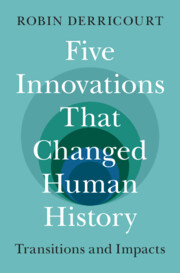
In the long sweep of human history, certain key innovations were so dramatic in their impacts that they changed our world forever. What do we know from historical studies and archaeology of the topics chosen for five key chapters of this book?
We live in an era of major technological developments, post-pandemic social adjustment, and dramatic climate change arising from human activity. Considering these phenomena within the long span of human history, we might ask: which innovations brought about truly significant and long-lasting transformations? Drawing on both historical sources and archaeological discoveries, Robin Derricourt explores the origins and earliest development of five major achievements in our deep history, and their impacts on multiple aspects of human lives. The topics presented are the taming and control of fire, the domestication of the horse,and its later association with the wheeled vehicle, the invention of writing in early civilisations, the creation of the printing press and the printed book, and the revolution of wireless communication with the harnessing of radio waves. Written in an engaging and accessible style, Derricourt's survey of key innovations makes us consider what we mean by long-term change, and how the modern world fits into the human story.
This chapter explains and discusses the definition of public sector innovation. Public sector innovation includes two concepts or terms: (1) public sector and (2) innovation. The first concept, “the public sector,” refers to the general government organizations owned and funded by the government and may include or exclude state-owned enterprises. The second concept, “innovation,” refers to novel ideas or practices implemented organizations. Thus, novelty and implementation are two key terms defining innovation. Therefore, public sector innovation refers to innovative activities in the public sector, and this chapter provides information about it. In addition, this chapter discusses how and in what ways innovation differs from public management reforms, organizational change, invention, creativity, entrepreneurship, and improvement.
Edited by
Alejandra Laera, University of Buenos Aires,Mónica Szurmuk, Universidad Nacional de San Martín /National Scientific and Technical Research Council, Argentina
This chapter reads César Aira’s work as an intervention in Argentine literature at the end of the twentieth century, which – since its irruption in 1981 – called for new reading protocols based on a fundamental operation: the transformation of the concept of fiction into invention. The radicalness of this invention – which embodied an unprecedented way of writing in Argentine literature – constitutes a point of inflection in storytelling.This phenomenon is described from diverse and converging points of view: the development of a singular economy; writing as the art of continuum and as a form of contemporary art; the imagination of worlds of the present by means of a general theory of documentation. The hypotheses put forward draw on a transversal reading which, while considering the whole of his books (more than a hundred), focuses on key texts which are representative of the diverse profiles of his works: the parable of nineteenth- to twenty-first-century Argentina, between Ema, the captive and Shantytown; the aporias of vision and the machines of thought from An Episode in the Life of a Landscape Painter to Marble; the fables of the writer in the contemporary world, between Varamo and Parménides.
This paper investigates how the members of the Kigye Yu lineage imagined and invented their ancestral roots during the Chosŏn dynasty (1392–1910) and how such a pursuit of ancestral origins led to subsequent developments in genealogical records. As early as the fifteenth century, Chosŏn elites began to show interests in genealogy that included identifying remote ancestors from ancient times for various political, social, and cultural reasons. From the seventeenth century, the transformation of kinship organization in line with the Confucian ideal of patriliny and elites’ competition for power and prestige intensified genealogical consciousness. Elites became heavily invested in searching for ancestral origins in the form of their lineages’ founders and their tombs. While claiming to rely on documentary and physical evidence, elites often deviated from their professed empiricism and adopted evidence from dubious sources such as oral testimonies and geomancy to rationalize invented ancestral roots. Such pliable approaches, often observed in other early modern cultures such as late imperial China and Europe, opened a floodgate of lineages glorifying their ancestry by pushing their origins back even to mythical founders of ancient Korean and Chinese kingdoms, and adorning their lineages with invented heroes. At the same time, loopholes and blank spots in genealogies enabled quasi- and nonelites to become a member of prominent lineages by grafting their names onto their family trees.
Many signs in urban areas are bilingual in Chinese and English. It cannot escape the notice of even the most casual bilingual observer that many such signs are woefully (and sometimes hilariously) mistranslated. Mistakes can result from wrong segmentation, wrong word choice, wrong grammar, or inappropriate style, which is particularly important in Chinese. Mistakes can also result from missing crucial information or lack of understanding of English. There are also the ‘innovative analogies’, which give rise to non-existent English words. Also frequently observed are inconsistencies, wavering between the two strategies of pinyin transliteration and meaning translation. The inclusion of mistranslated signs can be pedagogically useful in more than one way. Studying mistranslated signs is an exercise in contrastive analysis. Through detailed analysis of the causes of the mistakes, such signs can be used as negative examples in the teaching of both Chinese and English. They can also be useful to the study and practice of translation.
Times are changing as our global ecosystem for commercializing innovation helps bring new technologies to market, networks grow, and interconnections and transactions become more complex around standards, all to enable vast opportunities to improve the human condition, to further competition, and to improve broad access. The policies that governments use to structure their legal systems for intellectual property, especially patents, as well as for competition—or antitrust—continue to have myriad powerful impacts and raise intense debates over challenging questions. This chapter explores a representative set of debates about policy approaches to patents, to elucidate particular ideas to bear in mind about how adopting a private law, property rights-based approach to patents enables them to better operate as tools for facilitating the commercialization of new technologies in ways that best promote the goals of increasing access while fostering competition and security for a diverse and inclusive society.
Between Thomas Edison’s invention of the phonograph in 1877 and World War I, inventors, entrepreneurs, performers, and listeners transformed the singular talking machines of the late 1870s to the ubiquitous music machines of the twentieth century. Through selected images, objects, and links to period sounds, this essay offers a chronological glimpse of interacting social, technical, and entrepreneurial forces at work. Combining visual, aural, and material sources in this way enlarges the historian’s toolbox for understanding the late nineteenth and early twentieth centuries.
The epilogue considers the afterlives of “matter” and “making” in the Elizabethan period. Through brief readings of Sidney’s Astrophil and Stella and Puttenham’s Art of English Poesy, the epilogue demonstrates that both ideas continue to guide literary practice during this period. At the same time, however, the economic and political position of the Elizabethan poet differs markedly from the place that earlier court writers had occupied in the sphere of cultural production, and this shift in position motivates a gradual turn, in Elizabethan literary theory, away from notions of “making,” which draw attention to the material process by which literature is constructed, and towards notions of “authorship,” which hold instead that literature is produced by an autonomous figure whose type of work is categorically distinct from other kinds of labor. “Authorship” thus emerges from an ideological shift predicated, not upon a fundamental difference in literary technique, but upon a change in the conditions under which early modern poets worked.
From climate change to disruptive technologies, policymakers constantly face new problems calling for unprecedented institutional solutions. Yet, we still poorly understand the inventive process leading to the emergence of new institutional forms. Existing theories argue that exogenous changes provide incentives and opportunities for institutional invention. However, they fail to explain how the inventive process endogenously structures their emergence. Drawing from complexity theory and Brian Arthur's work on technological inventions, we develop a structural theory recasting the process of inventing new institutions as the combination of pre-existing institutions. Building on three assumptions related to this combinatorial process, we argue that the distance between institutions shapes the emergence of new institutional forms and their regime's trajectory. Following the initial take-off in the number of institutional inventions at the creation of a regime, we expect the rate of institutional inventions over replications will slow down as nearby institutions are combined and accelerate as distant ones are combined. We illustrate these expectations by looking at three regimes: data privacy, climate governance, and investment protection. Together, they showcase how our combinatorial theory can help make sense of the emergence of unprecedented institutions and, more generally, the pace of unfolding complexity in various international regimes.
The word ‘making’ does too much work. This chapter teases apart the etymological senses of three words that are sometimes employed interchangeably as synonyms for making. They are ‘Invention’, ‘Creation’, and ‘Production’. To list them in this order is to list them in a sequence that is broadly, but not strictly, chronological. Invention indicates the initiation of the making process, Creation describes the development stage, and Production describes the presentation or publication of the created thing. This chapter argues for a return to those original etymological distinctions as a way of distilling different significations from our undifferentiated talk of ‘making’. Perhaps it is not a return that is called for, so much as a fresh acknowledgement of etymological distinctions that still survive just below the surface of our discourse. That survival explains why, for example, one can ‘produce’ a rabbit from a hat, but one cannot ‘invent’ a rabbit, or ‘create’ a rabbit from a hat.
This final chapter offers theoretical reflections on rupture and creativity and on the need to struggle for epistemological independence in postcolonial Africa.
This chapter continues the biography of Wabeladio Payi. In contrast to the previous chapter, it focuses on his arrival in Kinshasa in the early 1980s and on how he managed to convince academics and scientists that he had something new to say to both artists and scientists. It also explores the times when Wabeladio was accused of being ‘mad’.
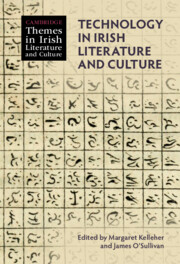
Technology in Irish Literature and Culture shows how such significant technologies—typewriters, gramophones, print, radio, television, computers—have influenced Irish literary practices and cultural production, while also examining how technology has been embraced as a theme in Irish writing. Once a largely rural and agrarian society, contemporary Ireland has embraced the communicative, performative and consumption habits of a culture utterly reliant on the digital. This text plumbs the origins of the present moment, examining the longer history of literature's interactions with the technological and exploring how the transformative capacity of modern technology has been mediated throughout a diverse national canon. Comprising essays from some of the major figures of Irish literary and cultural studies, this volume offers a wide-ranging, comprehensive account of how Irish literature and culture have interacted with technology.
At the beginning of 1845 members of parliament and newspaper leader writers celebrated the inventiveness and prosperity of Britain while also acknowledging that the ‘Condition of England Question’ cast a long shadow: ‘The people deteriorate.’ Leading writers such as Carlyle and Disraeli explored this question in their writings, often drawing upon documentary evidence in open letters to the newspapers or pamphlets framed as ‘letters’. Private letters also proliferated. Although leading figures in public life had secretaries who either wrote their employers’ letters to dictation or transcribed them in letter or copy books, senior professionals such as judges, generals, bishops and ministers of state, including prime ministers, generally wrote several letters each day, using a dip pen and inkstand while resting their paper – often a quarto sheet folded once – on a desk or table, or on a portable writing ‘slope’ or ‘desk’ when travelling. The letters of Augustus Welby Pugin and Edward FitzGerald provide examples of correspondence binding together communities of friends and colleagues through the universal penny post.