Refine search
Actions for selected content:
63 results
A new asymptotic regime for the KdV equation with Wigner–von Neumann type initial data
- Part of
-
- Journal:
- Journal of Nonlinear Waves / Volume 1 / 2025
- Published online by Cambridge University Press:
- 20 November 2025, e20
-
- Article
-
- You have access
- Open access
- HTML
- Export citation
Numerical range of Toeplitz and weighted composition operators on weighted Bergman spaces
- Part of
-
- Journal:
- Canadian Mathematical Bulletin , First View
- Published online by Cambridge University Press:
- 21 October 2025, pp. 1-19
-
- Article
-
- You have access
- Open access
- HTML
- Export citation
A characterization of numerical ranges for antilinear operators
- Part of
-
- Journal:
- Canadian Mathematical Bulletin , First View
- Published online by Cambridge University Press:
- 14 April 2025, pp. 1-16
-
- Article
- Export citation
-
This article aims to study the problem of determining the numerical ranges of antilinear operators on complex Hilbert spaces. First, we provide a concrete description of the numerical range $W(R)$ for every bounded antilinear operator R on a complex Hilbert space $\mathcal {H}$, solving the preceding problem. Second, given a bounded linear operator T on $\mathcal {H}$, we determine the possible value of the numerical radius $w(CT)$ of $CT$ when C ranges over the collection of all conjugations on $\mathcal {H}$.


A Cesàro-like operator from a class of analytic function spaces to analytic Besov spaces
- Part of
-
- Journal:
- Canadian Mathematical Bulletin / Volume 68 / Issue 4 / December 2025
- Published online by Cambridge University Press:
- 07 April 2025, pp. 1210-1222
- Print publication:
- December 2025
-
- Article
- Export citation
-
Let $\mu $ be a finite positive Borel measure on $[0,1)$ and $f(z)=\sum _{n=0}^{\infty }a_{n}z^{n} \in H(\mathbb {D})$. For $0<\alpha <\infty $, the generalized Cesàro-like operator $\mathcal {C}_{\mu ,\alpha }$ is defined by
  $$ \begin{align*}\mathcal {C}_{\mu,\alpha}(f)(z)=\sum^\infty_{n=0}\left(\mu_n\sum^n_{k=0}\frac{\Gamma(n-k+\alpha)}{\Gamma(\alpha)(n-k)!}a_k\right)z^n, \ z\in \mathbb{D}, \end{align*} $$
where, for $n\geq 0$, $\mu _n$ denotes the nth moment of the measure $\mu $, that is, $\mu _n=\int _{0}^{1} t^{n}d\mu (t)$.
For $s>1$, let X be a Banach subspace of $H(\mathbb {D})$ with $\Lambda ^{s}_{\frac {1}{s}}\subset X\subset \mathcal {B}$. In this article, for $1\leq p <\infty $, we characterize the measure $\mu $ for which $\mathcal {C}_{\mu ,\alpha }$ is bounded (resp. compact) from X into the analytic Besov space $B_{p}$.


GAUSSIAN HOLOMORPHIC SECTIONS ON NONCOMPACT COMPLEX MANIFOLDS
- Part of
-
- Journal:
- Journal of the Institute of Mathematics of Jussieu / Volume 24 / Issue 4 / July 2025
- Published online by Cambridge University Press:
- 12 March 2025, pp. 1197-1262
- Print publication:
- July 2025
-
- Article
-
- You have access
- Open access
- HTML
- Export citation
-
We provide two constructions of Gaussian random holomorphic sections of a Hermitian holomorphic line bundle $(L,h_{L})$ on a Hermitian complex manifold $(X,\Theta )$, that are particularly interesting in the case where the space of $\mathcal {L}^2$-holomorphic sections $H^{0}_{(2)}(X,L)$ is infinite dimensional. We first provide a general construction of Gaussian random holomorphic sections of L, which, if $H^{0}_{(2)}(X,L)$ is infinite dimensional, are almost never $\mathcal {L}^2$-integrable on X. The second construction combines the abstract Wiener space theory with the Berezin–Toeplitz quantization and yields a Gaussian ensemble of random $\mathcal {L}^2$-holomorphic sections. Furthermore, we study their random zeros in the context of semiclassical limits, including their distributions, large deviation estimates, local fluctuations and hole probabilities.


FINITE LINEAR COMBINATIONS OF MONOMIAL TOEPLITZ PRODUCTS ON THE BERGMAN SPACE
- Part of
-
- Journal:
- Journal of the Australian Mathematical Society / Volume 119 / Issue 1 / August 2025
- Published online by Cambridge University Press:
- 10 March 2025, pp. 39-60
- Print publication:
- August 2025
-
- Article
- Export citation
On spectra of Hankel operators on the polydisc
- Part of
-
- Journal:
- Canadian Mathematical Bulletin / Volume 68 / Issue 1 / March 2025
- Published online by Cambridge University Press:
- 09 January 2025, pp. 301-317
- Print publication:
- March 2025
-
- Article
-
- You have access
- Open access
- HTML
- Export citation
Embedding of some classes of operators into strongly continuous semigroups
- Part of
-
- Journal:
- Canadian Mathematical Bulletin / Volume 68 / Issue 1 / March 2025
- Published online by Cambridge University Press:
- 08 January 2025, pp. 219-231
- Print publication:
- March 2025
-
- Article
- Export citation
-
In this paper, we study the embedding problem of an operator into a strongly continous semigroup. We obtain characterizations for some classes of operators, namely composition operators and analytic Toeplitz operators on the Hardy space $H^2$. In particular, we focus on the isometric ones using the necessary and sufficient condition observed by T. Eisner.

Hilbert type operators acting from the Bloch space into Bergman spaces
- Part of
-
- Journal:
- Proceedings of the Edinburgh Mathematical Society / Volume 68 / Issue 1 / February 2025
- Published online by Cambridge University Press:
- 26 November 2024, pp. 205-225
-
- Article
- Export citation
-
Let µ be a finite positive Borelmeasure on $[0,1)$ and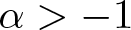 $\alpha \gt -1$. The generalized integral operator of Hilbert type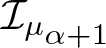 $\mathcal {I}_{\mu_{\alpha+1}}$ is defined on the spaces $H(\mathbb{D})$ of analytic functions in the unit disc $\mathbb{D}$ as follows:
 \begin{equation*}\mathcal {I}_{\mu_{\alpha+1}}(f)(z)=\int_{0}^{1} \frac{f(t)}{(1-tz)^{\alpha+1}}d\mu(t),\ \ f\in H(\mathbb{D}),\ \ z\in \mathbb{D} .\end{equation*}
In this paper, we give a unified characterization of the measures µ for which the operator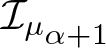 $\mathcal {I}_{\mu_{\alpha+1}}$ is bounded from the Bloch space to a Bergman space for all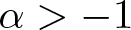 $\alpha \gt -1$. Additionally, we also investigate the action of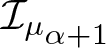 $\mathcal {I}_{\mu_{\alpha+1}}$ from the Bloch space to the Hardy spaces and the Besov spaces.


Minimal isometric dilations and operator models for the polydisc
- Part of
-
- Journal:
- Proceedings of the Royal Society of Edinburgh. Section A: Mathematics , First View
- Published online by Cambridge University Press:
- 26 November 2024, pp. 1-40
-
- Article
- Export citation
-
For commuting contractions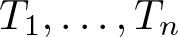 $T_1,\dots,T_n$ acting on a Hilbert space $\mathscr{H}$ with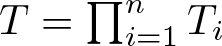 $T=\prod_{i=1}^n T_i$, we find a necessary and sufficient condition such that $(T_1,\dots,T_n)$ dilates to a commuting tuple of isometries $(V_1,\dots,V_n)$ on the minimal isometric dilation space of T with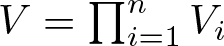 $V=\prod_{i=1}^nV_i$ being the minimal isometric dilation of T. This isometric dilation provides a commutant lifting of $(T_1, \dots, T_n)$ on the minimal isometric dilation space of T. We construct both Schäffer and Sz. Nagy–Foias-type isometric dilations for $(T_1,\dots,T_n)$ on the minimal dilation spaces of T. Also, a different dilation is constructed when the product T is a $C._0$ contraction, that is, ${T^*}^n \rightarrow 0$ as $n \rightarrow \infty$. As a consequence of these dilation theorems, we obtain different functional models for $(T_1,\dots,T_n)$ in terms of multiplication operators on vectorial Hardy spaces. One notable fact about our models is that the multipliers are all analytic functions in one variable. The dilation when T is a $C._0$ contraction leads to a conditional factorization of T. Several examples have been constructed.


A note on the space of all Toeplitz operators
- Part of
-
- Journal:
- Canadian Mathematical Bulletin / Volume 67 / Issue 4 / December 2024
- Published online by Cambridge University Press:
- 12 November 2024, pp. 1123-1140
- Print publication:
- December 2024
-
- Article
- Export citation $L^p$-BOUNDEDNESS OF THE BEREZIN TRANSFORM ON GENERALISED HARTOGS TRIANGLES
- Part of
-
- Journal:
- Bulletin of the Australian Mathematical Society / Volume 111 / Issue 3 / June 2025
- Published online by Cambridge University Press:
- 04 October 2024, pp. 541-551
- Print publication:
- June 2025
-
- Article
- Export citation
-
We study the $L^p$-boundedness of the Berezin transform on the generalised Hartogs triangles which are defined by
  $$ \begin{align*}H_k:=\{(z, w)\in\mathbb C^n\times\mathbb C: |z_1|^2+\cdots+|z_n|^2<|w|^{2k}<1\},\end{align*} $$
where $z=(z_1, \ldots , z_n)$ and $k\in \mathbb N$. We prove that the Berezin transform is bounded on $L^p(H_k)$ if and only if $p>nk+1$.


Commutants and complex symmetry of finite Blaschke product multiplication operator in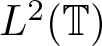 $L^2(\mathbb{T})$
- Part of
-
- Journal:
- Proceedings of the Edinburgh Mathematical Society / Volume 67 / Issue 1 / February 2024
- Published online by Cambridge University Press:
- 11 January 2024, pp. 261-286
-
- Article
- Export citation
-
Consider the multiplication operator MB in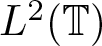 $L^2(\mathbb{T})$, where the symbol B is a finite Blaschke product. In this article, we characterize the commutant of MB in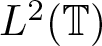 $L^2(\mathbb{T})$. As an application of this characterization result, we explicitly determine the class of conjugations commuting with $M_{z^2}$ or making $M_{z^2}$ complex symmetric by introducing a new class of conjugations in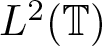 $L^2(\mathbb{T})$. Moreover, we analyse their properties while keeping the whole Hardy space, model space and Beurling-type subspaces invariant. Furthermore, we extended our study concerning conjugations in the case of finite Blaschke products.


Sub-Bergman Hilbert spaces on the unit disk III
- Part of
-
- Journal:
- Canadian Journal of Mathematics / Volume 76 / Issue 5 / October 2024
- Published online by Cambridge University Press:
- 22 August 2023, pp. 1520-1537
- Print publication:
- October 2024
-
- Article
- Export citation
-
For a bounded analytic function $\varphi $ on the unit disk $\mathbb {D}$ with $\|\varphi \|_\infty \le 1$, we consider the defect operators $D_\varphi $ and $D_{\overline \varphi }$ of the Toeplitz operators $T_{\overline \varphi }$ and $T_\varphi $, respectively, on the weighted Bergman space $A^2_\alpha $. The ranges of $D_\varphi $ and $D_{\overline \varphi }$, written as $H(\varphi )$ and $H(\overline \varphi )$ and equipped with appropriate inner products, are called sub-Bergman spaces.
We prove the following three results in the paper: for $-1<\alpha \le 0$, the space $H(\varphi )$ has a complete Nevanlinna–Pick kernel if and only if $\varphi $ is a Möbius map; for $\alpha>-1$, we have $H(\varphi )=H(\overline \varphi )=A^2_{\alpha -1}$ if and only if the defect operators $D_\varphi $ and $D_{\overline \varphi }$ are compact; and for $\alpha>-1$, we have $D^2_\varphi (A^2_\alpha )= D^2_{\overline \varphi }(A^2_\alpha )=A^2_{\alpha -2}$ if and only if $\varphi $ is a finite Blaschke product. In some sense, our restrictions on $\alpha $ here are best possible.


Toeplitz determinants with a one-cut regular potential and Fisher–Hartwig singularities I. Equilibrium measure supported on the unit circle
- Part of
-
- Journal:
- Proceedings of the Royal Society of Edinburgh. Section A: Mathematics / Volume 154 / Issue 5 / October 2024
- Published online by Cambridge University Press:
- 15 August 2023, pp. 1431-1472
- Print publication:
- October 2024
-
- Article
-
- You have access
- Open access
- HTML
- Export citation
-
We consider Toeplitz determinants whose symbol has: (i) a one-cut regular potential $V$
 , (ii) Fisher–Hartwig singularities and (iii) a smooth function in the background. The potential $V$
 is associated with an equilibrium measure that is assumed to be supported on the whole unit circle. For constant potentials $V$
 , the equilibrium measure is the uniform measure on the unit circle and our formulas reduce to well-known results for Toeplitz determinants with Fisher–Hartwig singularities. For non-constant $V$
 , our results appear to be new even in the case of no Fisher–Hartwig singularities. As applications of our results, we derive various statistical properties of a determinantal point process which generalizes the circular unitary ensemble.


Composition operators on weighted analytic spaces
- Part of
-
- Journal:
- Canadian Mathematical Bulletin / Volume 66 / Issue 4 / December 2023
- Published online by Cambridge University Press:
- 17 April 2023, pp. 1213-1230
- Print publication:
- December 2023
-
- Article
- Export citation
-
We characterize the membership in the Schatten ideals $\mathcal {S}_p$, $0<p<\infty $, of composition operators acting on weighted Dirichlet spaces. Our results concern a large class of weights. In particular, we examine the case of perturbed superharmonic weights. Characterization of composition operators acting on weighted Bergman spaces to be in $\mathcal {S}_p$ is also given.


General Toeplitz kernels and $(X,Y)$-invariance
- Part of
-
- Journal:
- Canadian Journal of Mathematics / Volume 76 / Issue 2 / April 2024
- Published online by Cambridge University Press:
- 27 March 2023, pp. 680-706
- Print publication:
- April 2024
-
- Article
- Export citation
-
Motivated by the near invariance of model spaces for the backward shift, we introduce a general notion of $(X,Y)$-invariant operators. The relations between this class of operators and the near invariance properties of their kernels are studied. Those lead to orthogonal decompositions for the kernels, which generalize well-known orthogonal decompositions of model spaces. Necessary and sufficient conditions for those kernels to be nearly X-invariant are established. This general approach can be applied to a wide class of operators defined as compressions of multiplication operators, in particular to Toeplitz operators and truncated Toeplitz operators, to study the invariance properties of their kernels (general Toeplitz kernels).


Weighted composition operators on weighted Bergman and Dirichlet spaces
- Part of
-
- Journal:
- Canadian Mathematical Bulletin / Volume 66 / Issue 1 / March 2023
- Published online by Cambridge University Press:
- 28 April 2022, pp. 286-302
- Print publication:
- March 2023
-
- Article
- Export citation
Zero products of Toeplitz operators on Reinhardt domains
- Part of
-
- Journal:
- Canadian Mathematical Bulletin / Volume 65 / Issue 1 / March 2022
- Published online by Cambridge University Press:
- 08 April 2021, pp. 170-179
- Print publication:
- March 2022
-
- Article
- Export citation
-
Let $\Omega $ be a bounded Reinhardt domain in $\mathbb {C}^n$ and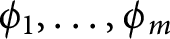 $\phi _1,\ldots ,\phi _m$ be finite sums of bounded quasi-homogeneous functions. We show that if the product of Toeplitz operators $T_{\phi _m}\cdots T_{\phi _1}=0$ on the Bergman space on $\Omega $, then $\phi _j=0$ for some j.


Characterizations of Hankel operators in the essential commutant of quasicontinuous Toeplitz operators
- Part of
-
- Journal:
- Canadian Mathematical Bulletin / Volume 65 / Issue 1 / March 2022
- Published online by Cambridge University Press:
- 09 February 2021, pp. 44-51
- Print publication:
- March 2022
-
- Article
- Export citation
