Refine search
Actions for selected content:
48 results
Physical measures for mostly sectionally expanding flows
- Part of
-
- Journal:
- Proceedings of the Edinburgh Mathematical Society , First View
- Published online by Cambridge University Press:
- 12 November 2025, pp. 1-60
-
- Article
- Export citation
-
We prove that a partially hyperbolic attracting set for a $C^2$ vector field, having slow recurrence to equilibria, supports an ergodic physical/SRB measure if, and only if, the trapping region admits non-uniform sectional expansion on a positive Lebesgue measure subset. Moreover, in this case, the attracting set supports at most finitely many ergodic physical/SRB measures, which are also Gibbs states along the central-unstable direction. This extends to continuous time systems a similar well-known result obtained for diffeomorphisms, encompassing the presence of equilibria accumulated by regular orbits within the attracting set. In codimension two the same result holds, assuming only the trajectories on the trapping region admit a sequence of times with asymptotical sectional expansion, on a positive volume subset. We present several examples of application, including the existence of physical measures for asymptotically sectional hyperbolic attracting sets, and obtain physical measures in an alternative unified way for many known examples: Lorenz-like and Rovella attractors, and sectional-hyperbolic attracting sets (including the multidimensional Lorenz attractor).

Some hyperbolicity revisited and robust transitivity
- Part of
-
- Journal:
- Ergodic Theory and Dynamical Systems / Volume 45 / Issue 12 / December 2025
- Published online by Cambridge University Press:
- 23 June 2025, pp. 3800-3831
- Print publication:
- December 2025
-
- Article
- Export citation
-
In this article, we revisit the notion of some hyperbolicity introduced by Pujals and Sambarino [A sufficient condition for robustly minimal foliations. Ergod. Th. & Dynam. Sys. 26(1) (2006), 281–289]. We present a more general definition that, in particular, can be applied to the symplectic context (something that was not possible for the previous one). As an application, we construct $C^1$ robustly transitive derived from Anosov diffeomorphisms with mixed behaviour on centre leaves.

Minimal strong foliations in skew-products of iterated function systems
- Part of
-
- Journal:
- Ergodic Theory and Dynamical Systems / Volume 45 / Issue 8 / August 2025
- Published online by Cambridge University Press:
- 03 December 2024, pp. 2273-2313
- Print publication:
- August 2025
-
- Article
- Export citation
Rigidity of Lyapunov exponents for derived from Anosov diffeomorphisms
- Part of
-
- Journal:
- Ergodic Theory and Dynamical Systems / Volume 45 / Issue 5 / May 2025
- Published online by Cambridge University Press:
- 14 October 2024, pp. 1444-1460
- Print publication:
- May 2025
-
- Article
- Export citation
-
For a class of volume-preserving partially hyperbolic diffeomorphisms (or non-uniformly Anosov)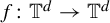 $f\colon {\mathbb {T}}^d\rightarrow {\mathbb {T}}^d$ homotopic to linear Anosov automorphism, we show that the sum of the positive (negative) Lyapunov exponents of f is bounded above (respectively below) by the sum of the positive (respectively negative) Lyapunov exponents of its linearization. We show this for some classes of derived from Anosov (DA) and non-uniformly hyperbolic systems with dominated splitting, in particular for examples described by Bonatti and Viana [SRB measures for partially hyperbolic systems whose central direction is mostly contracting. Israel J. Math. 115(1) (2000), 157–193]. The results in this paper address a flexibility program by Bochi, Katok and Rodriguez Hertz [Flexibility of Lyapunov exponents. Ergod. Th. & Dynam. Sys. 42(2) (2022), 554–591].
Shub’s example revisited
- Part of
-
- Journal:
- Ergodic Theory and Dynamical Systems / Volume 45 / Issue 3 / March 2025
- Published online by Cambridge University Press:
- 23 September 2024, pp. 894-914
- Print publication:
- March 2025
-
- Article
- Export citation
-
For a class of robustly transitive diffeomorphisms on ${\mathbb T}^4$ introduced by Shub [Topologically transitive diffeomorphisms of $T^4$. Proceedings of the Symposium on Differential Equations and Dynamical Systems (Lecture notes in Mathematics, 206). Ed. D. Chillingworth. Springer, Berlin, 1971, pp. 39–40], satisfying an additional bunching condition, we show that there exists a $C^2$ open and $C^r$ dense subset ${\mathcal U}^r$, $2\leq r\leq \infty $, such that any two hyperbolic points of $g\in {\mathcal U}^r$ with stable index $2$ are homoclinically related. As a consequence, every $g\in {\mathcal U}^r$ admits a unique homoclinic class associated to the hyperbolic periodic points with index $2$, and this homoclinic class coincides with the whole ambient manifold. Moreover, every $g\in {\mathcal U}^r$ admits at most one measure of maximal entropy, and every $g\in {\mathcal U}^{\infty }$ admits a unique measure of maximal entropy.


Partially hyperbolic endomorphisms with expanding linear part
- Part of
-
- Journal:
- Ergodic Theory and Dynamical Systems / Volume 45 / Issue 2 / February 2025
- Published online by Cambridge University Press:
- 28 May 2024, pp. 321-336
- Print publication:
- February 2025
-
- Article
- Export citation
On invariant holonomies between centers
- Part of
-
- Journal:
- Ergodic Theory and Dynamical Systems / Volume 45 / Issue 1 / January 2025
- Published online by Cambridge University Press:
- 08 May 2024, pp. 274-293
- Print publication:
- January 2025
-
- Article
- Export citation
-
We prove that for $C^{1+\theta }$, $\theta $-bunched, dynamically coherent partially hyperbolic diffeomorphisms, the stable and unstable holonomies between center leaves are $C^1$, and the derivative depends continuously on the points and on the map. Also for $C^{1+\theta }$, $\theta $-bunched partially hyperbolic diffeomorphisms, the derivative cocycle restricted to the center bundle has invariant continuous holonomies which depend continuously on the map. This generalizes previous results by Pugh, Shub, and Wilkinson; Burns and Wilkinson; Brown; Obata; Avila, Santamaria, and Viana; and Marin.


Smooth models for certain fibered partially hyperbolic systems
- Part of
-
- Journal:
- Ergodic Theory and Dynamical Systems / Volume 44 / Issue 8 / August 2024
- Published online by Cambridge University Press:
- 13 November 2023, pp. 2173-2198
- Print publication:
- August 2024
-
- Article
- Export citation
A mechanism for ejecting a horseshoe from a partially hyperbolic chain recurrence class
- Part of
-
- Journal:
- Ergodic Theory and Dynamical Systems / Volume 44 / Issue 8 / August 2024
- Published online by Cambridge University Press:
- 03 November 2023, pp. 2080-2142
- Print publication:
- August 2024
-
- Article
- Export citation
-
We give a $C^1$-perturbation technique for ejecting an a priori given finite set of periodic points preserving a given finite set of homo/heteroclinic intersections from a chain recurrence class of a periodic point. The technique is first stated under a simpler setting called a Markov iterated function system, a two-dimensional iterated function system in which the compositions are chosen in a Markovian way. Then we apply the result to the setting of three-dimensional partially hyperbolic diffeomorphisms.
 $C^r$-chain closing lemma for certain partially hyperbolic diffeomorphisms
- Part of
-
- Journal:
- Ergodic Theory and Dynamical Systems / Volume 44 / Issue 7 / July 2024
- Published online by Cambridge University Press:
- 11 October 2023, pp. 1923-1944
- Print publication:
- July 2024
-
- Article
-
- You have access
- HTML
- Export citation
-
For every $r\in \mathbb {N}_{\geq 2}\cup \{\infty \}$, we prove a $C^r$-orbit connecting lemma for dynamically coherent and plaque expansive partially hyperbolic diffeomorphisms with one-dimensional orientation preserving center bundle. To be precise, for such a diffeomorphism f, if a point y is chain attainable from x through pseudo-orbits, then for any neighborhood U of x and any neighborhood V of y, there exist true orbits from U to V by arbitrarily $C^r$-small perturbations. As a consequence, we prove that for $C^r$-generic diffeomorphisms in this class, periodic points are dense in the chain recurrent set, and chain transitivity implies transitivity.


EQUILIBRIUM STATES FOR CENTER ISOMETRIES
- Part of
-
- Journal:
- Journal of the Institute of Mathematics of Jussieu / Volume 23 / Issue 3 / May 2024
- Published online by Cambridge University Press:
- 02 June 2023, pp. 1295-1355
- Print publication:
- May 2024
-
- Article
- Export citation
On bifurcation of statistical properties of partially hyperbolic endomorphisms
- Part of
-
- Journal:
- Ergodic Theory and Dynamical Systems / Volume 44 / Issue 3 / March 2024
- Published online by Cambridge University Press:
- 18 April 2023, pp. 933-944
- Print publication:
- March 2024
-
- Article
- Export citation
-
We give an example of a path-wise connected open set of $C^{\infty }$ partially hyperbolic endomorphisms on the $2$-torus, on which the (unique) Sinai–Ruelle–Bowen (SRB) measure exists for each system and varies smoothly depending on the system, while the sign of its central Lyapunov exponent changes.


Thermodynamical u-formalism I: measures of maximal u-entropy for maps that factor over Anosov
- Part of
-
- Journal:
- Ergodic Theory and Dynamical Systems / Volume 44 / Issue 1 / January 2024
- Published online by Cambridge University Press:
- 27 February 2023, pp. 290-333
- Print publication:
- January 2024
-
- Article
- Export citation
Construction and applications of proximal maps for typical cocycles
- Part of
-
- Journal:
- Ergodic Theory and Dynamical Systems / Volume 44 / Issue 1 / January 2024
- Published online by Cambridge University Press:
- 10 February 2023, pp. 204-235
- Print publication:
- January 2024
-
- Article
- Export citation
Partially hyperbolic diffeomorphisms and Lagrangian contact structures
- Part of
-
- Journal:
- Ergodic Theory and Dynamical Systems / Volume 42 / Issue 8 / August 2022
- Published online by Cambridge University Press:
- 12 November 2021, pp. 2583-2629
- Print publication:
- August 2022
-
- Article
- Export citation
-
In this paper, we classify the three-dimensional partially hyperbolic diffeomorphisms whose stable, unstable, and central distributions $E^s$, $E^u$, and $E^c$ are smooth, such that $E^s\oplus E^u$ is a contact distribution, and whose non-wandering set equals the whole manifold. We prove that up to a finite quotient or a finite power, they are smoothly conjugated either to a time-map of an algebraic contact-Anosov flow, or to an affine partially hyperbolic automorphism of a nil- ${\mathrm {Heis}}{(3)}$-manifold. The rigid geometric structure induced by the invariant distributions plays a fundamental part in the proof.


The K-property for some unique equilibrium states in flows and homeomorphisms
- Part of
-
- Journal:
- Ergodic Theory and Dynamical Systems / Volume 42 / Issue 8 / August 2022
- Published online by Cambridge University Press:
- 12 November 2021, pp. 2509-2532
- Print publication:
- August 2022
-
- Article
- Export citation
-
We set out some general criteria to prove the K-property, refining the assumptions used in an earlier paper for the flow case, and introducing the analogous discrete-time result. We also introduce one-sided $\lambda $-decompositions, as well as multiple techniques for checking the pressure gap required to show the K-property. We apply our results to the family of Mañé diffeomorphisms and the Katok map. Our argument builds on the orbit decomposition theory of Climenhaga and Thompson.

Flexibility of Lyapunov exponents
- Part of
-
- Journal:
- Ergodic Theory and Dynamical Systems / Volume 42 / Issue 2 / February 2022
- Published online by Cambridge University Press:
- 18 October 2021, pp. 554-591
- Print publication:
- February 2022
-
- Article
-
- You have access
- Open access
- HTML
- Export citation
Smoothness of stable holonomies inside center-stable manifolds
- Part of
-
- Journal:
- Ergodic Theory and Dynamical Systems / Volume 42 / Issue 12 / December 2022
- Published online by Cambridge University Press:
- 18 October 2021, pp. 3593-3618
- Print publication:
- December 2022
-
- Article
- Export citation
-
Under a suitable bunching condition, we establish that stable holonomies inside center-stable manifolds for $C^{1+\beta }$ diffeomorphisms are uniformly bi-Lipschitz and, in fact, $C^{1+\mathrm {H}\ddot{\rm o}\mathrm {lder}}$. This verifies the ergodicity of suitably center-bunched, essentially accessible, partially hyperbolic $C^{1+\beta }$ diffeomorphisms and verifies that the Ledrappier–Young entropy formula holds for $C^{1+\beta }$ diffeomorphisms of compact manifolds.


Fast growth of the number of periodic points arising from heterodimensional connections
- Part of
-
- Journal:
- Compositio Mathematica / Volume 157 / Issue 9 / September 2021
- Published online by Cambridge University Press:
- 02 August 2021, pp. 1899-1963
- Print publication:
- September 2021
-
- Article
- Export citation
-
We consider $C^{r}$-diffeomorphisms ( $1 \leq r \leq +\infty$) of a compact smooth manifold having two pairs of hyperbolic periodic points of different indices which admit transverse heteroclinic points and are connected through a blender. We prove that, by giving an arbitrarily $C^{r}$-small perturbation near the periodic points, we can produce a periodic point for which the first return map in the center direction coincides with the identity map up to order $r$, provided the transverse heteroclinic points satisfy certain natural conditions involving higher derivatives of their transition maps in the center direction. As a consequence, we prove that $C^{r}$-generic diffeomorphisms in a small neighborhood of the diffeomorphism under consideration exhibit super-exponential growth of number of periodic points. We also give examples which show the necessity of the conditions we assume.


Centralizers of derived-from-Anosov systems on ${\mathbb T}^3$: rigidity versus triviality
- Part of
-
- Journal:
- Ergodic Theory and Dynamical Systems / Volume 42 / Issue 9 / September 2022
- Published online by Cambridge University Press:
- 02 August 2021, pp. 2841-2865
- Print publication:
- September 2022
-
- Article
- Export citation
-
In this paper, we study the centralizer of a partially hyperbolic diffeomorphism on ${\mathbb T}^3$ which is homotopic to an Anosov automorphism, and we show that either its centralizer is virtually trivial or such diffeomorphism is smoothly conjugate to its linear part.


