Refine search
Actions for selected content:
139 results
Liouville-type theorems for the quasilinear elliptic equation and inequality with logarithmic nonlinearity
- Part of
-
- Journal:
- Proceedings of the Royal Society of Edinburgh. Section A: Mathematics , First View
- Published online by Cambridge University Press:
- 26 November 2025, pp. 1-15
-
- Article
- Export citation
-
This paper is concerned with Liouville-type theorems of positive weak solutions to elliptic $m$-Laplace equation and inequality with the logarithmic nonlinearity $u^q(\log u)^p (q,p\geqslant0)$. Using a direct Bernstein method we obtain a first range of values of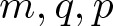 $m,q,p$ in which all positive weak solutions of equation are constants, this holds in the following cases: (i) $1 \lt m \lt 2$, $m-1 \lt q \lt 1$, $0 \lt p \lt q$; (ii)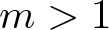 $m \gt 1$, $q\geqslant1$,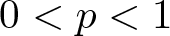 $0 \lt p \lt 1$. When $q=1$, the positive weak solutions are required to be bounded. Based on transformation of inequality and the utilization of suitable cut-off functions, we establish a Liouville-type theorem for positive weak solutions of inequality; this result also remains valid on complete noncompact Riemannian manifold.


Uniqueness of solution for logarithm Choquard equation
- Part of
-
- Journal:
- Proceedings of the Royal Society of Edinburgh. Section A: Mathematics , First View
- Published online by Cambridge University Press:
- 25 November 2025, pp. 1-29
-
- Article
- Export citation
-
In this paper, we prove the uniqueness of positive solutions for the following Choquard equation involving logarithm convolution
 \begin{equation*}-\Delta u(x)=e^{[\int_{\mathbb R^N} \ln{\frac {|y|}{|x-y|}}u(y)^{\frac{2N}{N-2}}\,dy]}u(x)^{\frac{N}{N-2}}\quad {\rm in}\ \mathbb{R}^N\end{equation*}
where $N\geq 3$. Under the assumptions that
 \begin{equation*}{\int_{\mathbb R^N}} e^{\frac{N+2}2[\int_{\mathbb R^N} \ln{\frac {|y|}{|x-y|}}u(y)^{\frac{2N}{N-2}}\,dy]}\,dx \lt \infty,\ {\int_{\mathbb R^N}} u^{\frac{N+2}{N-2}}\,dx \lt \infty \quad{\rm and }\quad {\int_{\mathbb R^N}} u^{\frac{2N}{N-2}}\,dx \lt \infty,\end{equation*}
we show that any positive solution of the above equation must have the following form
 \begin{equation*}u(x)=(\frac{C\varepsilon}{\varepsilon^2+|x-x_0|^2})^{\frac{N-2}2},\end{equation*}
where $C$ is a positive constant, $\varepsilon \gt 0$ and $x_0\in \mathbb R^N$ are two parameters.


Existence and uniqueness of a positive solution to a rapidly growing problem via sub-supersolution method
- Part of
-
- Journal:
- Proceedings of the Edinburgh Mathematical Society , First View
- Published online by Cambridge University Press:
- 13 November 2025, pp. 1-15
-
- Article
-
- You have access
- Open access
- HTML
- Export citation
-
In this paper, we study the validity of the sub-supersolution method for the equation
where \begin{equation*}\begin{cases}-\mbox{div}(K(x)\nabla u)=K(x)|x|^{\alpha-2}f(x,u) \,\mbox{in } {\mathbb{R}}^{N},\\u \gt 0 \,\mbox{in } {\mathbb{R}}^{N},\end{cases}\end{equation*} $N \geq 3$, $K(x)=exp(|x|^{\alpha}/4)$, $\alpha\geq 2$ and $f$ is a continuous function, with hypotheses that will be given later. We apply the method to cases where $f$ is singular, where $f$ behaves like a logistic function, showing in both cases the existence and uniqueness of a positive solution.


Nonlocal carrier’s double phase problem
- Part of
-
- Journal:
- Proceedings of the Royal Society of Edinburgh. Section A: Mathematics , First View
- Published online by Cambridge University Press:
- 13 November 2025, pp. 1-24
-
- Article
- Export citation
Non-degeneracy and local uniqueness of bubbling solutions for fractional almost critical problems
- Part of
-
- Journal:
- Proceedings of the Royal Society of Edinburgh. Section A: Mathematics , First View
- Published online by Cambridge University Press:
- 03 November 2025, pp. 1-45
-
- Article
- Export citation
-
This paper is concerned with the following problem involving almost critical growth
 \begin{equation*}\begin{cases}(-\Delta) ^su=|u|^{2_{s}^{*}-2-\varepsilon}u,& \text{in } \varOmega ,\\u=0,& \text{on } \Sigma ,\\\end{cases}\end{equation*}
where $2_{s}^{*}=\frac{2N}{N-2s}$, $s\in(\frac{1}{2},1)$, $N \gt 2s$, Ω is a bounded domain in $\mathbb{R}^N$, ɛ is a small parameter, and the boundary Σ is given in different ways according to the different definitions of the fractional Laplacian operator $(-\Delta)^{s}$. The operator $(-\Delta)^{s}$ is defined in two types: the spectral fractional Laplacian and the restricted fractional Laplacian. For the spectral case, Σ stands for $\partial \Omega$; for the restricted case, Σ is $\mathbb{R}^{N}\setminus \Omega$. Firstly, we provide a positive confirmation of the fractional Brezis–Peletier conjecture, that is, the above almost critical problem has a single bubbling solution concentrating around the non-degenerate critical point of the Robin function. Furthermore, the non-degeneracy andlocal uniqueness of this bubbling solution are established.


Concentration behavior of normalized ground states for mass critical Kirchhoff equations in bounded domains
- Part of
-
- Journal:
- Proceedings of the Royal Society of Edinburgh. Section A: Mathematics , First View
- Published online by Cambridge University Press:
- 03 November 2025, pp. 1-44
-
- Article
- Export citation
-
In present paper, we study the limit behavior of normalized ground states for the following mass critical Kirchhoff equation
where \begin{align*}\left\{\begin{array}{ll}-(a+b\int_{\Omega}|\nabla u|^2\mathrm{d}x)\Delta u+V(x)u=\mu u+\beta^*|u|^{\frac{8}{3}}u &\text{in}\ {\Omega}, \\[0.1cm]u=0&\text{on}\ {\partial\Omega}, \\[0.1cm]\int_{\Omega}|u|^2\mathrm{d}x=1, \\[0.1cm]\end{array}\right.\end{align*} $a\geq 0$, b > 0, the function V(x) is a trapping potential in a bounded domain $\Omega\subset\mathbb R^3$, $\beta^*:=\frac{b}{2}|Q|_2^{\frac{8}{3}}$ and Q is the unique positive radially symmetric solution of equation $-2\Delta u+\frac{1}{3}u-|u|^{\frac{8}{3}}u=0$ in $\mathbb R^3.$ We consider the existence of constraint minimizers for the associated energy functional involving the parameter a. The minimizer corresponds to the normalized ground state of above problem, and it exists if and only if a > 0. Moreover, when V(x) attains its flattest global minimum at an inner point or only at the boundary of Ω, we analyze the fine limit profiles of the minimizers as $a\searrow 0$, including mass concentration at an inner point or near the boundary of Ω. In particular, we further establish the local uniqueness of the minimizer if it is concentrated at a unique inner point.


Normalized multi-bump solutions of nonlinear Hartree equation with steep potential well
- Part of
-
- Journal:
- Proceedings of the Royal Society of Edinburgh. Section A: Mathematics , First View
- Published online by Cambridge University Press:
- 20 October 2025, pp. 1-37
-
- Article
- Export citation
-
In this paper, we study the existence of solutions to the following Hartree equation
 \begin{align*}\begin{cases}-\Delta u+\lambda V(x) u+\mu u=\left(\int_{\mathbb{R}^N}\frac{|u|^p}{|x-y|^{N-\alpha}}\right)|u|^{p-2}u,\ \text{in}\ \mathbb{R}^N,\\\int_{\mathbb{R}^N}|u|^2=\omega,\end{cases}\end{align*}
Where $N\geq 3$, $\omega,\lambda \gt 0$, $p\in \left(\frac{N+\alpha}{N}, \frac{N+\alpha}{N-2}\right)\setminus\left\{\frac{N+\alpha+2}{N}\right\}$ and µ will appear as a Lagrange multiplier. We assume that $0\leq V\in L^{\infty}_{loc}(\mathbb{R}^N)$ has a bottom $int V^{-1}(0)$ composed of $\ell_0$ $(\ell_{0}\geq1)$ connected components $\{\Omega_i\}_{i=1}^{\ell_0}$, where $int V^{-1}(0)$ is the interior of the zero set $V^{-1}(0)=\{x\in\mathbb{R}^N| V(x)=0\}$ of V. It is worth pointing out that the penalization technique is no longer applicable to the local sublinear case $p\in \left(\frac{N+\alpha}{N},2\right)$. Therefore, we develop a new variational method in which the two deformation flows are established that reflect the properties of the potential. Moreover, we find a critical point without introducing a penalization term and give the existence result for $p\in \left(\frac{N+\alpha}{N}, \frac{N+\alpha}{N-2}\right)\setminus\left\{\frac{N+\alpha+2}{N}\right\}$. When ω is fixed and satisfies $\omega^{\frac{-(p-1)}{-Np+N+\alpha+2}}$ sufficiently small, we construct a $\ell$-bump $(1\leq\ell\leq \ell_{0})$ positive normalization solution, which concentrates at $\ell$ prescribed components $\{\Omega_i\}^{\ell}_{i=1}$ for large λ. We also consider the asymptotic profile of the solutions as $\lambda\rightarrow\infty$ and $\omega^{\frac{-(p-1)}{-Np+N+\alpha+2}}\rightarrow 0$.


A k-Hessian equation with a power nonlinearity source and self-similarity
- Part of
-
- Journal:
- Proceedings of the Royal Society of Edinburgh. Section A: Mathematics , First View
- Published online by Cambridge University Press:
- 17 October 2025, pp. 1-25
-
- Article
- Export citation
-
We study existence and uniqueness of spherically symmetric solutions of
 \begin{equation*}S_k(D^2v)+\beta \xi\cdot\nabla v+\alpha v+\left\vert v\right\vert^{q-1}v=0\;\; \mbox{in}\;\; \mathbb{R}^n,\end{equation*}
where $\alpha,\beta$ are real parameters, $n \gt 2,\, q \gt k\geqslant 1$ and $S_k(D^2v)$ stands for the k-Hessian operator of v. Our results are based mainly on the analysis of an associated dynamical system and energy methods. We derive some properties of the solutions of the above equation for different ranges of the parameters α and β. In particular, we describe with precision its asymptotic behaviour at infinity. Further, according to the position of q with respect to the first critical exponent $\frac{(n+2)k}{n}$ and the Tso critical exponent $\frac{(n+2)k}{n-2k}$ we study the existence of three classes of solutions: crossing, slow decay or fast decay solutions. In particular, if k > 1 all the fast decay solutions have a compact support in $\mathbb{R}^n$. The results also apply to construct self-similar solutions of type I to a related nonlinear evolution equation. These are self-similar functions of the form $u(t,x)=t^{-\alpha}v(xt^{-\beta})$ with suitable α and β.


Smooth solutions to the Christoffel–Minkowski problem in hyperbolic space
- Part of
-
- Journal:
- Canadian Journal of Mathematics , First View
- Published online by Cambridge University Press:
- 15 September 2025, pp. 1-29
-
- Article
- Export citation
Optimal boundary regularity of proper harmonic maps between asymptotically hyperbolic spaces
- Part of
-
- Journal:
- Canadian Journal of Mathematics , First View
- Published online by Cambridge University Press:
- 11 September 2025, pp. 1-38
-
- Article
- Export citation
-
This article studies the optimal boundary regularity of harmonic maps between a class of asymptotically hyperbolic spaces. To be precise, given any smooth boundary map with nowhere vanishing energy density, this article provides an asymptotic expansion formula for harmonic maps under the assumption of $C^1$ up to the boundary.

Hardy-type inequalities for the drifting p-Laplace operator and applications
- Part of
-
- Journal:
- Proceedings of the Royal Society of Edinburgh. Section A: Mathematics , First View
- Published online by Cambridge University Press:
- 06 August 2025, pp. 1-33
-
- Article
-
- You have access
- Open access
- HTML
- Export citation
-
We consider the drifting p-Laplace operator
 \begin{equation*}\Delta_{p,v}u=e^{-v} \text{div}\,(e^v |\nabla u|^{p-2}\nabla u)\end{equation*}
and discuss generalized weighted Hardy-type inequalities associated with the measure $d\mu=e^{v(x)}dx$. As an application, we obtain several Liouville-type results for positive solutions of the non-linear elliptic problem with singular lower order term
 \begin{equation*}-\Delta_{p,v} u\ge c(x) u^{p-1}+B \frac{|\nabla u|^p}{u} \quad \text{in}\ \Omega,\end{equation*}
where Ω is a bounded or an unbounded exterior domain in ${\mathbb{R}}^N$, $N \gt p \gt 1$, $B+p-1 \gt 0$, as well as of the non-autonomous quasilinear elliptic problem
 \begin{equation*}-\Delta_{p,v} u+b(x)|\nabla u|^{p-1} \ge c(x) u^{p-1}\quad \text{in}\ \Omega,\end{equation*}
with general weights $b\ge0$ and c > 0. Liouville-type results are also discussed for a class of higher order differential equations.


The moving plane method and the uniqueness of high-order elliptic equation with GJMS operator
- Part of
-
- Journal:
- Proceedings of the Royal Society of Edinburgh. Section A: Mathematics , First View
- Published online by Cambridge University Press:
- 10 July 2025, pp. 1-45
-
- Article
- Export citation
-
In this paper, we study the following high-order elliptic equation involving the GJMS operator:
 \begin{align*}\alpha P_{\mathbb{S}^n}v_{\alpha}+2Q_{g_{\mathbb{S}^n}}=2Q_{g_{\mathbb{S}^n}}e^{nv_{\alpha}}.\end{align*}
We establish that if α > 1 and $n\geq3$ or if $\alpha\in (1-\epsilon_0, 1)$ with $n=2m\geq4$, then $v_{\alpha}\equiv0$. As an application, we present a new proof of the classical Beckner inequality.

The Dirichlet problem of generalized special Lagrangian type equations and curvature version
- Part of
-
- Journal:
- Canadian Journal of Mathematics , First View
- Published online by Cambridge University Press:
- 04 April 2025, pp. 1-27
-
- Article
- Export citation
-
This article focuses on two kinds of generalized special Lagrangian type equations. We investigate the Dirichlet problem for these equations with supercritical phase and critical phase in $\mathbb {R}^n$, deriving the a priori estimates and establishing the existence under the assumption of a subsolution. Furthermore, we also consider the corresponding special Lagrangian curvature type equations with supercritical phase and critical phase.

Numerical solution of a PDE arising from prediction with expert advice
- Part of
-
- Journal:
- European Journal of Applied Mathematics , First View
- Published online by Cambridge University Press:
- 02 April 2025, pp. 1-27
-
- Article
-
- You have access
- Open access
- HTML
- Export citation
-
This work investigates the online machine learning problem of prediction with expert advice in an adversarial setting through numerical analysis of, and experiments with, a related partial differential equation. The problem is a repeated two-person game involving decision-making at each step informed by $n$ experts in an adversarial environment. The continuum limit of this game over a large number of steps is a degenerate elliptic equation whose solution encodes the optimal strategies for both players. We develop numerical methods for approximating the solution of this equation in relatively high dimensions ( $n\leq 10$) by exploiting symmetries in the equation and the solution to drastically reduce the size of the computational domain. Based on our numerical results we make a number of conjectures about the optimality of various adversarial strategies, in particular about the non-optimality of the COMB strategy.


Solutions with prescribed mass for L2-supercritical NLS equations under Neumann boundary conditions
- Part of
-
- Journal:
- Proceedings of the Royal Society of Edinburgh. Section A: Mathematics , First View
- Published online by Cambridge University Press:
- 02 April 2025, pp. 1-34
-
- Article
-
- You have access
- Open access
- HTML
- Export citation
-
In this article, we investigate the following non-linear Schrödinger (NLS) equation with Neumann boundary conditions:
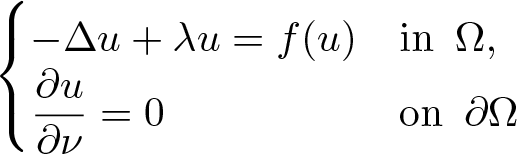 \begin{equation*}\begin{cases}-\Delta u+ \lambda u= f(u) & {\mathrm{in}} \,~ \Omega,\\\displaystyle\frac{\partial u}{\partial \nu}=0 \, &{\mathrm{on}}\,~\partial \Omega\end{cases}\end{equation*}
coupled with a constraint condition:
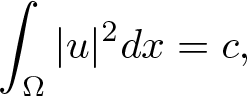 \begin{equation*}\int_{\Omega}|u|^2 dx=c,\end{equation*}
where $\Omega\subset \mathbb{R}^N(N\ge3)$ denotes a smooth bounded domain, ν represents the unit outer normal vector to $\partial \Omega$, c is a positive constant, and λ acts as a Lagrange multiplier. When the non-linearity f exhibits a general mass supercritical growth at infinity, we establish the existence of normalized solutions, which are not necessarily positive solutions and can be characterized as mountain pass type critical points of the associated constraint functional. Our approach provides a uniform treatment of various non-linearities, including cases such as $f(u)=|u|^{p-2}u$, $|u|^{q-2}u+ |u|^{p-2}u$, and $-|u|^{q-2}u+|u|^{p-2}u$, where $2 \lt q \lt 2+\frac{4}{N} \lt p \lt 2^*$. The result is obtained through a combination of a minimax principle with Morse index information for constrained functionals and a novel blow-up analysis for the NLS equation under Neumann boundary conditions.

On a perturbed critical semilinear equation with singularity
- Part of
-
- Journal:
- Proceedings of the Royal Society of Edinburgh. Section A: Mathematics , First View
- Published online by Cambridge University Press:
- 27 February 2025, pp. 1-35
-
- Article
- Export citation
-
In this article, we investigate necessary and sufficient conditions on the perturbation ρ for the existence of positive least energy solutions of the critical singular semilinear elliptic equation $ -\Delta u = \frac{|u|^{2^{*}(s)-2}}{|x|^s}u + \rho(u) $ with Dirichlet boundary condition in a bounded smooth domain in $\mathbb R^n$ containing the origin, where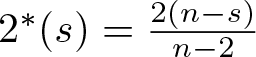 $2^*(s)=\frac{2(n-s)}{n-2}$, $0\leq s \lt 2 \lt n$. We show that the almost necessary and sufficient condition obtained for the case s = 0 in [1] differs conceptually when $0 \lt s \lt 2$.

A sharp threshold for Trudinger–Moser type inequalities with logarithmic kernels in dimension N
- Part of
-
- Journal:
- Proceedings of the Royal Society of Edinburgh. Section A: Mathematics , First View
- Published online by Cambridge University Press:
- 17 February 2025, pp. 1-39
-
- Article
- Export citation
-
In the article, we investigate Trudinger–Moser type inequalities in presence of logarithmic kernels in dimension N. A sharp threshold, depending on N, is detected for the existence of extremal functions or blow-up, where the domain is the ball or the entire space $\mathbb{R}^N$. We also show that the extremal functions satisfy suitable Euler–Lagrange equations. When the domain is the entire space, such equations can be derived by a N-Laplacian Schrödinger equation strongly coupled with a higher order fractional Poisson’s equation. The results extends [16] to any dimension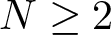 $N \geq 2$.

ASYMPTOTIC BEHAVIOUR OF THE LEAST ENERGY SOLUTIONS TO FRACTIONAL NEUMANN PROBLEMS
- Part of
-
- Journal:
- Journal of the Australian Mathematical Society / Volume 118 / Issue 2 / April 2025
- Published online by Cambridge University Press:
- 13 September 2024, pp. 178-209
- Print publication:
- April 2025
-
- Article
- Export citation
-
We study the asymptotic behaviour of the least energy solutions to the following class of nonlocal Neumann problems:
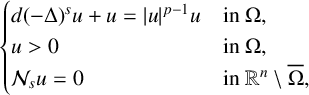 $$ \begin{align*} \begin{cases} { d(-\Delta)^{s}u+ u= \vert u\vert^{p-1}u } & \text{in } \Omega, \\ {u>0} & \text{in } \Omega, \\ { \mathcal{N}_{s}u=0 } & \text{in } \mathbb{R}^{n}\setminus \overline{\Omega}, \end{cases} \end{align*} $$
where $\Omega \subset \mathbb {R}^{n}$ is a bounded domain of class $C^{1,1}$, $1<p<({n+s})/({n-s}),\,n>\max \{1, 2s \}, 0<s<1, d>0$ and $\mathcal {N}_{s}u$ is the nonlocal Neumann derivative. We show that for small $d,$ the least energy solutions $u_d$ of the above problem achieve an $L^{\infty }$-bound independent of $d.$ Using this together with suitable $L^{r}$-estimates on $u_d,$ we show that the least energy solution $u_d$ achieves a maximum on the boundary of $\Omega $ for d sufficiently small.


Normalized solutions to the quasilinear Schrödinger equations with combined nonlinearities
- Part of
-
- Journal:
- Proceedings of the Edinburgh Mathematical Society / Volume 67 / Issue 2 / May 2024
- Published online by Cambridge University Press:
- 12 April 2024, pp. 349-387
-
- Article
- Export citation
-
We consider the radially symmetric positive solutions to quasilinear problem
 \begin{equation*}-\triangle u-u\triangle u^{2}+\lambda u=f(u),\quad{\rm in} \ \mathbb{R}^{N},\end{equation*}
having prescribed mass $\int_{\mathbb{R}^{N}}|u|^2 =a^2,$ where a > 0 is a constant, λ appears as a Lagrange multiplier. We focus on the pure L2-supercritical case and combination case of L2-subcritical and L2-supercritical nonlinearities
 \begin{equation*}f(u)=\tau |u|^{q-2}u+|u|^{p-2}u,\quad \tau \gt 0,\qquad{\rm where}\ \ 2 \lt q \lt 2+\frac{4}{N} \ {\rm and} \quad \ p \gt \bar{p},\end{equation*}
where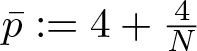 $\bar{p}:=4+\frac{4}{N}$ is the L2-critical exponent. Our work extends and develops some recent results in the literature.

VISCOSITY SOLUTIONS TO THE INFINITY LAPLACIAN EQUATION WITH SINGULAR NONLINEAR TERMS
- Part of
-
- Journal:
- Journal of the Australian Mathematical Society / Volume 117 / Issue 3 / December 2024
- Published online by Cambridge University Press:
- 20 March 2024, pp. 345-374
- Print publication:
- December 2024
-
- Article
- Export citation
-
In this paper, we study the singular boundary value problem
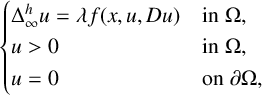 $$ \begin{align*} \begin{cases} \Delta_\infty^h u=\lambda f(x,u,Du) \quad &\mathrm{in}\; \Omega, \\ u>0\quad &\mathrm{in}\; \Omega,\\ u=0 \quad &\mathrm{on} \;\partial\Omega, \end{cases} \end{align*} $$
where $\lambda>0$ is a parameter, $h>1$ and $\Delta _\infty ^h u=|Du|^{h-3} \langle D^2uDu,Du \rangle $ is the highly degenerate and h-homogeneous operator related to the infinity Laplacian. The nonlinear term $f(x,t,p):\Omega \times (0,\infty )\times \mathbb {R}^{n}\rightarrow \mathbb {R}$ is a continuous function and may exhibit singularity at $t\rightarrow 0^{+}$. We establish the comparison principle by the double variables method for the general equation $\Delta _\infty ^h u=F(x,u,Du)$ under some conditions on the term $F(x,t,p)$. Then, we establish the existence of viscosity solutions to the singular boundary value problem in a bounded domain based on Perron’s method and the comparison principle. Finally, we obtain the existence result in the entire Euclidean space by the approximation procedure. In this procedure, we also establish the local Lipschitz continuity of the viscosity solution.


