Refine search
Actions for selected content:
16 results
On the rationality problem for low degree hypersurfaces
- Part of
-
- Journal:
- Forum of Mathematics, Pi / Volume 13 / 2025
- Published online by Cambridge University Press:
- 22 December 2025, e25
-
- Article
-
- You have access
- Open access
- HTML
- Export citation
-
We show that a very general hypersurface of degree $d \geq 4$ and dimension $N \leq (d+1)2^{d-4}$ over a field of characteristic $\neq 2$ does not admit a decomposition of the diagonal; hence, it is neither stably nor retract rational, nor $\mathbb {A}^1$-connected. Similar results hold in characteristic $2$ under a slightly weaker degree bound. This improves earlier results in [44] and [33].


TORSION BIRATIONAL MOTIVES OF SURFACES AND UNRAMIFIED COHOMOLOGY
- Part of
-
- Journal:
- Journal of the Institute of Mathematics of Jussieu / Volume 24 / Issue 6 / November 2025
- Published online by Cambridge University Press:
- 21 July 2025, pp. 2283-2315
- Print publication:
- November 2025
-
- Article
-
- You have access
- HTML
- Export citation
-
Let S and T be smooth projective varieties over an algebraically closed field k. Suppose that S is a surface admitting a decomposition of the diagonal. We show that, away from the characteristic of k, if an algebraic correspondence $T \to S$ acts trivially on the unramified cohomology, then it acts trivially on any normalized, birational and motivic functor. This generalizes Kahn’s result on the torsion order of S. We also exhibit an example of S over $\mathbb {C}$ for which $S \times S$ violates the integral Hodge conjecture.


Rationality and arithmetic of the moduli of abelian varieties
- Part of
-
- Article
-
- You have access
- Open access
- HTML
- Export citation
-
We study the rationality properties of the moduli space ${\mathcal{A}}_g$ of principally polarised abelian $g$-folds over $\mathbb{Q}$ and apply the results to arithmetic questions. In particular, we show that any principally polarised abelian 3-fold over ${\mathbb{F}}_p$ may be lifted to an abelian variety over $\mathbb{Q}$. This is a phenomenon of low dimension: assuming the Bombieri–Lang conjecture, we also show that this is not the case for abelian varieties of dimension at least 7. Concerning moduli spaces, we show that ${\mathcal{A}}_g$ is unirational over $\mathbb{Q}$ for $g\le 5$ and stably rational for $g=3$. This also allows us to make unconditional one of the results of Masser and Zannier about the existence of abelian varieties over $\mathbb{Q}$ that are not isogenous to Jacobians.


Quartic and Quintic Hypersurfaces with Dense Rational Points
- Part of
-
- Journal:
- Forum of Mathematics, Sigma / Volume 11 / 2023
- Published online by Cambridge University Press:
- 27 June 2023, e55
-
- Article
-
- You have access
- Open access
- HTML
- Export citation
-
Let $X_4\subset \mathbb {P}^{n+1}$ be a quartic hypersurface of dimension $n\geq 4$ over an infinite field k. We show that if either $X_4$ contains a linear subspace $\Lambda $ of dimension $h\geq \max \{2,\dim (\Lambda \cap \operatorname {\mathrm {Sing}}(X_4))+2\}$ or has double points along a linear subspace of dimension $h\geq 3$, a smooth k-rational point and is otherwise general, then $X_4$ is unirational over k. This improves previous results by A. Predonzan and J. Harris, B. Mazur and R. Pandharipande for quartics. We also provide a density result for the k-rational points of quartic $3$-folds with a double plane over a number field, and several unirationality results for quintic hypersurfaces over a $C_r$ field.


Higher index Fano varieties with finitely many birational automorphisms
- Part of
-
- Journal:
- Compositio Mathematica / Volume 158 / Issue 11 / November 2022
- Published online by Cambridge University Press:
- 02 December 2022, pp. 2033-2045
- Print publication:
- November 2022
-
- Article
- Export citation
-
A famous problem in birational geometry is to determine when the birational automorphism group of a Fano variety is finite. The Noether–Fano method has been the main approach to this problem. The purpose of this paper is to give a new approach to the problem by showing that in every positive characteristic, there are Fano varieties of arbitrarily large index with finite (or even trivial) birational automorphism group. To do this, we prove that these varieties admit ample and birationally equivariant line bundles. Our result applies the differential forms that Kollár produces on $p$-cyclic covers in characteristic $p > 0$.


Unramified logarithmic Hodge–Witt cohomology and $\mathbb {P}^1$-invariance
- Part of
-
- Journal:
- Forum of Mathematics, Sigma / Volume 10 / 2022
- Published online by Cambridge University Press:
- 16 March 2022, e19
-
- Article
-
- You have access
- Open access
- HTML
- Export citation
-
Let X be a smooth proper variety over a field k and suppose that the degree map ${\mathrm {CH}}_0(X \otimes _k K) \to \mathbb {Z}$ is isomorphic for any field extension $K/k$. We show that $G(\operatorname {Spec} k) \to G(X)$ is an isomorphism for any $\mathbb {P}^1$-invariant Nisnevich sheaf with transfers G. This generalises a result of Binda, Rülling and Saito that proves the same conclusion for reciprocity sheaves. We also give a direct proof of the fact that the unramified logarithmic Hodge–Witt cohomology is a $\mathbb {P}^1$-invariant Nisnevich sheaf with transfers.


Pencils on Surfaces with Normal Crossings and the Kodaira Dimension of $\overline {\mathcal {M}}_{g,n}$
- Part of
-
- Journal:
- Forum of Mathematics, Sigma / Volume 9 / 2021
- Published online by Cambridge University Press:
- 12 April 2021, e31
-
- Article
-
- You have access
- Open access
- Export citation
-
We study smoothing of pencils of curves on surfaces with normal crossings. As a consequence we show that the canonical divisor of $\overline {\mathcal {M}}_{g,n}$ is not pseudoeffective in some range, implying that $\overline {\mathcal {M}}_{12,6}$, $\overline {\mathcal {M}}_{12,7}$,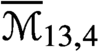 $\overline {\mathcal {M}}_{13,4}$ and $\overline {\mathcal {M}}_{14,3}$ are uniruled. We provide upper bounds for the Kodaira dimension of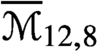 $\overline {\mathcal {M}}_{12,8}$ and $\overline {\mathcal {M}}_{16}$. We also show that the moduli space of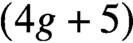 $(4g+5)$-pointed hyperelliptic curves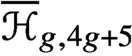 $\overline {\mathcal {H}}_{g,4g+5}$ is uniruled. Together with a recent result of Schwarz, this concludes the classification of moduli of pointed hyperelliptic curves with negative Kodaira dimension.


UNIRATIONALITY AND GEOMETRIC UNIRATIONALITY FOR HYPERSURFACES IN POSITIVE CHARACTERISTICS
- Part of
-
- Journal:
- Journal of the Institute of Mathematics of Jussieu / Volume 21 / Issue 5 / September 2022
- Published online by Cambridge University Press:
- 08 March 2021, pp. 1831-1847
- Print publication:
- September 2022
-
- Article
- Export citation
-
Building on work of Segre and Kollár on cubic hypersurfaces, we construct over imperfect fields of characteristic $p\geq 3$ particular hypersurfaces of degree p, which show that geometrically rational schemes that are regular and whose rational points are Zariski dense are not necessarily unirational. A likewise behavior holds for certain cubic surfaces in characteristic $p=2$.


On Polarized K3 Surfaces of Genus 33
-
- Journal:
- Canadian Mathematical Bulletin / Volume 60 / Issue 3 / 01 September 2017
- Published online by Cambridge University Press:
- 20 November 2018, pp. 546-560
- Print publication:
- 01 September 2017
-
- Article
-
- You have access
- Export citation
-
We prove that the moduli space of smooth primitively polarized $\text{K3}$ surfaces of genus 33 is unirational.

FAMILIES OF AFFINE RULED SURFACES: EXISTENCE OF CYLINDERS
- Part of
-
- Journal:
- Nagoya Mathematical Journal / Volume 223 / Issue 1 / September 2016
- Published online by Cambridge University Press:
- 18 August 2016, pp. 1-20
- Print publication:
- September 2016
-
- Article
-
- You have access
- HTML
- Export citation
-
We show that the generic fiber of a family $f:X\rightarrow S$ of smooth $\mathbb{A}^{1}$ -ruled affine surfaces always carries an $\mathbb{A}^{1}$ -fibration, possibly after a finite extension of the base $S$ . In the particular case where the general fibers of the family are irrational surfaces, we establish that up to shrinking $S$ , such a family actually factors through an $\mathbb{A}^{1}$ -fibration $\unicode[STIX]{x1D70C}:X\rightarrow Y$ over a certain $S$ -scheme $Y\rightarrow S$ induced by the MRC-fibration of a relative smooth projective model of $X$ over $S$ . For affine threefolds $X$ equipped with a fibration $f:X\rightarrow B$ by irrational $\mathbb{A}^{1}$ -ruled surfaces over a smooth curve $B$ , the induced $\mathbb{A}^{1}$ -fibration $\unicode[STIX]{x1D70C}:X\rightarrow Y$ can also be recovered from a relative minimal model program applied to a smooth projective model of $X$ over $B$ .
$B$ .


Rationality problems and conjectures of Milnor and Bloch–Kato
- Part of
-
- Journal:
- Compositio Mathematica / Volume 149 / Issue 8 / August 2013
- Published online by Cambridge University Press:
- 03 June 2013, pp. 1312-1326
- Print publication:
- August 2013
-
- Article
- Export citation
-
We show how the techniques of Voevodsky’s proof of the Milnor conjecture and the Voevodsky–Rost proof of its generalization the Bloch–Kato conjecture can be used to study counterexamples to the classical Lüroth problem. By generalizing a method due to Peyre, we produce for any prime number $\ell $ and any integer $n\geq 2$, a rationally connected, non-rational variety for which non-rationality is detected by a non-trivial degree $n$ unramified étale cohomology class with $\ell $-torsion coefficients. When $\ell = 2$, the varieties that are constructed are furthermore unirational and non-rationality cannot be detected by a torsion unramified étale cohomology class of lower degree.


THE GROUP OF AUTOMORPHISMS OF THE FIRST WEYL ALGEBRA IN PRIME CHARACTERISTIC AND THE RESTRICTION MAP
-
- Journal:
- Glasgow Mathematical Journal / Volume 51 / Issue 2 / May 2009
- Published online by Cambridge University Press:
- 01 May 2009, pp. 263-274
- Print publication:
- May 2009
-
- Article
-
- You have access
- Export citation
-
Let K be a perfect field of characteristic p > 0; A1 := K〈x, ∂|∂x−x∂=1〉 be the first Weyl algebra; and Z:=K[X:=xp, Y:=∂p] be its centre. It is proved that (i) the restriction map res : AutK(A1)→ AutK(Z), σ ↦ σ|Z is a monomorphism with im(res) = Γ := {τ ∈ AutK(Z)|





An Invariant Regarding Waring’s Problem for Cubic Polynomials
-
- Journal:
- Nagoya Mathematical Journal / Volume 193 / 2009
- Published online by Cambridge University Press:
- 11 January 2016, pp. 95-110
- Print publication:
- 2009
-
- Article
-
- You have access
- Export citation
Tight Closure and Plus Closure for Cones Over Elliptic Curves
-
- Journal:
- Nagoya Mathematical Journal / Volume 177 / 2005
- Published online by Cambridge University Press:
- 11 January 2016, pp. 31-45
- Print publication:
- 2005
-
- Article
-
- You have access
- Export citation
On classification of ℚ-fano 3-folds of Gorenstein index 2. I
-
- Journal:
- Nagoya Mathematical Journal / Volume 167 / 2002
- Published online by Cambridge University Press:
- 22 January 2016, pp. 117-155
- Print publication:
- 2002
-
- Article
-
- You have access
- Export citation
On classification of ℚ-fano 3-folds of Gorenstein index 2. II
-
- Journal:
- Nagoya Mathematical Journal / Volume 167 / 2002
- Published online by Cambridge University Press:
- 22 January 2016, pp. 157-216
- Print publication:
- 2002
-
- Article
-
- You have access
- Export citation
