To save content items to your account,
please confirm that you agree to abide by our usage policies.
If this is the first time you use this feature, you will be asked to authorise Cambridge Core to connect with your account.
Find out more about saving content to .
To save content items to your Kindle, first ensure no-reply@cambridge.org
is added to your Approved Personal Document E-mail List under your Personal Document Settings
on the Manage Your Content and Devices page of your Amazon account. Then enter the ‘name’ part
of your Kindle email address below.
Find out more about saving to your Kindle.
Note you can select to save to either the @free.kindle.com or @kindle.com variations.
‘@free.kindle.com’ emails are free but can only be saved to your device when it is connected to wi-fi.
‘@kindle.com’ emails can be delivered even when you are not connected to wi-fi, but note that service fees apply.
Key ideas: Walrasian equilibrium allocation, optimal allocation, invisible hand at work
In Chapter 3 we studied equilibrium and efficiency in exchange economies. In this chapter we add firms to the economy and show how the welfare theorems generalize. In this introductory section we consider the simplest such economy – the one-person economy. To introduce trade, we assume that the single individual Robinson Crusoe is schizophrenic, making his decisions as a manager and a consumer separately. His decisions are guided by market prices. In Section 5.2 we examine a general equilibrium model with production and extend the two welfare theorems.
The power of the first theorem hinges critically on the assumption that a Walrasian equilibrium exists. This is addressed in Section 5.3. In the basic model all goods are private. In Sections 5.4 and 5.5 we show how the basic model can be extended to incorporate multiple time periods and public goods.
We now extend the choice model to deal with uncertainty. We begin with an axiomatic development of expected utility theory. Because risk lovers are likely doomed to rapid ruin as they take huge gambles, agents that survive and thrive in the marketplace are almost surely either neutral or averse towards risk. Section 7.2 explores various ways of thinking about risk aversion and its consequences. In Section 7.3 we examine different ways of characterizing a change in beliefs that makes an agent “more optimistic” and explore their implications for the decisions that the agent makes.
A key assumption in the basic model of decision making under uncertainty is that all uncertainty faced by individuals contracting with one another is resolved eventually. Thus, any contract can be readily enforced. However, if one of the parties to a contract takes actions that are hidden, the ability to write contracts is constrained. We take up this important issue in Section 7.4.
Although proving a theorem is always a special joy, finding a convincing way to understand why theorems are true has always been a major fascination. I often learn much more from an informal graphical argument or from a well-thought-out example than from the formal analysis. Perhaps that is why I have always enjoyed teaching so much. It is very satisfying to take a major idea in economic theory and explain it in a way that gives students a new and deeper understanding.
I have written this text with the core goal of answering the question “Why?” in a clear and convincing manner. Some texts try to be encyclopedic. This one does not. Instead it explores the most important contributions of both price theory and game theory with the objective of developing strong insights as to why the results are true.
People learn in different ways. I remember once excitedly showing Roy Radner a diagrammatic explanation of a paper he had written with Joe Stiglitz. Roy listened patiently, then smiled and said, “Very good, John, but I never did understand a graphical argument!” Despite this disappointment, most people do find a clear diagram very helpful. There are a lot of them in this text. Yet looking at a graph only takes learning so far. There is no substitute for learning by doing. For this reason there is a strong focus on exercises. Many of the exercises are illustrative examples, but many others provide opportunities for a student to prove something related to the theorems presented in the text. Answers to all of the questions are provided. Half are in the text, and the rest can be found on the Web site, http://www.essentialmicroeconomics.com.
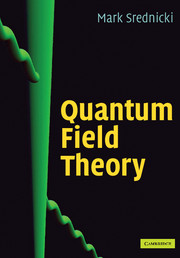
Quantum field theory is the basic mathematical framework that is used to describe elementary particles. This textbook provides a complete and essential introduction to the subject. Assuming only an undergraduate knowledge of quantum mechanics and special relativity, this book is ideal for graduate students beginning the study of elementary particles. The step-by-step presentation begins with basic concepts illustrated by simple examples, and proceeds through historically important results to thorough treatments of modern topics such as the renormalization group, spinor-helicity methods for quark and gluon scattering, magnetic monopoles, instantons, supersymmetry, and the unification of forces. The book is written in a modular format, with each chapter as self-contained as possible, and with the necessary prerequisite material clearly identified. It is based on a year-long course given by the author and contains extensive problems, with password protected solutions available to lecturers at www.cambridge.org/9780521864497.
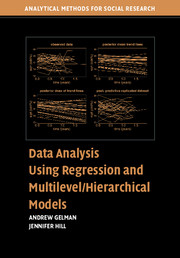
Data Analysis Using Regression and Multilevel/Hierarchical Models, first published in 2007, is a comprehensive manual for the applied researcher who wants to perform data analysis using linear and nonlinear regression and multilevel models. The book introduces a wide variety of models, whilst at the same time instructing the reader in how to fit these models using available software packages. The book illustrates the concepts by working through scores of real data examples that have arisen from the authors' own applied research, with programming codes provided for each one. Topics covered include causal inference, including regression, poststratification, matching, regression discontinuity, and instrumental variables, as well as multilevel logistic regression and missing-data imputation. Practical tips regarding building, fitting, and understanding are provided throughout.
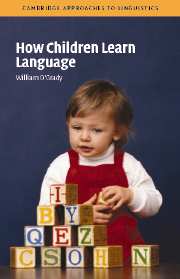
Adults tend to take language for granted - until they have to learn a new one. Then they realize how difficult it is to get the pronunciation right, to acquire the meaning of thousands of new words, and to learn how those words are put together to form sentences. Children, however, have mastered language before they can tie their shoes. In this engaging and accessible book, William O'Grady explains how this happens, discussing how children learn to produce and distinguish among sounds, their acquisition of words and meanings, and their mastery of the rules for building sentences. How Children Learn Language provides readers with a highly readable overview not only of the language acquisition process itself, but also of the ingenious experiments and techniques that researchers use to investigate his mysterious phenomenon. It will be of great interest to anyone - parent or student - wishing to find out how children acquire language.
Ever since the beginning of the history of computer systems, the demand for more performance has been the most important driving force for evolution in computer architecture. In particular, many important applications demand more performance than a single (serial) processor core can provide, and historically have pushed parallel architecture technology. A good example is numerical programs used in computer simulation to analyze and solve problems in science and engineering, such as climate modeling, weather forecasting, or computer-aided design. Another example is commercial systems in which a large pool of independent queries must be executed to meet the growing demands of the information age. Over the years, another driving force for parallel architectures has been the fear of impending technological barriers that would eventually stall the performance growth of serial computers. These two forces have fueled from the beginning a keen interest in multiprocessor architecture research. While scientific computing needs made these research efforts relevant early on in the market place, multiprocessor technology hit the mainstream with the shift to multi-core computers at the beginning of the twenty-first century.
This chapter is devoted to design principles of multiprocessor systems. It focuses on two multiprocessor architectural styles: shared-memory and message-passing multiprocessor systems. Both styles use multiple processors with the goal of achieving a linear speedup of computational power with the number of processors. However, they differ in the method by which the processors exchange data. Processors in shared-memory multiprocessors share the same address space and can exchange data through shared-memory locations by regular load and store instructions.
Soon her eyes fell on a little ebony box lying under the table: she opened it, and found in it a very small cake, on which was lying a card with the words EAT ME printed beautifully on it in large letters. ‘I’ll eat,’ said Alice, ‘and if it makes me larger, I can reach the key, and if it makes me smaller, I can creep under the door, so either way I’ll get into the garden, and I don’t care which happens!’
Lewis Carroll, Alice’s Adventures in Wonderland
Introduction
The 4-year-old pre-schooler is barely recognisable from the 2-year-old toddler who gleefully exercised new-found physical abilities on hapless parents or who could not easily be reasoned with when denied a brightly coloured toy that had caught their eye.
Four-year-olds are past the naming stage of asking ‘What’s that?’ (‘Wazzat?’) and are now curious to know ‘Why?’. When pre-schooler Matthew sits in the kitchen watching his father prepare dinner the ‘whys’ are apt to fl y thick and fast: ‘Why do you put salt in the soup, Dad?’ ‘Why is pepper hot?’ ‘Why do you chop the leaves off celery?’ and on and on it goes.
At 4 years of age children can answer their parents’ questions clearly. Their attention span is increasing and cooperative play with other children becomes a little easier.
The pre-schooler’s body shape has changed dramatically. The little protruding tummy so characteristic of the toddler (see Chapter 9) has disappeared and the child now walks in a more erect fashion. Jumping and climbing has long since been mastered. Pre-schoolers have acquired new eye-hand coordination that makes riding their first bicycle a pleasure, while fi ne motor coordination enables them to dress themselves. In the family life-cycle:12 the traumatic effects of the loss of a child for a family are presented.