To save content items to your account,
please confirm that you agree to abide by our usage policies.
If this is the first time you use this feature, you will be asked to authorise Cambridge Core to connect with your account.
Find out more about saving content to .
To save content items to your Kindle, first ensure no-reply@cambridge.org
is added to your Approved Personal Document E-mail List under your Personal Document Settings
on the Manage Your Content and Devices page of your Amazon account. Then enter the ‘name’ part
of your Kindle email address below.
Find out more about saving to your Kindle.
Note you can select to save to either the @free.kindle.com or @kindle.com variations.
‘@free.kindle.com’ emails are free but can only be saved to your device when it is connected to wi-fi.
‘@kindle.com’ emails can be delivered even when you are not connected to wi-fi, but note that service fees apply.
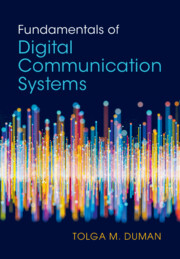
This dynamic textbook provides students with a concise and accessible introduction to the fundamentals of modern digital communications systems. Building from first principles, its comprehensive approach equips students with all of the mathematical tools, theoretical knowledge, and practical understanding they need to excel. It equips students with a strong mathematical foundation spanning signals and systems, probability, random variables, and random processes, and introduces students to key concepts in digital information sources, analog-to-digital conversion, digital modulation, power spectra, multi-carrier modulation, and channel coding. It includes over 85 illustrative examples, and more than 270 theoretical and computational end-of-chapter problems, allowing students to connect theory to practice, and is accompanied by downloadable Matlab code, and a digital solutions manual for instructors. Suitable for a single-semester course, this succinct textbook is an ideal introduction to the field of digital communications for senior undergraduate students in electrical engineering.
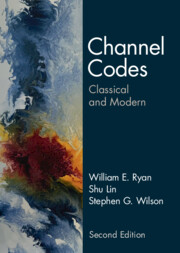
Channel coding lies at the heart of digital communication and data storage. Fully updated, including a new chapter on polar codes, this detailed introduction describes the core theory of channel coding, decoding algorithms, implementation details, and performance analyses. This new edition includes over 50 new end-of-chapter problems and new figures and worked examples throughout. The authors emphasize the practical approach and present clear information on modern channel codes, including turbo and low-density parity-check (LDPC) codes, detailed coverage of BCH codes, Reed-Solomon codes, convolutional codes, finite geometry codes, product codes as well as polar codes for error correction and detection, providing a one-stop resource for classical and modern coding techniques. Assuming no prior knowledge in the field of channel coding, the opening chapters begin with basic theory to introduce newcomers to the subject. Later chapters then extend to advanced topics such as code ensemble performance analyses and algebraic code design.
Now in an expanded and revised second edition, this book offers clear, penetrating examination of the central questions of ethics through study of the most important ethical theories in Western philosophy. Readers are introduced not only to the main ideas of each theory but also to contemporary developments and defenses of those ideas. Among theories the book covers are egoism, the eudaimonism of Plato and Aristotle, act and rule utilitarianism, modern natural law theory, Kant's moral theory, and existentialist ethics. Two new chapters add to this coverage expositions of Hume's ethics, Sidgwick's program for defending utilitarianism, and Rawls's hypothetical contractarianism. The discussions throughout draw the reader into philosophical inquiry through argument and criticism that illuminate the profundity of the questions under examination. Students will find this book to be a helpful guide to how philosophical inquiry is undertaken as well as to what the major theories of ethics hold.
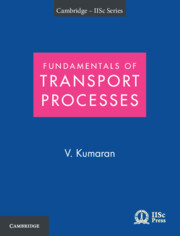
The study of transport phenomena is an essential part of chemical engineering, as well as other disciplines concerned with material transformations such as biomedical engineering, microfluidics, reactor design and metallurgy. Material transformations require the motion of constituents relative to each other, the transfer of heat across materials and fluid flow. This lucid textbook introduces the student to the fundamentals and applications of transport phenomena in a single volume and explains how the outcomes of transformation processes depend on fluid flow and heat/mass transfer. It demonstrates the progression from physical concepts to the mathematical formulation, followed by the solution techniques for predicting outcomes in industrial applications. The ordering of the topics, gradual build-up of complexity and easy to read language make it a vital resource for anyone looking for an introduction to the domain. It also provides a foundation for advanced courses in fluid mechanics, multiphase flows and turbulence.
Solid Mechanics, as compared to Mechanics of Materials or Strength of Materials, is generally considered to be a higher-level course. It is usually taught in higher semesters to senior undergraduate students. However, there is no suitable textbook on this subject. The book is primarily aimed at this group of students and the text is an attempt to bridge the gap between complex formulations in the theory of elasticity and elementary strength of materials in a simplified manner. The book is intended to present the basics of Solid Mechanics in a simple and concise manner to the initial learners. A large number of solved problems on each topic have been included to illustrate the text materials. Because of the simpler approach adopted in solving difficult problems, the book will be useful for all student groups who wish to learn the basic solid mechanics without much difficulty.
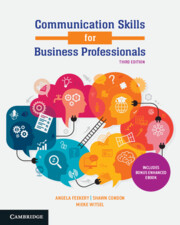
Effective communication is an essential skill all students need to succeed professionally. Based in theory and informed by practice, Communication Skills for Business Professionals takes readers through a range of basic communication concepts and demonstrates how they can be applied in business settings. The third edition has been restructured into three parts, respectively covering understanding communication, communicating in organisations and professional communication strategies in practice. The text has been updated to examine contemporary topics of increasing relevance, including the effects of AI on communication skills, intercultural competencies in business contexts and how to successfully facilitate virtual meetings in a post‒COVID-19 workplace. Each chapter includes short-answer questions, skill-builder activities and margin definitions to cement learning, while the two running case studies provide realistic examples of communication in practice. Communication Skills for Business Professionals remains an indispensable resource for business students wanting to improve their communication skills.
Machine learning has become a dominant problem-solving technique in the modern world, with applications ranging from search engines and social media to self-driving cars and artificial intelligence. This lucid textbook presents the theoretical foundations of machine learning algorithms, and then illustrates each concept with its detailed implementation in Python to allow beginners to effectively implement the principles in real-world applications. All major techniques, such as regression, classification, clustering, deep learning, and association mining, have been illustrated using step-by-step coding instructions to help inculcate a 'learning by doing' approach. The book has no prerequisites, and covers the subject from the ground up, including a detailed introductory chapter on the Python language. As such, it is going to be a valuable resource not only for students of computer science, but also for anyone looking for a foundation in the subject, as well as professionals looking for a ready reckoner.
Stylistics is the linguistic study of style in language. Now in its second edition, this book is an introduction to stylistics that locates it firmly within the traditions of linguistics. Organised to reflect the historical development of stylistics, it covers key principles such as foregrounding theory, as well as recent advances in cognitive and corpus stylistics. This edition has been fully revised to cover all the major developments in the field since the first edition, including extensive coverage of corpus stylistics, new sections on a range of topics, additional exercises and commentaries, updated further reading lists, and an entirely re-written final chapter on the disciplinary status of stylistics and its relationship to linguistics, plus a manifesto for the future of the field. Comprehensive in its coverage and assuming no prior knowledge of the subject, it is essential reading for students and researchers new to this fascinating area of language study.
Fully updated and revised, Cognitive and Social Neuroscience of Aging, 2nd Edition provides an accessible introduction to aging and the brain. Now with full color throughout, it includes over fifty figures illustrating key research findings and anatomical diagrams. Adopting an integrative perspective across domains of psychological function, this edition features expanded coverage of multivariate methods, moral judgments, cognitive reserve, prospective memory, event boundaries, and individual differences related to aging, including sex, race, and culture. Although many declines occur with age, cognitive neuroscience research reveals plasticity and adaptation in the brain as a normal function of aging. With this perspective in mind, the book emphasizes the ways in which neuroscience methods have enriched and changed thinking about aging.
Principles of Behavioral Economics, written by an acknowledged leader in the field, provides a comprehensive introduction to one of the most exciting areas of modern economics. It demonstrates how models of economic theory can be enriched by using interdisciplinary insights from psychology, sociology, evolutionary biology, and neuroscience to build the basis for a more empirically supported set of economic principles. Unique in its level of rigor and lucidity, the book highlights the important link between theoretical and empirical economics by demonstrating the usefulness of a range of data sources such as observational data, lab data, survey data, and neuroeconomic data. This field-defining textbook argues that behavioral economics is not just a supplement to mainstream economics. Taking behavioral economics seriously requires a total rethink, and eventual transformation, of every area of economics.
These are all very practical decisions, and the methods of analyzing them make use of Principle 1:A dollar today is not worth the same as a dollar tomorrow. Economists have considered the management of personal financial resources over a lifetime to be a central issue worthy of serious study, and several Nobel Prizes in economics have been awarded for contributions in this area. And, as Box 3.1 shows, financial literacy for a nation’s people is a goal being pursued by countries all over the world.
Most financial decisions boil down to figuring out how much an asset is worth. For example, in deciding whether to invest in a security such as a stock or a bond or in a business opportunity, you have to determine whether the price being asked is high or low relative to other investment opportunities available to you. In addition to investment decisions, there are many other situations in which one needs to determine the value of an asset. For example, suppose that the tax assessor in your town has assessed your house at $500,000 for property tax purposes. Is this value too high or too low? Or suppose you and your siblings inherit some property, and you decide to sell it and share the proceeds equally among yourselves. How do you decide how much it is worth?
In the previous chapters we introduced the concept of valuation, which involved converting cash flows that are expected to happen in the future into today’s terms, and we learned about the returns on various assets and how to analyze the past performance of financial instruments to inform investment decisions. However, the future is not known for sure. The cash flows that occur may be different from what we initially expect, and the value (and rates of return) of financial instruments change over time. In this chapter, we introduce a fundamental concept in finance: Uncertainty about the future can affect valuation and decision making.
We begin by defining what risk is in finance, and how it affects financial decisions. We then dive into how risk can be managed, which includes identifying relevant risks, assessing how they can affect one’s financial situation, and then determining appropriate techniques that can be used to reduce these risks.
Before proceeding with our first steps in valuation, we need to introduce some tools and define some notation that will be used here and throughout the book when valuing assets.
At a fundamental level, the value of an asset comes from the cash flows that are associated with it—that is, from the amounts of money that the owner either receives or pays at various points in time. An essential tool in analyzing cash flows from any financial decision is a diagram known as a timeline, a linear representation of cash outflows and inflows over a period of time. A negative sign in front of a cash flow means that you are paying that amount of money (it’s a cash outflow from you). No sign means that you are receiving an amount of money (it’s a cash inflow to you).
This chapter discusses some of the current trends and promising future directions in the field of cognitive neuroscience of aging. The chapter first discusses recent research investigating the contribution of individual difference factors related to identify, including race, culture, and sex differences. Next, the chapter reviews recent research on neuromodulation, including ways in which noninvasive brain stimulation (e.g., repetitive transcranial magnetic stimulation [rTMS], transcranial direct current stimulation [tDCS], and transcranial alternating current stimulation [tACS]) has been used in an attempt to enhance cognition with age as well as with age-related disorders. This section also considers other approaches to neuromodulation, including deep-brain stimulation and neurofeedback. Finally, discussion of emerging directions considers the importance of investigating aging across the lifespan, studying the intersection of physical health with cognition, exploring the distinction of socioemotional and cognitive domains, and emphasizing the contribution of context with age.