To save content items to your account,
please confirm that you agree to abide by our usage policies.
If this is the first time you use this feature, you will be asked to authorise Cambridge Core to connect with your account.
Find out more about saving content to .
To save content items to your Kindle, first ensure no-reply@cambridge.org
is added to your Approved Personal Document E-mail List under your Personal Document Settings
on the Manage Your Content and Devices page of your Amazon account. Then enter the ‘name’ part
of your Kindle email address below.
Find out more about saving to your Kindle.
Note you can select to save to either the @free.kindle.com or @kindle.com variations.
‘@free.kindle.com’ emails are free but can only be saved to your device when it is connected to wi-fi.
‘@kindle.com’ emails can be delivered even when you are not connected to wi-fi, but note that service fees apply.
Few scholars become the intellectual architects of their field. Professor M.B. (Barry) Hooker is one of them: a truly original scholar who has forged a singular, path-breaking body of work on law and society in Southeast Asia. His scholarship has been foundational in the fields of legal pluralism, customary law (adat) in Southeast Asia — particularly Malaysia — and Islamic law (sharia) in Southeast Asia. Hooker has shaped the intellectual frameworks that govern the way that we think of legal pluralism and hybridity in Southeast Asia, but that also invite contestation, expansion and elaboration.
This essay invites Professor Hooker to reflect on his intellectual journey and the choices that propelled him from his early life in New Zealand to a career of research and teaching in Singapore, the United Kingdom and Australia. It proceeds as an edited interview with him, and with Professor Virginia Hooker, who is both his wife and research collaborator as well as a distinguished scholar in her own right.1 The essay concludes with a full bibliography of M.B. Hooker's works to date, compiled by Virginia Hooker.
If you visit the library at the National University of Malaysia (UKM) you can ask to see the M.B. Hooker Collection. There, behind a screen, catalogued and air-conditioned, is the research and teaching library of more than 2,500 titles that Barry Hooker built over his scholarly lifetime. These are the books “on the history and philosophy and application of the legal systems in Southeast Asia” that “range by region from the Middle East through India, Burma and Indochina, to Malaysia and island Southeast Asia.… [works of] Islamic studies, philosophy, anthropology history, economics and law”.2 It includes substantial materials in the vernacular and the publications hunted by rare booksellers who supported Hooker's consuming passion. Virginia Hooker remembers, “Your library in your room in Kent was spectacular because you didn't have to go to any other library.… So when we moved [to Australia] you made that incredible decision to sell your entire library.… [Bookseller] John Randall insisted on selling it as the entire collection. Your papers, letters everything, the musical tapes, and so on.
When Barry Hooker's masterful study titled Legal Pluralism: An Introduction to Colonial and Neo-colonial Laws was first published in 1975, it fortunately became an instant classic. As he introduced his core ideas on legal pluralism that to this day guide his work, Hooker addressed a range of topics that were remarkably broad and far-reaching, certainly for the time, but even by today's measure. At a time when legal pluralism primarily connoted colonial or post-colonial situations, Hooker's study demonstrated the relevance of this emergent field beyond the historical parameters of coloniality; in effect, to include such histories as the voluntary adoption of Western laws in countries such as Turkey, Thailand, and Ethiopia. Similarly, at a time when the field lacked a comprehensive assessment of studies undertaken at the intersection of law and anthropology, Hooker was among the first to offer a thorough review of the colonial and post-colonial anthropological writings on law, which essentially made up the first chapter, “Legal Pluralism and the Ethnography of Law”. Therein, he discusses the anthropological attempts to conceptualize law and the challenge of generating a comparative language devoid of ethnocentric assumptions, reiterating at the same time the importance of studying legal processes and court cases. The main failing of these anthropological studies of law and legal process, according to Hooker, was that they largely ignored the impact of colonial law (1975, p. 52). In confining themselves to a narrow study of a specific society (tribe, village) and its law, anthropologists rarely aspired to demonstrate the intimate link between the prevalent structures and the colonial legal administration. He notes in summary that “the important point for the student of plural laws is that both the legal ethnography of a particular society and the formal judicial machinery refer to one and the same people. The two fields of study, therefore, approach the same individuals from different standpoints” (1975, p. 53). At that time few anthropologists had proclaimed the importance of this overlooked connection, notably Bohannan (1965) and Moore (1970), who had shown a similar level of awareness as Hooker. No major critiques had yet emerged on the anthropologists’ propensity to “edit out” the state, its law, and its administrative institutions from the analysis of “their” society (Moore 1978; Chanock 1985).
A significant key for understanding the successful transition to democracy in Indonesia, home to the largest Muslim community in the world, is a long-standing tradition of pluralism, to use modern terms. This tradition is well-anchored in the highly diverse society of Indonesia, that has roots in local Hindu-Buddhist cultures that contain pluralistic motifs. Remarkably, pluralistic motifs have not left Islam untouched in Indonesia. According to Robert W. Hefner, the people of the Indonesian archipelago have long grappled with what social theorists today often regard as a uniquely modern issue — cultural pluralism. Thus, for centuries intellectual and organizational pluralism have been a distinctive feature of Indonesian Islam and there were diverse ideas and religious views about the way to be a good Muslim in the Malay-Indonesian world. The distinctive narrative of Islam's introduction to the Indonesian archipelago also provides insights for understanding the nature of Islam there. Formative earlier periods of this narrative, starting around the fourteenth century, are intimately connected with mystical, spiritual Sufi traditions, known for religious tolerance and an inclusive pluralistic approach. In addition, whereas the historical breakthrough of Islam was largely marked by a use of force, the process of Islamization in Indonesia and the neighbouring region was carried out largely in a peaceful way; maritime traders, Sufi teachers and Sufi orders (tarikats), as well as marriage of foreign Muslims to native women and conversion of court circles, played an essential role in this process. Hence, the spread of Islam in Southeast Asia, according to A.H. Johns, was “hesitant, modest and discreet” and “what was achieved in one century in the Middle East took virtually a millennium in Southeast Asia”. Indeed, not rarely, pluralistic values were seriously ignored and violated throughout the history of Indonesia. Notwithstanding this, a considerable resistibility of these values has enabled numerous cultures, ethnic groups, religions, social communities and language groupings to tighten together and become one nation that has survived the storms of history. Pluralistic values have also navigated Indonesia to democracy.
M.B. Hooker has produced at least two important books on Islamic law in Indonesia: Indonesian Islam: Social Change through Contemporary Fatawa (2003) and Indonesian Syariah: Defining a National School of Islamic Law (2008). The two books demonstrate how Islam and sharia in Indonesia are understood and practised in a different way compared with the Middle East and other regions. Hooker offers his critical reviews of the method and application of fatwas, along with his evaluation of many different public faces of sharia from tertiary curricula, the Friday sermon in mosques, and a bureaucratic form of conducting the hajj, to the debates on public morality. Hooker's books show how elusive is the meaning of sharia in contemporary Indonesia.
My chapter considers some of Hooker's findings and focuses on how the issue of sharia is placed in the context of Indonesian law reform. As Hooker observed, until the early 1990s, “the status of Syariah in the Indonesian legal system was much as the Dutch had left it”. But things changed after the Soeharto era. The topic of sharia and pluralism in Indonesia is a complex arrangement of legal and public reasoning, moral practice, and political authority. There is understandable anxiety about the role of religion in public life, and Indonesian society's attempts to inculcate the values of respect, tolerance and pluralism. The main question is: Does legal pluralism still have a place in Indonesian Islam? My chapter examines the Indonesian experience as a vehicle to answer these questions. Among other things, I argue that Indonesia should be seen as a laboratory for legal pluralism, where state law coexists with sharia in legal postulates, official and unofficial laws.
Law Reform
The issue here is the unfinished discussion on religion, state and pluralism after the Soeharto era: how a state should, at the same time, accommodate and restrict the emergence of sharia into public life? If a state law was proposed and inspired by a particular rule from a particular religion, through public reasoning, would this situation damage the principle of state neutrality? Law and religion are entwined in the constitutional foundations of nations.
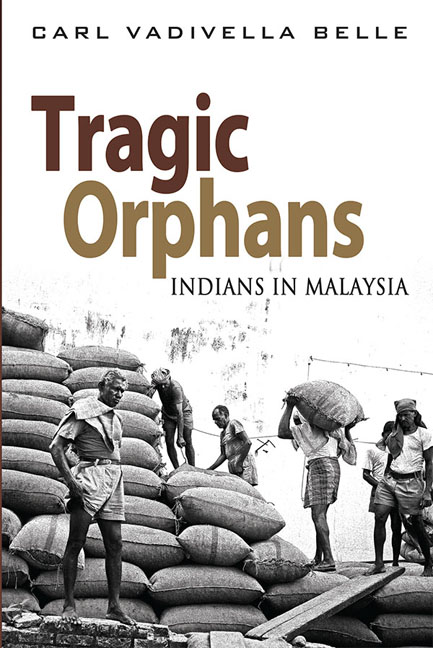
In 1938, noting that the bulk of the Indian population formed a 'landless proletariat' and despairing of the ability of the factionalized Indian community to unite in pursuit of common objectives, activist K.A. Neelakanda Ayer forecast that the fate of Indians in Malaya would be to become 'Tragic orphans' of whom India has forgotten and Malaya looks down upon with contempt'. Ayer's words continue to resonate; as a minority group in a nation dominated politically by colonially derived narratives of 'race' and ethnicity and riven by the imperatives of religion, the general trajectory of the economically and politically impotent Indian community has been one of increasing irrelevance. This book explores the history of the modern Indian presence in Malaysia, and traces the vital role played by the Indian community in the construction of contemporary Malaysia. In this comprehensive new study, Carl Vadivella Belle offers fresh insights on the Indian experience spanning the period from the colonial recruitment of Indian labour to the post-Merdeka political, economic and social marginalization of Indians. While recent Indian challenges to the political status quo – a regime described as that of 'benign neglect' – promoted Indian hopes of reform, change and uplift, the author concludes that the dictates of political discourse permeated by the ideologies of communalism offer limited prospects for meaningful change.
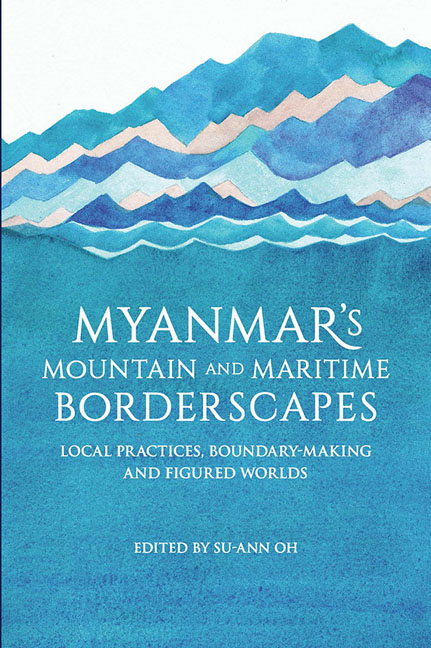
This edited volume adds to the literature on Myanmar and its borders by drawing attention to the significance of geography, history, politics and society in the construction of the border regions and the country. First, it alerts us to the fact that the border regions are situated in the mountainous and maritime domains of the country, highlighting the commonalities that arise from shared geography. Second, the book foregrounds socio-spatio practices - economic, intimate, spiritual, virtual - of border and boundary-making in their local context. This demonstrates how state-defined notions of territory, borders and identity are enacted or challenged. Third, despite sharing common features, Myanmar 's borderscapes also possess unique configurations of ethnic, political and economic attributes, producing social formations and figured worlds that are more cohesive or militant in some border areas than in others. Understanding and comparing these social practices and their corresponding life-worlds allows us to re-examine the connections from the borderlands back to the hinterland and to consider the value of border and boundary studies in problematizing and conceptualizing recent changes in Myanmar.
The central puzzle in the study of Japanese foreign policy has been why Japan has continued to play a passive role in international affairs, despite its impressive economic and political power. Challenging this central puzzle, the core argument of this study is to present an alternative path for the study of Japanese foreign policy. In fact, in recent years Japanese foreign policy has become less dependent on the United States, more strategic towards Asia, and more energetic towards international and regional institutions. One of the main features is multilateralism in Japanese foreign policy, as shown by Japan's active participation in the regional institutions. In pursuing multilateralism, Japan cooperated closely with the only durable regional body in Southeast Asia, to wit, the Association of Southeast Asian Nations (ASEAN). Given the fact that East Asian regionalism has been driven by ASEAN, it is of utmost urgency to investigate the emerging partnership between Japan and ASEAN. The central thesis of this study is thus to put Japan's ASEAN policy into a proper perspective by asserting that Japan's new policy initiatives towards ASEAN are not reactive, nor are they exceptions in a broader framework of merely reactive foreign policy.
In representative parliamentary systems, voters normally anticipate that the candidate they pick will not only address their concerns once in office, but also provide them with services and goods that only an official position in a major state institution would help secure. A large body of research has explained why freshly elected officials are therefore first and foremost expected to work for the constituents who elected them, secure new benefits for them, while preventing extant resources from being taken away from them (Fenno 1978; Cain et al. 1987; Mezey 2008, pp. 38–39). Expectations from constituents can thus run very high. More often than not, legislators are held accountable for the tangible benefits they bring to their constituencies rather than their overall legislative effectiveness or role in the scrutiny of other branches of government.
Among the legislative tools that can help an elected representative provide regular benefits to his/her constituents are district-level development funds and other “pork-barrel” spending programmes. The politics of “pork barrel” describes, in a pejorative way, the process that national-level officials use to obtain special government funds (or “pork”) to finance projects benefiting their own local constituencies. They “pass on pork” by redistributing governmental tax revenues to their home districts and, in the process, hope to build a clientele of loyal voters and win re-election to office. Criticism against distributive politics and pork barrelling programmes abounds worldwide. Pork-barrel spending indeed routinely open avenues for corruption, reinforces electoral clientelism and political patronage, encourages a considerable waste of public money, while keeping politicians away from national policymaking focus.
Yet, Myanmar has recently rediscovered the practicality and value of such programmes. In 2014, new legislation introducing a Constituency Development Fund (hereafter CDF) was passed by the Union parliament, then dominated by the Union Solidarity and Development Party (USDP). Once Aung San Suu Kyi's National League for Democracy (NLD) took control of the bicameral legislature after the elections held in November 2015, the new ruling party chose to continue the CDF scheme. Drawing on recent field research and interviews with elected parliamentarians, this paper will investigate initial patterns of “pork-barrel” politics in Myanmar under both the former USDP government (2014–16) and the early NLD administration (2016–17).
The paper starts with a brief review of the literature on “pork-barrel politics” and the international debates on constituency-level development funds.
The economic, political, strategic and cultural dynamism in Southeast Asia has gained added relevance in recent years with the spectacular rise of giant economies in East and South Asia. This has drawn greater attention to the region and to the enhanced role it now plays in international relations and global economics.
The sustained effort made by Southeast Asian nations since 1967 towards a peaceful and gradual integration of their economies has had indubitable success, and perhaps as a consequence of this, most of these countries are undergoing deep political and social changes domestically and are constructing innovative solutions to meet new international challenges. Big Power tensions continue to be played out in the neighbourhood despite the tradition of neutrality exercised by the Association of Southeast Asian Nations (ASEAN).
The Trends in Southeast Asia series acts as a platform for serious analyses by selected authors who are experts in their fields. It is aimed at encouraging policy makers and scholars to contemplate the diversity and dynamism of this exciting region.
• Myanmar introduced in 2014 a constituency development fund (CDF) to sponsor small public works and development projects in each of the country's 330 electoral constituencies.
• As a form of “pork-barrel” spending, CDF programmes have long remained controversial among international donors, anti-corruption agencies and civil society watchdogs for their potential for corruption, embezzlement, waste of public money, vote-buying and other clientelistic behaviours.
• The CDF has however emerged in as an extremely popular instrument for lawmakers, in offering new opportunities for meeting the basic infrastructure and development needs of local communities. The scheme has also fostered more frequent interactions among parliamentarians, local bureaucrats, and citizens. Mechanisms for vetting and monitoring the CDF projects seem also to have grown stronger each year.
• Rumours about petty corruption and misappropriation cases have gradually surfaced, particularly since the National League for Democracy (NLD) took control of the legislature in 2016. Yet in the first three fiscal years of its implementation, the scheme did not lead to any known major punitive action.
• There is also not yet enough of a record to identify credible linkages between the use of CDFs and the building of an electoral clientele by politicians — another common criticism of “pork-barrel” funding.
With China's transformation into a republic after two millennia as an empire as the starting point, Ooi Kee Beng prompts renowned historian Wang Gungwu through a series of interviews to discuss China, Europe, Southeast Asia and India. What emerges is an exciting and original World History that is neither Eurocentric nor Sinocentric. If anything, it is an appreciation of the dominant role that Central Asia played in the history of most of mankind over the last several thousand years.
The irrepressible power of the Eurasian core over the centuries explains much of the development of civilizations founded at the fringes – at its edges to the west, the east and the south. Most significantly, what is recognized as The Global Age today, is seen as the latest result of these conflicts between core and edge leading at the Atlantic fringe to human mastery of the sea in military and mercantile terms. In effect, human history, which had for centuries been configured by continental dynamics, has only quite recently established a new dimension to counteract these. In summary, Wang Gungwu argues convincingly that 'The Global is Maritime'.
This book argues that Malaysia's electoral politics have historically been premised on a hybridized model of communalism and consociationalism. Beyond this it posits a newer idea of power sharing based on the dynamic and transformative practice of mediated communalism through six decades (1952_2016) of electoral politics. The strategy of mediating communalism is critically explored throughout the book, serving to test its saliency as a distinct approach to power sharing in a social formation which is ethnically, religiously and regionally divided, yet has remained remarkably and tenuously integrated throughout Malaysia's electoral history. The book delves into this question by narrating and theorizing the complexity of communal politics leading to the emergence of new politics which have attempted to put Malaysia on the track of further democratization. It is further implied that new politics has to work in tandem with mediated communalism to transcend the most deleterious effects of an ethnically divided society.
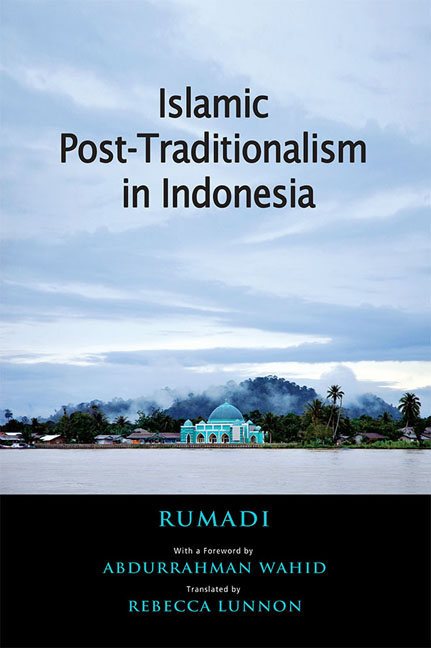
Islamic Post-Traditionalism in Indonesia offers a unique assessment of the development of the phenomenon of Islamic post-traditionalism using Nahdlatul Ulama (NU), the largest mass Islamic organization in Indonesia (and the world) as a case study. Post-traditionalism is a term now widely used to describe the often controversial attempts by progressive reformers to reify and legitimize modern intellectual notions, often from non-Islamic sources, by using reference to terminology and ideas drawn from Islamic tradition. This book discusses the discourse of post-traditionalist thought within Islamic thought more widely, before turning to examine the emergence of new currents of progressive thought within NU in Indonesia and the factors that influence that. In particular, the book explores the sometimes fiery struggle between liberal and conservative thought in NU; and the position of post-traditionalist thought in the wider development of intellectualism in Indonesia. It covers in detail new religious discourses that are being developed and offers important insights into the implications and future for post- traditionalist thought among Muslims. The highly influential Indonesian version of this book was originally published as Post Traditionalisme Islam: Wacana Intelektualisme dalam Komunitas NU by the Fahmina Institute, Indonesia, 2008.
This volume is a tribute to Professor Hal Hill, one of the most distinguished and internationally renowned Australian development economists and the single most important Australian figure in the networks that bind the Australian and Southeast Asian economics professions over the past four decades. The volume contains twelve original contributions by distinguished scholars who are at the forefront of their own subject areas. The contributions are thematically arranged into three parts to reflect Professor Hill's wide-ranging research interests: trade policy issues central to the development policy debate, structural change and global economic integration in East Asian economies, and the political economy of development policy.
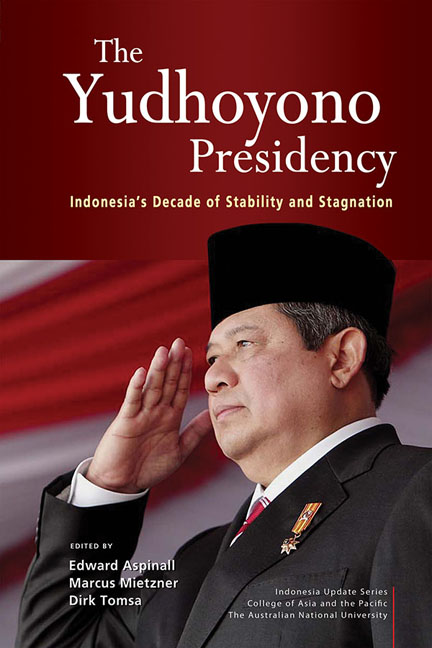
The presidency of Susilo Bambang Yudhoyono (2004–14) was a watershed in Indonesia's modern democratic history. Yudhoyono was not only the first Indonesian president to be directly elected, but also the first to be democratically re-elected. Coming to office after years of turbulent transition, he presided over a decade of remarkable political stability and steady economic growth. But other aspects of his rule have been the subject of controversy. While supporters view his presidency as a period of democratic consolidation and success, critics view it as a decade of stagnation and missed opportunities. This book is the first comprehensive attempt to evaluate both the achievements and the shortcomings of the Yudhoyono presidency. With contributions from leading experts on Indonesia's politics, economy and society, it assesses the Yudhoyono record in fields ranging from economic development and human rights, to foreign policy, the environment and the security sector.
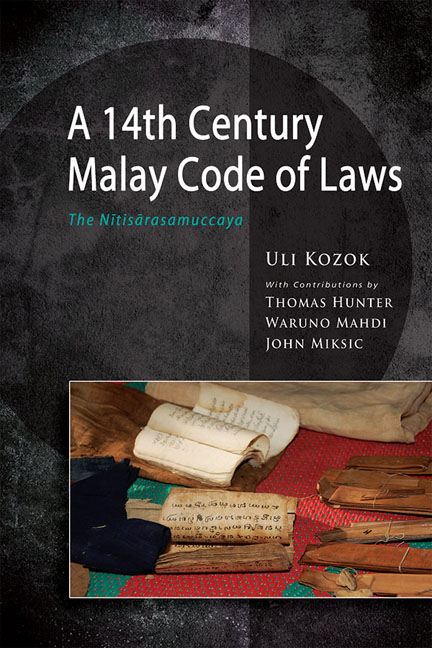
That is why the impressive results of the fieldwork and subsequent analytical research by the German scholar, Dr. Uli Kozok, are remarkable. By devoting considerable time and funds to his project in the interior of Sumatra, Kozok has produced results that will change the writing of the history of Malay. [...] By conducting fieldwork (Kozok saw the text in Kerinci in August 2002), by following up leads from the colonial literature (Voorhoeve's compilation), by analyzing the text without depending on accepted knowledge and by taking the step of using the latest technology to obtain an empirical perspective about the material, Kozok has succeeded in laying a major part of a foundation for the rewriting of the history of Malay in Indonesia! – James T. Collins
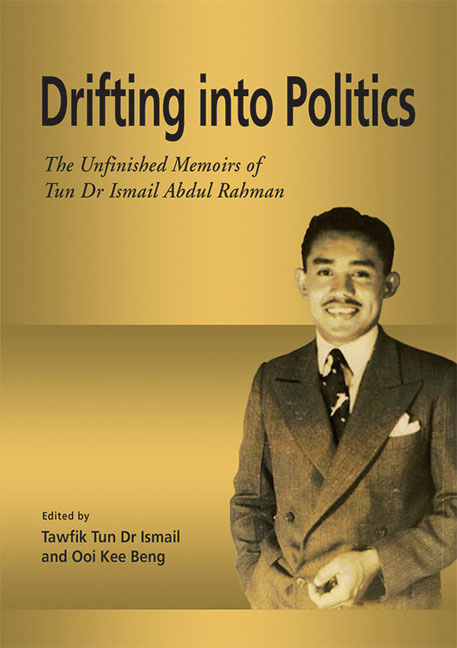
This is the unfinished autobiography of Tun Dr Ismail Abdul Rahman, the medical doctor who held key government positions in the first two decades of Malaysian nation building, and who was an important early player within UMNO, the country's dominant political party. Drifting into Politics was found among the private papers that were handed over to the Institute of Southeast Asian Studies (ISEAS) in 2005 by Tun Dr Ismail's eldest son, Mohd Tawfik.
The family has asked for it to be published in 2015, this year being the 100th anniversary of Tun Dr Ismail's birth. This is an apt time indeed to make his reflections on his own life available to the world. This is also the third book to come out of the Tun Dr Ismail papers which are kept at ISEAS Library. The Reluctant Politician: Tun Dr Ismail and His Time, the biography written by Ooi Kee Beng and published in 2006 is ISEAS's all-time bestseller, and it brought Tun Dr Ismail back with great impact into Malaysian political analysis and discourse. It has been translated into Malay and Chinese. The second book – Malaya's First Year in the United Nations – has also been welcomed by scholars of Malaysia's foreign affairs and diplomacy. This present volume continues Malaysia's rediscovery of Tun Dr Ismail.
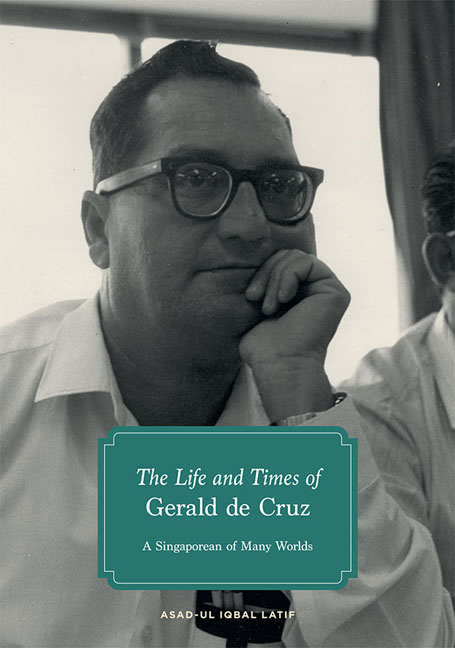
Gerald de Cruz's life overlapped many of the spheres of Singapore's history after World War II. As a Eurasian, a nationalist, a communist and then a democratic socialist, as a journalist and a writer, he represents the insurgent energies of a truculent time when a nascent nation was seeking the basis of statehood. His commitment to progressive ideas and movements reveals a man of integrity in search of himself in a better world. This book seeks to portray his place in time, particularly for younger Singaporeans who did not live in an era that has inaugurated the history of independent Singapore.
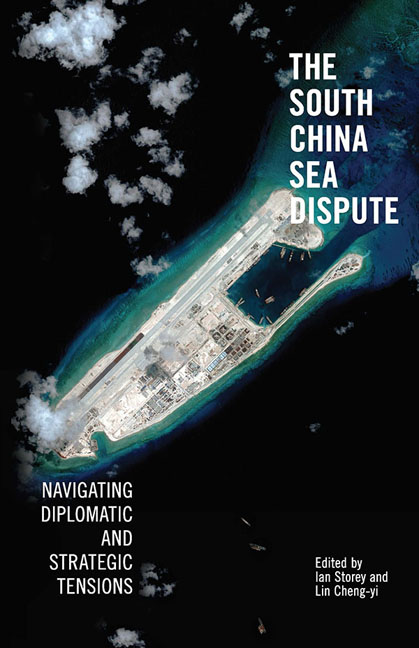
Increasing tensions in the South China Sea have propelled the dispute to the top of the Asia-Pacific's security agenda. Fuelled by rising nationalism over ownership of disputed atolls, growing competition over natural resources, strident assertions of their maritime rights by China and the Southeast Asian claimants, the rapid modernization of regional armed forces and worsening geopolitical rivalries among the Great Powers, the South China Sea will remain an area of diplomatic wrangling and potential conflict for the foreseeable future. Featuring some of the world's leading experts on Asian security, this volume explores the central drivers of the dispute and examines the positions and policies of the main actors, including China, Taiwan, the Southeast Asian claimants, America and Japan. The South China Sea Dispute: Navigating Diplomatic and Strategic Tensions provides readers with the key to understanding how this most complex and contentious dispute is shaping the regional security environment.