To save content items to your account,
please confirm that you agree to abide by our usage policies.
If this is the first time you use this feature, you will be asked to authorise Cambridge Core to connect with your account.
Find out more about saving content to .
To save content items to your Kindle, first ensure no-reply@cambridge.org
is added to your Approved Personal Document E-mail List under your Personal Document Settings
on the Manage Your Content and Devices page of your Amazon account. Then enter the ‘name’ part
of your Kindle email address below.
Find out more about saving to your Kindle.
Note you can select to save to either the @free.kindle.com or @kindle.com variations.
‘@free.kindle.com’ emails are free but can only be saved to your device when it is connected to wi-fi.
‘@kindle.com’ emails can be delivered even when you are not connected to wi-fi, but note that service fees apply.
The ECSSR 18th Annual Conference, The Future of Warfare in the 21st Century, held at the Center on April 9–10, 2013 in Abu Dhabi, and the resultant papers contained in this volume, explore how warfare may be affected by technological, strategic and civil developments in the coming years, particularly the revolutionary use of remote and autonomous systems on the modern battlefield, the budding application of cyber attack and defense strategies, and the future direction of intelligence operations in the 21st century.
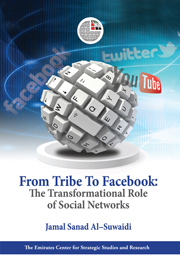
The recent proliferation of social networks has led to a societal shift - from a tribal mentality to that of Facebook - and has served to connect people from around the world with common cultural, religious, political and economic characteristics in an unprecedented manner and with astonishing speed. When such vast numbers of individuals congregate via social networks, societies that were once imaginary become real - the virtual worlds they inhabit expand and instill in their 'citizens' a shared desire to establish and enforce their common interests.
The interaction between the Muslim World and the West stretches back centuries and although the points of conflict are well known, the exchange of knowledge and cultural awareness cannot be under-estimated and their impact on both civilizations is palpable. Recent historical events have once again focused attention on perceived points of conflict and their associated negative connotations and the resultant criticisms and stereotypes of the West and Islam in general. In order to examine these issues and provide an in-depth overview of the relationship between the West and the Muslim World, the Emirates Center for Strategic Studies and Research (ECSSR) held a Symposium under the title 'Islam and the West: A Civilized Dialogue' on May 16–17, 2011 in Abu Dhabi, hosting a group of distinguished experts from various academic, political and educational backgrounds in conjunction with the School of Policy and International Affairs at the University of Maine, United States. This book comprises a valuable collection of the papers presented at the Symposium. It identifies how relations between the West and the Muslim World have developed; where mutual interests meet and diverge; and prospects for peaceful co-existence. This book draws on the in-depth knowledge and varied opinions of its contributors who share a wealth of experience in all facets of inter-cultural awareness, European and Islamic history, contemporary international relations, media and education, and includes experts native to the Muslim World and the West as well as those who have chosen both regions as their adoptive homes.
The UAE has taken concerted steps in order to ensure economic diversification of its key sectors as a means to ensure it is not entirely dependent on an oil/petroleum-based economy. Underpinning this diversification has been the commitment to the creation of a competitive knowledge-based economy, which, unlike agricultural and industrial economies, is not one that relies on natural/physical resources, but instead on a greater reliance on intellectual capabilities. All these requirements are dependent upon an effective education system. Various countries around the world have had great success at matching their education system to the demands of industry and society as well as incorporating the latest technology to improve education. However, exploiting the digital revolution does not stop at secondary education, and the tertiary level of learning can benefit enormously from such digital developments. As technology develops there are new ways to undertake learning and research and more flexible delivery of learning or faster and more sophisticated academic processes. The ubiquitous nature of the internet means that the use of this technology is part and parcel of our everyday life both in our personal and working life; therefore, it is an inevitability in education. Digital infrastructure can be defined as including technical services, technical standards, software tools, supporting policies, practice and regulatory frameworks. It allows for the appropriate creation, management and exploitation of information, resources and services to enable effective and high quality research and education. While more and more people involved in the educational process accept the notion that ICT has become part of our everyday life, and recognize the value of ICT as an enhancer for teaching and learning, there is an increasing demand for educators to have expertise in both their specific subject areas and competence in ICT. The essence of digital information and services, such as the worldwide web, means a whole new mode of operation and production of information, learning and research. It means there are new possibilities and a lot still yet to be imagined. Digital information can be replicated perfectly many times; add a network to that and it can be shared and accessed the world over; add the web to that and it can be viewed, annotated and linked to by anyone anywhere. Information technology not only facilitates how information is imparted in the learning environment, but also alters the relationships between participants in schools, colleges and universities, whether they by teachers, technicians or parents. Not only can more exciting and innovative forms of learning be created, but also the inclusion of all stakeholders in the learning process can be encouraged, which leads to greater understanding, encouragement of other ideas to stimulate learning, and ultimately a more rounded and educated individual and society.
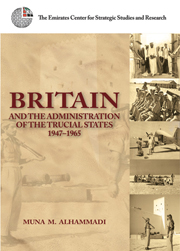
For over 150 years, from 1820 up to the foundation of the United Arab Emirates in 1971, Britain and the emirates of the eastern Arabian Peninsula were linked by a relationship that was unique when compared to colonial models exercised elsewhere. From the signing of the General Treaty with the Arab Tribes of the Gulf in 1820, through to the oil and aviation concession agreements penned during the mid- to late-20th century, formal treaties and agreements with the rulers of the various emirates formed the basis of Britain's long influence in the region, and are discussed in detail in this study. It also explores the evolution of the area's first security force in the early 1950s - the Trucial Oman Levies (TOL), which played a key role in the security and development of the emirates.
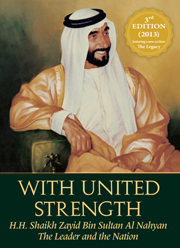
Against the backdrop of the British withdrawal from the Arabian Gulf region, it was H.H. Shaikh Zayid who accomplished the complex task of unifying the erstwhile Trucial States, creating the only thriving federal state in the Middle East. While fulfilling his personal destiny as the chosen leader, H.H. Shaikh Zayid strengthened the nation by uniting disparate tribal groups and sustained it against formidable challenges. He pioneered the modernization of the country and ultimately realized his dream of an effective framework for collaboration with neighboring Gulf states. The UAE has since become a constructive force within the region and beyond, exemplifying the principles of national unity, regional solidarity, international cooperation and religious tolerance.
Energy plays a key role in realizing sustainable development in both advanced and developing countries alike, and it is therefore vital that investment in technological development be sustained in order to maximize the benefits of currently available energy resources. However, the question as to how that investment should be directed is a contentious one, and involves numerous parallel questions relating to efficiency, resource availability, cost effectiveness and environmental impact, among others. Furthermore, uncertainty remains as to the extent to which technological innovation can satisfy future global energy requirements, regardless of the future energy balance. The ECSSR 18th Annual Energy Conference, Technology and the Future of Energy, held at the Center on November 12–13, 2012, and the resultant papers compiled in this volume, provide a variety of informed views on current and future technological trends in the energy industry, and their consequences for both producers and consumers. They present a strategic outlook for technological development in the industry, based on analysis of global energy supply and demand, current and future investment trends in energy technology, the potential impact of technological advances in the oil and gas industry, and the viability of alternative energy technologies. Also discussed are technological challenges and opportunities in energy-intensive sectors in the oilproducing countries of the Arabian Gulf.
The United States of America may be considered the dominant pole in the new world order, and that the world will continue to exist in an American age that is expected to extend for at least a further five decades. The qualitative supremacy of the United States of America has proven inescapable according to the data, statistics and information presented in this book, as well as the scales and variables of comparison adopted by the author in terms of economics, military advancement, energy resources, transportation, education, culture, and technological progress. According to these standards, the structure of the new world order may be described as a hierarchy, with the United States of America alone at the top, followed by a second tier comprising Russia, China and the European Union, a third tier consisting of Japan, India and Brazil, followed by the rest of world. The introduction to this book may be considered a basic foundation for the analysis presented in the following seven chapters, which examine the emergence, current status, and future of the new world order in its various dimensions.
Each of the Arab Gulf states faces major challenges in terms of its stability and security interests—only some of which can be addressed by creating more effective military forces, security forces, alliances within the Gulf and alliances with outside powers. These challenges vary from country to country, but they include religious extremism and terrorism; asymmetric and missile threats from Iran; internal sectarian, ethnic and tribal divisions; the need to deal with massive demographic pressures and a “youth bulge” that requires the creation of massive numbers of jobs and new social infrastructure as well as stable political and social evolution to avoid political upheavals that can do as much or more to disrupt reform and modernization as to achieve them.
Meeting Four Emerging Threats
Each Arab Gulf state must reshape every element of its security structure to move away from a past focus on conventional warfare and compartmented internal security efforts toward a spectrum of four interactive challenges:
• Internal security, counterterrorism (CT) and civil–military stability operations—often involving outside powers and arms transfers.
• Low to mid-level asymmetric wars that may involve conventional forces.
• Conventional wars using asymmetric means.
• Use of weapons of mass destruction (WMD), weapons of mass effectiveness, and cyber-warfare, as well as wild card patterns of conflict and escalation.
Warfare is very much like a chameleon—its color changes in accordance with the prevailing conditions and surroundings. Warfare is constantly evolving at such a speed that it is difficult to keep pace with its developments; but it is still true that launching a war is much easier than ending one. A leader waging a war thinking that he will be able to manage it, will inevitably after the first salvo become a slave to the conflict, and to all of the eventualities that he did not plan for. Hence, the observation of the famous German military commander Helmuth von Moltke the Elder (1800–1891) that no battle plan ever survived first contact with the enemy. Adaptation in war, therefore, is vital to victory; one must “adapt or die.”
There are many variables in war, and there is no common denominator between them; that is, they cannot be processed simultaneously and in a linear fashion, or by employing an explicit formula—in the words of the Prussian thinker Carl von Clausewitz (1780–1831), “everything in war is simple, and the simplest thing is difficult.” Indeed, Clausewitz suggested that the most difficult of all was dealing with what he called ‘friction’ — the way in which theoretical forward-planning is incapable of accounting for the multitude of eventualities one may face in real situations.
Fundamentally, most governments have chosen not to (and are unable to in the short- to mid-term at least) manufacture weapons systems or components. Governments have also entrusted the delivery of many important services, including the provision of training, to the private sector. The role of the private sector in generating a required military capability is therefore of particular significance when a government opts to use its forces in operations. A capable defense-industrial sector must accordingly be recognized as a multi-faceted national asset contributing to that elusive concept of political power.
It helps to think of two distinct, though overlapping and interdependent areas of analysis: the role played by the industrial base in preparing the military for operations, and the various activities undertaken by industry within those theaters of operations, close to the sharp-end of military endeavors. Both areas pose multiple challenges and opportunities for policy makers, military practitioners and industrialists.
This chapter seeks to contribute to a more nuanced understanding of these challenges and opportunities—an imperative for public and private defense stakeholders, not only in states with an advanced defense industrial base but also in those with a high level of defense imports, emerging domestic defense-industrial capabilities and a policy to advance their national defense efforts.
Success in future warfare is more likely to be the result of the successful coordination of all the tools available to governments than of battlefield victories. In fact, this has always been the case. In the context of contemporary operations there is an increased requirement to effectively coordinate all the elements of national power and to achieve at least a working relationship with the many international and non-state actors in conflict. Today there are a wider variety of actors with a stake in conflict (and humanitarian assistance, development and disaster relief) than ever before. Strategic success will require more nuanced approaches to the orchestration of non-military effects and will require leaders – both civilian and military – who must be comfortable with the fact that they cannot command all of the tools available, but must seek to influence others to achieve their objectives. This characteristic has always been a requirement of great civilian statesmen—such as Lincoln, Churchill and Roosevelt. In multi-dimensional civil–military operations, military and civilian leaders interact at the strategic, operational and tactical levels simultaneously. At the same time they must learn to integrate their efforts with often fundamentally different organizations and cultures if they are to achieve their objectives.
Defense planning cannot take place in a vacuum, and states need to adopt enhanced arrangements for multi-agency coordination and cooperation.
Asymmetric warfare and international terrorism will likely remain defining features of conflict in the 21st century. These are not new phenomena, as both have been part of the international system since at least the late 19th century. However, the current geopolitical order, combined with a variety of technological developments, has given them extraordinary prominence in the last decade of the 20th century and the first two decades of the 21st. Understanding asymmetric warfare and international terrorism is therefore vital to understanding the future of both inter- and intra-state violence.
This paper examines asymmetric warfare and international terrorism from the perspective of both state and non-state actors. It begins by defining and clarifying the two terms in the context of the early 21st century. Next it describes why asymmetric warfare and international terrorism will likely be so central to violence in the 21st century. It then focuses on two cases that lie at the intersection of these two issues. The first is the diffusion of techniques of rebellion and terrorism across North Africa, the Middle East, and Southwest Asia. The second is the evolution of one of the premiere asymmetric warfare techniques of the 21st century – the US drone operations in Africa, the Arabian Peninsula, and Southwest Asia – which has been driven heavily by the asymmetric techniques of the first case. The result has been a duel between increasingly asymmetric techniques.