To save content items to your account,
please confirm that you agree to abide by our usage policies.
If this is the first time you use this feature, you will be asked to authorise Cambridge Core to connect with your account.
Find out more about saving content to .
To save content items to your Kindle, first ensure no-reply@cambridge.org
is added to your Approved Personal Document E-mail List under your Personal Document Settings
on the Manage Your Content and Devices page of your Amazon account. Then enter the ‘name’ part
of your Kindle email address below.
Find out more about saving to your Kindle.
Note you can select to save to either the @free.kindle.com or @kindle.com variations.
‘@free.kindle.com’ emails are free but can only be saved to your device when it is connected to wi-fi.
‘@kindle.com’ emails can be delivered even when you are not connected to wi-fi, but note that service fees apply.
ANGELA MERKEL is the first female German chancellor, but she is not the first female head of government. Louise Schroeder preceded her when she became the first female lord mayor of Greater Berlin from 1947 to 1948. It took another forty-five years for the first female prime minister, Heide Simonis, to come into office in Schleswig-Holstein in 1993 when her male predecessor resigned in the aftermath of a scandal. Since then there have been five more female heads of government at the state level in Germany. Almost all of them took office as a successor to a male politician during an election period or, as in the case of Christine Lieberknecht in Thuringia in 2009, when the top male candidate und then premier was not accepted in the post-electoral coalition of Christian Democrats (CDU) and Social Democrats (SPD). The only exception was the Social Democrat and then opposition leader Hannelore Kraft in North Rhine-Westphalia (NRW), who gained office as prime minister in 2010 in the course of the general election.
In contemporary democracies people tend to perceive political leaders mainly through the media. Thus for women claiming power, media coverage is crucial. In the present chapter I seek to outline changes in media representations of female political leaders over the last two decades and the impact these representations have on women's claim to political power. I will draw on the findings of my earlier study about the media coverage of female top candidates running for the prime ministry in election campaigns at the state level. I will focus on the first female prime minister in Germany, Heide Simonis (1993–2005 in Schleswig-Holstein), as well as Andrea Ypsilanti, who failed to form a red and green minority coalition, that is, a coalition of the Social Democrats and the Green Party, in Hesse in 2008, and Hannelore Kraft, prime minister in NRW from 2010 to 2017. All of them were Social Democrats. This is due to the fact, that the SPD, within the time frame of the study, was the only party with more than one female candidate for prime ministry at the state level. Further reflections about media representations of Angela Merkel (CDU), as well as Gesine Schwan (SPD), who ran for the federal presidency in 2004 and 2009, and the Secretary of Defense, Ursula von der Leyen (CDU), are included.
TO ANYONE READING THE DRAMA Maria Stuart (1800) by Friedrich Schiller today, more than 200 years after its Weimar premiere, the power struggle between the two queens may seem like a dusty tableau from a distant past: on the right in this picture the virginal, austere Elisabeth, queen of England, on the left her seductive and beautiful rival, Maria Stuart, queen of Scotland. And one wonders what motivated Elfriede Jelinek to choose this constellation in her play Ulrike Maria Stuart (2006), which bears the subtitle “Queens’ drama.”
I would like to formulate some theses on this topic that focus primarily on the relationship between women and power. First of all, I will offer a brief analysis of Schiller's “women's drama,” which has received less attention and appreciation in traditional scholarship than his “male dramas” Die Räuber, Don Carlos, Wallenstein or Wilhelm Tell, even though its antithetic structure is considered to be particularly well executed. Moreover, on stage the tragedy of the two competing “sisters” has always stood in the shadow of the Maid of Orleans, which was written a little later and whose “militant femininity” has become an impetus for spectacular new productions, especially in current director-driven theater. Then I will turn to Jelinek's “Secondary Drama,” which, in its reference to the “classical model,” reexamines power and gender conflicts in a contemporary context. As I will show, Schiller ultimately reframes a female competition for power as an erotic rivalry and thus resituates his two female sovereigns safely in a more gender-appropriate sphere. In contrast, Jelinek links female power to maternity and deconstructs the notion that women derive power from motherhood.
Schiller
Schiller began work on Maria Stuart shortly after completing his Wallenstein trilogy. While Wallenstein was about the design of a “genius of strength” (Kraftgenie) who oscillates between grandiosity and depression, 3 Maria Stuart is concerned with the confrontation of two female rulers who fight for power and who—despite many differences—prove similar in character, even though the contrasting arrangement of the drama leads readers to assume the opposite. In some ways, Elisabeth and Maria—much like their “royal sisters” Käthchen von Heilbronn and Penthesilea a little later in Kleist—function as “two sides of the same coin”: together, they represent the “split image of woman” typical of male-authored literature around 1800.
THERESE HUBER'S 1795 novel Die Familie Seldorf has been the subject of much feminist scholarship, with varying results. Elisabeth Krimmer calls the novel “extraordinary” for the ways in which it “foils many of the expectations that we bring to eighteenth-century literature by women writers,” pointing out that “Sara is a positive character in spite of all her violations of the codes of proper femininity.” Stephanie Hilger offers an analysis that reads Sara Seldorf's “mutilated body” as “question[ing] the ideal of wholesome femininity portrayed in bourgeois tragedy and sentimental fiction” and thereby illuminating the failure of the post-Revolutionary body politic to include women. But others see Huber's critiques as insufficient: Inge Stephan argues that the novel fails to challenge prevailing models of femininity, while Wulf Köpke reads Huber as a conservative author. Still others take the ambiguity of Huber's depiction of both femininity and political activity to be typical of the “double-voiced discourse” of women authors around 1800, whose work is marked by “emancipatory elements which coexist with the conventional ones.” These questions become further vexed when one takes into account not only Huber's use of her husband's name to publish her novels (which was not at all unusual for the period) but also her far more conservative and sometimes even misogynistic comments about women writers (in correspondence and in her literary works), the importance of housekeeping, and perhaps especially her remarks about her own mother, whom she excoriated as “gar keine Hausfrau, wir wurden in Schmutz und Unordnung erzogen…. Sie war eine Schwärmerin, war an kein Hausgeschäft gewöhnt, liebte keine weibliche Arbeit” (not at all a housewife, we were brought up in filth and disorder … she was a dreamer, accustomed to absolutely no household duty, loved no feminine work). Even if, as Barbara Becker-Cantarino suggests, this kind of critique is rooted at least partially in Huber's great admiration for her father, the eminent Göttingen professor Christian Gottlob Heyne, it is difficult to square with any notion of Huber as a particularly (proto-)feminist author.
I want to suggest that viewing Die Familie Seldorf in terms of female leadership offers a new way of understanding the work that Huber's novel does without simply falling back on the further contradictions and difficulties of Huber's biography (personal and political).
THE LIFE, WORKS, and political engagement of Bertha von Suttner (1843–1914) offer an impressive example of female leadership, but also a drastic illustration of its failure. In a twist of tragic irony, Suttner's impassioned plea for peace, her much acclaimed novel Die Waffen nieder! (Lay Down Your Arms, 1889), was published not after but before the First World War. Unlike most famous pacifist novels, including Erich Maria Remarque's Im Westen nichts Neues (All Quiet on the Western Front, 1928) and Henri Barbusse's Le feu (Under Fire, 1916), Suttner's novel was not the result of the bitter experience of the Great War but rather a sign of great prescience. And yet it so clearly lacked the power to prevent the cataclysm it warned against.
In the following, I draw on theories of life writing, sovereignty, and leadership to ask how Bertha von Suttner justified her claim to moral and political authority in her activism for peace. I am interested in factors that helped Suttner become a successful political leader, such as her grounding in traditional forms of sovereignty through her aristocratic birth, her ability to define herself as a servant of a larger cause, her fantastic talent for networking and public relations, her unshakable conviction that change is possible, her profound respect for the importance of public opinion, her strategic optimism, her sense of humor, and, last but not least, her skillful navigation of gender codes. However, I am also interested in parsing the reasons for her failure to gain a wider platform, including her refusal to take seriously and engage with discourses of nationality and with the realities of capitalism, but also, and importantly, the barrage of sexism with which she was confronted on a daily basis. By parsing the theories of authors such as Paul Julius Möbius and Otto Weininger, I want to highlight a paradox at the heart of female activism for peace: although women are assumed to be innately inclined toward peace, they are not credited with the intellectual capabilities necessary to understand society nor granted the power and authority to transform it in accordance with a pacifist vision.
IN THINKING ABOUT women and leadership, the question of age is paramount. After all, many of the most coveted positions of power are in the hands of older segments of the population. Specifically, old (white) men are the prime contenders for economic and political leadership positions while old women, and old unmarried women in particular, face a panoply of prejudicial notions that are designed to disempower them and keep them confined to dependent positions within the private sphere. Popular cultural stereotypes of “old maids,” whose minds and hearts deteriorate in the absence of husbands and children, are rooted in the nineteenth century. A subject of examination for physicians such as August Forel and Julius Weiss and sexologists such as Richard von Krafft-Ebing, the lifelong-single woman was represented as either sexually deviant, physically deficient, or both. In her study of unmarried women in Imperial Germany, The Surplus Woman, historian Catherine L. Dollard examines the single woman as “a destabilizing force in turnof-the-century gender norms.” According to Dollard, the contemporary fears regarding a growing number of unmarried women did not reflect a demographic surfeit of unwed women but rather arose “as a consequence of the tensions and uncertainties that characterized an era of great social transformation.” Nevertheless, the anxiety concerning the illusory female surplus impregnated the German cultural imagination. Yet it is precisely because these women are not subordinated to a husband or limited by the duties of childcare that they are potentially available for participation in the public sphere.
What emerged in response to this prevailing unease about the role of single older women was a discourse of unique female contributions to the German state, especially in terms of what Ann Taylor Allen calls “spiritual motherhood,” and, for more progressive writers, a critical reflection of a system that forced women into these dependent roles. In this chapter I examine the agency of older unwed and widowed women in the works of two authors from this period: E. Marlitt (1825–87) and Hedwig Dohm (1831–1919).
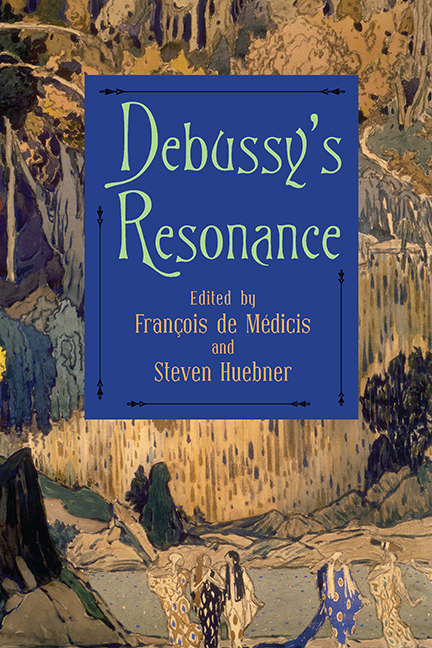
Some of Debussy's most beloved pieces, as well as lesser-known ones from his early years, set in a rich cultural context by leading experts from the English- and French-speaking worlds.
Now published for the International Brecht Society by Camden House, the Brecht Yearbook is the central scholarly forum for discussion of Bertolt Brecht's life and work and of topics of particular interest to Brecht, especially the politics of literature and of theater in a global context. It includes a wide variety of perspectives and approaches, and, like Brecht himself, is committed to the concept of the use value of literature, theater, and theory. Volume 41 features an interview with longtime Berliner Ensemble actor Annemone Haase by Margaret Setje-Eilers. A special section on teaching Brecht, guest-edited by Kristopher Imbrigotta and Per Urlaub, includes articles on creative appropriation in the foreign-language classroom (Caroline Weist), satire in Arturo Ui and The Great Dictator (Ari Linden), performative discussion (Cohen Ambrose), Brecht for theater majors (Daniel Smith), teaching performance studies with the Lehrstück model (Ian Maxwell), Verfremdung and ethics (Elena Pnevmonidou), Brecht on the college stage (Julie Klassen and Ruth Weiner), and methods of teaching Brechtian Stückschreiben (Gerd Koch). Other research articles focus on Harry Smith's Mahagonny (Marc Silberman), inhabiting empathy in the contemporary piece Temping (James Ball), Brecht's appropriation of Kurt Lewin's psychology (Ines Langemeyer), and Brecht's collaborations with women, both across his career (Helen Fehervary) and in exile in Skovbostrand (Katherine Hollander). Editor Theodore F. Rippey is Associate Professor of German at Bowling Green State University.
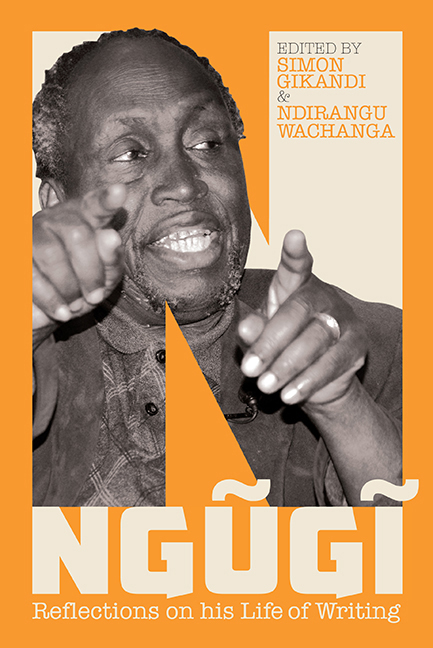
First-hand accounts of how Ngugi wa Thiong'o's life and work have intersected, and the multiple forces that have converged to make him one of the greatest writers to come out of Africa in the twentieth century.
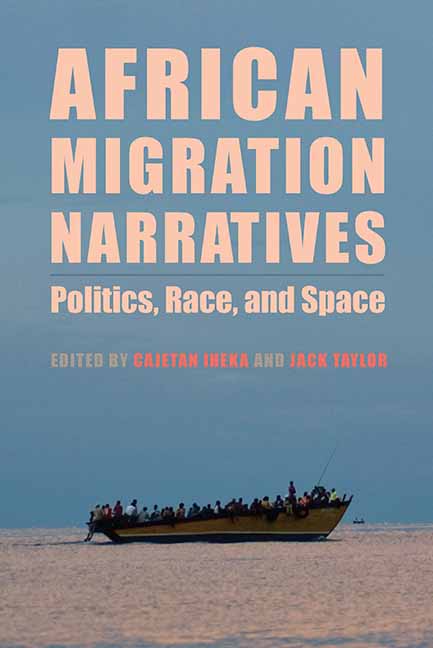
Examines the representations of migration in African literature, film, and other visual media, with an eye to the stylistic features of these works as well as their contributions to debates on migration.
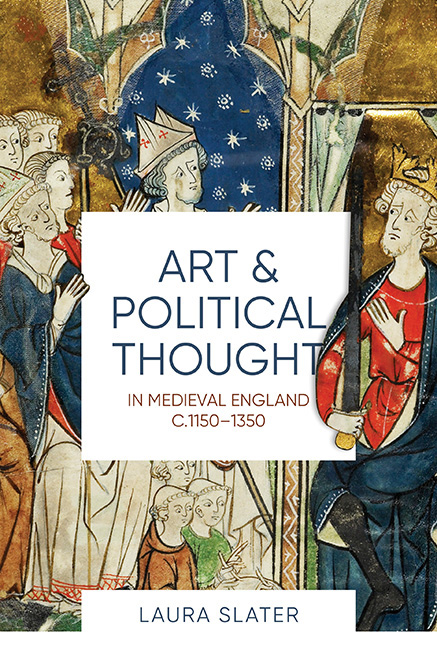
This book provides a comprehensive revision and analysis of Normandy, its rulers, and governance between the traditional date for the foundation of the duchy, 911, and the completion of the conquest led by Count Geoffrey V of the Angevins, 1144. It examines how the Norman dukes were able to establish and then to maintain themselves in their duchy, providing a new historical narrative in the process. It also explores the various tools that they used to promote and enforce their authority, from the recruitment of armies to the use of symbolism and emotions at court. In particular, it also seeks to come to terms with the practicalities of ducal power, and reveals that it was framed and promoted from the bottom up as much as from the top down. Dr Mark Hagger is Senior Lecturer in History, School of History, Welsh History and Archaeology, Bangor University.
The composer's diaries, translated for the first time, with commentary on his distinctive musical aesthetics and his relationship to artistic cross-currents in Czechoslovakia, France, and America.
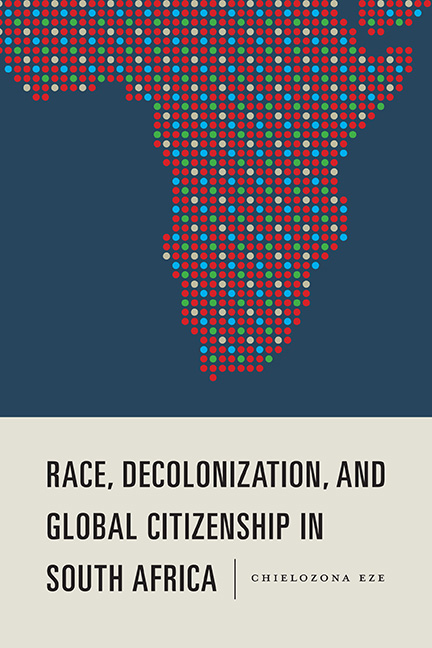
Examines the importance of South Africa's peaceful transition to democracy, especially in light of Nelson Mandela's belief that cosmopolitan dreams are not only desirable but a binding duty.
Introduces Skelton and his work to readers unfamiliar with the poet, gathers together the vibrant strands of existing research, and opens up new avenues for future studies.