Flip it Open aims to fund the open access publication of 128 titles through typical purchasing habits. Once titles meet a set amount of revenue, we have committed to make them freely available as open access books here on Cambridge Core and also as an affordable paperback. Just another way we're building an open future.
To save content items to your account,
please confirm that you agree to abide by our usage policies.
If this is the first time you use this feature, you will be asked to authorise Cambridge Core to connect with your account.
Find out more about saving content to .
To save content items to your Kindle, first ensure no-reply@cambridge.org
is added to your Approved Personal Document E-mail List under your Personal Document Settings
on the Manage Your Content and Devices page of your Amazon account. Then enter the ‘name’ part
of your Kindle email address below.
Find out more about saving to your Kindle.
Note you can select to save to either the @free.kindle.com or @kindle.com variations.
‘@free.kindle.com’ emails are free but can only be saved to your device when it is connected to wi-fi.
‘@kindle.com’ emails can be delivered even when you are not connected to wi-fi, but note that service fees apply.
Chapter 1 establishes a framework for understanding how the Romantic epic served as a vital literary form for addressing the tensions raised by the evangelical revival and the development of ideologies of Christian imperialism. Identifying epic poetry as an inherently conflicted genre that at once embodies reverence towards tradition and rebellion against it, the chapter investigates unique tensions in the Romantic epic that suspend it between an exterior focus influenced by the classics and an interior orientation inspired by Milton. Examining the conflicts within and between evangelism and the secular civilizing mission, the chapter argues that tensions within the epic genre make it useful for addressing similar anxieties exposed by the development of Christian imperialism.
In Chapter 2, Chen takes his readers to the roots of Chinese face and politeness: the social structure of hierarchy and the social value of harmony. Both features are traced to Confucianism, a codification of a society in which every member knows the rung they are at on the ladder of the social hierarchy and is expected to behave accordingly. To keep such a society stable, the notion of harmony is championed by Chinese philosophers, most notably Confucius. To promote harmony, Chen demonstrates, Confucius prescribes an elaborate system of behavioral rules for people of all walks of life. The monarch and the ruling class should be benevolent, subordinates loyal; parents should be caring; children filial; husbands should be responsible, wife faithful. Finally, every member of the society should strive for ren, which includes all that is good, and treat others with deference and respect. Lastly, Chen argues that the notions of hierarchy and harmony have been remarkably stable across the ages and appear to be present in contemporary Chinese-speaking societies outside mainland China: Taiwan and Hong Kong.
The concluding chapter takes a brief case study of performers’ experiences in various roles in the history play cycle performed at Shakespeare’s Globe in 2019. These performers’ voices both enrich and complicate the arguments made in the previous chapters and offer perspective on how the view of Shakespeare’s history plays put forward by this monograph might have practical use for artists but also point to areas of future study.
In this book, Rong Chen provides a thorough discussion of Chinese politeness and argues for universality in politeness theorizing. Based on in-depth analyses, the author dichotomizes Chinese face into Face1 and Face2 – the former referring to the person and the latter to the persona of the speaker – and proposes a model of Chinese politeness (MCP), with the notion of harmony at the center. Chinese politeness thusly conceived – the author argues – should be seen as a cultural-specification of a universal theory of politeness dubbed Brown and Levinson Extended (B&L-E), a model that anchors with Brown and Levinson’s theory but with the incorporation of the notions of self-politeness and impoliteness. The author then applies MCP and B&L-E to the analyses of Chinese politeness, both diachronically and synchronically, and to comparisons of politeness between Chinese and other languages. The results demonstrate that B&L-E is capable of accounting for variation as well as consistency across time and space, differences as well as similarity between linguacultures, and fluidity as well as stability in meaning making in authentic interaction. The monograph hence presents a rare challenge to politeness research and pragmatics, which have emphasized particularism at the expense of universalism.
The introduction explores how a popular sense of ‘Shakespearean’ history continues to influence historical drama today, looking to the Broadway play and subsequent HBO drama All the Way as an example. I then introduce the key concepts I will use to interrogate standing assumptions about ‘Shakespearean’ history, including the framework for feminist Shakespearean analysis first proposed by Lisa Jardine (1989), who argued for drawing upon archival materials to combat misleading assumptions about the role of women in both the plays and the early modern period itself; Henry S. Turner’s ‘New Theatricality’ (2012), though I instead suggest the term ‘dramaturgy’, borrowed from the theatre to reflect the inextricability of literary analysis and staging practise; and Pascale Aebischer’s concept of ‘negotiated reading’, which ‘deliberately seek[s] out opaque signs, empty spaces, silences, marginalised sign-clusters and characters’ and proposes the utility of reading early modern texts alongside contemporary performance. Finally, I introduce my own key concept: historical dramaturgy, the process of adapting historical sources into dramatic form. Female characters, I argue, can provide the key for understanding how Shakespeare’s historical dramaturgy works, and thus how he as a dramatist understood the form and purpose of history.
The book concludes with a chapter that links my argument to the poetic theory and epic practice of the canonical Romantics. Situating Wordsworth’s Prelude and Byron’s Don Juan in the epic revival reveals how they participate in the trends of the period by addressing the tensions of the evangelical turn of empire. The Prelude elaborates the tradition of epic poetry that broadly affirms assumptions of British imperialism while resisting and seeking to temper its worst aspects. Don Jua, on the other hand, may be read as an extension of more subversive uses of the epic genre, attempting oppose imperialism – or at least many of its forms – by decrying the very idea of transforming others. Yet in Byron’s rejection of conversion, and in his embrace of a subjectivity made thinkable by the increasing secularization of the world, he offers an alternate path for reclaiming a sense of wholeness, one grounded in doubt and critical thought.
This chapter provides a survey of the most common scholarly assumptions about the nature of a history play – that it is tragic, historically accurate, relates to a broader nationalistic agenda and that exclusion of the female is fundamental to the genre – and looks at how reading plays by Shakespeare and his contemporaries through the lens of their most prominent female characters troubles these preconceptions. It first explores how the sub-genre of romantic histories challenges the assumption that a history play is concerned with historical accuracy. Reading Shakespeare’s co-authored Edward III as an example of this genre demonstrates its influence on the rest of his canon. It then re-evaluates the stereotype that foreign characters – especially foreign female characters – are always a threat against which the English national identity can be defined by contrast. It takes Margaret of Anjou as a case study in reading female characters not as women but as dramatic devices. The final section looks again to the tone of the plays to unpick how scenes of overwhelming female emotion can be seen as essential features of the history play genre and part of what contributed to the genre’s popularity in the eras when it was most frequently performed.
In this chapter, MCP and B&L-E are applied to contemporary politeness phenomena in the Chinese linguaculture. Four areas are selected for analysis: Self-denigration and self-presentation, moral order and morality, conflict resolution, and humorous mockery. These areas – which would seem to be disparate at first sight – are expected to display different politeness principles at work. However, Chen shows that MCP and B&L-E, working together, offer a unified account for all while, at the same time, are capable of revealing differences among them. Humorous mockery, for instance, has been viewed by some as a genre to which politeness does not apply. Chen’s analysis demonstrates that it does, as long as one sees it as a tug-of-war between self-politeness and other-politeness.
This Introductory chapter previews the main argument. I emphasize that there are two key elements in shaping judicial impact for structural cases: the oversight mechanisms that some high courts deploy to monitor compliance with their structural rulings and the advocacy organizations that mobilize in the aftermath of these rulings. The chapter also presents the book’s three main contributions: First, a careful dissection of post-ruling politics uncovers the mechanisms that create impact. Second, through a comparative study of monitoring tools, the book contributes to our understanding of how judicial power is constructed in the Global South. Third, it shows that these courts do not necessarily displace democratic politics, or elected policymakers; instead, they can create new political spaces devoted to special problems.
Chapter 3 is devoted to the notion of Chinese face. Chinese face, Chen argues, is bifurcated into Face1 and Face 2. Face 1, most often represented by lian, the lexeme that denotes the physical face of a person, refers to character, intelligence, morality, ethics, and accomplishment, aspects that identify and define a person. Face2, most often represented by mian(zi), the lexeme that denotes the surface of a person or thing, refers to the way a person appears to or is perceived by others. Face 1 is hence the person while Face2 is the persona (of the person). As such, Face 1 is intrinsic and internal while Face2 is other-facing and interactional; Face1 is gained over time while Face2 can be gained by one act; Face 1 is difficult to regain if lost while Face2 can be re-obtained via corrective actions.
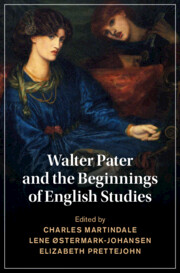
Walter Pater's significance for the institutionalization of English studies at British universities in the nineteenth century is often overlooked. Addressing the importance of his volume Appreciations (1889) in placing English literature in both a national and an international context, this book demonstrates the indebtedness of the English essay to the French tradition and brings together the classic, the Romantic, the English and the European. With essays on drama, prose, and poetry, from Shakespeare and Browne, to Lamb, Coleridge, Wordsworth and Pater's contemporaries Rossetti and Morris, Appreciations exemplifies ideals of aesthetic criticism formulated in Pater's first book, Studies in the History of the Renaissance (1873). Subjectivity pervades Pater's essays on the English authors, while bringing out their exceptional qualities in a manner reaching far into twentieth-century criticism. This title is part of the Flip it Open Programme and may also be available Open Access. Check our website Cambridge Core for details.