Flip it Open aims to fund the open access publication of 128 titles through typical purchasing habits. Once titles meet a set amount of revenue, we have committed to make them freely available as open access books here on Cambridge Core and also as an affordable paperback. Just another way we're building an open future.
To save content items to your account,
please confirm that you agree to abide by our usage policies.
If this is the first time you use this feature, you will be asked to authorise Cambridge Core to connect with your account.
Find out more about saving content to .
To save content items to your Kindle, first ensure no-reply@cambridge.org
is added to your Approved Personal Document E-mail List under your Personal Document Settings
on the Manage Your Content and Devices page of your Amazon account. Then enter the ‘name’ part
of your Kindle email address below.
Find out more about saving to your Kindle.
Note you can select to save to either the @free.kindle.com or @kindle.com variations.
‘@free.kindle.com’ emails are free but can only be saved to your device when it is connected to wi-fi.
‘@kindle.com’ emails can be delivered even when you are not connected to wi-fi, but note that service fees apply.
This chapter provides new insights into Neoclassicism, Nazarene art, and translational printmaking through an overview of the long-neglected prints of three female artists from German-speaking countries. Angelika Kauffmann, a central figure of Neoclassicism was active in many countries. Prints by her own hand as well as reproductive prints by others after her original paintings helped spread her fame as a history painter. Her success set an example for younger women artists such as Marie Ellenrieder, who admired Kauffmann, even as she moved beyond Neoclassicism to become an important Nazarene creating numerous works for the Catholic Church, including devotional prints and altar paintings. While Kauffmann and Ellenrieder both worked as painters and printmakers, the older artist Maria Katharina Prestel worked exclusively as an interpretive printmaker. With her husband, she maintained a workshop in which she reproduced drawings, sometimes using newly developed graphic techniques.
While her career remains vastly understudied, the Anglo-Italian narrative and portrait painter Maria Cosway (1760–1838) reached rare levels of recognition for an artist of any sex during her life by exhibiting to regular acclaim at London’s Royal Academy from 1781 to 1801. In these same years, and after she ceased exhibiting, Cosway also consistently engaged with print – an aspect of her artistic practice that has yet to be the subject of sustained scholarly work.
This chapter offers an initial foray into understanding Cosway’s relationship with and steady pursuit of the printed medium. Above all, it emphasises the implicitly professional nature of her published endeavours – according to definitions of professionalism at the time – by highlighting her contributions to five artistic, didactic printed series executed in London and Paris. Why print, and why these projects? What did she see in the medium that she may not have found in her painting practice? How might gender have factored into these decisions and, vitally, into her works’ reception? After two decades in the public eye, what was at stake for Cosway – might she have used print to claim a discrete identity as an artistic professional?
This chapter traces the career of the printseller Hannah Humphrey and her long association with James Gillray, with whom she lived in some form of partnership from 1794 until Gillray’s death in 1815. Brought up in a shop that sold shells and other curiosities, Hannah’s brother George became the leading commercial expert on shells while her sister Elizabeth married the world’s most important dealer in minerals. As for Hannah, by the time she was twenty-eight, she ran a shop selling prints, and, by the time she died, was the best-known caricature printseller in London. She and her brother William worked with Gillray from the outset of his career, but Hannah ultimately became Gillray’s sole publisher and even a collaborator who likely took part in the creative process as well as the business.
Women’s labour and contributions to the print publishing industry are all too frequently hidden in plain sight beneath the names of their male relatives. Between 1740 and 1800, at least twelve women in London independently managed businesses that published or retailed prints: Elizabeth Bartlet Bakewell, Ann Harper Bryer, Elizabeth Lyfe D’Achery, Mary Salmon Darly, Elizabeth Griffin, Hannah Humphrey, Dorothy Clapham Mercier, Hester Griffin Jackson Pulley, Mary Brown Ryland, Mary Baker Overton Sayer, Susanna Sledge, and Susanna Parker Vivares. This chapter surveys their careers, which stand as a representative sample for a much larger total number. Ranging from the renowned to the completely unknown, these women form a disparate group in terms of their origins, means of entry into the field, aesthetic interests, political beliefs, duration and scale of their firms, and widely varying levels of success. Reconstructing their histories demonstrates women’s ongoing contributions to the business of publishing and selling prints in eighteenth-century London.
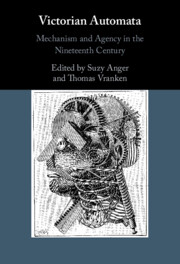
The relationship between lifelike machines and mechanistic human behaviour provoked both fascination and anxiety in Victorian culture. This collection is the first to examine the widespread cultural interest in automata – both human and mechanical – in the nineteenth century. It was in the Victorian period that industrialization first met information technology, and that theories of physical and mental human automatism became essential to both scientific and popular understandings of thought and action. Bringing together essays by a multidisciplinary group of leading scholars, this volume explores what it means to be human in a scientific and industrial age. It also considers how Victorian inquiry and practices continue to shape current thought on race, creativity, mind, and agency. This title is part of the Flip it Open programme and may also be available Open Access. Check our website Cambridge Core for details.
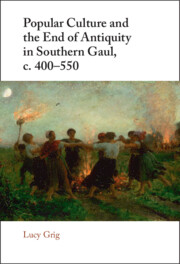
This book offers a new look at the transformation of the classical world in Late Antiquity. It focuses on a particular region, rich in both archaeological and literary evidence, and examines the social, cultural and religious history of late antique southern Gaul through the lens of popular culture. Using material culture, comparative and theoretical material alongside the often dominant normative and prescriptive texts produced by the late antique church, Lucy Grig shines a fresh light on the period. She explores city and countryside alike as contexts for late antique popular culture, and consider a range of case-studies, including the vibrant late antique festival of the Kalends of January. In this way important questions of continuity, change and historical agency are brought to the fore. This title is part of the Flip it Open Programme and may also be available Open Access. Check our website Cambridge Core for details.
A ground-breaking contribution that broadens our understanding of the history of prints, this edited volume assembles international senior and rising scholars and showcases an array of exciting new research that reassesses the history of women in the graphic arts c. 1700 to 1830. Sixteen essays present archival findings and insightful analyses that tell compelling stories about women across social classes and nations who persevered against the obstacles of their gender to make vital contributions as creative and skilled graphic artists, astute entrepreneurs and savvy negotiators of copyright law in Britain, France, Germany, Holland, Italy and the United States. The book is a valuable resource for both students and instructors, offers important new perspectives for print scholars and aims to provide impetus for further research. This title is part of the Flip it Open Programme and may also be available Open Access. Check our website Cambridge Core for details.
This chapter investigates Shelley’s fascination with issues of communication, especially his engagement with concepts of action at a distance, “the action of one object on another regardless of the presence or absence of an intervening medium” (Oxford English Dictionary). Shelley’s attempts to overcome distances of space and time were a feature of his correspondence, especially during his years in Italy. Action at a distance also informs his representation of a materialized physical universe in early works like Queen Mab (1813) and provides a foundation for his later accounts of political communication in The Mask of Anarchy (1819). I suggest that Shelley’s account of unmediated action at a distance coalesces with more recent treatments of matter and mediation in quantum physics and especially in Karen Barad’s account of material entanglements in which “matter [is] a dynamic and shifting entanglement of relations, rather than a property of things.” Shelley’s poetry itself functions as a form of Baradian apparatus with the facility to offer “agential cuts,” providing moments of insight within intra-active material systems. In these poems, Shelley presents the universe as one continuous material system, which enables unmediated communication across any distance, and which at times of political crisis enables instantaneous solidarity and resistance.
This chapter considers Shelley’s attempt to think before the “Error and Truth” of Enlightenment humanity, and before the binaristic split between the white male bourgeois Human and those not included in those definitions of humanity. Tracing his iconoclastic resistance to normative categories of gender, race, and the human as well as his idealistic attempt to recreate those categories in a reading of The Witch of Atlas, with its double creation of Witch and the Witch’s “sexless” creature, the chapter explores the poet’s radical understanding of gender and sex beyond the male–female binary alongside the poet’s commentary and critique on the dimorphic gender–sex systems circulating in discourse of his day. The chapter argues that his imagining of the creation of new beings – both the Witch and her creature – figure Shelley’s reply to Mary Shelley’s Frankenstein, as an alternative being beyond Western, Enlightenment notions of the human. Particularly through the envisioning of the nonbinary being of the Witch's creature as well as its flight through the world as an “image” and “sexless thing,” Shelley attempts to conceive of a continuum of gender and sex, one in which the gendered and racialized alterity of the Witch’s creature is embraced and prioritized, even though it may be imperfectly imagined.