Flip it Open aims to fund the open access publication of 128 titles through typical purchasing habits. Once titles meet a set amount of revenue, we have committed to make them freely available as open access books here on Cambridge Core and also as an affordable paperback. Just another way we're building an open future.
To save content items to your account,
please confirm that you agree to abide by our usage policies.
If this is the first time you use this feature, you will be asked to authorise Cambridge Core to connect with your account.
Find out more about saving content to .
To save content items to your Kindle, first ensure no-reply@cambridge.org
is added to your Approved Personal Document E-mail List under your Personal Document Settings
on the Manage Your Content and Devices page of your Amazon account. Then enter the ‘name’ part
of your Kindle email address below.
Find out more about saving to your Kindle.
Note you can select to save to either the @free.kindle.com or @kindle.com variations.
‘@free.kindle.com’ emails are free but can only be saved to your device when it is connected to wi-fi.
‘@kindle.com’ emails can be delivered even when you are not connected to wi-fi, but note that service fees apply.
Standard economic reasoning makes a compelling case for taxing on a lifetime (or even multigenerational) scale, instead of annually. But, in addition to practical problems, lifetime accounting raises serious philosophical challenges and objections. The question of the relevant time period over which to distribute tax (and other fiscal) benefits and burdens is fundamental in a number of areas. Among them are the longstanding debate about income versus consumption taxation, the equity of retirement programmes, and the progressivity of various countries’ fiscal systems.
In this chapter we provide simulations of Bohmian trajectories and probability distributions for a variety of linear potentials. We also discuss the possible physics-analogous interpretations of the model parameters from the previous chapter, in terms of which these simulations are shown. We hope this chapter can be inspirational to all those readers who also believe that the quantum physics– like research orientation is really the next important step to take.
This chapter discusses important notions which aid in formalizing how prices move toward equilibrium. We tackle the concepts of price discovery and price formation. The Kyle and Glosten and Milgrom models are discussed. We also go into some detail on the Rosenow model.
Transformative constitutions – which have been described as bringing about more than reform but less than a revolution – steer countries towards democracy, participation, and egalitarianism. The interpretation and enforcement of such transformative constitutions by courts and public institutions, such as tax administrations, deliver radical social change. A core aim of a transformative constitution is to promote greater democracy and participation in governance and, thus, state-building. Relying on case studies from Kenya, this chapter asks how citizens contribute to state-building by participating in the national tax policy, administration, and legislative processes and considers the roles of transparency and inclusivity on such public participation.
This chapter starts with the idea of a quantized version of supply and demand. We also provide for a discussion why quantum probability is useful in both option pricing and investment choice decisions. We also discuss briefly quantum-like Bayesian networks within the setting of missing financial data. We also hint toward the usefulness of open systems in social science and then dive into the very important observation that Black–Scholes Hamiltonians are non-Hermitian. Toward the end of the chapter, we give an overview of models (with and without memory and (a)symmetry between past and future times). We give some examples and then conclude the chapter with thoughts on the limitations of mathematical modelling.
Basque is a language of central importance to linguists because it is a 'language isolate,' a rare type of language that is typologically 'alone' and cannot be classified as a part of any language family. Language isolates remain somewhat a mystery, and this book aims to provide an important piece of the puzzle, by both exploring the structure of Basque and shedding new light on its unique place within the languages of the world. It meticulously examines various properties of Basque, including the alignment of intransitive verbs, the introduction of dative arguments, the nature of psych predicates, the causative/inchoative alternation, impersonals, and morphological causatives. By doing so, it presents a comprehensive overview of Basque's intricacies within the realm of argument structure alternations and voice. In its final chapter, it provides an introduction to potential formal analyses of the topics discussed, paving the way for future research in the field. This title is part of the Flip it Open programme and may also be available open access. Check our website Cambridge Core for details.
This concise and self-contained book opens completely novel areas of research by directly implementing concepts from quantum physics into areas of social science. It constructs compelling arguments originating from fundamental concepts in physics and the philosophy of science, including key developments in economics and finance, then surveys the important work which has been performed to date through applying the formalism of quantum mechanics to decision making and finance. The book is accessible to graduate students and researchers in social science and physics, as well as avid interdisciplinary readers. This title is part of the Flip it Open Programme and may also be available Open Access. Check our website Cambridge Core for details.
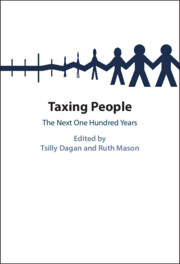
The modern international tax system is a complex framework of national laws, bilateral treaties, and multilateral agreements aimed at coordinating state tax entitlements. Historically, taxation was based on political allegiance, but globalization and increased mobility introduces new challenges. As more people and businesses operate across borders, it becomes harder to determine which states have the right to tax them. Fragmentation of individuals' economic and political lives has complicated states' abilities to balance liberty, justice, and collective decision-making. Taxing People addresses taxes on individuals, which are crucial for providing public goods, promoting justice, and legitimizing state power. Exploring the future of individual taxation, the book focuses on global tax governance, social changes like remote work, and the evolving relationship between people and states in a globalized economy. This title is part of the Flip it Open Programme and may also be available open access. Check our website Cambridge Core for details.
The kingdom of Alania was the most powerful polity in the medieval North Caucasus. It contained strategic mountain passes across the Caucasus mountains, as well as urban centres larger than any in contemporary Rus'. Its kings retained power from the mid-ninth to the late eleventh centuries, intermarried with the ruling families of Georgia and Byzantium, and led armies that terrorised the South Caucasus. In this, the first book to explore the subject in the English language, Latham-Sprinkle sheds light on how the kings of Alania came to embody 'the power of the foreign' – the status which accrued to individuals who could access the material and spiritual products of distant lands – thus rendering the development of a state structure unnecessary. Challenging existing narratives that centre elites and the state, Latham-Sprinkle provides an important contribution to the historiography of medieval state formation, Christianisation, and transregional connection. This title is part of the Flip it Open programme and may also be available open access. Check our website Cambridge Core for details.
During times of crisis, such as the COVID-19 pandemic, policymakers and the public reveal a strong preference for fairness in pricing even when that would reduce efficiency. For example, they support the application of price gouging laws that prevent prices for necessities from skyrocketing but probably also dampen incentives for firms to produce more and alleviate the shortage. More generally, a growing body of research reveals that consumers have a strong preference for fairness over wealth maximization. This suggests that in making price policy, governments should abandon neoclassical economics and its wealth maximization criterion in favor of an approach that treats fairness in pricing as a first principle and paramount value. The chapter considers the implications of this "neo-Kantian" approach to price policy for antitrust law and policy in particular.
This chapter critiques private property on four grounds. First, private property pushes resources into the hands of those who have more at the expense of those who have less. This arises because wealthier people are willing to pay more for normal goods so they tend to bid successfully for them, and because their wealth allows them to hold out for a larger share of the gains from trade. Second, private property is, in fact, allocatively inefficient. This is because the use of willingness to pay as an allocational technology means that the allocation of property is partially driven by ability to pay rather than a purchaser’s greater productive efficiency. Private property is also allocatively inefficient due to the monopoly power that it places in the hands of owners. Third, the regressivity of private property creates a powerful propertied class that can come to dominate the political system. Finally, both the regressivity and the inefficiency of private property have become even more stark in the internet era because markets which already have strong network effects and are vulnerable to domination by monopolists exacerbate both features.
Contemporary interest among American progressives in using antitrust law to address wealth inequality lacks a firm intellectual foundation. Indeed, both the original American progressives of a century ago and Thomas Piketty, whose work sparked contemporary interest in inequality, agree that inequality’s source is scarcity, rather than monopoly, and so inequality will persist even in perfectly competitive markets. The only real solution is taxation, not a potentially destructive campaign of breakup. Why, then, is antimonopolism so popular among American progressives today? There are two reasons. The first is American anti-statism, which has closed off tax policy as a viable political solution to inequality, forcing progressive scholars and activists to seek a second- or third-best workaround in antitrust policy. The second is the American press, which is actively promoting antimonopolism as a way of fighting back against Google and Facebook, two companies that have badly outcompeted the press for advertising dollars in recent years.
The US corporate tax is over 100 years old, and many academic observers have doubted its value. The standard explanation for why we tax corporations is that it is an indirect tax on shareholders, but that is not a valid reason to have a corporate tax because (a) shareholders can be taxed directly and (b) many shareholders are tax-exempt and should not be taxed at all. However, there is another reason to tax corporations, which was in fact the original rationale why we adopted the corporate tax in 1909: to limit the power of large monopolistic corporations and regulate their activities. If that is the reason for the corporate tax, the US should have a different tax structure than the current 21 percent flat tax. The corporate tax should be set at zero for normal returns and at a sharply progressive rate for supernormal returns (rents).
Progressives who respond to conservative law and economic arguments by rejecting neoclassical economic theory are making a mistake. Neoclassical economics is the only ideology that honors the modern view – associated with the Death of God narrative in Western culture – that there are no longer universal standards of value. To make a case for redistribution of wealth that appeals to the modern view regarding value – a view that progressives themselves hold – progressives must engage with economics. Fortunately, the concept of the gains from trade in neoclassical economics (also known as "surplus" or "economic rent") allows progressives to make a strong case for redistribution of wealth. That is because gains from trade can be redistributed without harming efficiency by varying the prices at which inframarginal units change hands. This insight is called "inframarginalism" to contrast it with the conservative view that the valuations of the marginal buyer and seller pin down price in competitive markets and therefore prevent redistribution of the gains from trade.
In the digital economy, quality is increasingly becoming the predominant variable of competition. Markets are expected to seek out that state of affairs in which product quality rather than efficiency is maximized. But an effective conceptual resolution of what constitutes product quality is more complex and elusive than previously thought, and there has been a widespread repudiation of the notion that dominant online platforms can be held accountable for failing to deliver something that a single descriptive standard would command them to produce. Furthermore, microeconomic theory provides little guidance for evaluating how adjustments in the level of competition in a market have a bearing on product quality. This chapter suggests that claims relating to product quality can best be resolved by underscoring loyalty. Product quality, viewed from this perspective, provides a framework for assessing the behavior of digital platforms while at the same time legitimizing the manner in which zero-price markets operate. The issue is most prominent with regard to search engine rankings, privacy, and the sale of goods in online marketplaces.
Academic plagiarism norms enable successful scholars to monopolize ideas. The New Brandeis School in antitrust has sought to expand antitrust’s scope and ought, therefore, to support antitrust action against enforcers of plagiarism rules. However, the New Brandeis School includes many scholars, writers, and other creatives and has tended to support monopolization of intellectual output by creatives. For example, New Brandeisians have called for expansion of intellectual property laws to include news and for the non-enforcement of the antitrust laws against cartels of musicians. As a result, it is unlikely that this School will champion antitrust action against plagiarism norms.