Refine search
Actions for selected content:
2633 results in Flip it Open
Dedication
-
- Book:
- Rituals, Runaways, and the Haitian Revolution
- Published online:
- 10 November 2021
- Print publication:
- 28 October 2021, pp v-vi
-
- Chapter
- Export citation
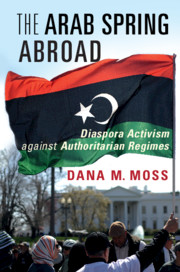
The Arab Spring Abroad
-
- Published online:
- 18 October 2021
- Print publication:
- 30 September 2021
-
- Book
- Export citation
Appendices
-
- Book:
- Black Markets and Militants
- Published online:
- 01 October 2021
- Print publication:
- 14 October 2021, pp 325-326
-
- Chapter
- Export citation
2 - Investing in Islamism: Labor Remittances, Islamic Banking, and the Rise of Political Islam in Sudan
- from II - The Institutional Context in an Era of Abundance
-
- Book:
- Black Markets and Militants
- Published online:
- 01 October 2021
- Print publication:
- 14 October 2021, pp 92-127
-
- Chapter
- Export citation
Tables
-
- Book:
- Black Markets and Militants
- Published online:
- 01 October 2021
- Print publication:
- 14 October 2021, pp x-x
-
- Chapter
- Export citation
I - The Framework
-
- Book:
- Black Markets and Militants
- Published online:
- 01 October 2021
- Print publication:
- 14 October 2021, pp 1-20
-
- Chapter
- Export citation
7 - The Political Economy of Radicalization: Informal Networks and the Rise of an Urban Militant Islamism in Cairo
- from III - Globalization and Institutional Change in an Era of Scarcity
-
- Book:
- Black Markets and Militants
- Published online:
- 01 October 2021
- Print publication:
- 14 October 2021, pp 263-313
-
- Chapter
- Export citation
Appendix B - Appendices
-
- Book:
- Black Markets and Militants
- Published online:
- 01 October 2021
- Print publication:
- 14 October 2021, pp 326-326
-
- Chapter
- Export citation
4 - Economic Crisis, Informal Institutions, and the Transformation of Islamist Politics in Egypt
- from III - Globalization and Institutional Change in an Era of Scarcity
-
- Book:
- Black Markets and Militants
- Published online:
- 01 October 2021
- Print publication:
- 14 October 2021, pp 153-177
-
- Chapter
- Export citation
II - The Institutional Context in an Era of Abundance
-
- Book:
- Black Markets and Militants
- Published online:
- 01 October 2021
- Print publication:
- 14 October 2021, pp 21-150
-
- Chapter
- Export citation
Appendix A - Appendices
-
- Book:
- Black Markets and Militants
- Published online:
- 01 October 2021
- Print publication:
- 14 October 2021, pp 325-325
-
- Chapter
- Export citation
Index
-
- Book:
- Black Markets and Militants
- Published online:
- 01 October 2021
- Print publication:
- 14 October 2021, pp 391-404
-
- Chapter
- Export citation
5 - From Remittance Economy to Rentier State: The Rise and Fall of an Islamist Authoritarian Regime in Sudan
- from III - Globalization and Institutional Change in an Era of Scarcity
-
- Book:
- Black Markets and Militants
- Published online:
- 01 October 2021
- Print publication:
- 14 October 2021, pp 178-218
-
- Chapter
- Export citation
Preface
-
- Book:
- Black Markets and Militants
- Published online:
- 01 October 2021
- Print publication:
- 14 October 2021, pp xv-xx
-
- Chapter
- Export citation
Acknowledgments
-
- Book:
- Black Markets and Militants
- Published online:
- 01 October 2021
- Print publication:
- 14 October 2021, pp xi-xiv
-
- Chapter
- Export citation
6 - State Collapse, Informal Networks, and the Dilemma of State Building in Somalia
- from III - Globalization and Institutional Change in an Era of Scarcity
-
- Book:
- Black Markets and Militants
- Published online:
- 01 October 2021
- Print publication:
- 14 October 2021, pp 219-262
-
- Chapter
- Export citation
Contents
-
- Book:
- Black Markets and Militants
- Published online:
- 01 October 2021
- Print publication:
- 14 October 2021, pp vii-viii
-
- Chapter
- Export citation
III - Globalization and Institutional Change in an Era of Scarcity
-
- Book:
- Black Markets and Militants
- Published online:
- 01 October 2021
- Print publication:
- 14 October 2021, pp 151-324
-
- Chapter
- Export citation
Introduction
- from I - The Framework
-
- Book:
- Black Markets and Militants
- Published online:
- 01 October 2021
- Print publication:
- 14 October 2021, pp 3-20
-
- Chapter
- Export citation
1 - “The House the Boom Built”: The Informal Economy and Islamist Politics in Egypt
- from II - The Institutional Context in an Era of Abundance
-
- Book:
- Black Markets and Militants
- Published online:
- 01 October 2021
- Print publication:
- 14 October 2021, pp 23-91
-
- Chapter
- Export citation
