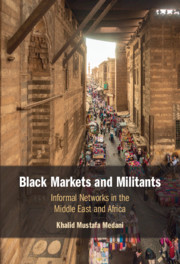
Understanding the political and socio-economic factors which give rise to youth recruitment into militant organizations is at the heart of grasping some of the most important issues that affect the contemporary Middle East and Africa. In this book, Khalid Mustafa Medani explains why youth are attracted to militant organizations, examining the specific role economic globalization, in the form of outmigration and expatriate remittance inflows, plays in determining how and why militant activists emerge. The study challenges existing accounts that rely primarily on ideology to explain militant recruitment. Based on extensive fieldwork, Medani offers an in-depth analysis of the impact of globalization, neoliberal reforms and informal economic networks as a conduit for the rise and evolution of moderate and militant Islamist movements and as an avenue central to the often, violent enterprise of state building and state formation. In an original contribution to the study of Islamist and ethnic politics more broadly, he thereby shows the importance of understanding when and under what conditions religious rather than other forms of identity become politically salient in the context of changes in local conditions.
Co-winner, 2022 Best Book on MENA Politics by a Senior Scholar, American Political Science Association
'Based on long-term, immersive field research in Egypt, Sudan and Somalia, Medani traces how globalization produced thriving informal markets and ultimately led to the rise of distinct forms of identity politics in these countries. Variable state capacity to regulate financial inflows as well as the ability of different political coalitions to monopolize lucrative informal markets shaped whether Islamist or ethnic politics prevailed and gained mass appeal. In this ambitious book, Medani shows us what actually happened on the ground to produce distinct forms of identity politics.'
Melani Cammett - Harvard University
This is a provocative and timely intervention in a stale literature that casts orientalist claims about the relations between informal Muslim financing, militancy, and terrorism. Medani challenges this scholarship and introduces contentious but credible propositions about the relationship between informal financial networks and political conflicts. It is a worthy read.
Abdi Samatar - University of Minnesota
Loading metrics...
* Views captured on Cambridge Core between #date#. This data will be updated every 24 hours.
Usage data cannot currently be displayed.
This section outlines the accessibility features of this content - including support for screen readers, full keyboard navigation and high-contrast display options. This may not be relevant for you.
Accessibility compliance for the PDF of this book is currently unknown and may be updated in the future.

