To save content items to your account,
please confirm that you agree to abide by our usage policies.
If this is the first time you use this feature, you will be asked to authorise Cambridge Core to connect with your account.
Find out more about saving content to .
To save content items to your Kindle, first ensure no-reply@cambridge.org
is added to your Approved Personal Document E-mail List under your Personal Document Settings
on the Manage Your Content and Devices page of your Amazon account. Then enter the ‘name’ part
of your Kindle email address below.
Find out more about saving to your Kindle.
Note you can select to save to either the @free.kindle.com or @kindle.com variations.
‘@free.kindle.com’ emails are free but can only be saved to your device when it is connected to wi-fi.
‘@kindle.com’ emails can be delivered even when you are not connected to wi-fi, but note that service fees apply.
Systems with a discrete set of mesostates and their canonical description in equilibrium are introduced. Observing trajectories in equilibrium yields the thermodynamic potentials of these mesostates. Time-scale separation allows one to describe the dynamics using a Markovian master equation. The ratio of transition rates is constrained by the free energy difference of the corresponding mesostates. First for relaxation and then for time-dependent driving, work, heat, and internal energy are identified along individual trajectories. Entropy production along such a trajectory is shown to contain three contributions given by the dissipated heat and the change in internal entropy and in stochastic entropy. The distributions of these thermodynamic quantities obey various exact fluctuation relations. For entropy production, the relation to the arrow of time and a putative identification within a Hamiltonian dynamics is discussed.
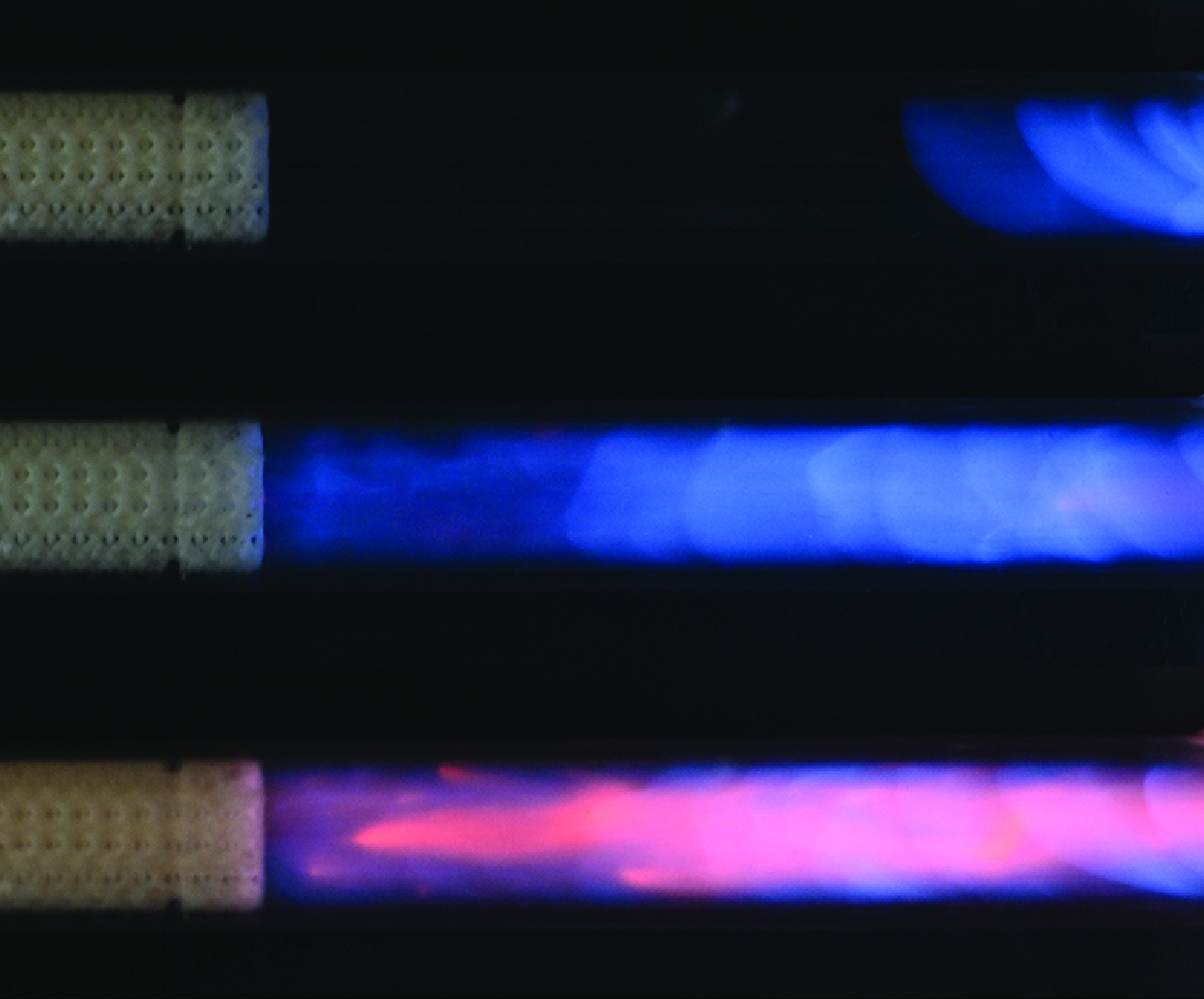
The interaction between the dynamics of a flame front and the acoustic field within a combustion chamber represents an aerothermochemical problem with the potential to generate hazardous instabilities, which limit burner performance by constraining design and operational parameters. The experimental configuration described here involves a laminar premixed flame burning in an open–closed slender tube, which can also be studied through simplified modelling. The constructive coupling of the chamber acoustic modes with the flame front can be affected via strategic placement of porous plugs, which serve to dissipate thermoacoustic instabilities. These plugs are lattice-based, 3-D-printed using low-force stereolithography, allowing for complex geometries and optimal material properties. A series of porous plugs was tested, with variations in their porous density and location, in order to assess the effects of these variables on viscous dissipation and acoustic eigenmode variation. Pressure transducers and high-speed cameras are used to measure oscillations of a stoichiometric methane–air flame ignited at the tube’s open end. The findings indicate that the porous medium is effective in dissipating both pressure amplitude and flame-front oscillations, contingent on the position of the plug. Specifically, the theoretical fluid mechanics model is developed to calculate frequency shifts and energy dissipation as a function of plug properties and positioning. The theoretical predictions show a high degree of agreement with the experimental results, thereby indicating the potential of the model for the design of dissipators of this nature and highlighting the first-order interactions of acoustics, viscous flow in porous media and heat transfer processes.
We investigate the dynamics of a cavitation bubble near rigid surfaces decorated with a single gas-entrapping hole to understand the competition between the attraction of the rigid and the repulsion of the free boundary. The dynamics of laser-induced bubbles near this gas-entrapping hole is studied as a function of the stand-off distance and diameter of the hole. Two kinds of toroidal collapses are observed that are the result of the collision of a wide microjet with the bubble wall. The bubble centroid displacement and the strength of the microjet are compared with the anisotropy parameter $\zeta$, which is derived from a Kelvin impulse analysis. We find that the non-dimensional displacement $\delta$ scales with $\zeta$.
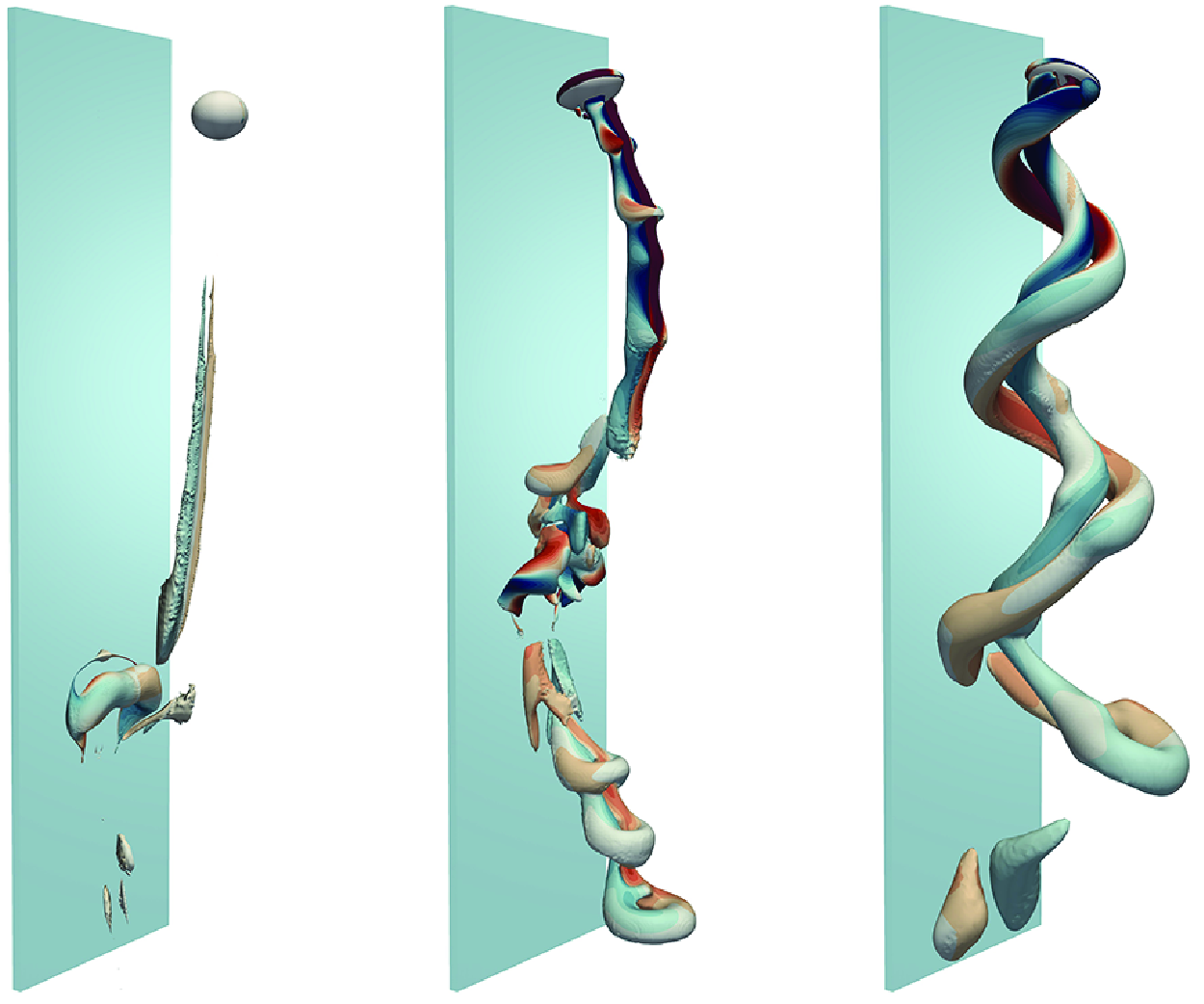
The fate of deformable buoyancy-driven bubbles rising near a vertical wall under highly inertial conditions is investigated numerically. In the absence of path instability, simulations reveal that, when the Galilei number, $Ga$, which represents the buoyancy-to-viscous force ratio, exceeds a critical value, bubbles escape from the near-wall region after one to two bounces, while at smaller $Ga$ they perform periodic bounces without escaping. The escape mechanism is rooted in the vigorous rotational flow that forms around a bubble during its bounce at high enough $Ga$, resulting in a Magnus-like repulsive force capable of driving it away from the wall. Path instability takes place with bubbles whose Bond number, the buoyancy-to-capillary force ratio, exceeds a critical $Ga$-dependent value. Such bubbles may or may not escape from the wall region, depending on the competition between the classical repulsive wake–wall interaction mechanism and a specific wall-ward trapping mechanism. The latter results from the reduction of the bubble oblateness caused by the abrupt drop of the rise speed when the bubble–wall gap becomes very thin. Owing to this transient shape variation, bubbles exhibiting zigzagging motions with a large enough amplitude experience larger transverse drag and virtual mass forces when departing from the wall than when returning to it. With moderately oblate bubbles, i.e. in an intermediate Bond number range, this effect is large enough to counteract the repulsive interaction force, forcing such bubbles to perform a periodic zigzagging-like motion at a constant distance from the wall.
This paper introduces a novel ray-tracing methodology for various gradient-index materials, particularly plasmas. The proposed approach utilizes adaptive-step Runge–Kutta integration to compute ray trajectories while incorporating an innovative rasterization step for ray energy deposition. By removing the requirement for rays to terminate at cell interfaces – a limitation inherent in earlier cell-confined approaches – the numerical formulation of ray motion becomes independent of specific domain geometries. This facilitates a unified and concise tracing method compatible with all commonly used curvilinear coordinate systems in laser–plasma simulations, which were previously unsupported or prohibitively complex under cell-confined frameworks. Numerical experiments demonstrate the algorithm’s stability and versatility in capturing diverse ray physics across reduced-dimensional planar, cylindrical and spherical coordinate systems. We anticipate that the rasterization-based approach will pave the way for the development of a generalized ray-tracing toolkit applicable to a broad range of fluid simulations and synthetic optical diagnostics.
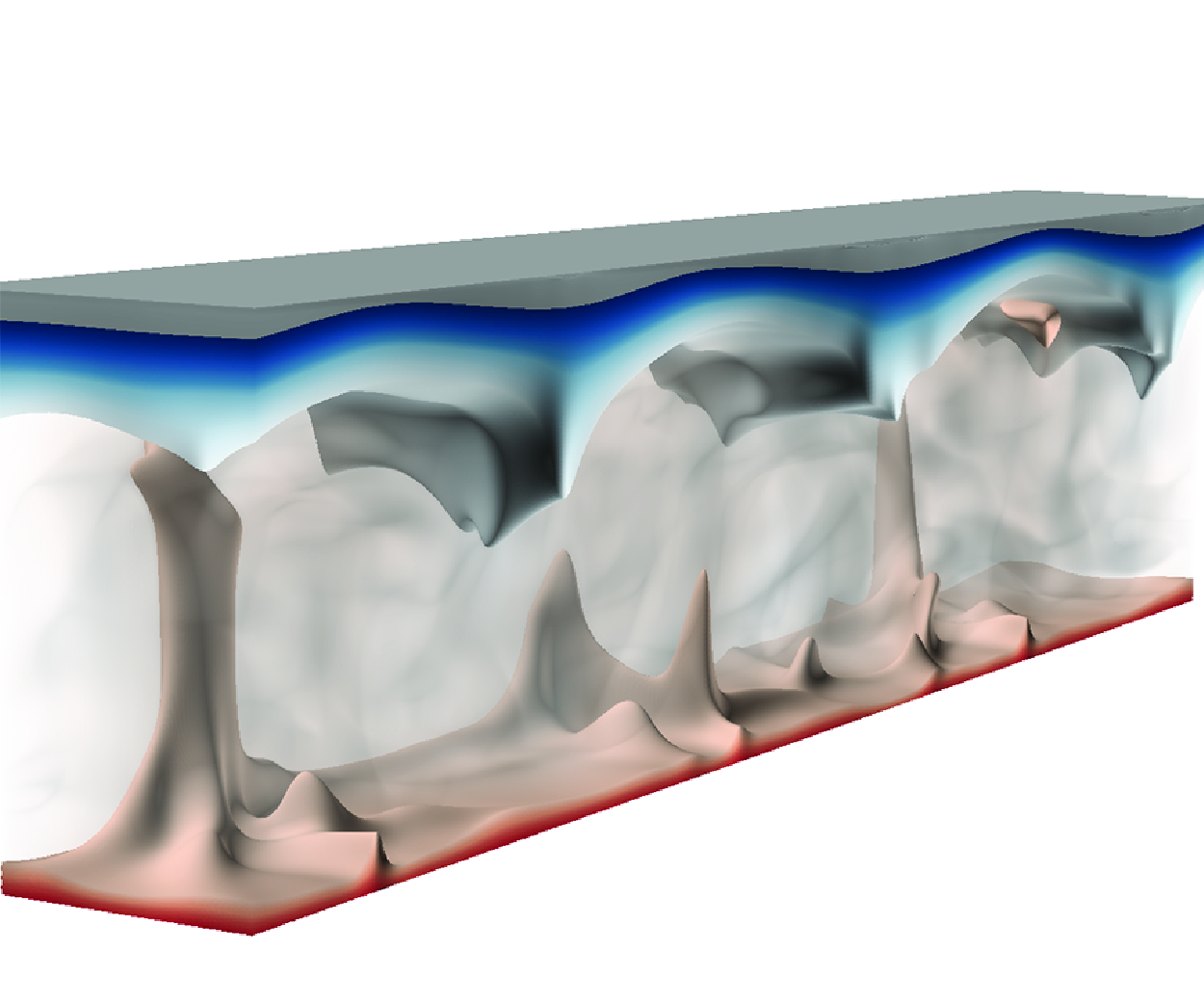
The dynamics of ice basal melting in seawater is one of the key factors in understanding and modelling the ice–seawater interaction in the polar oceans. In this work we study the basal melting of solid ice in seawater, and focus on the interaction between the melting process and the double diffusive convection developed in the seawater layer. Different temperatures and salinity differences are systematically simulated, and two different flow regimes are identified. For a relatively weak salinity difference, the convection layer occupies most of the liquid layer and grows in height as the ice melts. When the salinity difference is strong enough, the convection layer shrinks with time and a stably stratified layer grows between the ice layer and convection layer. When the dynamics is dominated by the convection layer, the global heat and salinity transfer rates follow a power-law scaling. Theoretical models are developed for the local mean salinity at the ice–water interface and the melting rates, and the critical density ratio corresponding to the transition between the two regimes, which all agree with the numerical results. Density inversion happens consistently adjacent to the ice–seawater interface, which has a profound influence on the ice surface shape. All these findings provide useful insights into the detailed dynamics of ice basal melting in oceans.
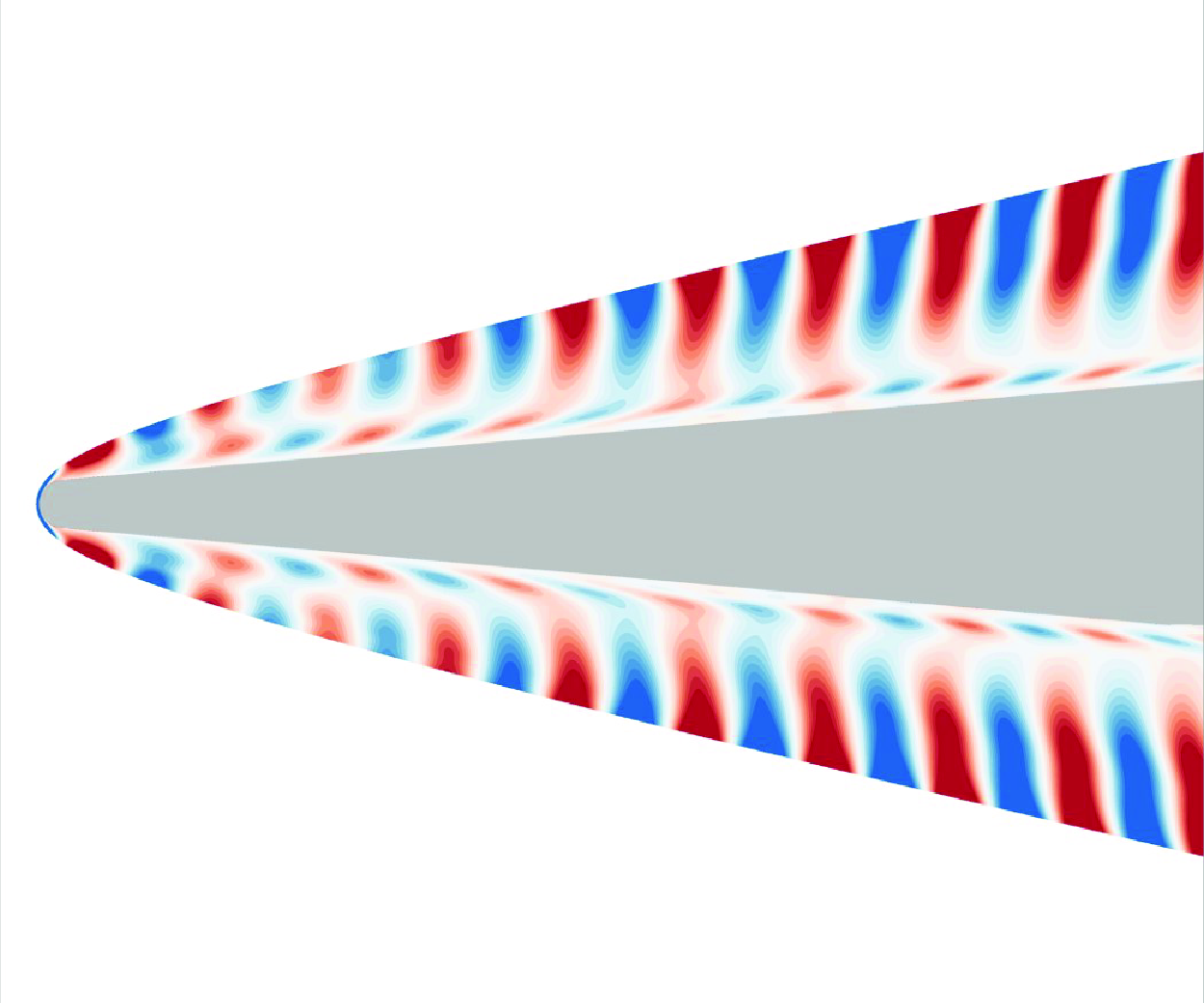
Many hypersonic flows of interest feature high free-stream stagnation enthalpies, which lead to high flow-field temperatures and thermochemical non-equilibrium (TCNE) effects, such as finite-rate chemistry and vibrational excitation. However, very few studies have considered receptivity for high-enthalpy flows. In this paper, we investigate the receptivity of a high-enthalpy Mach 5 straight-cone boundary layer to slow and fast acoustic free-stream waves using direct numerical simulation alongside linear stability theory and the linear parabolised stability equations. In addition, we investigate the TCNE effect on receptivity by comparing results between the TCNE gas model and a thermochemically frozen gas model. The dominant instability mechanism for this flow configuration is found to be Mack’s second mode, with the unstable mode being the fast mode. Second-mode receptivity coefficients are obtained for a number of frequencies. For free-stream slow acoustic waves, these receptivity coefficients are found to generally increase with frequency. For a small subset of the considered frequency range, the receptivity coefficients corresponding to free-stream fast acoustic waves are found to be several times larger than for free-stream slow acoustic waves. The TCNE effects are found to lead to higher peak $N$-factors while also reducing second-mode receptivity coefficients, indicating that TCNE effects have competing impacts on receptivity versus stability for the considered frequencies.
The phenomenon of bulge evolution under the action of gravity on shallow water is prevalent both in natural occurrences and engineering industries. However, despite its ubiquity, its physical process remains largely unexplored. The evolution of bulge contains two fundamental physical processes: collapse and propagation. The collapse process can be further divided into two sub-processes: squeezing process and diffusion process. Based on the weakly nonlinear shallow water assumption with the classical perturbation method, the governing equations controlling the surface elevations in the diffusion process and the propagation process have been theoretically derived, where a bulge-induced surface pressure is modeled for the propagation process. Moreover, their scaling laws for the decay of wave height are also established, which have been validated by direct numerical simulation results. The derived scaling laws for wave height attenuation of bulge evolution provide profound insights, which hold the potential to applications in the engineering industry.
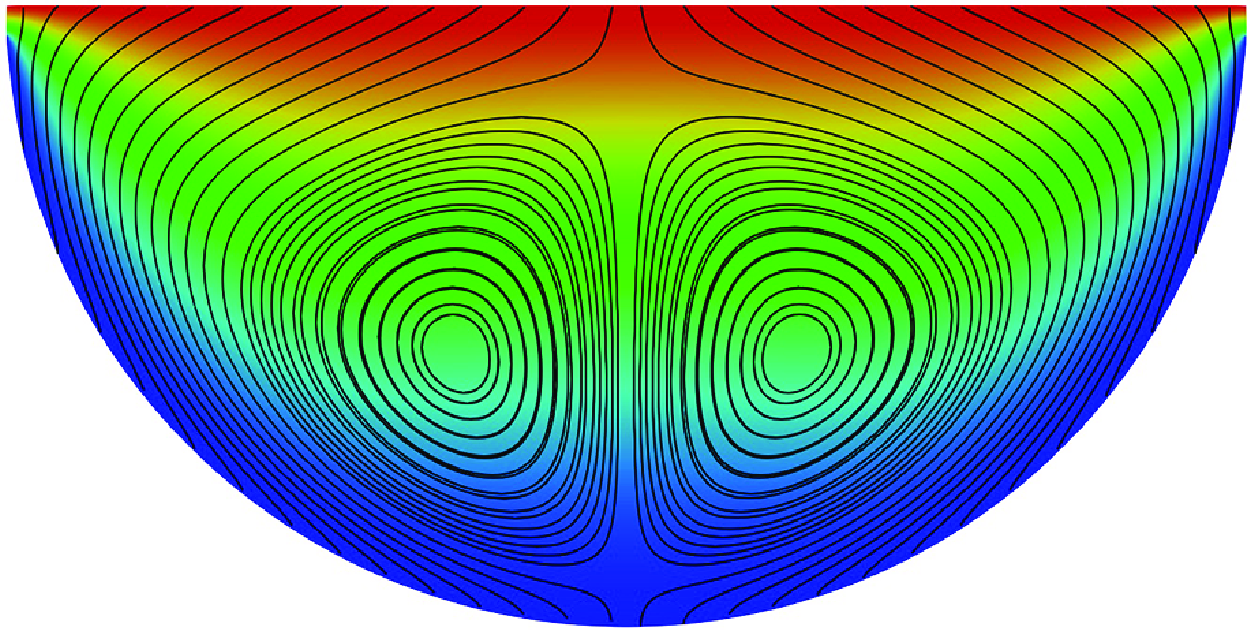
This paper presents a method to stabilise oscillations occurring in a mixed convective flow in a nearly hemispherical cavity, using actuation based on the receptivity map of the unstable mode. This configuration models the continuous casting of metallic alloys, where hot liquid metal is poured at the top of a hot sump with cold walls pulled in a solid phase at the bottom. The model focuses on the underlying fundamental thermohydrodynamic processes without dealing with the complexity inherent to the real configuration. This flow exhibits three branches of instability. The solution of the adjoint eigenvalue problem for the convective flow equations reveals that the regions of highest receptivity for unstable modes of each branch concentrate near the inflow upper surface. Simulations of the linearised governing equations show that a thermomechanical actuation modelled on the adjoint eigenmode asymptotically suppresses the unstable mode. If the actuation’s amplitude is kept constant in time, which is easier to implement in an industrial environment, the suppression is still effective but only over a finite time, after which it becomes destabilising. Based on this phenomenology, we apply the same actuation during the stabilising phase only in the nonlinear evolution of the unstable mode. It turns out stabilisation persists, even when the unstable mode is left to evolve freely after the actuation period. These results not only demonstrate the effectiveness of receptivity-informed actuation in stabilising convective oscillations but also suggest a simple strategy for their long-term control.
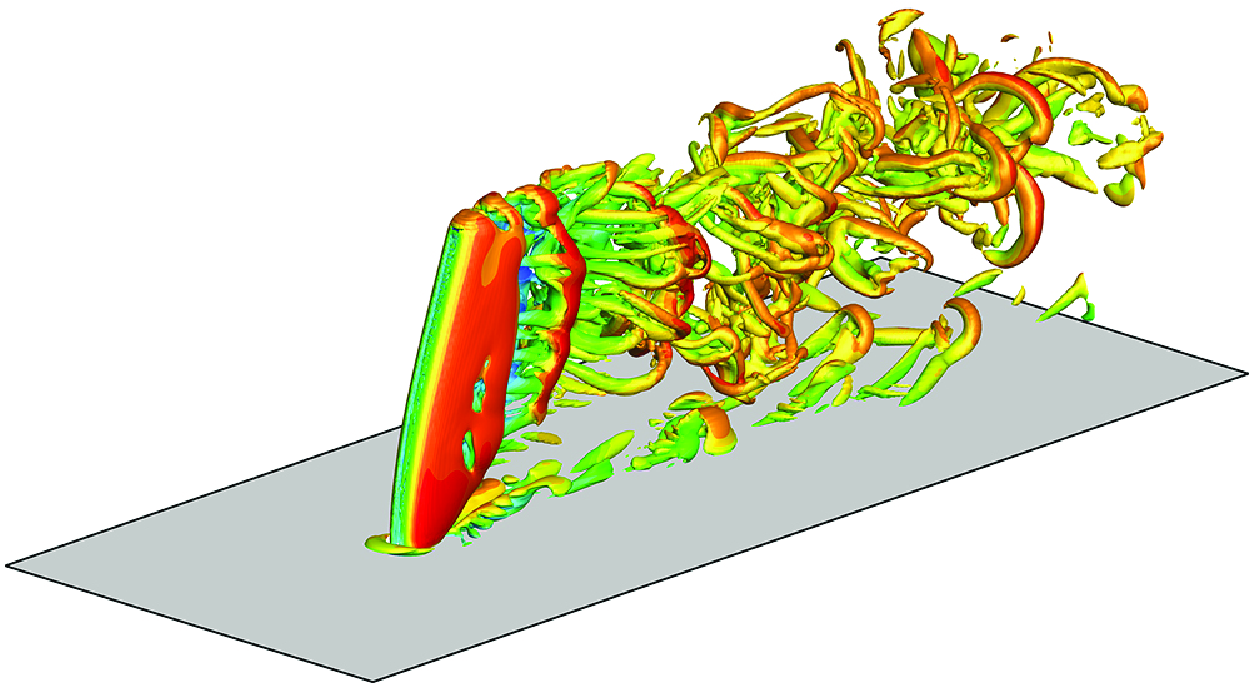
The dynamics of wall-mounted flexible structures, such as aquatic vegetation, is essential for analysing collective behaviours, flow distributions and vortex formation across different scales. To accurately model these structures under various flow conditions, we develop a novel numerical method that couples the immersed boundary method (IBM) with the vector form intrinsic finite element (VFIFE) method, referred to as the IBM–VFIFE method. We simulate both flexible and rigid stems, each with a constant aspect ratio of 10, mounted on an impermeable bottom in uniform flow with the Reynolds number ranging from 200 to 1000. In the rigid case, we identify three distinct flow regimes based on the vortex dynamics and lift spectral characteristics. Due to the influences of downwash flow at the free end and upwash flow near the junction, vortex shedding varies significantly along the vertical direction. For the flexible case, we examine a wide range of stem stiffness values to explore potential dynamic responses. The results reveal that stiffness plays a key role in stem behaviour, leading to three distinct classifications based on amplitude magnitude and displacement spectra respectively. Notably, the vortex dynamics of a flexible stem differs significantly from that of a rigid stem due to shape deformation and stem oscillation. A flexible stem with relatively high stiffness experiences greater hydrodynamic loads compared with its rigid counterpart. This study highlights the unique stem behaviours and vortex dynamics associated with flexible stems. We find that stem oscillation, combined with a near-wake base vortex, contributes to an upwash flow near the stem bottom, which significantly weakens (or, in some cases, eliminates) the downwash flow. Additionally, low-frequency oscillations in the streamwise and vertical directions are observed, while the transverse oscillation exhibits a dominant frequency one order of magnitude higher. Overall, this study provides valuable insights into the response and vortex dynamics of a single stem in uniform flow.
The classical water-wave theory often neglects water compressibility effects, assuming acoustic and gravity waves propagate independently due to their disparate spatial and temporal scales. However, nonlinear interactions can couple these wave modes, enabling energy transfer between them. This study adopts a dynamical systems approach to investigate acoustic–gravity wave triads in compressible water flow, employing phase-plane analysis to reveal complex bifurcation structures and identify steady-state resonant configurations. Through this framework, we identify specific parameter conditions that enable complete energy exchange between surface and acoustic modes, with the triad phase (also known as the dynamical phase) playing a crucial role in modulating energy transfer. Further, incorporating spatial dependencies into the triad system reveals additional dynamical effects that depend on the wave velocity and resonance conditions: we observe that travelling-wave solutions emerge, and their stability is governed by the Hamiltonian structure of the system. The phase-plane analysis shows that, for certain velocity regimes, the resonance dynamics remains similar to the spatially independent case, while in other regimes, bifurcations modify the structure of resonant interactions, influencing the efficiency of energy exchange. Additionally, modulated periodic solutions appear, exhibiting changes in wave amplitudes over time and space, with implications for wave-packet stability and energy localisation. These findings enhance the theoretical understanding of acoustic–gravity wave interactions, offering potential applications in geophysical phenomena such as oceanic microseisms.
We present a fully three-dimensional kinetic framework for modeling intense short pulse lasers interacting with dielectric materials. Our work modifies the open-source particle-in-cell code EPOCH to include new models for photoionization and dielectric optical response. We use this framework to model the laser-induced damage of dielectric materials by few-cycle laser pulses. The framework is benchmarked against experimental results for bulk silica targets and then applied to model multi-layer dielectric mirrors with a sequence of simulations with varying laser fluence. This allows us to better understand the laser damage process by providing new insight into energy absorption, excited particle dynamics and nonthermal excited particle distributions. We compare common damage threshold metrics based on the energy density and excited electron density.
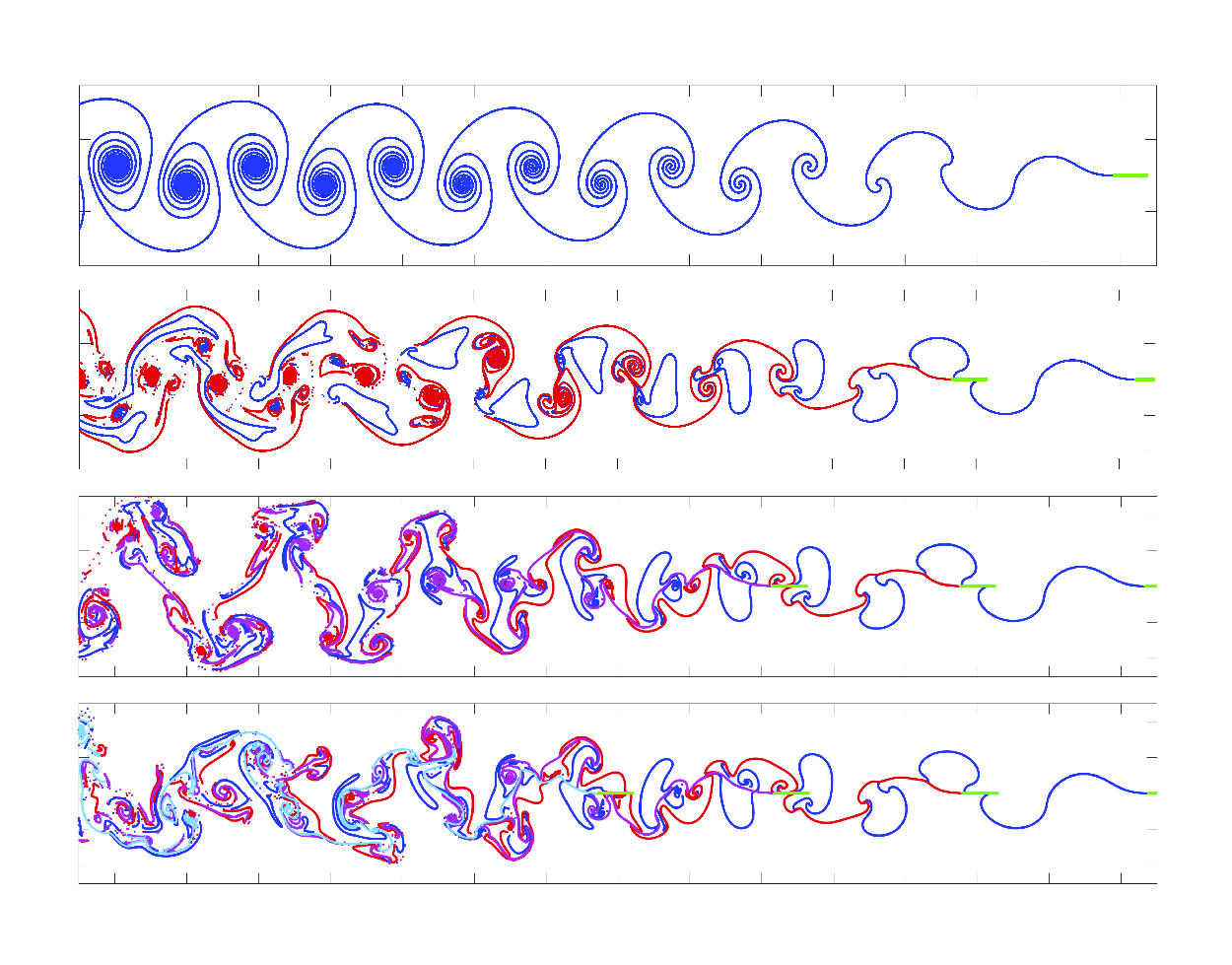
The motion of several plates in an inviscid and incompressible fluid is studied numerically using a vortex sheet model. Two to four plates are initially placed in line, separated by a specified distance, and actuated in the vertical direction with a prescribed oscillatory heaving motion. The vertical motion induces the plates’ horizontal acceleration due to their self-induced thrust and fluid drag forces. In certain parameter regimes, the plates adopt equilibrium ‘schooling modes’, wherein they translate at a steady horizontal velocity while maintaining a constant separation distance between them. The separation distances are found to be quantised on the flapping wavelength. As either the number of plates increases or the flapping amplitude decreases, the schooling modes destabilise via oscillations that propagate downstream from the leader and cause collisions between the plates, an instability that is similar to that observed in recent experiments on flapping wings in a water tank (Newbolt et al., 2024, Nat. Commun., vol. 15, 3462). A simple control mechanism is implemented, wherein each plate accelerates or decelerates according to its velocity relative to the plate directly ahead by modulating its own flapping amplitude. This mechanism is shown to successfully stabilise the schooling modes, with remarkable impact on the regularity of the vortex pattern in the wake. Several phenomena observed in the simulations are obtained by a reduced model based on linear thin-aerofoil theory.
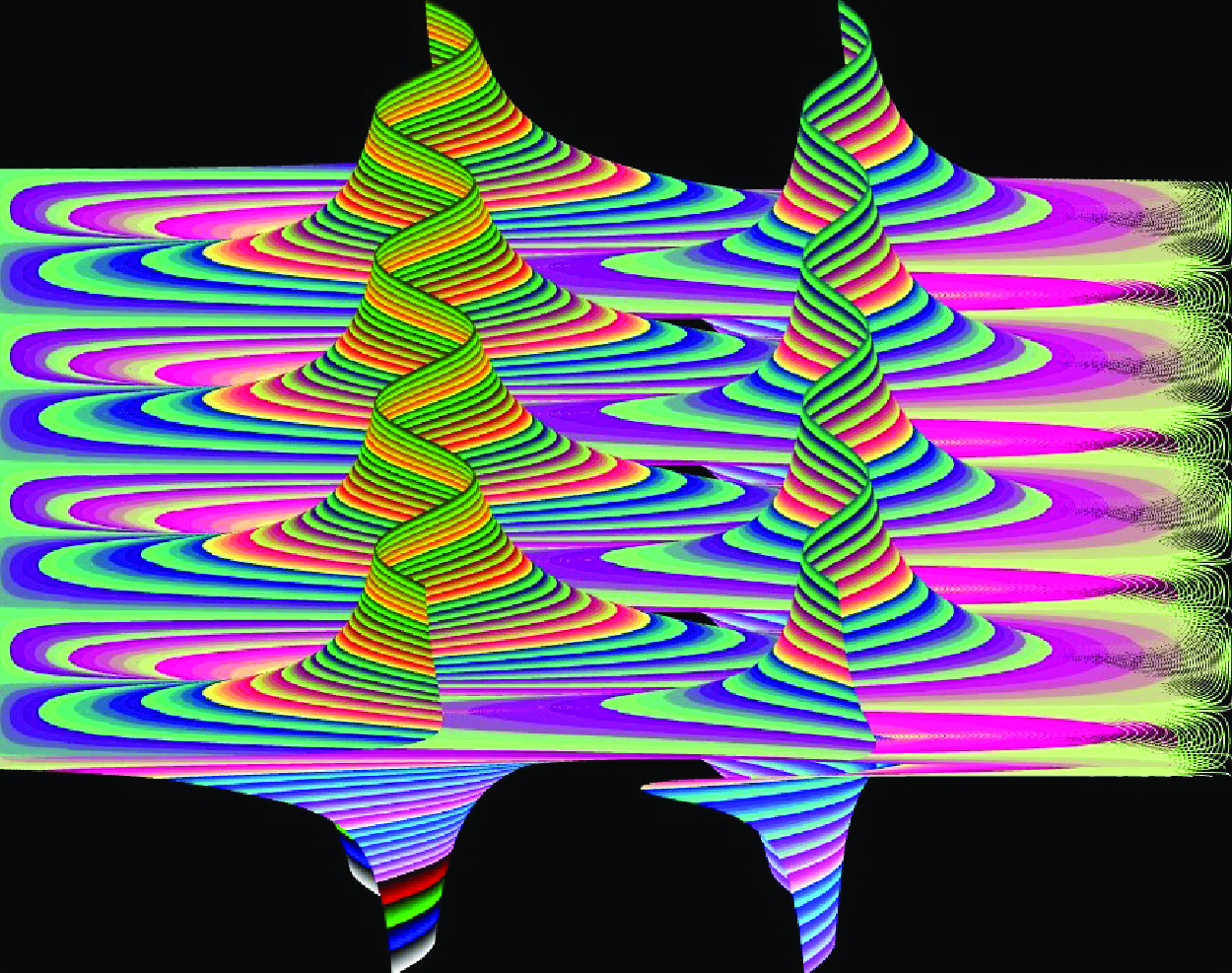
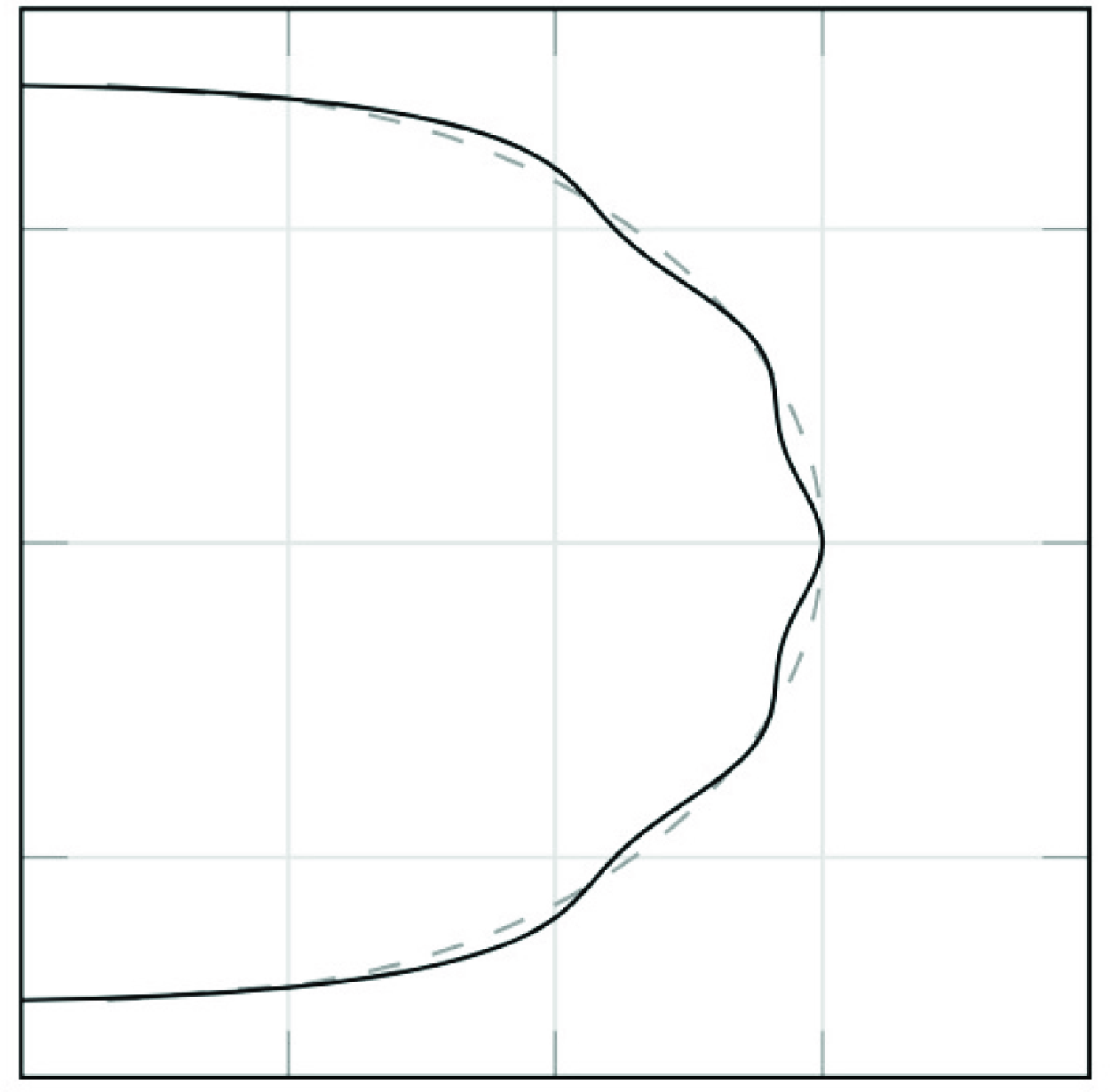
We present a numerical scheme that solves for the self-similar viscous fingers that emerge from the Saffman–Taylor instability in a divergent wedge. This is based on the formulation by Ben Amar (1991, Phys. Rev. A, vol. 44, pp. 3673–3685). It is demonstrated that there exists a countably infinite set of selected solutions, each with an associated relative finger angle, and furthermore, solutions can be characterised by the number of ripples located at the tip of their finger profiles. Our numerical scheme allows us to observe these ripples and measure them, demonstrating that the amplitudes are exponentially small in terms of the surface tension; the selection mechanism is driven by these exponentially small contributions. A recently published paper derived the selection mechanism for this problem using exponential asymptotic analytical techniques, and obtained bifurcation diagrams that we compare with our numerical results.
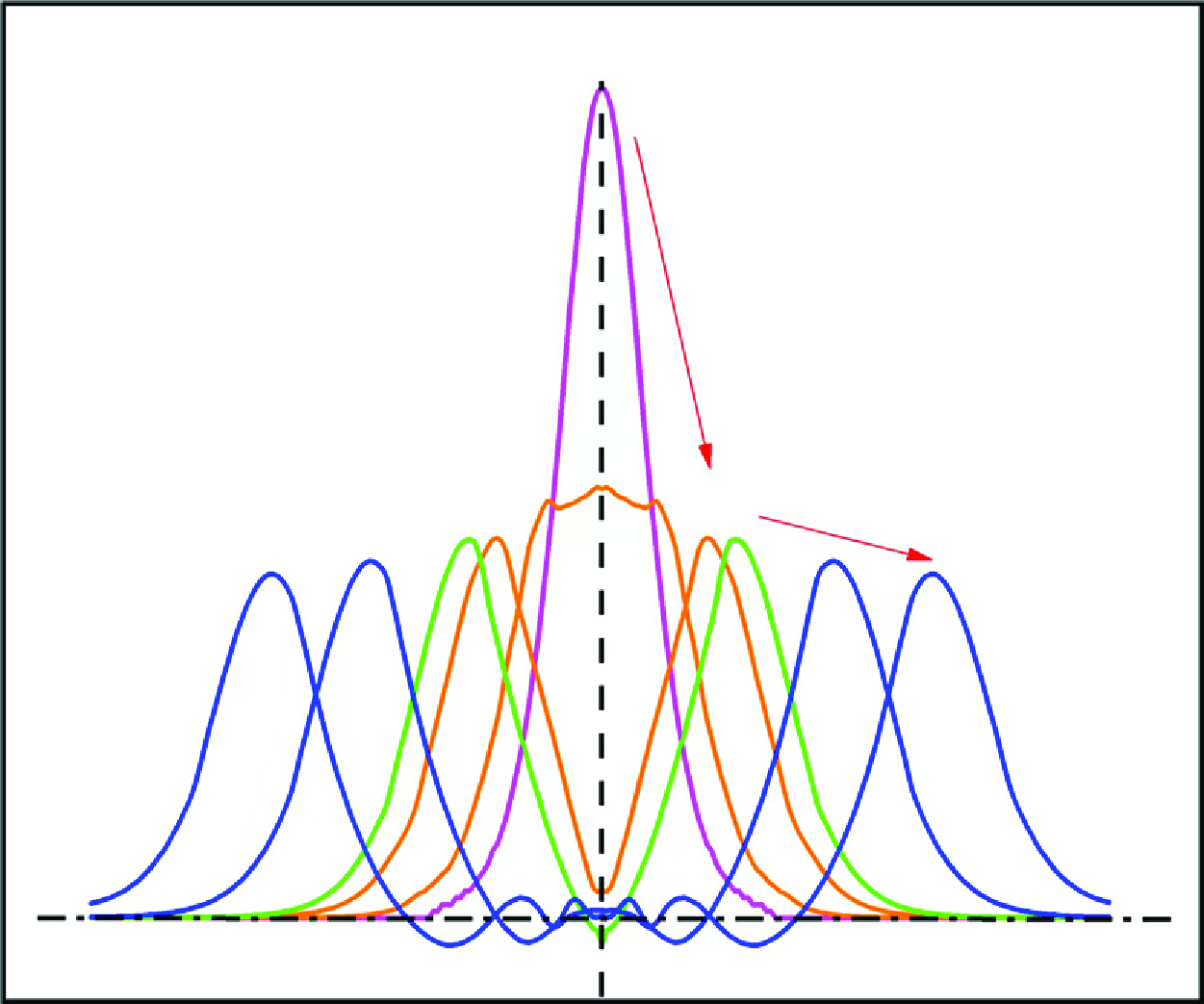
Waves propagating over oscillating periodic structures can be reflected and attenuated either by Bragg scattering or by local resonance. In this work, we focus on the interplay between surface gravity waves and submerged resonators, investigating the effect of the local resonance on wave propagation. The study is performed using a state of the art numerical simulation of the Navier–Stokes equation in two-dimensional form with free boundary and moving bodies. A volume of fluid interface technique is employed for tracking the free surface, and an immersed boundary method for the fluid–structure interaction. A wave maker is placed at one end of the flume and an absorbing beach at the other. The evolution in space of a monochromatic wave interacting with up to four resonators coupled only fluid mechanically is presented. We evaluate the efficiency of the system in terms of wave amplitude attenuation and energy transfers between the fluid and the solid phase. The results indicate that, near resonance conditions, both wave reflection and energy dissipation increase significantly. Conversely, far from resonance, waves can propagate through the system with minimal dissipation, even in the presence of numerous resonators. Moreover, when the time scale associated with the resonator’s restoring force is longer than the wave period, the resonators tend to follow the wave motion, oscillating with an amplitude comparable to that of the wave. In contrast, when the two time scales are similar, the resonator motion becomes amplified, resulting in stronger velocity gradients and enhanced viscous dissipation.
Artificial intelligence is dramatically reshaping scientific research and is coming to play an essential role in scientific and technological development by enhancing and accelerating discovery across multiple fields. This book dives into the interplay between artificial intelligence and the quantum sciences; the outcome of a collaborative effort from world-leading experts. After presenting the key concepts and foundations of machine learning, a subfield of artificial intelligence, its applications in quantum chemistry and physics are presented in an accessible way, enabling readers to engage with emerging literature on machine learning in science. By examining its state-of-the-art applications, readers will discover how machine learning is being applied within their own field and appreciate its broader impact on science and technology. This book is accessible to undergraduates and more advanced readers from physics, chemistry, engineering, and computer science. Online resources include Jupyter notebooks to expand and develop upon key topics introduced in the book.