To save content items to your account,
please confirm that you agree to abide by our usage policies.
If this is the first time you use this feature, you will be asked to authorise Cambridge Core to connect with your account.
Find out more about saving content to .
To save content items to your Kindle, first ensure no-reply@cambridge.org
is added to your Approved Personal Document E-mail List under your Personal Document Settings
on the Manage Your Content and Devices page of your Amazon account. Then enter the ‘name’ part
of your Kindle email address below.
Find out more about saving to your Kindle.
Note you can select to save to either the @free.kindle.com or @kindle.com variations.
‘@free.kindle.com’ emails are free but can only be saved to your device when it is connected to wi-fi.
‘@kindle.com’ emails can be delivered even when you are not connected to wi-fi, but note that service fees apply.
Driven by advances in data science and machine learning, photonics has evolved rapidly in recent years and has transformed into a highly interdisciplinary field, connecting fundamental research with cutting-edge applications. Inspired by recent Nobel Prizes in Physics in 2021 and 2024, Conti highlights the interplay between photonics and spin glasses, a key concept for understanding the link between photon propagation and complex systems. Beginning with a study of black-body radiation, the book then revisits laser theory using techniques from non-equilibrium statistical mechanics. Through a step-by-step exploration of important photonic experiments, it bridges foundational concepts and advances in optical computing, with a focus on developing efficient hardware for classical and quantum artificial intelligence. This reveals the profound ties between complexity, photonics, and the future of AI technologies. The book will be a valuable resource for advanced undergraduate and graduate students and more practised researchers.
'Quantum Engineering' covers the theory, design, fabrication and applications of quantum coherent solid-state structures. This updated and expanded second edition provides a self-contained presentation of the theoretical methods and experimental results in both first and second waves of quantum technology innovation. Topics span the quantum theory of electric circuits, theoretical methods of quantum optics in application to solid-state circuits, the quantum theory of noise, decoherence and measurements, Landauer formalism for quantum transport, the physics of weak superconductivity and the physics of two-dimensional electron gas in semiconductor heterostructures. The author introduces microscopic ion- and defect-based qubits, currently among the most successful platforms for quantum computation and quantum sensing. Reflecting the significant progress of quantum hardware, state-of-the-art implementations such as quantum metamaterials and quantum reservoir computing are also added to the discussion. Written for graduate students in physics, this book also serves electronic engineers working in quantum engineering.
The study of magnetism has driven progress in experimental science for centuries, and demonstrates how ground-breaking theoretical advances can be translated directly into essential, transformative technology. Now in an expanded second edition, this popular textbook provides comprehensive coverage of the theory and practical applications of magnetism and magnetic materials. The text has been updated throughout to address significant developments from the last decade, including new theoretical insights, advanced experimental probes, and thin film technology. A new chapter covers the important topic of transverse magnetotransport and effects of topology. The book is extensively illustrated with over 700 figures conveying important experimental data, concepts and applications, and each self-contained chapter concludes with a summary section, a list of further reading and a set of exercises. The text contains a wealth of useful information that will be of interest to graduate students and researchers in physics, materials science and engineering.
Quantum many-body systems are a central feature of condensed matter physics, relevant to important, modern research areas such as ultrafast light-matter interactions and quantum information. This book offers detailed coverage of the contour Green's function formalism – an approach that can be successfully applied to solve the quantum many-body and time-dependent problems present within such systems. Divided into three parts, the text provides a structured overview of the relevant theoretical and practical tools, with specific focus on the Schwinger-Keldysh formalism. Part I introduces the mathematical frameworks that make use of Green's functions in normal phase states. Part II covers fermionic superfluid phases with discussion of topics such as the BCS-BEC crossover and superconducting systems. Part III deals with the application of the Schwinger-Keldysh formalism to various topics of experimental interest. Graduate students and researchers will benefit from the book's comprehensive treatment of the subject matter and its novel arrangement of topics.
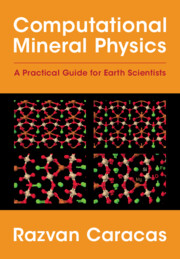
Computational mineralogy is fast becoming the most effective and quantitatively accurate method for successfully determining structures, properties and processes at the extreme pressure and temperature conditions that exist within the Earth's deep interior. It is now possible to simulate complex mineral phases using a variety of theoretical computational techniques that probe the microscopic nature of matter at both the atomic and sub-atomic levels. This introductory guide is for geoscientists as well as researchers performing measurements and experiments in a lab, those seeking to identify minerals remotely or in the field, and those seeking specific numerical values of particular physical properties. Written in a user- and property-oriented way, and illustrated with calculation examples for different mineral properties, it explains how property values are produced, how to tell if they are meaningful or not, and how they can be used alongside experimental results to unlock the secrets of the Earth.
As physical science advances, theoretical simulations become increasingly reflective of realistic systems, and experimental observations become more precise and refined. Thus, going beyond the Born–Oppenheimer approximation is inevitable. This book bases its discussion of condensed matter physics on the Schrödinger equation, considering both nuclear and electronic degrees of freedom. Particular attention is given to two types of phenomena: those, such as nuclear quantum effects, for which the Born–Oppenheimer approximation, although applicable in principle, is progressively weakened in practice, and those that cannot be applied at all, such as phenomena exhibiting non-adiabatic effects. In practical systems, the full quantum nature of condensed matter, as emphasized in this book, cannot be overlooked when performing accurate simulations or measurements of material properties. This book offers state-of-the-art quantum theoretical and experimental methods, valuable for undergraduates, graduates, researchers, and industry professionals in fields such as physics, chemistry, materials science, energy, and environmental science.
Artificial intelligence is transforming industries and society, but its high energy demands challenge global sustainability goals. Biological intelligence, in contrast, offers both good performance and exceptional energy efficiency. Neuromorphic computing, a growing field inspired by the structure and function of the brain, aims to create energy-efficient algorithms and hardware by integrating insights from biology, physics, computer science, and electrical engineering. This concise and accessible book delves into the principles, mechanisms, and properties of neuromorphic systems. It opens with a primer on biological intelligence, describing learning mechanisms in both simple and complex organisms, then turns to the application of these principles and mechanisms in the development of artificial synapses and neurons, circuits, and architectures. The text also delves into neuromorphic algorithm design, and the unique challenges faced by algorithmic researchers working in this area. The book concludes with a selection of practice problems, with solutions available to instructors online.
Extreme fluctuations in oil prices (such as the dramatic fall from mid-2014 into 2015) raise important strategic questions for both importers and exporters. In this volume, specialists from the US, the Middle East, Europe and Asia examine the rapidly evolving dynamic in the energy landscape, including renewable and nuclear power, challenges to producers including the shale revolution, and legal issues. Each chapter provides in-depth analysis and clear policy recommendations.
Nonequilibrium steady states arise if a system is driven in a time-independent way. This can be realized through contact with particle reservoirs at different (electro)chemical potential for enzymatic reactions and for transport through quantum dot structures. For molecular motors, an applied external force contributes to such an external driving. Formally, such systems are described by a master equation with time-independent transition rates that are constrained by the local detailed balance relation. Characteristic of such systems are persistent probability currents. This stationary state is unique and can be obtained either through a graph-theoretic method or as an eigenvector of the generator. These systems have a constant rate of entropy production. Moreover, this entropy production fulfills a detailed fluctuation theorem. The thermodynamic uncertainty relation provides a lower bound on entropy production in terms of the mean and dispersion of any current in the system. An important classification distinguishes unicyclic from multicyclic systems. In particular for the latter, the concept of cycles and their affinities are introduced and related to macroscopic or physical affinities driving an engine. In the linear response regime, Onsager coefficients are proven to obey a symmetry.
This chapter starts with a discussion of simple univariate chemical reactions networks emphasizing the need to impose thermodynamically consistent reaction rates. For a linear reaction scheme, the stationary distribution is given analytically as a Poisson distribution. Nonlinear schemes can lead to bistability. For large systems, the stationary solution can be expressed by an effective potential. Two types of Fokker–Planck descriptions are shown to fail in certain regimes. In the thermodynamic limit, the dynamics can be described by a simple rate equation. Entropy production is discussed on the various levels of description. A simple two-dimensional scheme, the Brusselator, can lead to persistent oscillations. Heat and entropy production are identified for an individual reaction event of a general multivariate reaction scheme.
Rare or extreme fluctuations beyond the Gaussian regime are treated through large deviation theory for the nonequilibrium steady state of discrete systems and of systems with Langevin dynamics. For both classes, we first develop the spectral approach that yields the scaled cumulant-generating function for state observables and currents in terms of the largest eigenvalue of the tilted generator. Second, we introduce the rate function of level 2.5 that can be determined exactly. Contractions then lead to bounds on the rate function for state observables or currents. Specialized to equilibrium, explicit results are obtained. As a general result, the rate function for any current is shown to be bounded by a quadratic function which implies the thermodynamic uncertainty relation.
The efficiency of classical heat engines is bounded by the Carnot efficiency leading to vanishing power. Efficiency at maximum power is often related to the Curzon–Ahlborn efficiency. As a paradigm for a periodic stochastic heat engine, a Brownian particle in a harmonic potential is sequentially coupled to two heat baths. For a simple steady-state heat engine, a two-state model coupled permanently to two heat baths leads to transport against an external force or against an imposed electrochemical potential. Affinities and Onsager coefficients in the linear response regime are determined. The identification of exchanged heat in the presence of particle transport is shown to be somewhat ambiguous.
Molecular motors that transform chemical energy into mechanical motion can be modeled in different ways. Thermodynamically consistent ratchet-type models lead to transport against an external force in a periodic potential that switches between different shapes. In a second class of models, the motor is described by a set of internal states that leads to discrete steps along a filamentous track. In the class of hybrid models, the motor cycles through internal states while pulling a cargo particle that follows a Langevin dynamics. For these motors, the first and second laws and the thermodynamic efficiency are discussed and illustrated with experimental data for a rotary motor, the F1-ATPase.