To save content items to your account,
please confirm that you agree to abide by our usage policies.
If this is the first time you use this feature, you will be asked to authorise Cambridge Core to connect with your account.
Find out more about saving content to .
To save content items to your Kindle, first ensure no-reply@cambridge.org
is added to your Approved Personal Document E-mail List under your Personal Document Settings
on the Manage Your Content and Devices page of your Amazon account. Then enter the ‘name’ part
of your Kindle email address below.
Find out more about saving to your Kindle.
Note you can select to save to either the @free.kindle.com or @kindle.com variations.
‘@free.kindle.com’ emails are free but can only be saved to your device when it is connected to wi-fi.
‘@kindle.com’ emails can be delivered even when you are not connected to wi-fi, but note that service fees apply.
Anachronistic as it might seem, Early Modern authors wrestled with several of the issues at the center of ecocriticism including humanity's relation to non-human nature and the potentially destructive effects that human activities can have on ecology. As one critic notes,
The modern constitution, premised on the new governability of culture apart from nature, originated in Bacon and Newton's science of mechanism and Hobbes's and Locke's realm of contract and commerce. The common people may still have believed it rained for decades in England because of the divorces of a king, but by the end of the English Revolution, the constitution and the cosmos were also divorced. […] After the Renaissance and the Reformation, humanity would arise as the new artificer of politics and of the machine; the world would be made new, as Bacon would claim, not in millennialist hopes of the end of history but in the power which science and the state would draw together in birthing the “new atlantis” and the novum organum.
It is arguable that the expulsion of both divinity and humanity from nature can be traced to thinkers of the Early Modern period whose works created a context in which nature became the object of a rational, mechanistic science and shaped the anthropocentric direction of modernity. Our ecological crisis developed against this background that separated culture from nature, subject from object and material bodies from a transcendent God.
It should not be surprising then, to find insightful reflections on ecological questions in the works of Early Modern authors. But instead of merely applying ecocritical tools to reread those texts— which in itself carries its own significance—it might be fruitful to try to explore what those Early Modern texts can add to our current conversations. Accordingly, in what follows, I will read Panurge's praise of debts and the praise of Pantagruelion from François Rabelais's Tiers livre in conversation with contemporary ecocritics whose work seems to resonate with his text and style.
For example, Timothy Morton's insistence that we address our ecological crisis through laughter and play resonates with Rabelais's comic style. Similarly, Rabelais's meditation on debt and the bonds that it forms finds echoes in Michel Serres's and Bruno Latour's interest in reconfiguring and expanding our understanding of how we are bound to other humans and also to nature.
The sitter for Raphael's La Donna Velata (The Veiled Woman), 1514–1516 (Fig. 1) and La Fornarina (The Baker's Daughter), 1518–1520 (Fig. 2) has been identified by some scholars as the artist's lover, Margherita Luti. Whether or not they depict the same woman, the two works differ in that one female appears to be a Jewish bride, whereas the other is in the costume of an Oriental concubine. With these two paintings Raphael created a dichotomy of sacred and profane portraiture by depicting one woman as a dignified clothed figure and the other as an erotic nude. This essay examines signifiers within the paintings that hide and reveal the model's name, her possible Jewish ethnicity, and her possible relationship to the artist. Raphael created depictions of an exotic Eastern lover that later would serve as prototypes for nineteenth-century French Orientalist paintings and literary works.
Subtle differences between the facial features of these two women suggest that they may not be the same model. The dis crepancies between the portraits can, in part, be explained because of their diverse support systems. The veiled woman was created on canvas, while the nude was rendered on a wood panel. Ostensibly, this variance in material accounts for the softer more diffused execution of the clothed figure, while the hardness of the wood produces a delineated line in the other. Nevertheless, the greater contrast between the two women is that one is clothed, while the other is nude; one is modest, the other is anything but.
The formality of La Donna Velata resembles other portraits by Raphael, such as Maddalena Doni (1506), and her husband, Agnolo Doni (1506), who married in 1503. The two panels function as wedding portraits. Similarities between the two females include a three-quarter view, the inclusion of hands, elaborate jewelry, and detailed fabric on the sleeves. Most descriptions of Donna Velata explain that her veil means she is married; yet, Maddalena, who is wedded, does not wear the same type of heavy veil. None of Raphael's portraits of women, married or otherwise have large opaque veils. La Donna Gravida (1506) wears a snood, as does La Muta (1507). The only female figure whom Raphael depicts with a full veil is the Virgin Mary. The resemblance between Raphael's Sistine Madonna, 1512–13 (Fig. 3) and La Donna Velata is well recognized.
Both geographically and historically, Tudor England uniquely forms a liminal border between the old world and the new; like the Roman god Janus, facing both past and future, it is both rightly called “the Renaissance” and “the Early Modern Period.” The sixteenth century, at the height of the Reformation and Counter Reformation, is still medieval inasmuch as it is still definitively and even triumphantly Christian. Firmly but turbulently Christian, the Tudor historical gaze peers even further back in time as English Renaissance thinkers rummage about in classical antiquity to find cultural capital with which they can create new identities with antique origins. But the sixteenth century also witnesses some of strongest pangs in the birth of modernity and, for England (among other nations), it is the beginning of the age of colonization. Searching for a conception of race and identity in Tudor England is thus an exceptionally difficult task.
As Loomba and Burton point out, race in the Renaissance “is routinely understood as drastically different” from how it was conceptualized in the Enlightenment and in the nineteenth and twentieth centuries, for the Renaissance is generally thought of “as a premodern time when racial ideologies had not taken root.” Responding to Kwame Anthony Appiah's famous 1990 article on “Race,” Peter Erickson likewise argues, “the renaissance cannot meet the stringent definition of race gathered from the 19th century” and study of race in the early modern period should begin with “sustained Portuguese contact with West Africa in the fifteenth century.” In order to uncover Early Modern and Renaissance understandings of race, we thus must turn to “pre-modern” sources, even though, as Jean Feerick notes, “traces of “ the “modes and logic” of race can be found in prior texts to the Enlightenment in which notions of race were hammered out.
The work of the Elizabethan poet, Edmund Spenser, would seem to be especially fertile ground for postcolonial and race theory; however, there is surprisingly little written on race and Spenser, and what is written focuses primarily on Spenser as an early modern poet and colonist of Ireland.
Early modern sacred spaces are intimately concerned with ethnicity and race, as reflected in the varying degrees of inclusivity evoked through the interior designs of Northern European churches. Serving as hubs that furthered social cohesion, church buildings were central to early modern socialization and to the integration of community members from different ethnic, cultural, and religious backgrounds. Church interiors also reinforced social distinctions through seating arrangements that stratified congregations according to class and gender. Many churches displayed coats of arms of influential families to make privilege visible, and some featured designated women's benches to preserve gender distinctions. 3 In a similar vein, parish churches regularly signposted racial distinctions through a strategic showcasing of racialized artifacts, thereby promoting and normalizing views on race and inclusivity among a given congregation.
Although early modern communities might not always have embraced the racial norms encoded in a given interior design, there are documented cases of racialized artifacts informing social practice, and vice versa. At St. Johannis Church in Schweinfurt, Bavaria, several fifteenth to the seventeenth-century baptisms of Jewish, Turkish, and Black congregants were performed at a font underneath a massive mural depicting the baptism of the Ethiopian chamberlain from the Acts (8:26–40). On at least one such occasion, the preceding sermon commenced with a reading of a passage describing the Ethiopian's baptism in the Acts, illustrating how the vision reified in the mural inspired both inclusive discourse as well as social practice.
Similar links between artifacts, discourse, and social practice can be observed with exclusionary texts, such as the recently much debated Judensau (Jews’ sow) outside Wittenberg Cathedral (c.1305). The sandstone sculpture shows two Jews suckling a sow and a rabbi looking into her backside and was placed parallel with the Jüdenstraße (Jewish street), presumably to provoke and discredit the Jewish community. The sculpture is referenced in Martin Luther's antisemitic tract Vom Schem-Hamphoras (1543), which prompted some sixteenth-century readers to engrave Luther's nonsensical phrase “Rabini Schem HaMphoras,” a bastardized version of “Shem ha-Mephorash” (a synonym for Yaweh), onto the sandstone itself, thus explicitly linking artifact and antisemitic discourse. These ties between the sculpture and social contexts were further consolidated when a printer from Wittenberg reproduced the sculpture together with its inscription in an antisemitic pamphlet in 1596, presumably to promote a tightening of antisemitic legislation in the Duchy of Saxony.
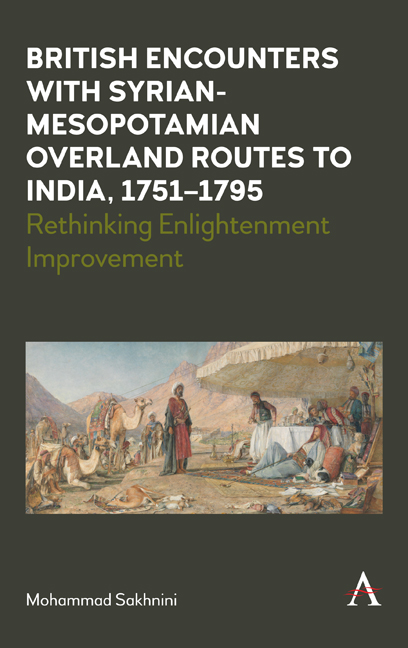
This book argues that eighteenth-century British travel writings about the Arabian Overland Routes to India offered fascinating anecdotes of encounters that allow us to rethink Enlightenment understanding of the meaning of improvement. Travelling among and writing about the inhabitants, government, culture, religion and ruins of Syria and Mesopotamia offered Britons opportunities to pose themselves in their narratives as men of improvement abroad. To that end, travelling appeared in their books as serious attempt to improve their readers' knowledge about a region that many in Britain saw as decayed, barbaric and primitive. But the various encounters British travellers experienced in the region allowed them to negotiate the impact of excessive materialism on the traditions, morality, religion and landscape of eighteenth-century Britain. At the heart of this book's understanding of Enlightenment writings about the Levant is the idea that a journey in a region which many considered as a theatre for the arts, sciences and military conquests in the past and decay in the present represents a fraught relationship modern Europeans had with the past, present and future.
This monograph treats modes of fictionality in contemporary auto/biography, memoir and autofiction. Adopting a case study approach, it demonstrates the extent to which contexts of production and reception are important in framing generic expectations with respect to the representation of lived experience and in helping to determine the status of the narrator as (fictional) persona or (implied) author.
The Critical Situation: Vexed Perspectives in Postmodern Literary Studies comprises a selection of essays that register the situatedness of critical theory and practice amid various intellectual, institutional, and cultural contexts. This book offers examples of situated criticism, which in turn are concerned with the ways in which literary and cultural criticism are and have been situated in relation to a variety of ideological and institutional structures, including those of world literature, American studies, spatial literary studies, cultural critique, globalization and postmodernity. These structures influence the ways that criticism is practiced, and due recognition of their continuing effects is crucial to the success of any meaningful critical practice in the twenty-first century.
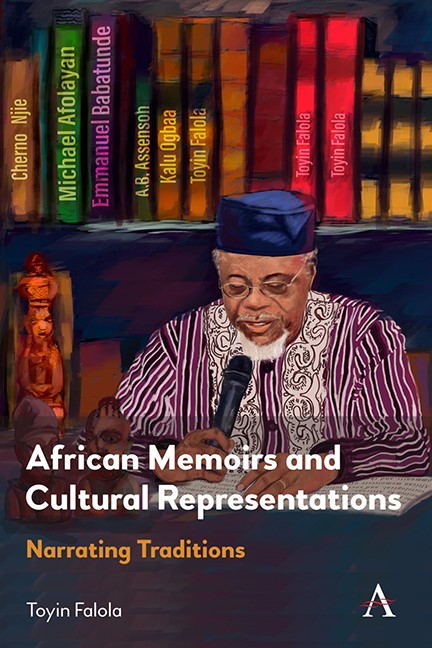
Traditions and cultures represent a set of persisting or prevailing beliefs, social practices, oral, linguistic, and values that define an individual's way of life. In other words, in memoir writing, the emphasis is often to propagate a unilateral need or embrace of self-identity. However, the dominant narrative and method of analysis in this study holds the notion and privileges that tradition and cultures imbibed by memoirists are sometimes subverted, refashioned, or reworked due to the strand of experiences or realities they encounter in different spaces as their narration develops. Thus, memoirists embrace indifference and open-mindedness, which is also greatly explored in the context of autobiography.
I was Born at Woodbury near Exeter on the 22nd of January 1791 and died on the ⦠My Father Jacob Butter and my Mother Catherine each lived to the age of 77 years and died leaving three children – two sons and one daughter.
A remarkable circumstance attended my birth and the subject of this narrative. I had seven grandfathers and grandmothers all living at my birth and had I been born 3 months earlier I might have had eight. Another remarkable circumstance is that my father and mother were not married until they had passed their thirtieth year of age and that I was not born for 15 months after their marriage. At my Christening another remarkable circumstance occurred: two of my great-grandmothers, both above 90 years of age, rode on a horse with side-saddle pillion two miles forward and two miles backward and the united ages of the three, including the horse, amounted [to] 206 years.
My father practised the Medical Profession at Woodbury and the surrounding parishes above half a century and succeeded his grandfather Langdon in that parish. I and my brother Jacobus both received a classical education at the Exeter Grammar School under the Revd Mr Bartholomew. We both chose the medical profession.
1807
On leaving school at 16 I performed my first surgical operation by a tooth for my own Father whose sufferings prompted him to ride to Exmouth and Budleigh without success for the purpose of getting this Tooth extracted. Necessity obliged him to instruct a Schoolboy in the art of using a German Key+ with which I extracted my Father's Tooth so much to his ease and comfort that it induced him to present me with my first fee. I then undertook the treatment of a poor boy in the village who had long been afflicted with scald head alias Tincea Capita.+ This patient had bid defiance to my Father's skill and had baffled the treatment received at the Devon & Exeter Hospital. He was cured by taking a Plesner's pill every night and a purging powder twice a week, and externally by the application of Tar Ointment to the head every night, covered with a silk cap and washed off every morning with a lather of yellow soap.
The Memoir is essentially John Butter's life story, from his birth in Woodbury, Devon, in 1791, to the middle of 1853, shortly before he went blind. He died in Plymouth in 1877. Why he wrote, and for whom, is not clear, although, in describing a device for removing fishhooks from the throats of careless anglers [1820], he does write that ‘this notice may be useful to others’, and there are several other apparent indicators of an intention to publish. Apart from fishhook removal, he gives many valuable insights into
• the history of medicine and of medical education, in pursuit of which he spent time in London, on the continent, and in Edinburgh, where he was responsible for the introduction of the stethoscope to Scotland;
• the foundation and growth of the Plymouth Royal Eye Infirmary;
• his experiences with the South Devon Militia, particularly during its acquaintance with the Luddites;
• his life as a physician and a surgeon;
• his travelling, both at home and on the continent;
• his love of hunting and game-shooting;
• his social life in and beyond Plymouth; and
• his ventures into the property market.
The Memoir is written in nineteen notebooks, 3¾ x 6¼ inches in size. They are virtually identical, except that volumes one to three have pale orange covers (and, on the front, somebody else's illegible name crossed-through), volume five is blue and the rest green. All except volume five, which is blank, have a calendar for 1854 inside the back cover, and an almanack for the same year inside the front. So far, so good, but the very first entry is an apparently arbitrary and isolated date, ‘12 December 1865’. The situation is further confused by the fact that volumes one and two have the date 1864 inscribed on their front covers as, presumably, the time at which they were written. Volume three is dated 1864/5, volumes five to seven 1866, and all the others are undated. What happened? Did Butter suddenly come across a cache of ten-year-old books? Had he bought them in order to write his life story, and then not got around to it before he went blind? Why does the first of the 1864 books start with a date right at the end of 1865? When were the undated volumes written?