To save content items to your account,
please confirm that you agree to abide by our usage policies.
If this is the first time you use this feature, you will be asked to authorise Cambridge Core to connect with your account.
Find out more about saving content to .
To save content items to your Kindle, first ensure no-reply@cambridge.org
is added to your Approved Personal Document E-mail List under your Personal Document Settings
on the Manage Your Content and Devices page of your Amazon account. Then enter the ‘name’ part
of your Kindle email address below.
Find out more about saving to your Kindle.
Note you can select to save to either the @free.kindle.com or @kindle.com variations.
‘@free.kindle.com’ emails are free but can only be saved to your device when it is connected to wi-fi.
‘@kindle.com’ emails can be delivered even when you are not connected to wi-fi, but note that service fees apply.
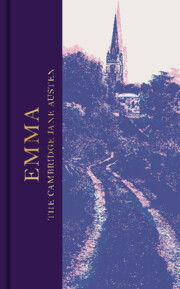
Jane Austen's stylish masterpiece, Emma is a brilliant psychological comedy about the mind's deception of itself. It speaks to the tedium of family and social existence, yet does so in a sparkling, utterly beguiling manner. An 'imaginist' and a snob, the heroine Emma inhabits a comical world of secrecy, illusion and fantasies. Living a claustrophobic life in which she is always significant, Emma persuades herself that marriage is unnecessary for her; instead, she employs her charm and position to manoeuvre others, until she learns the truth about herself and her needs. A sharp portrait of entitlement and snobbery, Emma is simultaneously a story of family kindness and of a nurturing village community more fully realised in this novel than in any other Austen work. Prefaces and explanatory endnotes supplied by Janet Todd illuminate the cultural, historical and literary context, bringing Jane Austen's world to life.
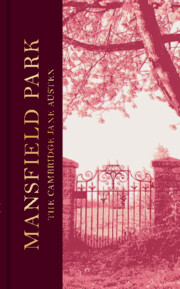
Many critics regard Mansfield Park as Austen's supreme achievement. It is a serious, even earnest work, but never dull, finding its comedy less in dialogue than in situation. It has wonderful set pieces including an outing to a grand house, aborted theatricals and a visit to a chaotic ménage. All Austen's novels are set during the French Wars, but Mansfield Park catches most clearly the anxious mood of a wartime nation unsure of its moral status. The heroine Fanny Price holds to principles against sophisticated laxness, but she is also self-deceiving as her principles jostle against her nature and youth. With the subtle irony that is her forte, Austen shows that integrity wins out but at a cost – and that virtue is neither easy nor always pleasurable to achieve. Prefaces and explanatory endnotes supplied by Janet Todd illuminate the cultural, historical and literary context, bringing Jane Austen's world to life.
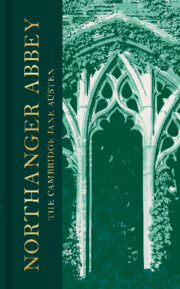
Northanger Abbey is both an ingenious Gothic parody and a realistic portrait of the social education of a naive young girl in late eighteenth-century England. Conceived in the 1790s but not published until after Jane Austen's death, the novel straddles the style of her childhood writings, with their playful mockery of contemporary fiction, and the later mature works which probe both society and individual psychology. It paints a wonderfully dense picture of the material and social conditions of genteel English life in town and country. Through the young, naïve heroine, the reader experiences the popular delight in escapist and sensational fiction typical of the period. The novel invites us to enjoy being laughed at for our own fictional expectations, while happily fulfilling most of them. Prefaces and explanatory endnotes supplied by Janet Todd illuminate cultural, historical and literary context, bringing Jane Austen's world to life.
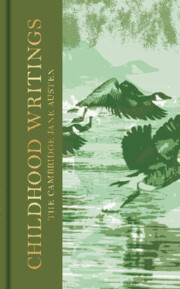
In her earliest writings, a precocious, alarmingly assured Jane Austen views the adult world with wide, clear eyes, cheekily amused at the emotions, pomposity, intrigues and bustle of family and friends. Composed between the ages of eleven and seventeen, they reveal a child's excitement in language and its imaginative possibilities. Most pieces are ebullient and anarchic; many are surreal, displaying gluttony, drunkenness, matricide, theft and excess, combined with total self-absorption. The cheerful characters roar through their transgressions without a shred of shame or responsibility. This edition prints all of Austen's childhood works, from the earliest comic pieces to the later, more psychologically realistic 'Catharine, or the Bower', which anticipates themes in the adult novels. The volume also includes the comical illustrations her sister Cassandra contributed to 'The History of England'. Prefaces and explanatory endnotes supplied by Janet Todd illuminate cultural, historical and literary context, bringing Jane Austen's world to life.
Gathering together all the unpublished mature work of Jane Austen, this volume comprises poems, a novella, unfinished novels, literary spoofs and a series of letters giving advice on how to write fiction. Written between her childhood tales and published novels, 'Lady Susan' is the most complete portrait of clever, charming malice Austen ever penned. With its special bleak atmosphere, 'The Watsons' is a powerful satire of claustrophobic middle-class life, while 'Sanditon', the work she was writing when she died, is an experimental novel exchanging Austen's usual country-house setting for a speculative seaside resort. Along with the poems (the last written just three days before her death), the letters and comic pieces, the novel fragments are beguiling on their own; they also provide a fascinating companion to the published novels. Prefaces and explanatory endnotes supplied by Janet Todd illuminate the cultural, historical and literary context, bringing Jane Austen's world to life.
A powerful portrait of grief triumphantly overcome, Persuasion is Austen's most passionate work: more than any previous novel, it concentrates on the intense inner life of the heroine. It opens with Anne Elliot lamenting lost love in a painful reversal of the courtship novel; it then transforms into a rapturous romantic comedy. Against a dysfunctional gentry family corroded by snobbishness, the novel pits professional self-made naval men marked by energy and domestic virtues: the heroine's future lies with them rather than with the landed class into which she was born. Persuasion is the only Austen novel that ends with the heroine lacking a settled home. Uniquely in Austen's oeuvre, an earlier part of the text survives. This edition includes a transcript, allowing readers to glimpse Austen's creative process. Prefaces and explanatory endnotes supplied by Janet Todd illuminate the cultural, historical and literary context, bringing Jane Austen's world to life.