To save content items to your account,
please confirm that you agree to abide by our usage policies.
If this is the first time you use this feature, you will be asked to authorise Cambridge Core to connect with your account.
Find out more about saving content to .
To save content items to your Kindle, first ensure no-reply@cambridge.org
is added to your Approved Personal Document E-mail List under your Personal Document Settings
on the Manage Your Content and Devices page of your Amazon account. Then enter the ‘name’ part
of your Kindle email address below.
Find out more about saving to your Kindle.
Note you can select to save to either the @free.kindle.com or @kindle.com variations.
‘@free.kindle.com’ emails are free but can only be saved to your device when it is connected to wi-fi.
‘@kindle.com’ emails can be delivered even when you are not connected to wi-fi, but note that service fees apply.
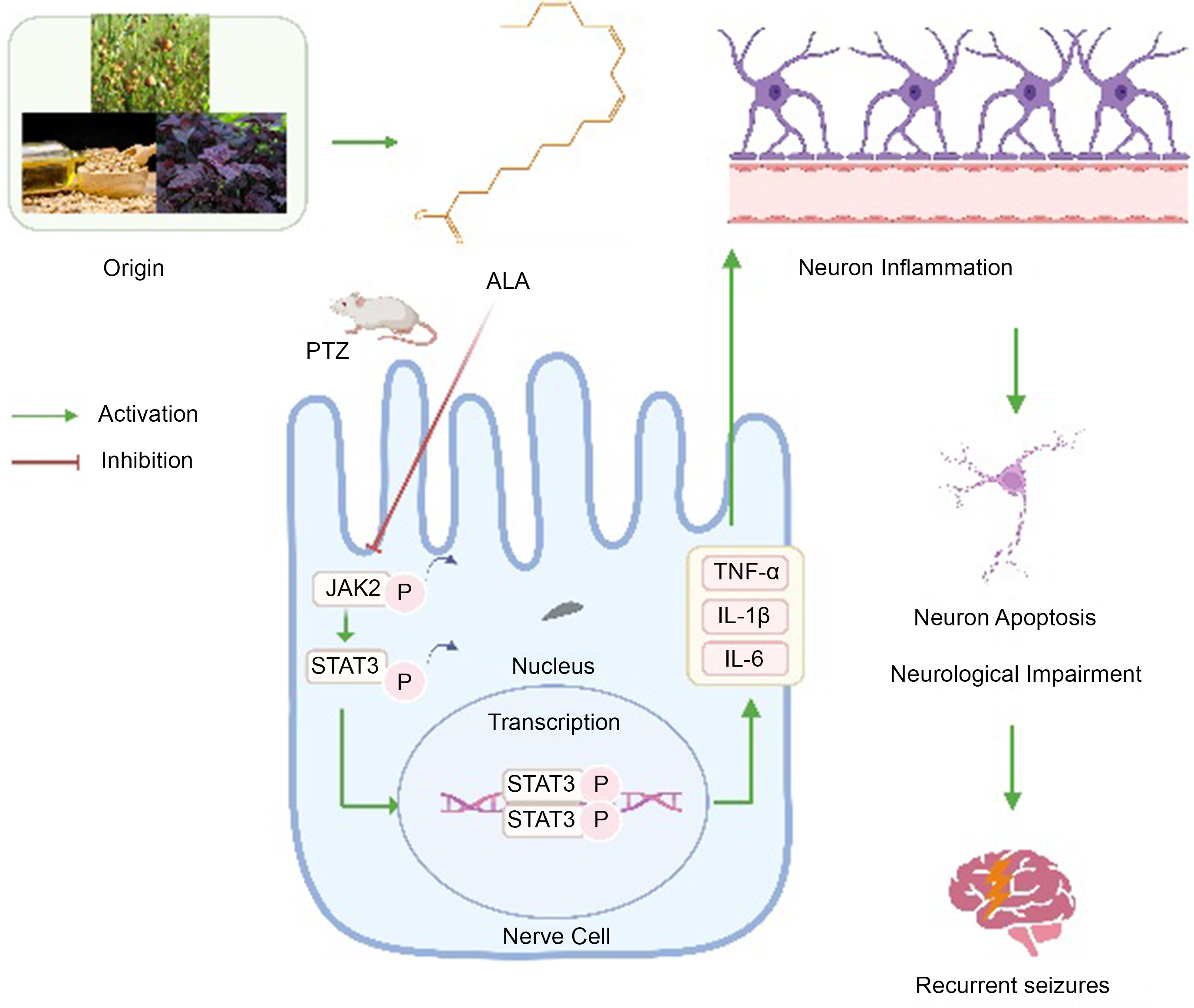
Epilepsy ranks fourth among neurological diseases, featuring spontaneous seizures and behavioural and cognitive impairments. Although anti-epileptic drugs are currently available clinically, 30 % of epilepsy patients are still ineffective in treatment and 52 % of patients experience serious adverse reactions. In this work, the neuroprotective effect of α-linolenic acid (ALA, a nutrient) in mice and its potential molecular mechanisms exposed to pentylenetetrazol (PTZ) was assessed. The mice were injected with pentetrazol 37 mg/kg, and ALA was intra-gastrically administered for 40 d. The treatment with ALA significantly reduced the overall frequency of epileptic seizures and improved the behaviour impairment and cognitive disorder caused by pentetrazol toxicity. In addition, ALA can not only reduce the apoptosis rate of brain neurons in epileptic mice but also significantly reduce the content of brain inflammatory factors (IL-6, IL-1 and TNF-α). Furthermore, we predicted that the possible targets of ALA in the treatment of epilepsy were JAK2 and STAT3 through molecular docking. Finally, through molecular docking and western blot studies, we revealed that the potential mechanism of ALA ameliorates PTZ-induced neuron apoptosis and neurological impairment in mice with seizures by down-regulating the JAK2/STAT3 pathway. This study aimed to investigate the anti-epileptic and neuroprotective effects of ALA, as well as explore its potential mechanisms, through the construction of a chronic ignition mouse model via intraperitoneal PTZ injection. The findings of this research provide crucial scientific support for subsequent clinical application studies in this field.
This cross-sectional study aims to describe and compare energy, nutrient intake and food consumption according to eating location and by age groups using data from the National Food, Nutrition and Physical Activity Survey (IAN-AF 2015/2016). Dietary intake was estimated by two non-consecutive days of food diaries (children)/24-h recalls (other age groups), and four eating location categories were defined according to the proportion of meals consumed at out-of-home locations: Home (at least 80 % of meals at home), Other Homes, School or Work and Restaurants and Other Places. The majority of meals (69·1 %) were consumed at home. Meals were also often taken at school by children and adolescents and in restaurants and similar outlets by adults and elderly. Children and adolescents in the School or Work category ate more fruit, vegetables and pulses and cereals and starchy tubers, whereas adults in this category ate more red and processed meats, sugar-sweetened beverages and sweets. Compared with Home category, Restaurants and Other Places was associated with worse diet adequacies among children (β = –1·0; 95 % CI = –2·0, −0·04), adolescents: (β = –2·4; 95 % CI = –3·2, −1·5) and adults (β = –1·3; 95 % CI = –1·6, −1·0) reflecting higher intakes of energy, fat, trans-fatty acids and SFA, and Na. The elderly consumed more free sugars and fat when eating out of home in general. Overall, findings reflect important variation in nutrient profiles by eating location, with meals taken at school or work contributing to higher consumption of nutrient-dense foods and those taken in restaurants and other similar settings implying higher consumption of energy-dense foods.
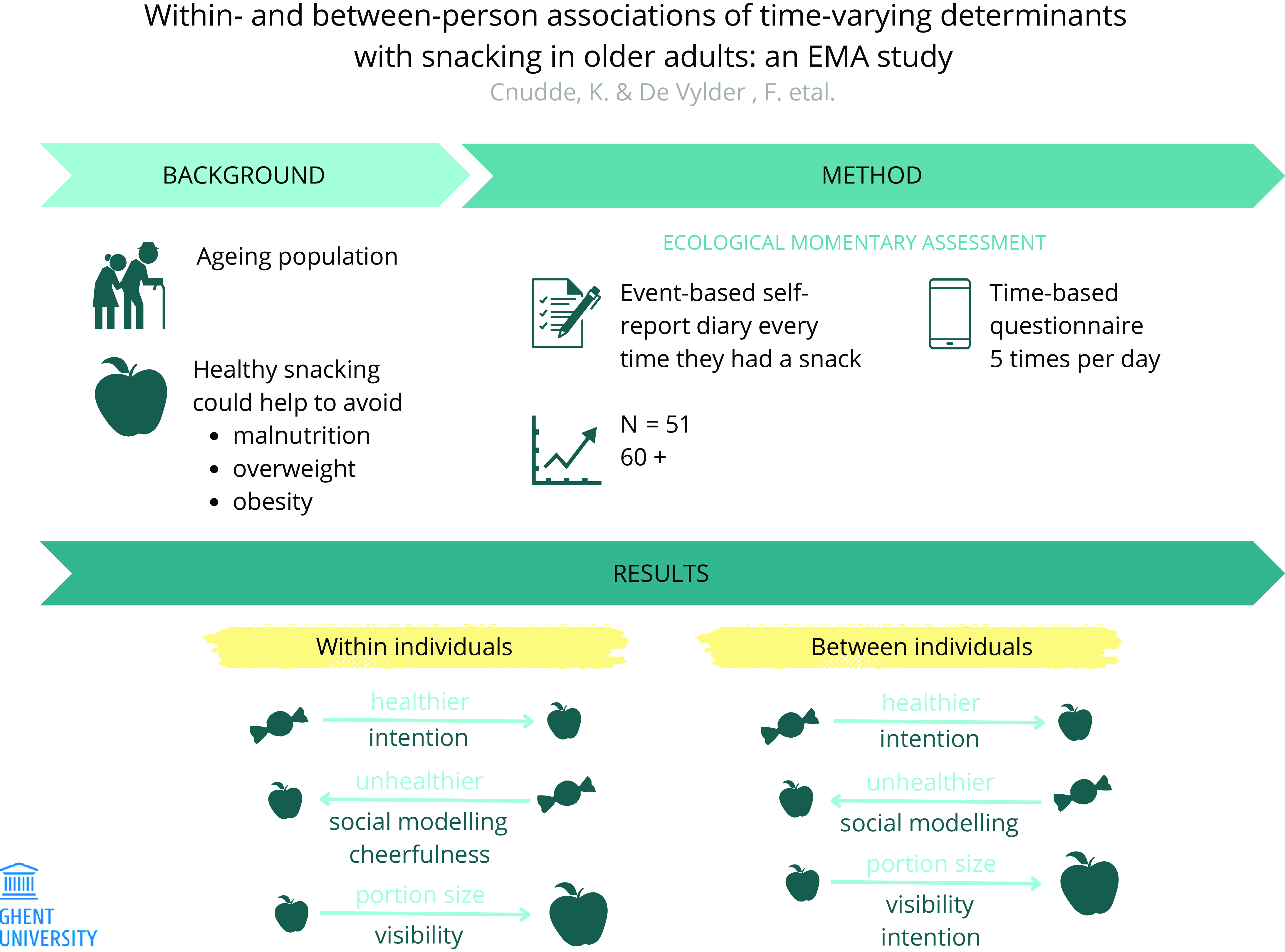
Promoting healthy snacking is important in addressing malnutrition, overweight and obesity among an ageing population. However, little is known about the factors underlying snacking behaviour in older adults. The present study aimed to explore within- and between-person associations between determinants (i.e. intention, visibility of snacks, social modelling and emotions) and snacking behaviours (i.e. decision to snack, health factor of the snack and portion size) in older adults (60+). Conducting a two-part intensive longitudinal design, data were analysed from forty-eight healthy older adults consisting of (1) an event-based self-report ecological momentary assessment (EMA) diary every time they had a snack and (2) a time-based EMA questionnaire on their phone five times per day. Analysis through generalised linear mixed models indicated that higher intention to snack healthily leads to healthier snacking while higher levels of social modelling and cheerfulness promote unhealthier choices within individuals. At the between-person level, similar results were found for intention and social modelling. Visibility of a snack increased portion size at both a within- and between-person level, while the intention to eat a healthy snack only increased portion size at the between-person level. No associations were found between the decision to snack and all determinants. This is the first study to investigate both within- and between-person associations between time-varying determinants and snacking in older adults. Such information holds the potential for incorporation into just-in-time adaptive interventions, allowing for personalised tailoring, more effective promotion of healthier snacking behaviours and thus pursuing the challenge of healthy ageing.
To examine associations between three different plant-based diet quality indices, chronic kidney disease (CKD) prevalence and related risk factors in a nationally representative sample of the Australian population.
Design:
Cross-sectional analysis. Three plant-based diet scores were calculated using data from two 24-h recalls: an overall plant-based diet index (PDI), a healthy PDI (hPDI) and an unhealthy PDI (uPDI). Consumption of plant and animal ingredients from ‘core’ and ‘discretionary’ products was also differentiated. Associations between the three PDI scores and CKD prevalence, BMI, waist circumference (WC), blood pressure (BP) measures, blood cholesterol, apo B, fasting TAG, blood glucose levels (BGL) and HbA1c were examined.
Setting:
Australian Health Survey 2011–2013.
Participants:
n 2060 adults aged ≥ 18 years (males: n 928; females: n 1132).
Results:
A higher uPDI score was associated with a 3·7 % higher odds of moderate-severe CKD (OR: 1·037 (1·0057–1·0697); P = 0·021)). A higher uPDI score was also associated with increased TAG (P = 0·032) and BGL (P < 0·001), but lower total- and LDL-cholesterol (P = 0·035 and P = 0·009, respectively). In contrast, a higher overall PDI score was inversely associated with WC (P < 0·001) and systolic BP (P = 0·044), while higher scores for both the overall PDI and hPDI were inversely associated with BMI (P < 0·001 and P = 0·019, respectively).
Conclusions:
A higher uPDI score reflecting greater intakes of refined grains, salty plant-based foods and added sugars were associated with increased CKD prevalence, TAG and BGL. In the Australian population, attention to diet quality remains paramount, even in those with higher intakes of plant foods and who wish to reduce the risk of CKD.
A healthy diet is at the forefront of measures to prevent type 2 diabetes. Certain vegetable and fish oils, such as pine nut oil (PNO), have been demonstrated to ameliorate the adverse metabolic effects of a high-fat diet. The present study investigates the involvement of the free fatty acid receptors 1 (FFAR1) and 4 (FFAR4) in the chronic activity of hydrolysed PNO (hPNO) on high-fat diet-induced obesity and insulin resistance. Male C57BL/6J wild-type, FFAR1 knockout (-/-) and FFAR4-/- mice were placed on 60 % high-fat diet for 3 months. Mice were then dosed hPNO for 24 d, during which time body composition, energy intake and expenditure, glucose tolerance and fasting plasma insulin, leptin and adiponectin were measured. hPNO improved glucose tolerance and decreased plasma insulin in the wild-type and FFAR1-/- mice, but not the FFAR4-/- mice. hPNO also decreased high-fat diet-induced body weight gain and fat mass, whilst increasing energy expenditure and plasma adiponectin. None of these effects on energy balance were statistically significant in FFAR4-/- mice, but it was not shown that they were significantly less than in wild-type mice. In conclusion, chronic hPNO supplementation reduces the metabolically detrimental effects of high-fat diet on obesity and insulin resistance in a manner that is dependent on the presence of FFAR4.
To assess the effect of different front-of-package labelling (FOPL) schemes on the objective understanding of the nutritional content and intention to purchase products, in Panama.
Supermarkets across Panama. Participants were exposed to two-dimensional images of fifteen mock-up products presented at random and balanced orders. Participants assigned to the intervention groups were exposed to mock-ups featuring one FOPL scheme: black octagonal warning labels (OWL), traffic-light labelling (TFL) or guideline daily amounts (GDA). The control group was not exposed to any FOPL scheme.
Participants:
Adult supermarket shoppers (n 1200). Participants were blinded to group assignment.
Results:
A similar number of participants were randomised and analysed in each group: OWL (n 300), TFL (n 300), GDA (n 300) and control (n 300). The odds of choosing to purchase the least harmful or none of the options more often was the highest in the OWL group. Compared with the control group, these odds were two times higher in the OWL group (OR 2·13, 95 % CI 1·60, 2·84) and 57 % higher in the TFL (1·57, 1·40–2·56), with no changes in the GDA (0·97, 0·73–1·29). OWL also resulted in the highest odds for correctly identifying the least harmful option and for correctly identifying a product with excessive amounts of sugars, sodium and/or saturated fats.
Conclusions:
OWL performed best in helping shoppers to correctly identify when a product contained excessive amounts of nutrients of concern, to correctly identify the least harmful option and to decide to purchase the least harmful or none of the options, more often.
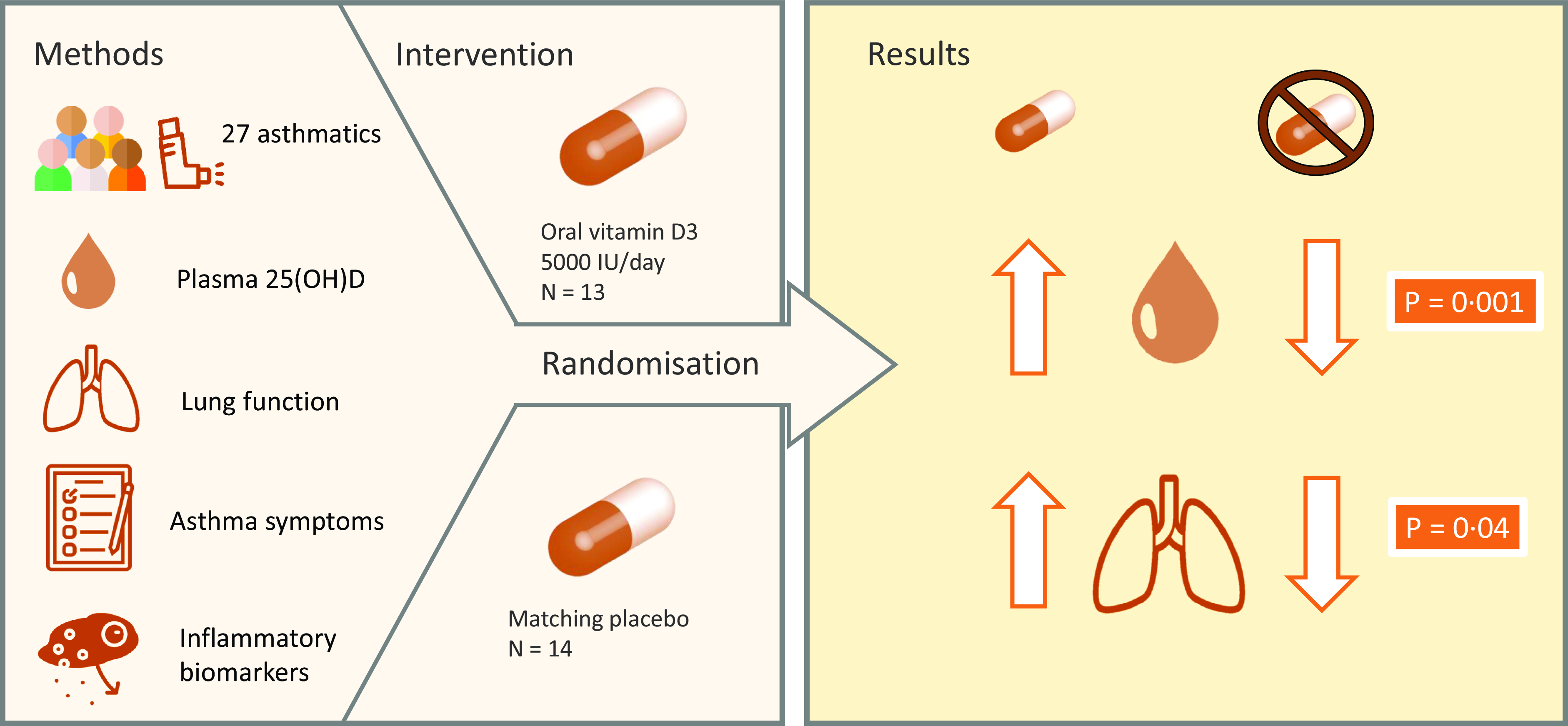
Vitamin D deficiency has previously been linked to higher rates of exacerbation and reduced lung function in asthmatics. Previous randomised controlled trials investigating the effect of vitamin D supplementation have mainly focused on children with asthma. Trials involving adults have typically used bolus dosing regimens, and the main outcomes have been patient-focused without investigating underlying inflammation. The present study aimed to conduct a 12-week placebo-controlled randomised controlled trials administering a daily 125 µg vitamin D3 supplement to adults with mild to moderate asthma. A total of 32 participants were randomised to receive either the 125 μg vitamin D3 supplement or an identical matching placebo. The primary outcome of the study was lung function measured by the ratio of FEV1:FVC (effect size 2·5) with secondary outcomes including asthma symptoms and inflammatory biomarkers. There was a small but statistically significant higher increase in the mean (±sd) ratio of FEV1:FVC from baseline to post-intervention in the vitamin D group (+0·05 ± 0·06) compared with the placebo group (+0·006 ± 0·04, P = 0·04). There was no effect of the intervention on asthma control test scores, or the inflammatory biomarkers measured. There was a moderate, significant association between baseline plasma 25(OH)D concentration and baseline plasma IL-10 (r = 0·527, P = 0·005) and TNF-α (r = −0·498. P = 0·008) concentrations. A daily vitamin D3 supplement led to slightly improved lung function in adult asthmatics and may be a useful adjunct to existing asthma control strategies, particularly for individuals with suboptimal vitamin D status.
Improved food availability and a growing economy in Tanzania may insufficiently decrease pre-existing nutritional deficiencies and simultaneously increase overweight within the same individual, household or population, causing a double burden of malnutrition (DBM). We investigated economic inequalities in DBM at the household level, expressed as a stunted child with a mother with overweight/obesity, and the moderating role of dietary diversity in these inequalities.
Design:
We used cross-sectional data from the 2015–2016 Tanzania Demographic and Health Survey.
Setting:
A nationally representative survey.
Participants:
Totally, 2867 children (aged 6–23 months) and their mothers (aged 15–49 years). The mother–child pairs were categorised into two groups based on dietary diversity score: achieving and not achieving minimum dietary diversity.
Results:
The prevalence of DBM was 5·6 % (sd = 0·6) and significantly varied by region (ranging from 0·6 % to 12·2 %). Significant interaction was observed between dietary diversity and household wealth index (Pfor interaction < 0·001). The prevalence of DBM monotonically increased with greater household wealth among mother–child pairs who did not achieve minimum dietary diversity (Pfor trend < 0·001; however, this association was attenuated in those who achieved minimum dietary diversity (Pfor trend = 0·16), particularly for the richest households (P = 0·44). Analysing household wealth index score as a continuous variable yielded similar results (OR (95 % CI): 2·10 (1·36, 3·25) for non-achievers of minimum dietary diversity, 1·38 (0·76, 2·54) for achievers).
Conclusions:
Greater household wealth was associated with higher odds of DBM in Tanzania; however, the negative impact of household economic status on DBM was mitigated by minimum dietary diversity.
There are many health and nutrition implications of suffering from multimorbidity, which is a huge challenge facing health and social services. This review focuses on malnutrition, one of the nutritional consequences of multimorbidity. Malnutrition can result from the impact of chronic conditions and their management (polypharmacy) on appetite and nutritional intake, leading to an inability to meet nutritional requirements from food. Malnutrition (undernutrition) is prevalent in primary care and costly, the main cause being disease, accentuated by multiple morbidities. Most of the costs arise from the deleterious effects of malnutrition on individual’s function, clinical outcome and recovery leading to a substantially greater burden on treatment and health care resources, costing at least £19·6 billion in England. Routine identification of malnutrition with screening should be part of the management of multimorbidity together with practical, effective ways of treating malnutrition that overcome anorexia where relevant. Nutritional interventions that improve nutritional intake have been shown to significantly reduce mortality in individuals with multimorbidities. In addition to food-based interventions, a more ‘medicalised’ dietary approach using liquid oral nutritional supplements (ONS) can be effective. ONS typically have little impact on appetite, effectively improve energy, protein and micronutrient intakes and may significantly improve functional measures. Reduced treatment burden can result from effective nutritional intervention with improved clinical outcomes (fewer infections, wounds), reducing health care use and costs. With the right investment in nutrition and dietetic resources, appropriate nutritional management plans can be put in place to optimally support the multimorbid patient benefitting the individual and the wider society.
Oral health is a critical component of overall health and well-being, not just the absence of disease. The objective of this review paper is to describe relationships among diet, nutrition and oral and systemic diseases that contribute to multimorbidity. Diet- and nutrient-related risk factors for oral diseases include high intakes of free sugars, low intakes of fruits and vegetables and nutrient-poor diets which are similar to diet- and nutrient-related risk factors for systemic diseases. Oral diseases are chronic diseases. Once the disease process is initiated, it persists throughout the lifespan. Pain and tissue loss from oral disease leads to oral dysfunction which contributes to impaired biting, chewing, oral motility and swallowing. Oral dysfunction makes it difficult to eat nutrient-dense whole grains, fruits and vegetables associated with a healthy diet. Early childhood caries (ECC) associated with frequent intake of free sugars is one of the first manifestations of oral disease. The presence of ECC is our ‘canary in the coal mine’ for diet-related chronic diseases. The dietary sugars causing ECC are not complementary to an Eatwell Guide compliant diet, but rather consistent with a diet high in energy-dense, nutrient-poor foods – typically ultra-processed in nature. This diet generally deteriorates throughout childhood, adolescence and adulthood increasing the risk of diet-related chronic diseases. Recognition of ECC is an opportunity to intervene and disrupt the pathway to multimorbidities. Disruption of this pathway will reduce the risk of multimorbidities and enable individuals to fully engage in society throughout the lifespan.
Multimorbidity, the existence of two or more concurrent chronic conditions in a single individual, represents a major global health challenge. The Nutrition Society’s 2023 Winter Conference at the Royal Society, London focused on the topic of ‘Diet and lifestyle strategies for prevention and management of multimorbidity’, with symposia designed to explore pathways for prevention of multimorbidity across the lifecourse, the role of ageing, the gut-brain-heart connection and lifestyle strategies for prevention and management of multimorbidity. It also considered machine learning and precision nutrition approaches for addressing research challenges in multimorbidity. The opening plenary lecture discussed advancing diet and lifestyle research to address the increasing burden and complexity of multimorbidity. The two-day programme concluded with a plenary which addressed the key dietary risk factors and policies in multimorbidity prevention.
We aimed to understand what influences parents’ purchasing behaviours when shopping for groceries online and potential ways to improve the healthiness of online grocery platforms.
Design:
We conducted semi-structured interviews, guided by the Marketing Mix framework. Reflexive thematic analysis was used to analyse data.
Setting:
Online interviews were conducted with primary grocery shoppers.
Participants:
Parents (n 14) or caregivers (n 2) using online grocery platforms at least every 2 weeks.
Results:
Most participants perceived purchasing healthy food when shopping for groceries online to be more challenging compared to in physical stores. They expressed concerns about the prominence of online marketing for unhealthy food. Participants from lower socio-economic backgrounds often depended on online supermarket catalogues to find price promotions, but healthy options at discounted prices were limited. Across socio-economic groups, fresh items like meat and fruit were preferred to be purchased instore due to concerns about online food quality.
Participants believed online grocery platforms should make healthy foods more affordable and supported regulations on supermarket retailers to promote healthy options and limit unhealthy food promotion online.
Conclusions:
Participants had varied experiences with online grocery shopping, with both positive and negative aspects. Efforts to improve population diets need to include mechanisms to create health-enabling online grocery retail platforms. Government interventions to restrict marketing of unhealthy foods and promote marketing of healthy options on these platforms warrant investigation.
Obesity is a multifactorial pathophysiological condition with an imbalance in biochemical, immunochemical, redox status and genetic parameters values. We aimed to estimate the connection between relative leucocyte telomere lengths (rLTL) – biomarker of cellular ageing with metabolic and redox status biomarkers values in a group of obese and lean children. The study includes 110 obese and 42 lean children and adolescents, both sexes. The results suggested that rLTL are significantly shorter in obese, compared with lean group (P < 0·01). Negative correlation of rLTL with total oxidant status (TOS) (Spearman’s ρ = –0·365, P < 0·001) as well as with C-reactive protein (Spearman’s ρ = –0·363, P < 0·001) were observed. Principal component analysis (PCA) extracted three distinct factors (i.e. principal components) entitled as: prooxidant factor with 35 % of total variability; antioxidant factor with 30 % of total variability and lipid antioxidant – biological ageing factor with 12 % of the total variability. The most important predictor of BMI > 30 kg/m2 according to logistic regression analysis was PCA-derived antioxidant factor’s score (OR: 1·66, 95th Cl 1·05–2·6, P = 0·029). PCA analysis confirmed that oxidative stress importance in biological ageing is caused by obesity and its multiple consequences related to prooxidants augmentation and antioxidants exhaustion and gave us clear signs of disturbed cellular homoeostasis deepness, even before any overt disease occurrence.
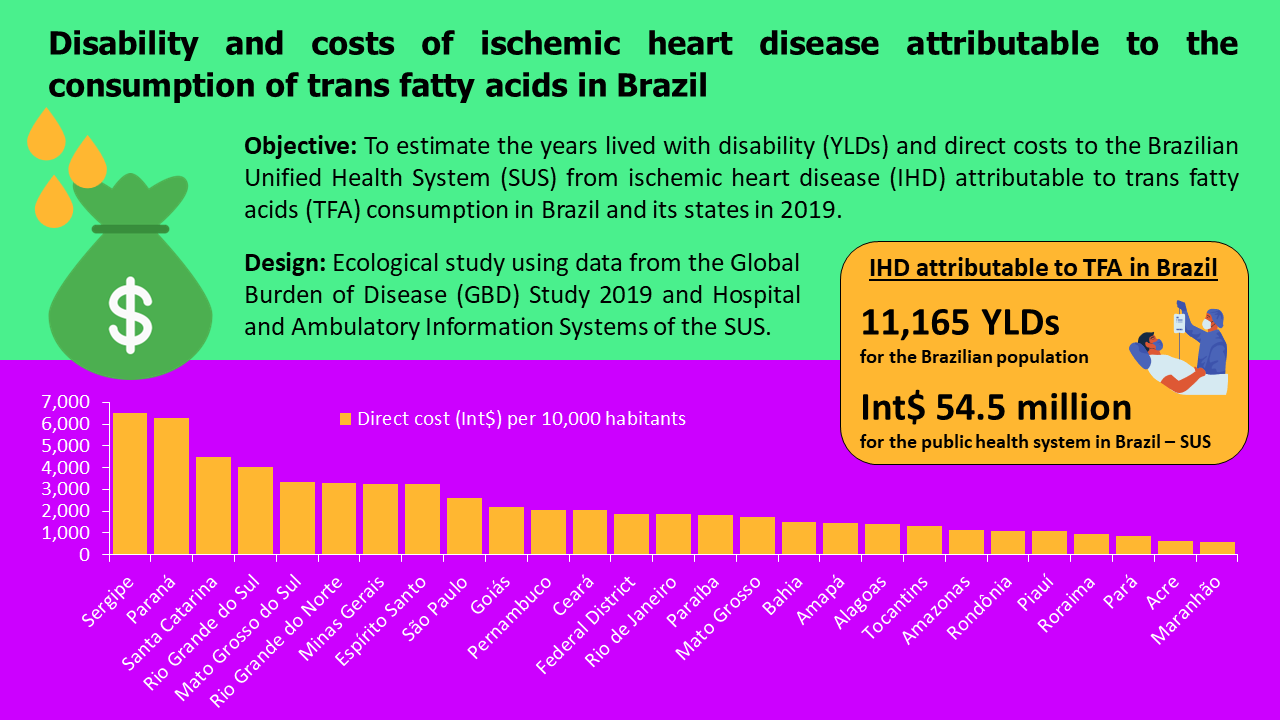
To estimate the disability and costs of the Brazilian Unified Health System for IHD attributable to trans-fatty acid (TFA) consumption in 2019.
Design:
This ecological study used secondary data from the Global Burden of Disease (GBD) Study 2019 to estimate the years lived with disability from IHD attributable to TFA in Brazil in 2019. Data on direct costs (purchasing power parity: 1 Int$ = R$ 2·280) were obtained from the Hospital and Ambulatory Information Systems of the Brazilian Unified Health System. Moreover, the total costs in each state were divided by the resident population in 2019 and multiplied by 10 000 inhabitants. The relationship between the socio-demographic index, disease and economic burden was investigated.
Setting:
Brazil and its twenty-seven states.
Participants:
Adults aged ≥ 25 years of both sexes.
Results:
IHD attributable to TFA consumption resulted in 11 165 years lived with disability (95 % uncertainty interval 932–18 462) in 2019 in Brazil. A total of Int$ 54 546 227 (95 % uncertainty interval 4 505 792–85 561 810) was spent in the Brazilian Unified Health System in 2019 due to IHD attributable to TFA, with the highest costs of hospitalisations, for males and individuals aged ≥ 50 years or over. The highest costs were observed in Sergipe (Int$ 6508/10 000; 95 % uncertainty interval 576–10 265), followed by the two states from the South. Overall, as the socio-demographic index increases, expenditures increase.
Conclusions:
TFA consumption results in a high disease and economic IHD burden in Brazil, reinforcing the need for more effective health policies, such as industrial TFA elimination, following the international agenda.
Obesity is a significant health issue in Aotearoa; effective and pragmatic strategies to facilitate weight loss are urgently required. Growing recognition of the circadian rhythm’s impact on metabolism has popularised diets like time-restricted eating (TRE)(1). The 16:8 TRE method involves limiting food intake to an 8-hour daily eating window and can lead to weight loss without other substantial changes to diet(2). Nonetheless, TRE requires accountability and tolerating hunger for short periods. Continuous glucose monitors (CGM) are small wearable biofeedback devices that measure interstitial glucose levels scanned via smartphones. By providing immediate feedback on the physiological effects of eating and fasting, CGM use may promote adherence to TRE(3). This pilot study aimed to 1) investigate how CGM affects adherence to TRE and 2) assess the feasibility of CGM use while undertaking TRE. This two-arm randomised controlled trial enrolled healthy adults from Dunedin, assigning them to TRE-only or TRE+CGM groups for 14 days. Successful adherence to TRE was defined a priori as maintaining an 8-hour eating window on 80% of days. CGM feasibility was defined a priori as scanning the glucose monitor thrice daily on 80% of days. Secondary outcomes included well-being, anthropometry, glucose levels, and overall TRE and CGM experiences via semi-structured interviews. Twenty-two participants were randomised into two groups: TRE-only (n = 11) and TRE+CGM (n = 11, with n = 2 excluded from analysis post-randomisation for medical reasons). Participants had a diverse range of ethnicities, the mean age was 32 (+/-14.9) years, and 55% were female. The TRE+CGM group adhered to the 8-hour eating window for an average of 10.0 days (range 2-14) compared with 8.6 days (range 2-14) in the TRE-only group. Both groups had similar mean eating window durations of 8.1 hours. Five (56%) participants in the TRE+CGM group achieved the a priori criteria for TRE adherence, compared to 3 (27%) in the TRE-only group. Participants in the TRE+CGM group performed an average of 8.2 (+/-5.6) daily scans, with n = 7 (78%) of participants meeting the a priori CGM feasibility criteria. Neither group reported consistent adverse psychological impacts in DASS-21 and WHO-5 scores. Interviews highlighted that CGM increased hunger tolerance during fasting as participants felt reassured by their normal glucose levels. CGM aided TRE accountability by acting as a biological tracker of food intake. Participants reported that TRE led to improved energy and self-efficacy, a more productive daily routine, and healthier food choices. Promisingly, 72% of participants would use CGM and undertake TRE in future. This study demonstrates that using CGM while undertaking TRE is feasible and can improve adherence by enhancing hunger tolerance and accountability. Overall, participants experienced increased awareness of eating habits and physiological mechanisms. Over the longer term, this simple and synergistic approach may be a helpful weight loss strategy.
While there is a recognised role of optimising lifestyle behaviours such as diet and physical activity in the management of infertility, the best practice for lifestyle management of infertility remains unknown, and factors influencing the lifestyle behaviours of people with infertility are not well understood. The aim of this systematic review is to evaluate the barriers and enablers to a healthy lifestyle in people with infertility, from the perspectives of people with infertility and health professionals, in order to inform optimal behavioural change strategies for lifestyle management of infertility. Ovid MEDLINE(R), PsycINFO, EMBASE, EBM Reviews, and CINAHL Plus were searched from inception to 12th September 2022. Eligible studies were qualitative, quantitative or mixed-methods primary studies which explored barriers and/or enablers to lifestyle for infertility management, from the perspectives of people with infertility and/or health professionals. Two independent reviewers performed quality assessment, using the Centre for Evidence-Based Management Critical Appraisal of a Survey Tool (quantitative and mixed-methods studies) and the Critical Appraisal Skills Programme Qualitative Checklist (qualitative and mixed-methods studies). Data were analysed by inductive thematic analysis with themes mapped to the Capability, Opportunity, Motivation and Behaviour (COM-B) model(1) and Theoretical Domains Framework (TDF)(2). Relevant behaviour change techniques (BCTs)(3) to target the identified enablers and barriers were suggested. After screening 10703 citations and 82 full-texts, 22 studies were included (12 quantitative, 7 mixed-methods and 3 qualitative) with 18 studies including women with infertility (n = 2442), 10 including men with infertility (n = 1372) and 6 including health professionals (n = 261). From the perspectives of people with infertility, themes related to capability (e.g. strategies for behaviour change), opportunity (e.g. limited time, resources and money) and motivation (e.g. interplay between lifestyle and emotional state); themes mapped to 8 TDF domains. From the perspectives of health professionals, themes related to capability (e.g. identification of patients appropriate for lifestyle intervention), opportunity (e.g. mode of delivery) and motivation (e.g. professional responsibility); themes mapped to 6 TDF domains. 34 BCTs were identified across the suggested interventions. This systematic review found that several interacting factors influence lifestyle in people with infertility as well as health professional behaviour with regards to provision of lifestyle interventions for infertility. These factors can be targeted for optimisation of interventions. In light of the limited number of qualitative studies, there is a need for more qualitative research to gain deeper insights into the perspectives of people with infertility and health professionals for further exploration of the complex and interacting factors which shape lifestyle during the fertility journey.
Bitter taste perception plays a dual role in human nutrition and evolutionary biology; being identifiable in nutrient-dense foods such as cruciferous vegetables and historically signalled toxic compounds. The TAS2R38 gene, part of the taste 2 receptor family, is central to individual differences in bitter taste perception(1). While genetic variations are influential, dietary habits and food preparation also impact taste perception. However, research investigating the interplay between these factors and genetic variations in influencing bitter taste sensitivity and food intake is limited. This study aimed to elucidate the relationship between bitter taste sensitivity and TAS2R38 haplotype variations in the context of bitter food consumption among Australian adults. A cross-sectional, mixed-methods study was conducted. Healthy adults who had maintained a stable diet for at least three months were eligible. Data collection was via an online survey (REDCap), capturing self-reported demographics, dietary patterns specific to bitter foods including metrics of bitter food avoidance, frequency, liking and perceived healthfulness, alongside a Dietary Quality Index (DQI) derived from a food frequency questionnaire(2). Bitter taste sensitivity was assessed using self-reported intensity perceptions of 6-n-propylthiouracil (PROP) taste strips(3). Genotyping was conducted via TaqMan qPCR assays on DNA extracted from buccal swabs to ascertain TAS2R38 haplotypes. Data analysis utilised Analysis of Covariance (ANCOVA) and regression models, with all tests adjusted for confounding variables such as gender, age, and smoking status. A total of 222 participants (47.5 ± 17.7 years; 86% female; BMI 27.3 ± 7.1 kg/m2) completed the study. PROP sensitivity was strongly correlated with TAS2R38 haplotype, with supertasters predominantly having PAV/PAV, medium tasters with PAV/AVI, and non-tasters with AVI/AVI (p = 0.002). However, no relationship was observed between PROP sensitivity and either the frequency, liking, or avoidance of bitter foods (p>0.05). DQI was significantly related to bitter food consumption; individuals in the lowest DQI quintile consumed bitter foods more frequently than those in the third (p = 0.007) and top quintiles (p = 0.001). The perceived healthfulness of bitter foods was significantly higher in those with AVI/AVI haplotypes (non-tasters) compared to those with PAV/AVI (medium tasters) (p = 0.001). Counterintuitively, participants who reported greater enjoyment of bitter tastes consumed bitter foods less frequently (p<0.001). Our study confirms that TAS2R38 variants are predictive of PROP taste sensitivity, consistent with literature that identifies PAV/PAV individuals as supertasters. However, neither PROP sensitivity nor TAS2R38 haplotype influenced bitter food frequency or preference consumption patterns. Interestingly, those with lower Dietary Quality Index scores and less enjoyment of bitter taste consumed bitter foods more often. These observations highlight the need to investigate other factors influencing bitter food intake, such as additional sensory characteristics or psychological and behavioural aspects.
Associations between obesity and mental illness have been identified, but they are complex and bidirectional(1). Weight loss interventions have been proposed as a potential strategy to improve mental health in individuals with overweight or obesity, but the evidence remains inconclusive(2). Additionally, the role of specific foods in a weight loss diet and mental health outcomes is not well understood(3). This study aimed to explore the association between weight loss (with and without almonds) and self-administered psychological and sleep assessments, including the Profile of Mood States (POMS), the Perceived Stress Scale (PSS), the Zung Self-Rating Depression Scale (ZSDS), and the Pittsburgh Sleep Quality Index (PSQI). Participants (n = 140, 47.5 ± 10.8 years) with overweight or obesity (BMI: 30.7 ± 2.3 kg/m2) were randomised to an energy-controlled almond-enriched diet (AED) or nut-free diet (NFD). Psychological and sleep assessments were conducted at baseline, after 3 months of weight loss, and after 6 months of weight maintenance. Data were analysed using mixed-effects models and linear regression. For POMS, total mood disturbance score (TMDS) (60.2%, p = 0.01), fatigue-inertia (21.2%, p = 0.003), and vigor-activity (19.9%, p<0.001) improved over time (with no different between groups), with improvements associated with the magnitude of weight loss (TMDS: β = 0.059, p = 0.02; fatigue-inertia: β = 0.268, p = 0.016; vigor-activity: β=-0.194, p = 0.048). No significant changes were observed in tension-anxiety, depression-dejection, anger-hostility, or confusion-bewilderment. A significant group x time interaction (p = 0.048) was found for the PSS, which increased in the NFD group (10.1%) and decreased in the AED (1%) during the weight maintenance phase. No significant changes were observed for the ZSDS. The PSQI demonstrated significant improvement in both groups over time for sleep quality (11.3%, p<0.001), sleep latency (24.3%, p<0.001), sleep disturbance (39.2%, p = 0.04), and daytime dysfunction (290.4%, p<0.001), but not for sleep duration or habitual sleep efficiency. Summed scores, generating the global sleep score (GSS), demonstrated an overall significant improvement in both groups over time (33.5%, p<0.001), and these improvements were associated with weight loss (GSS: β = 0.863, p<0.001). The findings emphasise the importance of evaluating mental health outcomes in weight loss interventions and highlight the potential influence of weight management on mood and sleep quality. Further research is warranted to explore the impact of diet composition on perceived stress and other mental health outcomes.
Adequate energy intake (EI) is essential for adolescent athletes to support health, performance, and growth(1). Rowing is a physically demanding sport where intense training begins in adolescence. Research is needed to assess whether current EI is sufficient to support healthy physiological functions and training in adolescent rowers. The aim of this study was to evaluate the energy status (energy availability (EA) or energy balance (EB)) including EI and exercise energy expenditure (EEE) of adolescent rowers in New Zealand. A total of 35 rowers (23 females, 16.8yrs ± 1.9yrs; 12 males, 17.3yrs ± 1.6yrs) who had been rowing for at least one season participated. A bioimpedance analyser measured body composition in 11 participants (8 females, weight 63.0±7.0kg, fat free mass (FFM) 50.8 ± 6.5kg; 3 males, weight 78.5 ± 15.9kg, FFM 70.7 ± 12.2kg) enabling calculation of EA. Due to COVID-19 restrictions, the remaining 24 participants (15 females, 9 males) provided estimated body weight (74.7 ± 9.2kg) and EB was then used to evaluate energy status. All participants completed four days of food and training diaries, two ‘recovery’ and two ‘hard’ training days. EI was determined in FoodWorks10 software using the New Zealand Food Composition Database. For training, metabolic equivalent of tasks (MET)(2) were assigned using bodyweight, heart rate, and rating of perceived effort to estimate EEE. Paired sample t-tests or Wilcoxon Signed Rank test (non-parametric data) was used to determine differences between EI, EEE, EA, and EB on the high and low training days for each gender. Significance was set at p< 0.05. The average EI for females on hard and recovery days was 10837 ± 3304kJ and 10461 ± 2882kJ respectively, and for males was 15293 ± 3971kJ and 13319 ± 4943kJ, respectively. No significant differences were found between EI on hard vs. recovery days in both genders. Significant differences between average EEE on hard vs. recovery days were found in both genders (females, hard day 4609 ± 2446kJ, recovery day 3146 ± 1905kJ, p<0.001; males, hard day 6589 ± 1575kJ, recovery day 3326 ± 2890kJ, p = 0.001). EA on hard and recovery training days was classified as suboptimal at 142 ± 80kJ/FFMkg/day and 167 ± 79kJ/FFMkg/day respectively with no significant difference in EA between hard and recovery days (p = 0.092). Average EB on hard training days was −484 ± 4267kJ and on recovery training days was 572 ± 3265kJ, with no significant difference between training days (p = 0.177). Both genders showed no significant difference in EB between hard and recovery training days (females p = 0.221, males p = 0.978). The results suggest that adolescent rowers do not adjust their nutritional intake to match EEE. This may increase the risk of adolescent rowers presenting with suboptimal EB or EA, with females being at a greater risk than males.
Dietary intake plays a key role in athletic performance in rowing(1). Suboptimal nutrition within the adolescent rowing population may negatively affect performance, normal growth and development, professional athlete development, and career longevity. Previous research has indicated that suboptimal carbohydrate intakes are a common issue in rowing(2). The quality of nutritional intake in adolescent rowers has seldom been explored. During moderate training, adolescent athletes should aim for 5-7g.kg-1 of carbohydrates, 1.3-1.8g.kg-1 of protein, and 20-35% energy from fat(3). This study aimed to examine the dietary intake of adolescent rowers in New Zealand and compare it with nutritional guidelines for normal growth, development, and sports performance. A cross-sectional study design involved data collection on two ‘hard’ training days, and two ‘recovery’ days from rowers (14-21 years) recruited from clubs and secondary schools around New Zealand. Participants completed four 24-hour collection periods, recording food intake, training duration and intensity. The food records were verified for accuracy, and dietary data was entered into Foodworks software for nutritional analysis. IBM SPSS software was used to calculate mean intakes for carbohydrate, protein, fat, and standard deviations. Independent t-tests were used to compare carbohydrate and protein intakes between males and females. Of the initial 40 participants, 35 fully (n = 23 females, 16.8 ± 1.9 years and n = 12 males, 17.3 ± 1.6 years) completed the study. Participants consumed 319 ± 116g (4.5 ± 1.7g.kg-1/day) of carbohydrates, 121 ± 56 g (1.7 ± 0.7 g.kg-1/day) of protein and 113 ± 46 g (1.6 ± 0.6g.kg-1/day) of fat per day. Females consumed 290 ± 80g (4.4 ± 1.3g.kg-1/day) of carbohydrates and males consumed 400 ± 78 g (5.0 ± 1.4g.kg-1/day) per day, with no significant difference between males and females intake per kilogram of bodyweight per day (p = 0.165). Minimum carbohydrate levels of 5g.kg-1 per day were only achieved by 7 females (30.4%) and 4 (33.3%) males. Females consumed significantly less protein per day, 106 ± 38g (1.6 ± 0.6 g.kg-1/day), in comparison to males who consumed 164 ± 46 grams (2.0 ± 0.5 g.kg-1/day) per day (p = 0.04). Fourteen females (60.9%) and 10 males (83.3%) consumed more than the minimum requirement of 1.3g.kg-1 of protein per day. The findings suggest that 2 out of 3 adolescent rowers in New Zealand fail to reach the minimum recommendations for carbohydrate intake(3), and males more readily meet the recommended intakes of protein when compared to females. Nutrition education for adolescent rowers in New Zealand should emphasise adequate carbohydrate and protein intakes that meet sports nutrition guidelines in order to support normal growth, development and optimised performance for these athletes.