To save content items to your account,
please confirm that you agree to abide by our usage policies.
If this is the first time you use this feature, you will be asked to authorise Cambridge Core to connect with your account.
Find out more about saving content to .
To save content items to your Kindle, first ensure no-reply@cambridge.org
is added to your Approved Personal Document E-mail List under your Personal Document Settings
on the Manage Your Content and Devices page of your Amazon account. Then enter the ‘name’ part
of your Kindle email address below.
Find out more about saving to your Kindle.
Note you can select to save to either the @free.kindle.com or @kindle.com variations.
‘@free.kindle.com’ emails are free but can only be saved to your device when it is connected to wi-fi.
‘@kindle.com’ emails can be delivered even when you are not connected to wi-fi, but note that service fees apply.
The family Syngnathidae contains 52 seahorse species, which inhabit a range of habitats including coral reefs, seagrass beds and coastal estuaries. The seahorse Hippocampus kelloggi is among the most widely distributed species, occurring from Indo-West Pacific to East Africa. This species was included in the IUCN Red List in 2017 and is classified as vulnerable according to A2cd criteria. In this study, three specimens collected from the central coast of Mozambique were investigated and based on morphology and mitochondrial subunit of cytochrome oxidase I (COI) were identified as H. kelloggi. These results confirmed for the first time the extensive range of occurrence of H. kelloggi on the central coast of Mozambique.
A new record of a white humpback whale (Megaptera novaeangliae) was made off Papeete, Tahiti in July 2019. The individual was completely white, except for grey patterns on its body and on the ventral part of the fluke. The presence of different colourations indicates that this individual is not an albino but a leucistic individual. According to field observations, the individual was likely a juvenile or a subadult. It was seen breaching several times and travelled further north of Papeete, where the animal was recaptured off Arue. White individuals are rare and offer unique opportunities to understand whale movement patterns and potential population connectivity among humpback whale populations.
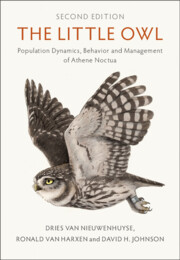
The basic biology of owls is poorly understood compared to that of other bird species. The Little Owl, Athene noctua, is one of the best models for biological and conservation research. Though widespread across Europe, Asia and North Africa, populations of the Little Owl are now in decline, making studies of its behavior and ecology all the more important. This extensively revised and updated second edition features substantial new long-term data on population dynamics, behavioral observations and breeding biology of the Little Owl. The authors discuss its wide-ranging ecology, genetics, subspecies, and population status by country. In addition, they outline a research strategy and monitoring program. Exceptional illustrations of all fourteen subspecies cover embryonic and chick development, feather growth and moult, including high-quality drawings presenting concrete management suggestions. Whilst being an invaluable resource for academic researchers, its accessible and straightforward style will also appeal to amateur ornithologists and enthusiasts.
Russia’s Arctic policy since 2008 has been influenced by two competing foreign policy lines (discourses): the “Arctic as a resource base” and the “sovereignty discourse”. The “Arctic as a resource base” has been the dominant one since the first Russian Arctic Strategy in 2008. It is primarily about exploiting the vast oil and gas resources estimated to be located there, as well as turn the Northern Sea Route into a “global transport corridor”. In Russia’s Arctic Strategy of 2020, however, there is enhanced emphasis on sovereignty and power balancing in Russian Arctic policy. And the focus on sovereignty was heightened with the amendments to Russia’s Arctic Strategy in March 2023. This increased emphasis on sovereignty, territorial defence and balance of power in Russian Arctic policy is likely to be further reinforced by the growing great-power competition between the USA and Russia, which has gained new momentum following Russia’s invasion of Ukraine in 2022.
Recent developments in ecological theory point the way to a stewardship approach that promotes biocultural diversity and ecosystem resilience. In addition, the escalating pace of anthropogenic environmental change makes it clear that conservation strategies which incorporate social as well as ecological dimensions are essential. This thoroughly updated version of Conservation in the Context of a Changing World covers a broader geographic, historical, and cultural scope that integrates material from the natural sciences, social sciences, and humanities. Contemporary and comprehensive, this book provides essential material for understanding trade-offs between different options for resolving complex issues, including climate policy, the contrasting interests of different groups, the changing roles of Indigenous peoples, biopiracy, human-wildlife conflict, and new governance models such as co-management. Sources of evidence about the natural world and the roles of local and traditional people are emphasized. This is a vital resource for making informed decisions about controversial issues in conservation.
Richly illustrated in full colour and packed with examples from every major continent and wetland type, this third edition has been completely rewritten to provide undergraduates with a thoroughly accessible introduction to the basic principles. It divides the world’s wetlands into six principal types and presents six major causal environmental factors, arranged by importance and illustrated with clear examples, making it easy for instructors to plan tailored lectures and field trips and avoid overwhelming students with unnecessary detail. It retains its rigour for more advanced students, with sections on research methods and experiments, and over a thousand classic and contemporary references. Each chapter ends with questions that review the content covered and encourage further investigation. With expanded sections on topical issues such as sea level rise, eutrophication, facilitation and the latest approaches to restoration and conservation, the new edition of this prize-winning textbook is a vital resource for wetland ecology courses.