To save content items to your account,
please confirm that you agree to abide by our usage policies.
If this is the first time you use this feature, you will be asked to authorise Cambridge Core to connect with your account.
Find out more about saving content to .
To save content items to your Kindle, first ensure no-reply@cambridge.org
is added to your Approved Personal Document E-mail List under your Personal Document Settings
on the Manage Your Content and Devices page of your Amazon account. Then enter the ‘name’ part
of your Kindle email address below.
Find out more about saving to your Kindle.
Note you can select to save to either the @free.kindle.com or @kindle.com variations.
‘@free.kindle.com’ emails are free but can only be saved to your device when it is connected to wi-fi.
‘@kindle.com’ emails can be delivered even when you are not connected to wi-fi, but note that service fees apply.
Sharks are scarce in much of the Caribbean due to widespread depletion. Trinidad and Tobago, in the southern Caribbean, is a shark meat consumer and international exporter of dried shark fins. Despite limited fisheries management there is a small Marine Protected Area (MPA; 7 km2) in urbanised southwest Tobago, but its effect on sharks and rays (elasmobranchs) is unknown. The rural northeast is a recently designated UNESCO Man and the Biosphere Reserve with a significant marine component and plans for a large MPA, but no baseline data for elasmobranchs exist. Given the local importance of elasmobranchs and a newly drafted Sustainable Shark and Ray Management Plan, we used baited remote underwater video stations within a 40 m depth contour at 270 randomly generated points around Tobago to: (i) establish a baseline of species richness and relative abundance, (ii) investigate the influence of season, habitat relief, depth and water temperature on relative abundance, and (iii) investigate spatial variation in relative abundance. Caribbean reef sharks, nurse sharks, and southern stingrays were observed at all sites, the latter two more frequently in the urbanised southwest. Shark diversity was unexpectedly high in the northeast, driven by rarer species (sharpnose, smoothhound, tiger, scalloped hammerhead, great hammerhead) only observed there. Habitat relief, depth and season likely influence relative abundance of elasmobranchs around Tobago, but research is needed to elucidate species-level effects. Shark species richness in northeast Tobago is high for the Caribbean, warranting research attention, while the larger MPA presents an opportunity to strengthen elasmobranch management.
In this study, we applied generalized additive model to investigate the influence of spatial temporal variables and vessel length on catch per unit-effort (CPUE) of Atlantic bluefin tuna (ABFT) purse seine fishery using catch and effort data from commercial logbooks and field surveys from 1992 to 2006. The vessel lengths of sampled purse seines ranged from 20 to 64 m. The number of ABFT caught within each operation varied between 1 and 2000. A total of 386 CPUE values for ABFT were calculated 0.05 and 60 t ⋅ (haul day)–1 with mean CPUE of 5.51 ± 0.54 t ⋅ (haul day)–1. Although the sea surface temperature had little influence on the CPUE, the effect of time and spatial variables, vessel length and salinity was found as significant. In conclusion, the spatial dynamics of ABFT should be considered if the impact of fisheries on the ecosystem is to be reduced.
We report the first record of Ramari's beaked whale (Mesoplodon eueu) from the temperate Southwestern Atlantic. Our analysis is based on an adult female and a plausibly associated calf/juvenile that stranded on the coast of Canelones Department, Uruguay. The species of the two individuals was identified via a combination of morphometric and molecular mitochondrial data and provide new insights into the Ramari's beaked whale, including previously unknown polymorphisms in the mitochondrial genome and a re-estimated date of divergence from Mesoplodon mirus at 2.5902 Mya.
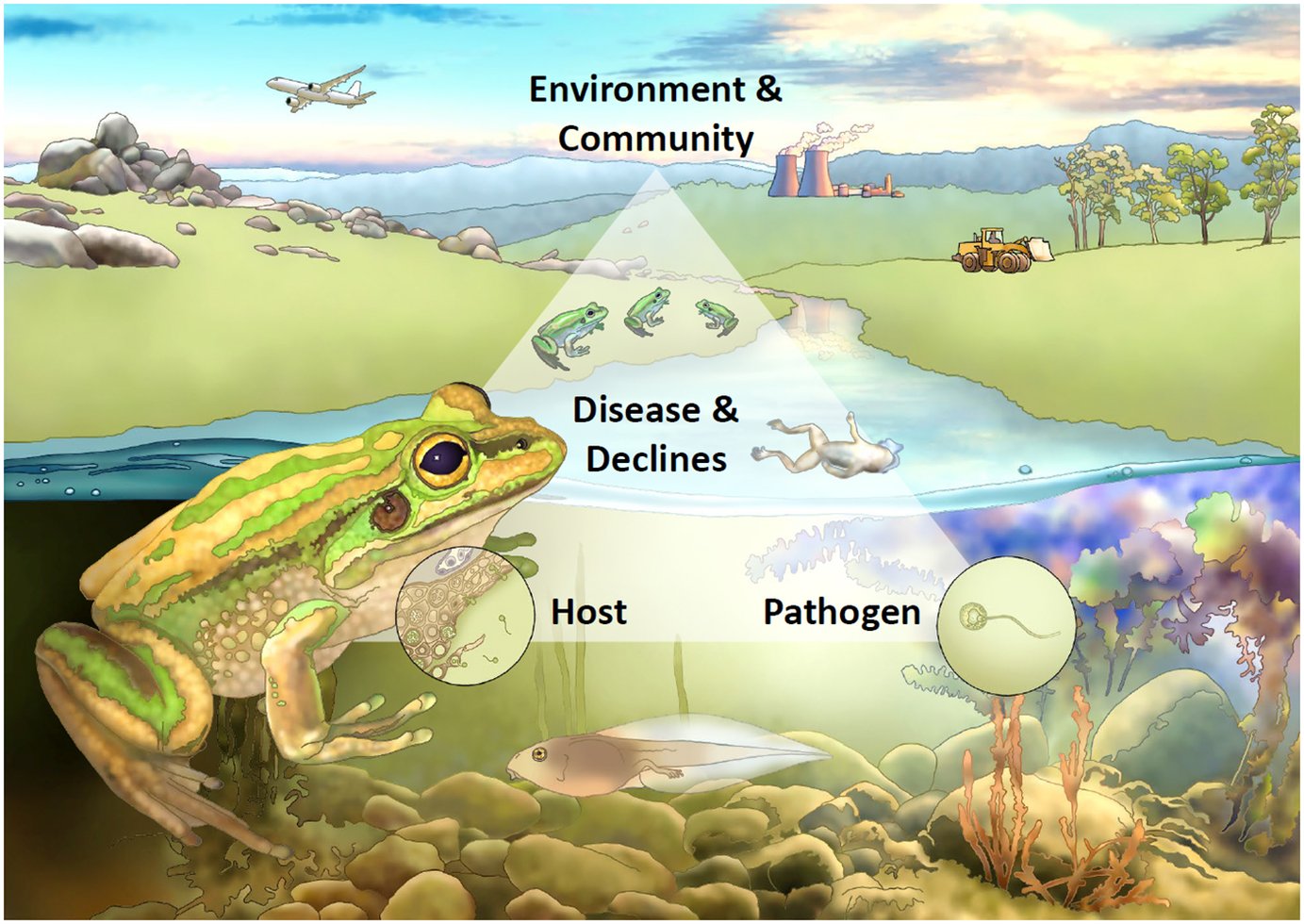
Infectious disease is an important driver of extinctions and population declines. With a few exceptions, such as the fungal disease chytridiomycosis in frogs, disease is probably underestimated as a cause of both local and global extinction because it often co-occurs with other more overt drivers of extinction, and its signs can be easily overlooked. Here, we discuss issues around attributing extinction to infectious disease and overview key underlying factors. We then examine the extent to which anthropogenic influences, such as climate change, habitat destruction and exotic species introductions, are likely to lead to increased extinction risk in association with infectious disease. Finally, we discuss strategies to mitigate the threat of extinction due to infectious disease.
Gadfly petrels Pterodroma spp. are among the most threatened bird taxa. Conservation interventions have been successfully developed and applied for some gadfly petrel species, but a substantial gap remains in conservation science for this group in the tropical Pacific Ocean. The Vanuatu Petrel Pterodroma [cervicalis] occulta is an ideal exemplar to develop a pipeline for conservation science in tropical Pacific gadfly petrels as it is subject to many of the challenges facing other gadfly petrel taxa in the region. We review over 40 pelagic Vanuatu Petrel records and five research expeditions to the only known colony on the island of Vanua Lava, Vanuatu. These records provide a baseline from which to recommend conservation research actions for the taxon. The population status, taxonomy, distribution, and threat profile of the taxon are all poorly known, and these areas are high priorities for future research.
Despite attacks of bottlenose dolphins towards conspecifics and other species of dolphins being reported worldwide, inside the Mediterranean Sea these behaviours are still considered sporadic and have been, to date, only recorded in Spain and France, mostly directed to striped dolphins. In this work, we reported the necropsy outcomes of a dead striped dolphin that suggest a fatal interaction with bottlenose dolphins inside the Italian side of the Pelagos Sanctuary, Western Ligurian Sea. Results from the post-mortem examination showed multiple, multifocal external rake marks spaced 1–1.2 cm and several internal injuries, consisting of subcutaneous and muscular haematomas and haemorrhages, multiple vertebral and rib fractures, haemothorax and lung laceration. The inter-tooth distance and all the internal findings were consistent with a fatal traumatic interaction with bottlenose dolphins as reported in similar cases in other parts of the world where the same results were found. No other significant gross and microscopic findings and concurrent significant pathogens were detected. This case highlights the existence of negative interspecific interactions in an area where they have never been reported before and adds new important information to the literature for understanding their occurrence, expanding the geographical range of observation in the western Mediterranean Sea.
The unsolved systematics of the genus Cardiomya has led to a sequence of astonishing identification mistakes. This scenario is a result of the rarity of specimens and, more importantly, the lack of knowledge about which characters are relevant to the genus taxonomy. In this study, we developed a method based on standard linear discriminant analysis to identify the smallest number of morphological characters that efficiently distinguish individuals at the species level of Brazilian Cardiomya. Starting from 29 morphometric measurements obtained from photographed Cardiomya shells, we were able to identify only five characters: the dorsal inflection of the rostrum, the distance from the posterior most rib end to the umbonal posterior margin and the distance from the central point of the valve to the anterior margin at 45°, 15° and −30° angles. Surprisingly, all these characters are related to the shell outline and not the ornamentation, which is a remarkable character in Cardiomya. We performed a one-way ANOVA with post-hoc Tukey HSD test specifically using the total number of ribs to verify its discriminant power in species identification. Our analysis demonstrated that the number of ribs does not show a significant difference between the analysed species.
The rocky intertidal zone of sheltered shores in Breiðafjörður, north-west Iceland is dominated by monospecific stands of canopy-forming brown algae Ascophyllum nodosum, which provide habitat for mobile organisms and has been subjected to long-standing rotational harvesting. We investigated the assemblage composition of little-studied mobile brachyuran crabs in this area, to track distributional shifts in a native species responding to climate change and extent of occupancy of the intertidal by a primarily subtidal invasive non-native species. Potential interactive effects of seaweed harvesting were explored. Breiðafjörður was compared with two reference sites in Faxaflói, south-west Iceland. The study revealed clear poleward expansion of the native European green crab Carcinus maenas in the region, displacing the native spider crab Hyas araneus particularly at mid-shore levels. The invasive non-native Atlantic rock crab Cancer irroratus had negligible occupancy in the intertidal zone, indicating limited effects on the intertidal crab assemblage, composition, and abundance. The current harvesting regime of A. nodosum in Breiðafjörður did not affect the composition and abundance of the brachyuran crab assemblage in the rocky intertidal zone. H. araneus is likely being squeezed by displacement subtidally by C. irroratus, and intertidally by C. maenas. Overall, we provide insights into the potential interactions between climate change, invasive species, and human activities in the rocky intertidal zone.
The Falkland Shelf is a highly productive ecosystem in the Southwest Atlantic Ocean. It is characterized by upwelling oceanographic dynamics and displays a wasp-waist structure, with few intermediate trophic-level species and many top predators that migrate on the shelf for feeding. One of these resident intermediate trophic-level species, the Patagonian longfin-squid Doryteuthis gahi, is abundant and plays an important role in the ecosystem. We used two methods to estimate the trophic structure of the Falkland Shelf food web, focusing on the trophic niche of D. gahi and its impacts on other species and functional groups to highlight the importance of D. gahi in the ecosystem. First, stable isotope measurements served to calculate trophic levels based on an established nitrogen baseline. Second, an Ecopath model was built to corroborate trophic levels derived from stable isotopes and inform about trophic interactions of D. gahi with other functional groups. The results of both methods placed D. gahi in the centre of the ecosystem with a trophic level of ~ 3. The Ecopath model predicted high impacts and therefore a high keystoneness for both seasonal cohorts of D. gahi. Our results show that the Falkland Shelf is not only controlled by species feeding at the top and the bottom of the trophic chain. The importance of species feeding at the third trophic level (e.g. D. gahi and Patagonotothen ramsayi) and observed architecture of energy flows confirm the ecosystem's wasp-waist structure with middle-out control mechanisms at play.
In 2021, the decision to close the last Norwegian coal mine on Svalbard was made, and with that, the Norwegian coal adventure on the archipelago came to an end. This was a result of a political process, which is the focus of this article. Drawing on fieldwork conducted during the fall of 2022, I argue that the political process of phasing out coal changed from a conflict over interests to a contest over symbolic capital. The article contributes to the understanding of Norwegian Svalbard politics and the “balancing act” that this represents. I focus on how power, in the form of shaping people’s perceptions and as prestige, influenced what interests prevail and why. The article addresses (1) why the decision to phase out coal was not made earlier, (2) what ultimately made this decision possible and (3) why and over what the key actors were still competing after the decision to phase out coal was made.
In 2022, highly pathogenic avian influenza (HPAI) A(H5N1) virus clade 2.3.4.4b became enzootic and caused mass mortality in Sandwich Tern Thalasseus sandvicensis and other seabird species across north-western Europe. We present data on the characteristics of the spread of the virus between and within breeding colonies and the number of dead adult Sandwich Terns recorded at breeding sites throughout north-western Europe. Within two months of the first reported mortalities, 20,531 adult Sandwich Terns were found dead, which is >17% of the total north-western European breeding population. This is probably an under-representation of total mortality, as many carcasses are likely to have gone unnoticed and unreported. Within affected colonies, almost all chicks died. After the peak of the outbreak, in a colony established by late breeders, 25.7% of tested adults showed immunity to HPAI subtype H5. Removal of carcasses was associated with lower levels of mortality at affected colonies. More research on the sources and modes of transmission, incubation times, effective containment, and immunity is urgently needed to combat this major threat for colonial seabirds.
Antioquia Brushfinch Atlapetes blancae is a recently rediscovered Colombian microendemic species with a restricted distribution. Although the species might use a variety of habitats, current information suggests that it is a shrubland specialist. It is categorised as “Critically Endangered” because due to habitat loss its population has been estimated to be smaller than 50 individuals. Such estimates are based on indirect measurements of its population and assumptions regarding its restricted range/habitat. We provide the first direct population estimates and adult sex ratio for seven localities, using mark-resighting techniques. Individuals were captured using mist-nets, bled, and colour banded. Subsequently, we performed censuses along transects to record banded and non-banded individuals. Population estimates were obtained using the classic closed population mark-resighting model. In addition, we used the abundance–area relationship to estimate population size at other sites where the species has been previously recorded. Finally, individuals were sexed by amplifying the Z and W-linked Chromo-Helicase DNA-binding gene (CHD) genes. In total, we banded 55 individuals at four locations. Summarising across the seven sampled localities, we found that the population is most likely composed of 109 individuals in the 122 ha sampled. Based on the abundance–area relationship, we estimated that the population of Antioquia Brushfinch could be as large as 405 individuals in 322 ha of suitable habitat. We found that male/female sex ratio was 0.45 (95% confidence interval [CI] 0.32–0.6) and that it was not significantly biased. Our results suggest that the population of Antioquia Brushfinch is at least eight times larger than suggested by secondary information. We found that populations are properly structured at least regarding sex ratio, although we caution for further research on sex biases of immature and juvenile individuals. We recommend that future studies should focus on population trends and the impact of habitat transformation on the demography of this iconic species.
We report how artificial nests can be utilised at scale in nest site-limited areas of Mongolia to create a managed population of Saker Falcons (Falco cherrug), an “Endangered” species that is harvested for international trade. The provision of 5,000 artificial nests created an average annual saker population of 602 (SE ± 59) breeding pairs, producing an estimated 1,735 (SE ± 272) fledglings per annum over the period 2013–2015. Our regular monitoring enabled us to identify the effects of climate and vegetation on breeding performance. A warm and dry climate prior to breeding was associated with earlier egg-laying dates, while warmer conditions during the breeding season increased fledging success. Greater vegetation biomass in the previous growth season was positively related to breeding density and earlier clutch initiation, which was associated with larger clutch size and larger fledged brood size. Furthermore, using small mammal remains from saker pellets collected at artificial nest sites, we found that higher breeding density, earlier egg laying, larger clutch size, and increased nest survival were associated with areas with a higher proportion of small mammal prey in the diet. Our results provided evidence of the role of temporal and spatial variation in climate and prey availability on breeding performance, demonstrating the requirement for dynamic modelling of variable demographic parameters to be incorporated within an adaptive management framework for the sustainable management of the Saker Falcon.
Reed warblers are widespread throughout Eurasia, Africa, and Australasia, and many species undertake long seasonal migrations. By contrast, other species of the genus Acrocephalus are sedentary and endemic to single oceanic islands. The Pitcairn Reed Warbler Acrocephalus vaughani is confined to the small volcanic island of Pitcairn in the South Pacific Ocean, and no population assessments have ever been conducted for this species. Due to its restricted range, the presence of invasive species, and the loss of natural habitat, the species is considered as globally “Endangered”, but its actual conservation status is entirely speculative. We conducted transect surveys and nest monitoring in the austral summer of 2022/23 and present abundance estimates for the species. We counted between 51 and 158 reed warblers along 54 transects that were each 100 m long and covered all habitats and roughly 13% of the vegetated island area. Using binomial mixture models accounting for imperfect detection and habitat variation in abundance, we estimated that Pitcairn may hold 1,568 (95% confidence interval 812–3,237) Pitcairn Reed Warblers, and that the species appeared to be most abundant in introduced Rose Apple Syzygium jambos stands. Based on the monitoring of 49 nests, of which only four failed to fledge any young, we estimated that Mayfield nest survival rate was 0.69 and estimated productivity was 1.07 (± 0.39 standard deviation) fledglings per nest. Assuming that Pitcairn Reed Warblers have similar annual survival probabilities as other island reed warblers, the productivity appears sufficient to maintain the population and there is no indication that the species has decreased significantly over the past three generations. Given the limited extent of occurrence, and the stable current population size between 442 and 2,774 mature individuals, we recommend that the global conservation status of the Pitcairn Reed Warbler be classified as “Vulnerable”.
Pringlea antiscorbutica (Brassicaceae) and Azorella polaris (syn. Stilbocarpa polaris, Apiaceae) are endemic sub-Antarctic flowering plants of significant ecological and historical importance. Pringlea antiscorbutica occurs on Îles Kerguelen and Crozet, Prince Edward, and the Heard and MacDonald Islands; A. polaris on Auckland, Campbell, and Macquarie Islands. We examine the use of these unrelated species of “wild cabbage,” as scurvy remedies and sustenance for eighteenth–nineteenth-century sailors. We trace their European discovery, taxonomic treatment, morphological representation, and cultural association through the historical record. Scurvy killed more sailors during the sixteenth-nineteenth centuries than armed conflict and shipwrecks combined. Both plants were essential to the survival of sailors and formed a nutritious, carbohydrate-rich staple of their diets, however, attitudes to these plants were strongly influenced by cultural background. Use of P. antiscorbutica as a scurvy remedy was promoted by Cook and Anderson, leading to a greater historical legacy than A. polaris, and a unique contemporary research focus on the plant’s nutritional value and cultivation potential. In contrast, contemporary studies of A. polaris have been directed primarily at the plant’s protection. Pringlea antiscorbutica and A. polaris are intrinsically linked to human associations with the sub-Antarctic islands, which further increases their cultural and conservation value.
Few details are known about the fate of the Franklin Expedition after it departed England in 1845. What we do know is derived from the archaeological record, Inuit testimony and brief communications written in 1847 and 1848 from the Expedition. During the 1860s, Charles Francis Hall went to the Arctic in search of survivors, papers, and relics. During Hall’s second expedition, two Inuit testimonies emerged which reported unusual site(s) on the Westcoast of King William Island which were reputedly built by the Expedition. Hall believed these sites were either a burial site or a cemented document vault(s). The first testimony, recorded by Hall himself, was obtained from a Pelly Bay Inuk, Sŭ-pung-er, in 1866. The second was collected from Pelly Bay Inuit by members of Hall’s support team, including Peter Bayne, in Hall’s absence in 1868. Eventually, the second testimony was sold to the Canadian Government in the form of a report written by George Jamme after Bayne’s death in 1928. Until now, only extracts of the Jamme Report have been available. This paper describes the background to the Jamme report and presents it in its entirety along with critiques so that scholars in the future may have this tool.
Open natural ecosystems (ONEs), such as tropical grasslands, are among the most threatened habitats on Earth today. The long-term monitoring of ONEs is an important research domain that is essential for understanding anthropogenic impacts and facilitating conservation action. Using a simple day-listing method over a 13-year period, we studied species trends in a central Indian grassland–agriculture mosaic experiencing several land-use changes. Our results indicate that some grassland species (such as the Great Indian Bustard Ardeotis nigriceps) showed steep declines during the study period, while other generalist species (such as the Indian Peafowl Pavo cristatus) showed an increasing trend. Daily listing also revealed distinct seasonal patterns, and we discuss the Great Indian Bustard and Western Marsh Harrier Circus aeruginosus as examples. Our study highlights the utility of consistent checklist surveys to monitor population trends of bird communities within a changing landscape.
Indigenous communities in Canada are disproportionately affected by issues related to water security, especially access to clean water to meet human needs. The issues these communities face are diverse and widespread across Canada, with many causes and consequences. This review summarizes the types and magnitudes of risks associated with the water security of these communities, the consequences considering health and social perspectives, and the means of responding to these issues. Risks are broadly divided into quantitative risks (e.g., water quality and availability) and qualitative risks (e.g., lack of funding and jurisdictional conflicts). These risks lead to unique consequences, resulting in challenges in developing generalized risk response frameworks. Management of these risks includes a mix of techniques relying on legislative and technical approaches. Nevertheless, the affected communities should be included in the decision-making process that should be holistic, incorporating indigenous knowledge. Good governance, cooperation between communities, policy improvement and the development of an institutional mechanism for clean water supply will provide a pathway and guidelines to address the water security challenges among indigenous communities.