To save content items to your account,
please confirm that you agree to abide by our usage policies.
If this is the first time you use this feature, you will be asked to authorise Cambridge Core to connect with your account.
Find out more about saving content to .
To save content items to your Kindle, first ensure no-reply@cambridge.org
is added to your Approved Personal Document E-mail List under your Personal Document Settings
on the Manage Your Content and Devices page of your Amazon account. Then enter the ‘name’ part
of your Kindle email address below.
Find out more about saving to your Kindle.
Note you can select to save to either the @free.kindle.com or @kindle.com variations.
‘@free.kindle.com’ emails are free but can only be saved to your device when it is connected to wi-fi.
‘@kindle.com’ emails can be delivered even when you are not connected to wi-fi, but note that service fees apply.
This book was first published in 1992. This book deals with an area of great importance: the issues involved in developing biotechnologically based industries in the developing countries. The science and most of the techniques are well established and it is often possible to obtain the desired finance. This book, however, examines the sort of choices that a developing country has to make as to whether to go ahead with any of the projects outlined in the book and their likely socio-economic consequences. Each chapter is written by experts in their field and discusses the current biotechnologically based industries and their state of development, their suitability for various economies and the problems associated with developing them. Chapters discuss environmental questions and further socio-economic factors that need to be considered in order to bring about successful wealth creation in these countries. This book will be invaluable reading for all those interested in biotechnology and its application to the developing world.
This volume is a unique international compilation for biotechnologists of data on the location and use of bacterial cells. The volume provides details of the location and scope of major culture collections around the world holding bacteria; information on how to access their data, administration and safety, identification, culture and media recipes, preservation, patents, specialist services and international organisations. The authors are international authorities who have combined with the resource centres to provide a source book for microbiologists in industry, research establishments and universities.
Over the past fifty years plant breeders have achieved impressive improvements in yield, quality and disease resistance. These gains suggest that many more modifications might be introduced if appropriate genes can be identified. Current DNA techniques allow the construction of transgenic plants and this important new book reviews the current state of knowledge. A team of leading researchers provide in-depth reviews at the cutting edge of technology for laboratory techniques for the transformation of important soil microorganisms and recalcitrant plants of economic value. The book is divided into three sections: soil microorganisms; cereal crops; and industrially important plants. The most effective methods used to date are compared, and their merits and limitations discussed. Some chapters emphasise case studies and applications. In cases where obstacles remain to be overcome, an overview of progress to date is given. The book will serve as a general guide and reference tool for those working on transformation in microbiology and plant science.
This is an introductory text intended to give the non-specialist a comprehensive insight into the science of biotransformations. The book traces the history of biotransformations, clearly spells out the pros and cons of conducting enzyme-mediated versus whole-cell bioconversions, and gives a variety of examples wherein the bio-reaction is a key element in a reaction sequence leading from cheap starting materials to valuable end-products (such as pharmaceuticals and agrochemicals, fragrances and flavours). Biotransformations involving the hydrolysis of esters, amides and nitriles, the synthesis of esters and amides, reduction and oxidation reactions and carbon–carbon bond-forming systems are discussed. The book finishes with a discussion of some industrially important large-scale bioconversions.
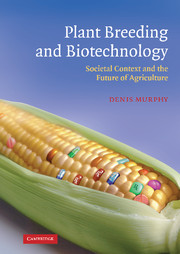
This comprehensive 2007 survey of modern plant breeding traces its history from the earliest experiments at the dawn of the scientific revolution in the seventeenth century to the present day and the existence of high tech agribusiness. Murphy tells the story from the perspective of a scientist working in this field, offering a rationale and evidence-based insight into its development. Crop improvement is examined from both a scientific and socio-economic perspective and the ways in which these factors interact and impact on agricultural development are discussed, including debates on genetically-modified food. Murphy highlights concerns over the future of plant breeding, as well as potential options to enable us to meet the challenges of feeding the world in the 21st century. This thoroughly interdisciplinary and balanced account serves as an essential resource for everyone involved with plant breeding research, policy and funding, as well as those wishing to engage with current debates.
Recombinant Antibodies for Immunotherapy provides a comprehensive overview of the field of monoclonal antibodies (mAbs), a market that has grown tremendously in recent years. Twenty-five articles by experienced and innovative authors cover the isolation of specific human mAbs, humanization, immunogenicity, technologies for improving efficacy, 'arming' mAbs, novel alternative Ab constructs, increasing half-lives, alternative concepts employing non-immunoglobulin scaffolds, novel therapeutic approaches, a market analysis of therapeutic mAbs, and future developments in the field. The concepts and technologies are illustrated by examples of recombinant antibodies being used in the clinic or in development. This book will appeal to both newcomers and experienced scientists in the field, biology and biotechnology students, research and development departments in the pharmaceutical industry, medical researchers, clinicians, and biotechnology investors.
Monoclonal antibodies are one of the most exciting developments in biotechnology in recent years; this book provides a comprehensive description of principles, methodologies and applications of this powerful technology to modern science and industry. The immune system of the body, in particular the role of antibodies, is described; and details provided on the isolation of antibody-producing cells, how hybridomas are formed and maintained in culture such that the required antibody can be produced to a very high degree of purity. The material is presented in such a way that students, researchers and managers in research and development will be able to make choices as to which are the most suitable techniques for their particular requirements. The text is comprehensively referenced and, in short, the book is a necessary resource for all those who have the need to be involved in the production of monoclonal antibodies from hybridoma cells in culture.
As in numerous other areas, the comparatively simple technique of polymerase chain reaction (PCR) has revolutionized the field of infectious diseases. Whether this is through sequencing the genomes of key pathogens or developing vaccines by genetic manipulation, PCR-driven molecular biology has stamped its mark on infectious diseases. It is particularly fascinating to consider how PCR has influenced, and continues to influence, disease management and to realize how influential this research technology has become as a practical diagnostic tool.
Its role in this context can be broadly split into diagnosis, epidemiology, and prognostic monitoring. However, before considering the utility of the PCR, it is useful to discuss infectious diseases and the additional considerations required for using PCR for their management.
Infectious diseases can be broadly split into groups corresponding to the causative pathogen: bacterial (tuberculosis [TB], pseudomembranous colitis [PMC], sepsis) and viral (acquired immunodeficiency syndrome [AIDS], hepatitis C, influenza) are two simple groupings. Viral pathogens are the most common causes of infectious diseases worldwide (e.g., common cold with numerous viral causes), with bacterial pathogens often being more serious when they strike. The remaining categories are more complex and include the eukaryotes. A major group are the Protozoa, including the causes of many classical tropical diseases (e.g., malaria and sleeping sickness). The fungal pathogens (Pneumocystis pneumonia [PCP]) are frequently opportunistic, causing infections worldwide in individuals with reduced or impaired immunity.
The invention of molecular beacons followed a rather circuitous route. Our laboratory had been studying the remarkable mechanism of replication of the single-stranded genomic ribonucleic acid (RNA) of bacteriophage Qβ, a virus that infects Escherichia coli. When a few molecules of Qβ RNA are incubated in a test tube with the viral RNA-directed RNA polymerase, Qβ replicase, millions of copies of each Qβ RNA molecule are generated in only a few minutes by exponential amplification, without primers and without thermal cycling. Unfortunately, Qβ replicase is so specific for the particular sequences and structures present in Qβ RNA that it ignores almost all other nucleic acid molecules, disappointing scientists who would use its extraordinary amplification characteristics to generate large amounts of any desired RNA in vitro. However, our laboratory discovered that if a heterologous RNA sequence is inserted into an appropriate site within Midivariant RNA (MDV-1), which is a naturally occurring small RNA isolated from Qβ-infected E. coli that possesses the sequences and structures required for replication, the resulting “recombinant RNA” can be amplified exponentially by incubation with Qβ replicase. This discovery enabled the design of recombinant RNAs that contained inserted hybridization probe sequences, which were employed in the earliest real-time exponential amplification assays, and the use of which, paradoxically, led to the invention of molecular beacons.
Spurred by the emergence of the pernicious infectious agent human immunodeficiency virus (HIV)-1, which is present in as few as 1 in 100,000 peripheral blood mononuclear cells in infected asymptomatic individuals, we developed an assay that was designed to use the exponential amplification of recombinant RNA hybridization probes to measure the number of HIV-1 target molecules present in clinical samples.
Severe acute respiratory syndrome (SARS) first emerged in Guangdong Province, China, in November 2002, and presented as an outbreak of a typical pneumonia that was soon recognized as a global threat. In Mainland China, it infected 5,327 people and caused 349 deaths within the first seven months of its recognition. In Hong Kong, SARS caused considerable disruption as this area faced the largest outbreak outside of Mainland China. It infected 1,755 people and caused 299 deaths (a fatality rate of 17.04%). Among the infected, 405 people (23.08%) were health care workers and medical students in hospitals and clinics. Within a month of recognition of this as a new type of infection, but before the disease pathogen was identified, it had spread to thirty-three countries and regions over the world, largely as a result of international air travel.
Although the number of worldwide cases remained relatively low (8,098 cases), the mortality rate (774 deaths) remained relatively high until July 7, 2003. This rate resulted in widespread concern, sometimes to the point of panic, in both affected and nonaffected populations. It was viewed in the same category as acquired immunodeficiency syndrome (AIDS) – a severe and readily transmissible new disease to emerge in the twenty-first century.
The SARS epidemic highlighted the need for a rapid international response to disease control. The recent outbreak of H5N1 influenza in birds in Southeast Asia has only reinforced the potential for a pandemic spread of newly emerging or evolving infectious agents.
All living organisms use nucleic acid to store the genetic code. In most cases, this is in the form of deoxyribonucleic acid (DNA), although some viruses use a ribonucleic acid (RNA) molecule. DNA is used as the template for production of various RNA molecules. These have several functions, including regulation of the transcription of messenger RNA (mRNA), which is an intermediary molecule used in turn as the template for the production of proteins. It is proteins that are generally considered to be the active molecules of the cell. Of course there are many exceptions to this general pathway or “Central Dogma,” and complex regulatory mechanisms are constantly being elucidated. Nonetheless it serves as a starting point for our discussion on the use of the polymerase chain reaction (PCR), because the study of these genetic materials is critical for our understanding of most aspects of life science. PCR is currently the cornerstone tool for the study of both DNA and (indirectly) RNA.
DNA ANALYSIS IN THE PRE-PCR ERA
Within human and other eukaryotic cells, DNA is compacted and organized into a number of chromosomes. Cytogenetic studies of entire chromosomes use banding patterns resulting from Giemsa staining (G banding) as structural markers. By the 1950s the techniques relating to G banding were sophisticated enough for the human karyotype (chromosome complement) to be defined as forty-six chromosomes that are arranged as twenty-two matching pairs and two sex-related chromosomes. In 1959, Jerome Lejeune et al. discovered that an additional chromosome, later accepted as number 21 (trisomy 21), was consistent with Down's syndrome.
Prenatal diagnosis is now an established part of the modern obstetrics practice. For genetic and chromosomal analyses, however, conventional definitive methods for prenatal diagnosis would typically start with the invasive sampling of fetal materials, using procedures such as amniocentesis and chorionic villus sampling. These procedures are associated with a finite risk to the fetus. Thus, over the last forty years, many researchers have attempted to develop methods for noninvasive prenatal diagnosis that do not carry such a risk. In particular, much effort has been spent on the development of noninvasive methods for screening certain chromosomal aneuploidies, especially trisomy 21. Approaches such as ultrasonography and serum biochemical screening have been developed for this purpose. Although the recent developments in these approaches are remarkable, these methods essentially measure epiphenomena that are associated with chromosomal aneuploidies and do not analyze the core pathology of these disorders – namely, the actual chromosome abnormality.
To allow the direct analysis of this core pathology, a noninvasive source of fetal genetic material is needed. Investigators in this field have initially targeted fetal nucleated cells that may have entered into the maternal circulation, including trophoblasts, lymphocytes, and nucleated red blood cells. However, the extreme rarity of such cells in the maternal circulation (of the order of a few cells per milliliter of blood) has been a major impediment to the development of the field.
The analysis and use of ancient deoxyribonucleic acid (DNA) is intimately linked with the polymerase chain reaction (PCR). Although the first ancient DNA sequences were uncovered before the invention of PCR, ancient DNA research, like many other fields in molecular biology, only began to develop after this technique became established. From initial short fragments that could be amplified via PCR, ancient DNA research has evolved into a field in which complete mitochondrial genomes and genomic shotgun sequences of several megabases can be amplified and analyzed using modern variations of PCR, such as multiplex or emulsion PCR. These achievements became possible by PCR's extraordinary sensitivity, which allows amplification from as little as a single target molecule. However, this sensitivity has a dark side, because PCR also frequently amplifies contaminating DNA. Consequently, spectacular errors, such as the presumed amplification of several-million-year-old dinosaur DNA from bone or insect DNA from amber fossils, have plagued the field almost from its beginnings. In this chapter, we explore how PCR has been a blessing for the advancement of ancient DNA research, while also addressing its limitations, which seem much like a curse.
HISTORY OF ANCIENT DNA AND PCR
Ancient DNA research started more than twenty years ago, with the sequencing of two short mitochondrial DNA (mtDNA) fragments from the extinct quagga. This sequencing was achieved even in the absence of PCR; the first article to describe PCR was published almost exactly one year later.
The polymerase chain reaction (PCR) is conceptually divided into three reactions, each usually assumed to occur over time at a single temperature. Such an “equilibrium paradigm” of PCR is naïve, but widely accepted. It is easy to think of three reactions (denaturation, annealing, and extension) occurring at three temperatures over three time periods in each cycle (Figure 4–1, left). However, this equilibrium paradigm does not fit well with physical reality. Instantaneous temperature changes do not occur; it takes time to change the sample temperature. Furthermore, individual reaction rates vary with temperature, and after primer annealing occurs, polymerase extension immediately follows. More accurate is a kinetic paradigm for PCR in which reaction rates and the temperature are always changing (Figure 4–1, right). Holding the temperature constant during PCR is not necessary as long as the products denature and the primers anneal. Under the kinetic paradigm of PCR, product denaturation, primer annealing, and polymerase extension may temporally overlap and their rates continuously vary with temperature. Under the equilibrium paradigm, three temperatures each held for finite time periods define a cycle, whereas the kinetic paradigm requires transition rates and target temperatures.
Paradigms are not right or wrong, but should be judged by their usefulness. The equilibrium paradigm is simple to understand and lends itself well to the engineering mindset and instrument manufacturing. The kinetic paradigm is more relevant to biochemistry, rapid PCR, and melting curve analysis.
We live in an age in which hyperbole has become so pervasive that it is difficult to find apt expressions for something truly exceptional. Furthermore, impatience, haste, and short attention span seem to be added hallmarks of our times, inviting technological bandwagon effects that briefly promise the earth, but then cannot deliver because the technologies were either conceived in haste without proper regard for technical and biological concerns or are superseded by the next technological “revolution.”
The polymerase chain reaction (PCR) has been around a long time now: certainly as US Patent 4,683,202 since 1987, as a practical tool since 1985, and as a theoretical proposition since 1971. A Google search for “polymerase chain reaction” throws up more than 1.3 × 10⁷ results, roughly the same number as a search for “monoclonal antibody,” the other wonder technology in the molecular arsenal. Its conceptual clarity, practical accessibility, and ubiquitous applicability have made PCR the defining technology of our molecular age, with a three-letter abbreviation as distinctive as that of deoxyribonucleic acid (DNA). It has even made it to Hollywood, where the re-creation of dinosaurs in Jurassic Park was accomplished using PCR technology. The concept is so perfectly simple that the elemental scheme remains unchanged since its inception: two oligonucleotide primers that define converging sequences on opposite strands of a DNA molecule, a DNA polymerase, dNTP building blocks, and a series of heating and cooling cycles.
Although real-time reverse transcription–polymerase chain reaction (RT–qPCR) technology has become widely implemented in molecular diagnostics, it is worth pausing to consider the tremendous potential for real harm inherent in using such a sensitive and potentially easily contaminated assay in a clinical setting. Its central role in the controversy surrounding the triple measles, mumps, and rubella (MMR) virus vaccine, gut pathology, and autism serves as a textbook example of the enormous implications for the health of individuals that result from inappropriate use of this technology.
In 1996, a UK legal firm approached a gastroenterologist, Dr. Andrew Wakefield, who was then working at the Royal Free Hospital in London. He was asked to examine a group of children whose parents believed that their children's behavioral symptoms were directly caused by the MMR vaccine. In a 1998 Lancet publication, Wakefield reported on twelve autistic children with intestinal abnormalities, eight of whom had been supposedly affected after receiving the MMR vaccine. Although stating that the findings did not prove an association between the MMR vaccine and the syndrome described, the article raised the possibility of a causal link between MMR, gut pathology, and autism. Wakefield later went on to speculate that the measles component of the vaccine had infected the children's intestines and in some way caused brain damage.