To save content items to your account,
please confirm that you agree to abide by our usage policies.
If this is the first time you use this feature, you will be asked to authorise Cambridge Core to connect with your account.
Find out more about saving content to .
To save content items to your Kindle, first ensure no-reply@cambridge.org
is added to your Approved Personal Document E-mail List under your Personal Document Settings
on the Manage Your Content and Devices page of your Amazon account. Then enter the ‘name’ part
of your Kindle email address below.
Find out more about saving to your Kindle.
Note you can select to save to either the @free.kindle.com or @kindle.com variations.
‘@free.kindle.com’ emails are free but can only be saved to your device when it is connected to wi-fi.
‘@kindle.com’ emails can be delivered even when you are not connected to wi-fi, but note that service fees apply.
This chapter presents a self-contained ethnography of twenty-seven girls at a high school in Bolton, in the north-west of England. The setting of the school, Midlan High, is contextualised socially and geographically and the social groups within the school are described. The ethnography identifies four communities of practice in the school and these are described in detail. The communities of practice include the elitist and trendy pro-school Eden Village clique; the sensible, pragmatic and pro-school Geeks; the independent, cool, and somewhat anti-school Populars; and the most rebellious and anti-school group, the Townies. In articulating the process of ethnography, the chapter also reflects upon the fieldwork process, providing a frank and honest account of the intricacies of doing ethnography within an educational context.
How stylistically sophisticated can the use of morpholexical/morphosyntactic variation be? By focusing on the range of social meanings that can be articulated by ‘levelled were’ (e.g., she were funny) – a regionally restricted variant of the type most frequently studied in sociolinguistics – this chapter explores the extent to which social meanings are fixed by a variant’s enduring association with place. It first considers how children acquire linguistic variation and the extent to which this process interacts with their ability to vary grammatical items stylistically. The analysis then explores how levelled were patterns by social class, parental place of birth, and community of practice at Midlan High. It provides evidence that all of these factors play a role in the use of levelled were, but that the most robust correlation is with community of practice. This data is used to argue that grammatical variants can mark distinctive social styles and personas, and that speakers can adapt their use of variation providing that (i) they have access to a range of variants, and (ii) that they are motivated to use them by virtue of its utility to them as a social symbol.
How do we adapt our grammar to communicate social detail? Do all working class people have a local dialect or are we free to use language in ways that transcend our place in the social hierarchy? Seeking to answer these questions, this pioneering book is the first to exclusively and extensively address the relationship between social meaning and grammatical variation. It demonstrates how we use grammar to communicate alignments and stances and to construct our social style or social identity. Based on an ethnographic study of high school girls in Northern England, it also uses the author's own experiences as a working-class student, to argue for change in how we conceive of grammar and how grammar is taught in schools. Lively and engaging real life examples from the study are included throughout, bringing to life new contributions to debates in variationist sociolinguistic and linguistic anthropology.
The therapist-client relationship in psychotherapy is considered one of the most important factors in promoting well-being and facilitating change in clients. This pioneering book provides a novel perspective on relationships by focusing on how they are accomplished through client-therapist interactions. Drawing on the key concept of affiliation from conversation analysis, it provides new insights into how therapists and clients forge affiliations in the course of therapy and how therapists successfully re-establish affiliation with their clients following disagreement or opposition - or fail to do so. It is the first book of its kind to offer a systematic overview of the range of interactional practices found in a particular psychotherapeutic approach (Emotion Focused Psychotherapy, EFT). By forming linkages between psychotherapy concepts and conversation analysis, this timely study is of importance not only to scholars of linguistics and interaction, but also to clinicians and clinical researchers.
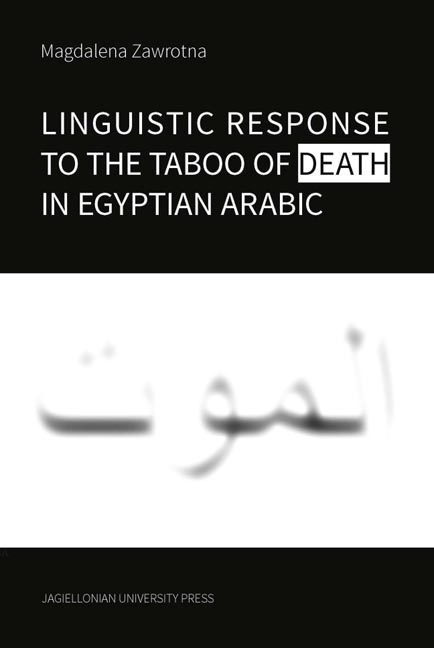
When Egyptians fear death or apprehend it, or when they are confronted with the taboo of death, they tend to submit themselves to God's will, hoping that he will save them from danger. While taking refuge in God, they resort to religious formulae, choosing from what seems to be an endless collection of prophylactic, protective or soothing incantations and blessings. The role of religion in everyday social interactions of Egyptians cannot be overemphasised. It regulates human relations and helps to catalyse the inner fears of man. Religious formulae denote complex cultural concepts by relating to multi-layered and multi-dimensional, recurrent situations. This embedding in sociocultural context is a crucial feature of formulae. Thus, 'formulaicity' is the lens through which this book analyses the response to the taboo of death in Egypt.
Building on the discussion of suprasegmentals in Chapters 6and 7, this chapter introduces the concept of intonation. The chapter begins by defining intonation both articulatorily and acoustically, with a focus on the relationship among pitch, tone, and intonation. The chapter then provides an overview of methods of analysing intonation, including acoustic analysis and theTone and Break Indices (ToBI) System. The chapter next examines intonational systems in different varieties of English by first describing GAmE and SSBE sentence intonation and pitch accent patterns, to provide a framework through which to examine other varieties. The intonation and pitch accent patterns from different varieties is then discussed, as is the pitch range of different varieties. The chapter then examines two global phenomena in detail – High Rising Terminal on declarative statements, or uptalk; and creaky voice, also commonly called vocal fry. The chapter ends with exercises to check your understanding of the content of the chapter, as well as to expand your knowledge through an analysis of the intonation and pitch accent patterns in your own variety of English.
In this chapter, we will examine the emergence and evolution of the language called English. One of the first questions we will seek to answer is: Is English ‘English’? In other words, did English originate in the geographic area known today as England? To answer this question, we journey back to the roots of English, beginning with Indo-European. We then begin the story of English, with the emergence of Old English from 449 CE, after which we move into the era of Middle English, focusing on the impact of Anglo-Norman French. The emergence of English literature, and particularly the work of Chaucer, during this period is also discussed. We willexamine how British international trade and colonization of the Americas, Australia, and New Zealand, as well as parts of Asia, the Caribbean, and Africa, changed and spread the English language worldwide. The chapter concludes with an overview of the terminology used to describe the varieties of English that will be examined in this volume. The final section of the chapter has a series of exercises and tasks to guide you through a revision of the contents of the chapter.