To save content items to your account,
please confirm that you agree to abide by our usage policies.
If this is the first time you use this feature, you will be asked to authorise Cambridge Core to connect with your account.
Find out more about saving content to .
To save content items to your Kindle, first ensure no-reply@cambridge.org
is added to your Approved Personal Document E-mail List under your Personal Document Settings
on the Manage Your Content and Devices page of your Amazon account. Then enter the ‘name’ part
of your Kindle email address below.
Find out more about saving to your Kindle.
Note you can select to save to either the @free.kindle.com or @kindle.com variations.
‘@free.kindle.com’ emails are free but can only be saved to your device when it is connected to wi-fi.
‘@kindle.com’ emails can be delivered even when you are not connected to wi-fi, but note that service fees apply.
The goal of this chapter is to develop a theory of Formal Features that will capture and unify many of the generalisations we have arrived at in previous chapters and, more specifically, to develop a theory of Case, agreement and movement, showing how these three notions are intertwined. The core notion is the Agree relation.
In this chapter, we look at empty pronouns: cases of ‘silent deep anaphora’. More specifically, our focus is on null subjects, i.e. silent pronominal subjects, in a range of languages. We identify three main types of null-subject languages and attempt to explain the typology. This leads us to the investigation of the parametric variation across languages.
Consulting dictionaries during writing requires time and cognitive resources. ColloCaid, a writing assistance prototype freely available online, was designed to minimize the cognitive strain on writers by embedding a collocation database within the writing environment. Usability surveys have shown ColloCaid can indeed help. In this study, we go beyond user perceptions. Using authentic excerpts of student academic writing by 27 advanced L2 English speakers, we analysed (1) the lexical coverage of the tool, (2) the collocation changes prompted by the tool, (3) the reasons behind decisions to revise collocations, (4) the effect of revisions prompted by ColloCaid, and (5) the participants’ perceptions of using the tool to revise authentic writing assignments. Our findings indicate that ColloCaid offered good academic collocation coverage, that the participants tended to accept its collocation prompts with discernment, and that the revisions made resulted in more fluent texts overall.
This article looks at how gendered chronotopes of tradition are created in the work of four tradwives, or digital influencers who describe themselves as “feminine not feminist.” It first shows how each tradwie animates a distinct, highly mediatized, chronotope of tradition ranging, from the 1850s homestead to the 1950s suburban wife in pearls. Each uses submissive gender roles to create a unique vision of a past as domestic idyll embodied by a desirable woman: glowing, warm, beautiful, white. In a second step, it looks at how each of these individual chronotopes of tradition are aligned in a higher chronotope of absolute femininity. Like a string of pearls, femininity becomes a thread on which each individual chronotope becomes coeval, tokens of a type of absolute womanhood, atavistic tradition, “pearl nationalism.” In the third section, I explore how a chronotope of femininity is shaped through contrast to chronotope of feminist modernity. Rather than evoking a particular place, tradition means a woman returned to hers. The paper concludes with what a study of tradwives’ feminine chronotopes can contribute to understanding of chronotopes in mass media, and in particular to the growing appeal of the far right.
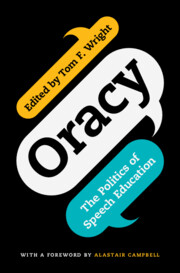
Oracy – or 'speaking and listening skills' – has become one of the most prominent ideas in modern education. But where has this idea come from? Should oracy education be seen as positive, or does it hold unintended consequences? How can problems over definitions, teaching and assessment ever be overcome? This timely book brings together prominent practitioners and researchers to explore the often overlooked implications of speaking and listening education. It features essays from teachers, school leaders, political advisers and charity heads, and from leading thinkers across the fields of linguistics, political science, history, Classics and anthropology. Together, they consider the benefits and risks of oracy education, place it in global context, and offer practical guidance for those trying to implement it on the ground. By demystifying one of the most important yet contentious ideas in modern education, this book offers a vital roadmap for how schools can make oracy work for all.
Embodied cognition theory posits that language comprehension is grounded in sensorimotor experience. For instance, abstract concepts such as perceived power are metaphorically associated with spatial information such as physical size. Here, using a size judgement task, we investigated whether perceived power embodiment differs between languages in Chinese–English bilinguals. Asked to make judgements regarding the physical size of words, participants responded faster and made fewer errors to high-power words (e.g., king) presented in bold and large font than in thin and small font, while no such effect was found for low-power words. Furthermore, this congruency effect was stronger in bilinguals’ L1 (Chinese) than in their L2 (English). Thus, while embodiment of perceived power is detectable in both languages of bilinguals, it appears weaker in the L2. This study highlights cross-linguistic similarities and differences in the embodiment of abstract concepts and contributes to our understanding of conceptual knowledge grounding in bilinguals.
Previous research using cued language switching paradigms has shown a reversed language dominance effect in highly proficient bilinguals, wherein the dominant language is most inhibited. This study investigated cued language switching in highly proficient Spanish–Basque bilinguals (N = 50) using pupillometry, a novel measure of switching cost that tracks cognitive load via pupil size. Response times during cued picture-naming showed faster responses on non-switch than switch trials and faster responses in Basque than in Spanish. These findings suggest balanced proficiency across languages, with Spanish showing overall slowed responses, indicating a reversed dominance effect. Pupil data revealed larger pupil responses for Basque, the less dominant language, suggesting greater cognitive load despite faster naming. This indicates more attentional allocation or activation of the non-dominant language during cued language switching. These results provide insights into the cognitive processes involved in bilingual switching and highlight the value of using pupillometry to explore bilingual language processing.
The primary objective of this study is to identify the most salient prosodic features at the sentence level in Colombian Spanish. Data were collected from the country’s major cities, and the study examines the intensity, duration, and pitch (F0) of vowels in pre-stressed, stressed, and post-stressed syllables within both statements and questions. Stressed vowels were compared to adjacent unstressed vowels to determine the most significant features for identifying vowel prominence. The results indicate that duration is the most consistent acoustic cue of stress, reliably distinguishing stressed vowels from adjacent unstressed vowels. In contrast, intensity predicts stress only in relation to post-stressed vowels, and F0 plays a limited role, distinguishing stressed from post-stressed vowels in specific contexts. An important contribution of this study is the demonstration that the stressed versus unstressed distinction in Spanish is primarily explained by duration, rather than F0. These findings challenge traditional classifications of Spanish as a syllable-timed language by showing that rhythmic grouping, previously thought to be exclusive to stress-timed languages, is also present in syllable-timed languages.
Whether bilingualism confers non-linguistic cognitive advantages continues to generate both interest and debate in the psychological sciences. In response to mixed reports and methodological critiques, researchers have embraced more rigorous practices when investigating bilingual effects, including those in the domain of cognitive control. Despite considerable advances, one significant issue persists: the assumption that task performance remains stable over time. To address this, the present study investigated the relationship between bilingual language experience and Simon task performance modeled as a continuous function of time. In a sample of Mandarin-English bilingual young adults, we identified distinct patterns of results across both conventional and time-sensitive performance trajectory measures with each supporting a different relationship between language experience and cognitive control. Results suggest that reliance on conventional performance measures may be partially responsible for mixed results, necessitating reevaluation of how bilingual effects on cognitive control manifest and which analysis methods best support their identification.
We present research from Visual World eye tracking to show that, contrary standard assumptions in the formal semantics literature, the English past tense does not reliably trigger entailments of completion on accomplishments in neutral contexts. We contrast it with the perfect construction in English (both present and past tense versions) which does reliably draw attention to the result state; furthermore, we tested the simple past in more narrative contexts (using adverbial clauses to create a narrative sequence) and found that this did not induce a stronger resultative interpretation. We discuss the formal proposals for analysis of these tense/aspect forms in the language, and the consequences this new data has for theories of the tense/aspect system of English.
Learners completing writing tasks in pairs or small groups engage in peer interaction, operationalized as language-related episodes (LREs), which seem to facilitate second or foreign language (L2) acquisition. Multiple studies have shown that the patterns of interaction learners form during collaborative language tasks affect the frequency, nature, and outcome of LREs, as well as the quality of the written texts. However, most findings come from studies involving young and adult learners of English as a foreign or a second language (EFL/ESL), whereas research with adolescent EFL learners (aged 13–15) remains scarce. Given the widespread presence of L2 instruction in compulsory education and adolescents’ unique developmental traits, further research is crucial. This study addresses this gap by examining the patterns of interaction, the number, type, and outcome of LREs, and the written texts produced by 60 adolescent EFL learners (aged 13–14) completing a writing task in pairs. Results showed that adolescent learners formed predominantly collaborative patterns of interaction, followed by expert/novice, dominant/dominant, and dominant/passive. Additionally, the pairs with collaborative orientation produced and correctly resolved more LREs and created higher quality texts, measured through global evaluation rubrics. These findings underscore the importance of fostering collaborative pair work in L2 classrooms to enhance peer interaction, LREs, and writing quality.
How does bilingualism affect orthographic processing across languages with different structures? This study investigates masked transposed-letter (TL) priming in Arabic-English bilinguals, comparing Arabic (a Semitic language with rigid orthography and weak TL effects) with English (an Indo-European language with flexible letter coding and strong TL effects). Using lexical decision tasks, we tested whether exposure to English enhances letter-coding flexibility in Arabic. Results showed robust TL priming in both languages, indicating that bilingual experience with English modifies Arabic orthographic processing, traditionally seen as resistant to letter transpositions. These findings suggest that bilingual orthographic processing is adaptable, with language-specific exposure reshaping letter-position encoding and enabling flexible word recognition across languages.
The Speak Mandarin Campaign (SMC) was launched in Singapore in 1979, promoting Mandarin among the Chinese population. An emerging prevalent narrative blames the SMC in terms of causing Chinese cultural erosion. This article seeks to understand how and why this monolithic discourse has emerged. We do this by tracing Mandarinization as a transnational ideology originating from China’s founding as a republic. We draw on life history interviews with eleven individuals born between 1940 and 1966. Informants recount engagements with the SMC, from alignment to nonchalance, and fear of resistance. Accounts often invoked ‘Lee Kuan Yew’ as a chronotope, representing the sociopolitical circumstances of Singapore in the 1970s–80s. We argue that the current discourse surrounding the SMC might be theorized as a form of collective memory. It emerges from and is sustained by conflating prominent language policies with a perceived sense of the state’s oppression and marginalization of a Chinese-educated class. (Collective memory, collective remembering, Mandarin policy, Speak Mandarin Campaign)
This longitudinal study investigates the development and interrelation of adolescent learners’ L2 English vocabulary knowledge and extramural English (EE) input. The study examines the longitudinal development of L2 English receptive vocabulary knowledge, EE input and the dynamics between L2 proficiency and EE input. Data were collected at four time points by administering vocabulary tests and questionnaires on EE activities. Generalized additive mixed models and growth curve models indicated significant vocabulary growth, particularly in the early years of secondary school, which slowed down toward the end of the study. EE activities such as gaming, social media and reading positively predicted vocabulary development, while watching television with L1 subtitles had a negative effect. Temporal network analysis revealed reciprocal relationships, suggesting that L2 proficiency influences EE input and vice versa. The findings underscore the importance of EE in L2 vocabulary development and highlight the dynamic interplay between language learning and extramural activities.