To save content items to your account,
please confirm that you agree to abide by our usage policies.
If this is the first time you use this feature, you will be asked to authorise Cambridge Core to connect with your account.
Find out more about saving content to .
To save content items to your Kindle, first ensure no-reply@cambridge.org
is added to your Approved Personal Document E-mail List under your Personal Document Settings
on the Manage Your Content and Devices page of your Amazon account. Then enter the ‘name’ part
of your Kindle email address below.
Find out more about saving to your Kindle.
Note you can select to save to either the @free.kindle.com or @kindle.com variations.
‘@free.kindle.com’ emails are free but can only be saved to your device when it is connected to wi-fi.
‘@kindle.com’ emails can be delivered even when you are not connected to wi-fi, but note that service fees apply.
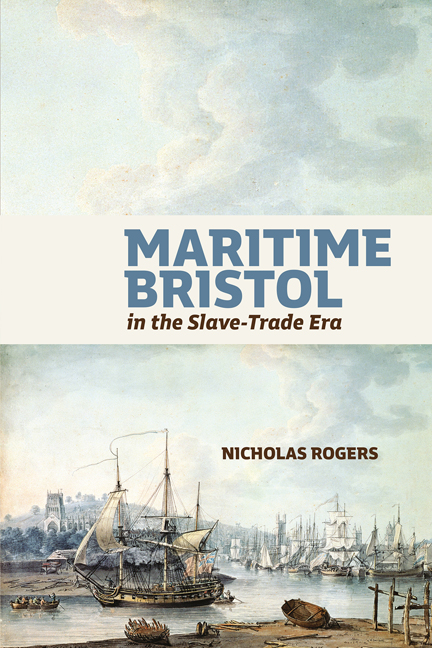
On the 12 July 1779, the merchant James Caton was arrested at the Bristol Exchange by Lieutenant Richard Lane of the press gang. Merchants protested at his abrupt detention, especially his friend, Paul Farr, who was told to back off, otherwise Lane ‘would shoot him with his pistol’. Caton was whisked away to a lock-up in Prince Street, a ‘nasty stinking room’ in which the chimney place was used as a common latrine. Lane derisively offered Caton a shilling for victuals, ordered the sentry to bolt the door, and refused to allow any of his friends to consult with him. When the regulating officer, Captain William Hamilton arrived, Caton demanded to know the reason for his arrest and again insisted he meet with his friends to settle his affairs. Hamilton retorted that he was ‘fit to serve the king’ and would not see any of his friends or associates until he was aboard the tender at Kingroad. He also refused Caton's request to see the mayor of the city, Sir John Durbin, remarking that ‘he has no business with it’. The two lieutenants of the rendezvous, Richard Lane and William Springhorpe, were equally uncooperative, and at 6p.m. Caton was hustled onto an open boat at the Gibb and taken seven miles down the river Avon to Kingroad. There Paul Farr was denied access to his friend, but he tried again the following morning along with Thomas Mullett and a man called Davis. Despite promises that they might finally talk with Caton, they were ‘peremptorily refused admittance’. The words suggest they were never allowed on board the tender.
The Caton affair engaged ‘the conversation of all ranks of people’ in Bristol and inevitably prompted some pressing questions. Why was a merchant like James Caton arrested at the Exchange? Why was he denied an audience with the mayor and his friends? The answer to the first question was that Hamilton believed there were plausible grounds for impressing Caton because he was someone who had been in the merchant marine. He was a former captain who had commanded Bristol ships for leading Bristol merchants, very possibly in the Mediterranean trade in the mid-1750s, but also in the American trades.
This book has not been about strategy, but about the influence navies have exerted upon the strategy-making bodies in different societies. Navies cannot exist without the explicit support of political authorities, and those authorities rely upon their naval experts to help them make decisions to ensure naval power fits into national objectives. It is a symbiotic relationship that is common to almost all experts and their political masters in the modern world. In the twenty-first century the need for political authorities to understand naval power remains as important as ever, but, as the often repeated fears of ‘sea-blindness’ demonstrates, it is a difficult task. What these essays show is that the problems are not new. They have existed at least from the late sixteenth century when institutionalised navies imposed long-term fiscal, economic and political demands on societies’ leaders. The complex demands placed upon those leaders by other actors influenced how they understood their navies and what they demanded of naval power was also highly variable.
Even in strongly maritime societies, navies are just one of many organisations and groupings that influence and inform political and defence policy decision-making. Defence demands have to be satisfied or negotiated among many other pressures facing modern industrialised societies. Today, when navies are an element within a broad ‘defence’ proposition, that is expanding from the other traditional domains of land and air to space and cyber, and the message is clearly that the effectiveness of defence will depend on the joint contribution of all these domains, navies have, as always, to compete to explain and demonstrate their place within this joint endeavour. The new digital media, in some ways, makes it easier, but in others it creates an even bigger wall of competing ‘noise’.
On the other side of the equation, for societies to profit from sea power it requires an understanding and a willingness to accept the technical, social, and financial costs over a long period. Political leaders were not faced with the same defence problem, re-presented continually over space and time. What the problems are and how they are presented, varies according to the social, cultural, economic, and political circumstances.
The U.S. Navy has only recently recognized that there is both an art and a science to leadership and that higher command at the flag and general officer level requires a unique approach in professional military education. As understanding slowly developed, the navy began by using history and biography, then they used applied social science theories and business management applications. In the early twenty-first century, the Naval War College began a new approach, a previously untried method of individual flag officer development.
In the late eighteenth century, the United States of America took form in the context of ideologies from the Enlightenment that informed not only the political context and debate over the purposes and functions of a navy but also how Americans initially viewed naval officers. At the outset, Americans did not like the title of “admiral,” which they thought inappropriate to their new republic. Primarily because of the Royal Navy's name, Americans viewed it as a product of the monarchical and aristocratic values they were trying to avoid. Many thought military and naval education a danger to the new republic, believing in the militia and the innate abilities of Americans as militiamen and privateers.
At the same time, they had no corresponding distaste for the rank of “general,” which Congress gave to George Washington and others, associating it with Cromwell and the militia rather than the aristocracy.
The American Continental Navy of 1775–1785 and the United States Navy, established in 1794, used the rank of captain, not admiral, for its most senior officers. On 22 December 1775, Congress appointed Captain Esek Hopkins commander in chief of the Continental Navy with the courtesy title of commodore – the Dutch term that King William III had introduced into the Royal Navy in 1689. Congress overwhelmingly voted to deny Hopkins the perquisites of an admiral, such as table money for expenses. Hopkins's career was short and unsuccessful. When Congress dismissed Hopkins from service, no one replaced him as commander in chief.
On 15 November 1776, the Continental Congress had created a table of equivalent ranks for the officers of the army and navy that included the naval ranks of admiral, vice admiral, rear admiral, and commodore.
This essay examines the recovery and development of strategic leadership as an educational aid for senior officers and statesmen. Between 1902 and 1914 Julian Stafford Corbett (1854–1922) provided history and strategy lectures for the Royal Navy's senior level war course, an educational programme designed to prepare the navy's leadership for future conflicts through in depth study of strategy, technology, intentional law, historical and contemporary experience, and national policy. Corbett, a lawyer by training, was wealthy and politically engaged. In the less than a decade he developed his limited initial brief, providing historical content, into a programme to capture and define national strategy, and disseminate it as doctrine. He worked closely with service leaders, including First Sea Lord Admiral Sir John Fisher (1904–1910) and successive directors of naval intelligence, the navy's chief war planner, and the officer responsible for the war course. Not only did he teach almost all the middle and senior level naval officers who served in the First World War, but his extensive publications ensured national strategic doctrine was widely understood, by service leaders and civilians.
Corbett's work was shaped by service agendas, but the navy left him to deliver the programme. This intellectual partnership between the navy's strategic leadership and a sophisticated Clausewitzian intellectual proved to highly effective. In 1907 Corbett published England in the Seven Years’ War: A Study in Combined Strategy, which demonstrated the impact of limited maritime strategy in a global war with extensive continental military operations. It was a template for a future conflict, written for admirals and statesmen, not academics. The book stressed that British maritime/amphibious strategy had triumphed over French-continental methods, and remained the basis of national strategy in 1907. He highlighted the critical role of civilian strategic leadership, working in partnership with sophisticated service leaders, in this case Pitt the Elder and Admiral Lord Anson. His argument shaped contemporary strategic choice, ensuring Britain did not create a mass conscript army before 1916.
The leadership he studied was national, not individual, rational rather than heroic, and his focus was on the evolution of contemporary strategic doctrine. In his study of the Trafalgar campaign Corbett emphasised strategic continuity, not tactical innovation.
The Unfortunate Shipwright is an important primary source for the slave trade but one that is used sparingly. David Richardson did not use it in his research on the Bristol slave trade; Marcus Rediker cited it twice in The Slave Ship; and Emma Christopher deployed it selectively to detail the poverty of seamen and one fleeting episode of sailor-slave amity. The tract has surfaced in Bristol, where it is noted in the Port Cities website as one of three first-person accounts of the Bristol slave trade, and it is mentioned in a number of local histories. Even so, the larger story has not been told, despite the fact it is a valuable eye-witness account of a slave voyage by a literate artisan, and one that he subsequently fleshed out in a much larger version. Many of the life writings of seafarers in this period come from people of a somewhat higher station, déclassé mariners who went to sea for youthful adventure, men like Robert Stanfield or William Butterworth. It is unusual to find a perspective from a labouring man. There are very few of them for the eighteenth century. The Unfortunate Shipwright is important not simply because it throws insider light on shipboard tensions and chains of command, but because it reveals quite graphically the difficulties of seamen getting legal redress for wrongs committed on the voyage. It links the power dynamics of the ship to the power dynamics of the port and its courts of law. The Unfortunate Shipwright belongs to a strain of travel literature in which adventures overseas are discussed to edify the public about exotic lands and peoples. As a genre it could be traced back to the picaresque novel of Thomas Nashe, The Unfortunate Traveller, first published in 1593, although it is not as jocosely satirical as that account since it was designed as a prelude to a legal suit and fired by a strong sense of personal grievance. It was also a narrative of life on the high seas and, in the spirit of Defoe, of ‘extraordinary Events, unexpected Accidents and miraculous Deliverances’. There was a spate of these productions in the 1740s when Britain engaged first Spain and then France to protect colonial possessions and promote freer trade in Atlantic waters.
One of the greatest exemplars of personal leadership in the history of modern Spain was a naval officer, the son of a humble postal worker from Vigo, whose brilliant career would be acclaimed by contemporary literary figures such as Benito Pérez Galdós and Gustavo Adolfo Bécquer. His name and accomplishments would be commemorated in streets all over Spain, and he would even be proposed as Regent of the Kingdom after the 1868 revolution that deposed Isabel II (who, even so, remained steadfast in her affection for him). Méndez Núñez would never get a chance to play this role, however, because he succumbed to illness only a year later and died at just 45 years of age.
The Spanish navy has memorialized Méndez Núñez several times by naming ships after him: an armoured frigate (up to 1886), a light cruiser (1922–1963), a destroyer (1973–1992), and a new class F-100 frigate (2007–). Among the other ships in this last class, some are named after such illustrious seafarers as Christopher Columbus, Álvaro de Bazán, and Blas de Lezo. Thus, despite ever-shifting political winds, Méndez Núñez's name has continued to be celebrated almost without interruption from the time of his death until the present, a period of almost 150 years.
It is true that Méndez Núñez did not discover a new world or win any decisive battles like Lepanto, Ponta Delgada, or Cartagena de Indias, but his prominence transcends his naval accomplishments, and he has come to be considered a paragon of good character, personifying what it means to be a Spanish patriot.
Born in Vigo on 1June 1824, Méndez Núñez joined the navy as a midshipman before the age of sixteen and was promoted to sub-lieutenant on 11 June 1846, thus rising to an officer's rank more quickly than he ought to have. This was due to his outstanding service in the reconnaissance expedition to Equatorial Guinea aboard the brigantine Nervión, which earned him his first decoration: the Fernando Poo Cross. Later, serving in Spain's expedition in support of Pope Pius IX, he earned the Pontifical Cross and the Pontifical Medal.
An examination of strategic leadership in the navy during the Second Republic is of great interest for multiple reasons. These include our current lack of knowledge about the naval sphere and the actions aimed at steering naval policy during those years, the fact that this period coincided with a great upheaval in international politics, and that it was also a period of transformation at home.
Taking only a brief look at the several figures between 1931 and 1936 who were responsible for setting naval policy, we can conclude that, with few exceptions, the continuity, knowledge, and time necessary to develop a policy with any kind of long-range perspective by the Republican government were missing. As a consequence, there was a lack of strategic leadership at a time when the most serious threat to Spain's national security lay in the naval situation.
Going back to the beginning of the century, the Spanish navy had endured incomplete and ill-considered plans, multifarious and discontinued shipbuilding projects, and, in general, the lack of a balanced, viable agenda that was consistent with the country's economic reality. A profound change was therefore needed for the navy to become an efficient tool. The first requirement was to understand its structural problems, the second was to define exactly what was expected of it, and the third was to formulate a plan to invest resources, realistically, in a way that was consistent with the navy's needs and its mission.
One of the Second Republic's naval leaders stands out from the rest, José Giral Pereira (1879–1962), who served two separate terms as minister of the navy (10 October 1931–11 June 1933, and 19 February–18 July 1936). Giral, who was a pharmacist by profession, was the only navy minister to push for a plan aimed at dealing with the main challenges mentioned in the previous paragraph. His plans were ready to be approved in July 1936, but the process was interrupted by the war, and since then they have languished in the navy's archives.
However, because of their quality and sense of direction, they are among some of the best plans formulated in the first third of the twentieth century.
During the eighteenth century, the Spanish Bourbon naval system evolved in two well-defined political and administrative phases, roughly divided by the outcome of the Seven Years War. This evolution, however, has seldom been understood from the perspective of strategy. The purpose of this article is to outline the evolution of Spanish naval strategy from the writings of four authors who have rarely been studied from this perspective, or who are practically unknown as strategic thinkers. The four plans described in this essay illustrate the evolution of Spanish naval thinking during both periods, showing not only the main objectives of Spanish foreign policy, but also the tasks that naval forces were expected to fulfil, their interaction with land forces, their relation to merchants and privateers, and the relation between naval strategy and shipbuilding policy.
In order to understand the origins of Spanish Bourbon naval strategic thought, is it necessary to consider the situation of Spanish naval forces during the late Spanish Habsburg period. During the second half of the seventeenth century, the main naval threat to the empire came from the rising power of Louis XIV's France. After having simultaneously fought the Dutch Revolt (1566–1648) and the Thirty Years War (1618–1648), the Spanish monarchy still had to combat the French armies until the Peace of the Pyrenees was signed in 1659. This, however, proved to be only a brief respite, and Franco-Spanish hostilities resumed during 1667–1668 (War of the Devolution), 1672–1678 (Franco-Dutch War), 1683–1684 (War of the Reunions), and 1689–1697 (War of the League of Augsburg). In this same period, the French monarchy followed a programme of mercantilist expansion, aimed at seizing a share of international commerce, which, in turn, led to confrontation with the English and the Dutch. These emerging maritime powers, on the other hand, fought three naval conflicts (1651–1654, 1665–1667, and 1672–1674) that led to important transformations in the European practice of war at sea. The traditional armed merchantman, improvised as a warship and used as an infantry rather than an artillery platform, became obsolete in the face of the specialised man-of-war, larger, strongly built, and primarily armed with heavy broadside cannon.
The mid-century decades were Bristol's golden age of privateering. In the years 1738 to 1783, over 580 vessels were launched to maraud enemy shipping, the high point being during the Seven Years’ War when Britain engaged the French in Atlantic waters and expanded its territory in North America and the Caribbean. The newspapers of the day are full of accounts of the ventures of the privateers, their battles, captures, and disasters, to a point that some historians have typified the era as the age of plunder.
Much of this activity was transcribed in the style of derring-do, a Chaucerian phrase meaning ‘daring to do’, which by the eighteenth century exemplified the courage and masculinity of the British sailor taking on its traditional foes. Although some historians continue to regard privateering as little more than legalized piracy, privateering was subject to quite specific rules of reprisal. Unlike piracy, it was not regarded as ‘an afront to all mankind’. The days when the boundaries between piracy and privateering were blurred by the willingness of the state to sanction the pillaging of the Spanish Main and open new avenues of commerce were over. Private men-of-war were commissioned by the state; their owners or captains had to apply for licences to attack enemy vessels, whether specially designated privateers or merchantmen; and the conquests had to be officially registered or ‘condemned’, to use contemporary legal parlance, in the Admiralty courts or adjunct jurisdictions.1 Royal proclamations and statutes laid out the division of spoils for officers and men in naval vessels, with the Admiralty taking a share of 10 per cent before 1708 but none thereafter. Private men-of-war were subject to more flexible arrangements, but they had to be set down in legal contracts, and the captains of these vessels had to register the names of crew members who were entitled to a share, just in case they felt shortchanged by the agents who managed the prizes.
Understandably and predictably, there were grey areas of privateering activity that were open to abuse. A Caroline statute allowed captains and seamen the right to pillage ‘all such Goods and Merchandizes’ as could be found ‘upon and above the gun deck’, a right that potentially cut into legitimate prizes and encouraged embezzling.
When Durham’s tenure as port admiral at Portsmouth was drawing to its close, The Times (11 January 1839) reproduced a report from the Edinburgh Evening Post, which in an attack on ‘the Minto clique’ stated that Charles Elphinstone Fleeming was expected to relieve him, and had eyed that plum command for some time. ‘The authority of Admiral Fleming [sic] on all points connected with the present administration of the navy is indeed beneath contempt,’ the report stated. ‘He is a mere tool of the Mintos, with which grasping family he is connected through his relationship to Admiral Adam.’ Fleeming did indeed succeed Durham – but was himself replaced in November 1839 by Sir Edward Codrington. The comparatively undistinguished but inordinately favoured Fleeming, who was Lord Keith’s nephew and had been port-admiral at Sheerness earlier in the decade, was with blatant political partiality plucked from the Portsmouth posting to fill what was widely regarded as the most desirable of shore appointments, the governor-generalship of Greenwich Hospital, which had the advantage of life tenure. That he was selected to replace in ‘the almost consecrated post’ Vice-Admiral Sir Thomas Hardy, who had died in September, sparked resentment and outrage – hence the remark in [928], written by the husband of yet another of the Murray siblings, Marianne. The widespread view was that one of ‘a galaxy of glorious names’, admirals ‘prominent in the public eye and estimation’ – an officer, we may suppose, such as Durham – should have succeeded Nelson’s captain.
From the cessation of his Portsmouth command onwards, references to Durham in The Times hint at his continuing activity: sitting on the committee of the Nelson Memorial under the chairmanship of the Marquis of Anglesey (The Times, 3 June 1839); attending the annual Navy Club dinner for the First Lord of the Admiralty, the Earl of Haddington, at the Thatched House Tavern, St. James’s Street, not far from his Hill Street home (The Times, 2 July 1842); introducing his great-nephew, Lieutenant Alexander Murray, to Prince Albert at a levée at St James’s Palace in June 1843 (The Times, 22 June 1843); hosting the Duke of Bordeaux at Fordel that autumn (The Times, 21 Ocober 1843); and subscribing to the fund, chaired by Sir Edward Codrington, for a dinner in Trafalgar Square for Greenwich pensioners (The Times, 2 August 1844).