Refine search
Actions for selected content:
9746 results in Engineering: general interest
CHAPTER VII
-
- Book:
- The History of the Drainage of the Great Level of the Fens, Called Bedford Level
- Published online:
- 05 June 2015
- Print publication:
- 20 November 2014, pp 134-145
-
- Chapter
- Export citation
No. 15 - Hayward's Original Survey, 1636
-
- Book:
- A Collection of the Laws Which Form the Constitution of the Bedford Level Corporation
- Published online:
- 05 June 2015
- Print publication:
- 20 November 2014, pp 141-235
-
- Chapter
- Export citation
No. 24 - Second Style Act, 1751
-
- Book:
- A Collection of the Laws Which Form the Constitution of the Bedford Level Corporation
- Published online:
- 05 June 2015
- Print publication:
- 20 November 2014, pp 524-526
-
- Chapter
- Export citation
CHAPTER XVI
-
- Book:
- The History of the Drainage of the Great Level of the Fens, Called Bedford Level
- Published online:
- 05 June 2015
- Print publication:
- 20 November 2014, pp 452-538
-
- Chapter
- Export citation
No. 28 - Second North Level Act, 1771
-
- Book:
- A Collection of the Laws Which Form the Constitution of the Bedford Level Corporation
- Published online:
- 05 June 2015
- Print publication:
- 20 November 2014, pp 644-668
-
- Chapter
- Export citation
No. 2 - The like
-
- Book:
- A Collection of the Laws Which Form the Constitution of the Bedford Level Corporation
- Published online:
- 05 June 2015
- Print publication:
- 20 November 2014, pp 3-7
-
- Chapter
- Export citation
INDEX
-
- Book:
- The History of the Drainage of the Great Level of the Fens, Called Bedford Level
- Published online:
- 05 June 2015
- Print publication:
- 20 November 2014, pp 793-832
-
- Chapter
- Export citation
No. 10 - Sir Clement Edmonds' Report, 1618
-
- Book:
- A Collection of the Laws Which Form the Constitution of the Bedford Level Corporation
- Published online:
- 05 June 2015
- Print publication:
- 20 November 2014, pp 60-70
-
- Chapter
- Export citation
CHAPTER XIX - Registration of Deeds
-
- Book:
- The History of the Drainage of the Great Level of the Fens, Called Bedford Level
- Published online:
- 05 June 2015
- Print publication:
- 20 November 2014, pp 593-602
-
- Chapter
- Export citation
CHAPTER XXIII
-
- Book:
- The History of the Drainage of the Great Level of the Fens, Called Bedford Level
- Published online:
- 05 June 2015
- Print publication:
- 20 November 2014, pp 692-726
-
- Chapter
- Export citation
No. 3 - The like
-
- Book:
- A Collection of the Laws Which Form the Constitution of the Bedford Level Corporation
- Published online:
- 05 June 2015
- Print publication:
- 20 November 2014, pp 8-17
-
- Chapter
- Export citation
CHAPTER XVIII
-
- Book:
- The History of the Drainage of the Great Level of the Fens, Called Bedford Level
- Published online:
- 05 June 2015
- Print publication:
- 20 November 2014, pp 584-592
-
- Chapter
- Export citation
No. 22 - Inclosure Prevention Act, 1684
-
- Book:
- A Collection of the Laws Which Form the Constitution of the Bedford Level Corporation
- Published online:
- 05 June 2015
- Print publication:
- 20 November 2014, pp 519-521
-
- Chapter
- Export citation
No. 27 - First Bond Act, 1755
-
- Book:
- A Collection of the Laws Which Form the Constitution of the Bedford Level Corporation
- Published online:
- 05 June 2015
- Print publication:
- 20 November 2014, pp 632-644
-
- Chapter
- Export citation
CHAPTER XIII
-
- Book:
- The History of the Drainage of the Great Level of the Fens, Called Bedford Level
- Published online:
- 05 June 2015
- Print publication:
- 20 November 2014, pp 323-388
-
- Chapter
- Export citation
ERRATA
-
- Book:
- The History of the Drainage of the Great Level of the Fens, Called Bedford Level
- Published online:
- 05 June 2015
- Print publication:
- 20 November 2014, pp xviii-xviii
-
- Chapter
- Export citation
No. 6 - General Drainage Act, 43 Eliz. c. 11
-
- Book:
- A Collection of the Laws Which Form the Constitution of the Bedford Level Corporation
- Published online:
- 05 June 2015
- Print publication:
- 20 November 2014, pp 34-38
-
- Chapter
- Export citation
Frontmatter
-
- Book:
- The History of the Drainage of the Great Level of the Fens, Called Bedford Level
- Published online:
- 05 June 2015
- Print publication:
- 20 November 2014, pp i-ii
-
- Chapter
- Export citation
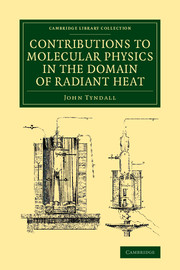
Contributions to Molecular Physics in the Domain of Radiant Heat
- A Series of Memoirs Published in the 'Philosophical Transactions' and 'Philosophical Magazine', with Additions
-
- Published online:
- 05 November 2014
- Print publication:
- 13 February 2014

Faraday as a Discoverer
-
- Published online:
- 05 November 2014
- Print publication:
- 20 March 2014
