To save content items to your account,
please confirm that you agree to abide by our usage policies.
If this is the first time you use this feature, you will be asked to authorise Cambridge Core to connect with your account.
Find out more about saving content to .
To save content items to your Kindle, first ensure no-reply@cambridge.org
is added to your Approved Personal Document E-mail List under your Personal Document Settings
on the Manage Your Content and Devices page of your Amazon account. Then enter the ‘name’ part
of your Kindle email address below.
Find out more about saving to your Kindle.
Note you can select to save to either the @free.kindle.com or @kindle.com variations.
‘@free.kindle.com’ emails are free but can only be saved to your device when it is connected to wi-fi.
‘@kindle.com’ emails can be delivered even when you are not connected to wi-fi, but note that service fees apply.
Electromagnetic Scintillation describes the phase and amplitude fluctuations imposed on signals that travel through the atmosphere. These volumes provide a modern reference and comprehensive tutorial for this subject, treating both optical and microwave propagation. Measurements and predictions are integrated at each step of the development. The first volume dealt with phase and angle-of-arrival measurement errors, which are accurately described by geometrical optics. This second volume concentrates on amplitude and intensity fluctuations of the received signal.
The numerical approximation of Maxwell's equations, Computational Electromagnetics (CEM), has emerged as a crucial enabling technology for radio-frequency, microwave and wireless engineering. The three most popular 'full-wave' methods - the Finite Difference Time Domain Method, the Method of Moments and the Finite Element Method - are introduced in this book by way of one or two-dimensional problems. Commercial or public domain codes implementing these methods are then applied to complex, real-world engineering problems, and a careful analysis of the reliability of the results obtained is performed, along with a discussion of the many pitfalls which can result in inaccurate and misleading solutions. The book will empower readers to become discerning users of CEM software, with an understanding of the underlying methods, and confidence in the results obtained. It also introduces readers to the art of code development. Aimed at senior undergraduate/graduate students taking CEM courses and practising engineers in the industry.
Small particles in the size range from one micron to one millimetre are increasingly important in today's technological world. They serve as workhorses in many mechanisms and devices - from electrostatic copiers to fluidised beds. A more recent development involves the characterisation and manipulation of individual cells and DNA molecules. Particulates can also be a hazard, for example, particulate pollution. Because all particles have electrical and magnetic properties associated with their shape and the materials of which they are constituted, they experience forces and torques when subjected to electric and/or magnetic fields. This book offers a lucid account of the electromechanical interactions that govern the behaviour of particles when an electric or magnetic field is present. With numerous real-world examples, the book should interest a wide range of scientists and engineers.
This book is aimed at scientists and engineers wanting to use radioisotopes and the emitted ionising radiations competently but without seeking expertise. It describes decay and stability criteria, necessary precautions to ensure radiation protection and the detection of alpha, beta and gamma rays including spectrometry. There are comments on calorimetry, liquid scintillation counting, how to use secondary standard instruments, high resolution detectors and how to calculate counting results estimating uncertainties and allowing for the statistics of radionuclide decays. The book's principal purpose is to encourage radionuclide applications which can be done safely, reliably and accurately. It describes industrial and scientific applications of alpha, beta, and gamma rays, neutrons and high energy radiations. This book will be of particular interest to scientists and technologists, teachers and students, helping them to work with radioisotopes safely, efficiently and reliably.
This is an advanced text on electromagnetic theory, presenting a systematic discussion of electromagnetic waves and radiation processes in a wide variety of media. The treatment, taken from the field of plasma physics, is based on the dielectric tensor, and this permits the discussion of media outside the scope of the usual approach adopted in most textbooks on electromagnetism. The approach taken also has notable advantages when applied to the conventional emission processes of electromagnetic theory. The authors have thus unified the approaches used in plasma physics and astrophysics on the one hand, and in optics on the other. The book has been written clearly and pedagogically, and will be therefore of value to senior undergraduates, graduate students, lecturers and researchers. Students will find the exercises provided at the end of each chapter particularly useful.
This 2001 book provides a detailed introduction to the principles of Doppler and polarimetric radar, focusing in particular on their use in the analysis of weather systems. The design features and operation of practical radar systems are highlighted throughout the book in order to illustrate important theoretical foundations. The authors begin by discussing background topics such as electromagnetic scattering, polarization, and wave propagation. They then deal in detail with the engineering aspects of pulsed Doppler polarimetric radar, including the relevant signal theory, spectral estimation techniques, and noise considerations. They close by examining a range of key applications in meteorology and remote sensing. The book will be of great use to graduate students of electrical engineering and atmospheric science as well as to practitioners involved in the applications of polarimetric radar systems.
This 1992 book provides a thorough and systematic description of particle field holography. The use of holography to study very small objects in a dynamic volume is a technique of importance for scientists and engineers across a variety of disciplines for obtaining information about the size, shape and velocity of small objects such as dust particles, fuel droplets, raindrops, pollen, bubbles etc. Professor Vikram has made major contributions to the field, and here provides a coherent, comprehensive and self-contained treatment of the theory, practise and applications. The volume is written to satisfy the needs of researchers in the technique, practising engineers dealing with applications, and advanced students in science or engineering departments. All the necessary mathematical formulations, figures and photographs, experimental procedures and results, and literature citations are therefore included.
Calculations on lens systems are often marred by the unjustifiable use of the small-angle approximation. This book describes in detail how the ray and wave pictures of lens behaviour can be combined and developed into a theory capable of dealing with the large angles encountered in real optical systems. A distinct advantage of this approach is that Fourier optics appears naturally, in a form valid for arbitrarily large angles. The book begins with extensive reviews of geometrical optiks, eikonal functions and the theory of wave propagation. The propagation of waves through lenses is then treated by exploiting the close connection between eikonal function theory and the stationary phase approximation. Aberrations are then discussed, and the book concludes with various applications in lens design and analysis, including chapters on laser beam propagation and diffractive optical elements. Throughout, special emphasis is placed on the intrinsic limitations of lens performance. The many practical insights it contains, as well as the exercises with their solutions, will be of interest to graduate students as well as to anyone working in optical design and engineering.
Linear electric actuators (LEAs) and linear electric generators (LEGs) are widely used electromagnetic devices. This book deals with LEAs that convert electric energy into controlled mechanical motion of limited travel and LEGs that transform mechanical energy into electric energy. Examples range from loudspeakers and microphones to magnetically levitated material transfer in ultraclean rooms. Much of the literature on linear actuators and generators covers the principles of operation and performance calculations of these devices. Little has been published on their control or on detailed design methodologies. This book presents the first unified treatment of the subject, including the construction, operation, control and design of LEAs and LEGs. Chapters describe linear induction, permanent-magnet, linear reluctance, switched reluctance, and linear stepper actuators, as well as various types of linear electric generators. The text is amply illustrated with numerous design examples.
Current research into holography is concerned with applications in optically storing, retrieving, and processing information. Polarization holography has many unique properties compared to conventional holography. It gives results in high efficiency, achromaticity, and special polarization properties. This books reviews the research carried out in this field over the last 15 years. The authors provide basic concepts in polarization and the propagation of light through anisotropic materials, before presenting a sound theoretical basis for polarization holography. The fabrication and characterization of azobenzene based materials, which remain the most efficient for the purpose, is described in detail. This is followed by a description of other materials that are used in polarization holography. An in-depth description of various applications, including display holography and optical storage, is given, and the book concludes with perspectives for the future. This book is an important reference for researchers.
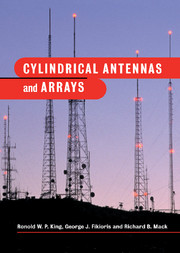
Cylindrical arrays lie at the heart of the antenna systems of most major radio communication systems, including broadcasting networks, cellular 'phone systems and radar. In this book, the authors present practical theoretical methods for determining current distributions, input admittances and field patterns of a wide variety of cylindrical antennas, including the isolated antenna, the two-element array, the circular array, curtain arrays, Yagi and log-periodic arrays, planar arrays and three-dimensional arrays. Coverage includes analysis of horizontal antennas over, on and in the earth and sea, large resonant arrays of electrically short dipoles and a chapter on the theory and techniques of experimental measurement. Written by three of the leading engineers in the field, and based on world-class research carried out at Harvard over the last forty years, Cylindrical Antennas and Arrays is destined to become established as the basic reference for practising engineers and advanced students for many years to come.
In contrast to the conventional holographic process, in which intensity variations in an interference pattern between an object beam and a reference beam are recorded, polarization holography employs beams with two different polarizations for recording information. In this case, the polarization state of the resultant beam is recorded on a suitable medium. This process was discovered by Sh. D. Kakicheshvili, from Georgia (which was then part of the USSR). Currently there is only one monograph on polarization holography, namely that written in Russian by Kakicheshvili (Polyarizatsionnaya golografiya, Nauka, 1989). However, because of its complex presentation, this monograph is not easily amenable for application to practical work.
Polarization holographic storage has several unique properties: (1) it is possible to achieve theoretically 100% diffraction efficiency even in thin films; (2) the diffracted beams have unique polarization properties, depending on the polarization of the recording and read-out beams; (3) it is possible to fabricate polarization-sensitive optical elements; and (4) the optical elements fabricated with polarization holography are achromatic, allowing their use at all wavelengths.
Our book intends to fill a gap in the area of holography, and documents research done during the last two decades. High-capacity holographic storage remains a hot topic. This book is intended for scientists as well as students at graduate and postgraduate level. A basic undergraduate optics background is assumed, and a well-prepared undergraduate physics major will be able to appreciate the subtleties of polarization holography.
Polarization holograms have been shown to possess some extraordinary properties: they are capable of achieving a 100% diffraction efficiency; and they are able to reconstruct the polarization properties of the object beam in addition to providing intensity and wavelength information. Since the reconstructed images have different polarization from that of the undiffracted light, their signal-to-noise ratio is higher than in conventional holography. Polarization holograms also exhibit achromaticity. It is possible to fabricate a half-wave plate, or a polarization beamsplitter for linearly and circularly polarized light, independently of the wavelength of operation.
Polarization holograms in materials such as alkali halides, arsenic trisulfide and bacteriorhodopsin have been used to demonstrate several interesting properties. The most efficient material available today for polarization holography is based on azobenzene. Azobenzene-containing polymers have fast response, and the polarization holograms based on azobenzene polymers are stable at room temperature. However, the fast response depends on the intensity of the interfering beams. There are other drawbacks with this material. Azobenzene absorbs blue and green light. Thus any optical element based on azobenzene can be used only in the red and infrared. While polarization holograms fabricated in azobenzene polymers have been stable over many years under ambient conditions, they are not stable under high-temperature treatment. Amorphous polymers with high glass-transition temperatures have been shown to retain light-induced anisotropy until approximately 200°C. Liquid-crystalline polymers that depend on the reorientation of entire domains are more susceptible to degradation at temperatures around 100°C.
Photoinduced anisotropy in silver-halide materials
The appearance of dichroism in silver-halide emulsions exposed to linearly polarized light was first observed by F. Weigert [1–3] in 1919. This effect is called the Weigert effect (W-effect). Weigert discovered that the effect was most pronounced if the emulsion layer was first exposed to unpolarized short-wavelength light to form print-out silver and afterwards to long-wavelength linearly polarized light. Photodichroism was observed in layers only before photographical development. Later it was found that the effect could be reversible [4]. When a silver chloride (AgCl) emulsion layer was exposed to polarized red light and then the polarization direction was rotated by 90°, the degree of dichroism first diminished, then disappeared completely, and, with continued exposure, reappeared with opposite sign with respect to the first time. This reversible effect could be achieved several times by rotating the polarization direction. Photoinduced dichroism was later observed also in single crystals of AgCl. Hilsch and Pohl [5] and Cameron and Taylor [6] found that, when AgCl crystals are exposed first to unpolarized UV light and then to linearly polarized red light, they become dichroic. The effect was also observed by Zocher and Coper [7].
All these early investigators of the W-effect tried also to give a theoretical explanation. They all assumed that the first exposure created anisotropic particles distributed in all directions.
In this chapter, we shall examine first the principles of interference and holography and extend them to the concept of polarization holography. We shall study the specific character of the periodic anisotropic structures obtained by the holographic method, which we call polarization holograms. We shall show how their efficiency and their polarization properties depend on the choice of recording geometry and on the photoinduced anisotropy in the materials. Since the formation of linear anisotropy is more common and more pronounced in photoanisotropic materials known at the moment, we first consider polarization holography in materials with linear anisotropy only. Then we extend the consideration to materials with both linear and circular anisotropy. The appearance of relief gratings on the surface of polarization holograms is also taken into account.
Plane-wave interference and holography
The holographic method was first proposed by Denis Gabor in 1948 [1] as a method for the reconstruction of wavefronts. Gabor proposed a two-stage process. The first stage is a two-dimensional photographic storage of the intensity distribution in the interference pattern of the signal wave (S) with a reference wave (R). At the second stage the reference wave illuminates the obtained photograph and reconstructs both the amplitude and the phase of the signal wavefront. The method was called “holography”, that is, “whole writing”. Later it was shown by Denisyuk [2] that, if three-dimensional (volume) materials are used to fix the interference field, the wavelength of the signal wave could also be restored.