To save content items to your account,
please confirm that you agree to abide by our usage policies.
If this is the first time you use this feature, you will be asked to authorise Cambridge Core to connect with your account.
Find out more about saving content to .
To save content items to your Kindle, first ensure no-reply@cambridge.org
is added to your Approved Personal Document E-mail List under your Personal Document Settings
on the Manage Your Content and Devices page of your Amazon account. Then enter the ‘name’ part
of your Kindle email address below.
Find out more about saving to your Kindle.
Note you can select to save to either the @free.kindle.com or @kindle.com variations.
‘@free.kindle.com’ emails are free but can only be saved to your device when it is connected to wi-fi.
‘@kindle.com’ emails can be delivered even when you are not connected to wi-fi, but note that service fees apply.
Before Enid Blyton's stories about picturesque girls’ residential schools entered the Indian literary market, colonial boarding schools, with their distinctive architectural form and curriculum, held a unique place in the educational landscape. We can discern three kinds of boarding schools during this period, identifiable by the geographies in which they were located and the social character of their pupils, but essentially, as Satadru Sen notes, ‘paralysed by an articulation of difference that implied that native children were essentially small, perverse adults’. As with early European military-style institutions, the boarding schools established by Catholic and Protestant missionary societies and the British colonial administration had strict timetables, corporal punishment, and physical and intellectual training aligned with specified educational goals regarding children's capacities and futures.
First, the boarding schools established during the 1870s mainly catered to children of royal parentage in many parts of India, aimed at training them (mainly boys) in habits and codes of behaviour befitting their status. Located in remote locations, these schools were immersed in a curriculum aligned with those similar to British public schools, which included horse riding, classical languages, and military training, among other subjects. In this way, imperial administrators considered young sons of princely rulers, enveloped in colonial discourses of effeminacy, to be removed from their immediate surroundings to soften any propensity to rebel against their imperial masters. The second type of boarding school, known as Lawrence Military Asylums and based in the cooler climes of hill stations, was designed to educate and train mainly children of British soldiers serving in the subcontinent and reluctantly admitted a handful of children of mixed-race descent. In the tropical heat, these schools served as enclaves amid constant anxieties about racial miscegenation. This chapter analyses the third type, the oldest, most modestly resourced charity boarding schools run by Christian missionary organizations that offered education to orphaned, destitute, famine-stricken, runaway, and poor Indian children in villages and towns since the 1830s. Often, orphans presented ‘a problem of governance’, resulting in sharp disagreements over financial management and the kind and duration of instruction these pupils should receive.
In the story of British colonialism in India, we often overlook the role of other European actors, especially those who lived in close contact with the local populace. The predominantly German-speaking, Switzerland-based Basel Evangelical German Missionary Society (BM) was one such group that lived and functioned under the aegis of British rule in India from 1834 onwards. On the Malabar coast, in the southwestern part of the subcontinent, they saw themselves as members of a broader religious community than those confined within specific territorially defined boundaries and forged a cordial relationship with several administrators. The BM was also a beneficiary of the European foreign evangelical movement during the early nineteenth century and postured itself like its contemporaries as a mission to save ‘heathen souls’ in faraway lands, especially children. This chapter explores the complex encounters between the BM and the local poor children of low-caste and, sometimes, mixed-race descent, supervised in their boarding schools or orphanages in various parts of British-administered Malabar. The Basel missionaries established the first residential institutions for poor and needy children in the predominantly Malayalam-speaking region, where they sought to establish ‘model’ Christian communities. In their attempt to erase caste-inscribed markers, the Basel missionaries negotiated with different adults and children to run these establishments. In fact, ‘orphans’ were not always without parents, and the BM employed coercive measures to admit pupils by arguing against the ‘barbarity’ of Indian parenting and childhood norms. They were not always successful as children influenced decision-making processes and resisted strategies of emotional disciplining and modes of labour regulation imposed on them. Exploring these dynamic encounters of local populations with non-Britons in determining educational agendas helps us understand transregional histories predicated on ideas of ‘whiteness’.
The earliest cohorts of German-speaking Basel missionaries encountered a myriad of people upon their arrival in southwestern India. In addition to Malabar's many castes and religious communities who spoke Malayalam, the coastal villages and towns were also home to Portuguese sailors, Dutch traders, English soldiers, Tamils, Telugus, and other migrants. Such diversity was most evident among the earliest educational and boarding establishments in the BM's walled mission compounds.
The introduction of measures to promote mass vernacular education ushered in significant shifts in the educational landscape of colonial Kerala from the mid-nineteenth century onwards, which indigenous and mission schools had hitherto dominated. These developments provided an impetus to the emergence of a ‘public’ sphere and a concomitant debate on notions of ‘publicness’ during this period. The right to access government schools, increasingly seen as ‘public’ in nature, was far from universal and constituted a major claim for subaltern communities in their quest for dignity. At the beginning of the twentieth century, upper-caste and upper-class pupils dominated government schools in the region, as some monarchical subjects were granted protection and guarantee of rights based on their caste status. In contrast, others were barred from entry and confined to separate, marginal spaces. d
By the 1890s, the shifts in modes of governance, led by the executive hand of the dewan subject to the ultimate authority of the monarch, witnessed several individual reformers, journalists, and caste and religious associations advocate for participation in an inclusive public sphere as rights-bearing subjects in Travancore and Cochin. Alongside struggles for temple entry, government employment, and land ownership, education became a key component of mass mobilization, undermining the princely states’ claims to modernity and pushing the limits of citizenship. In particular, school-based literacy was viewed as central to individual and community progress, occupational mobility, and reform, all of which were central to rethinking the interconnected relationship between space, body, and the self.
As a result of the establishment of the Travancore Legislative Council (TLC) in 1888, with the TSMPA in 1904, and the Cochin's Legislative Council (CLC) in 1925 consisting of nominated official and unofficial members, schooling became firmly enshrined on the political agenda. In every annual meeting, members belonging to different interest groups, particularly mercantile and planters’ associations, caste and religious organizations, and nominated members from depressed and backward classes, stressed the need to improve welfare provisions and addressed the budgetary concerns related to an overall expansion in primary and secondary education. A consensus was also emerging that children across class lines should receive elementary schooling and that the government would establish schools or provide grants to private agencies willing to take on the responsibility.
In colonial Kerala, how and why were poor children educated, and how did schooling become integral to childhood formation? These overarching questions frame the narratives detailed in this book. Although mentioning ‘Kerala’ and ‘education’ in the same breath may seem trite for some, an exploration teasing out the historical configurations of schooling is pertinent to understand the shifting cultural and political values associated with the Malayali child. Today, with the steady removal of children from agricultural and industrial labour, a declining fertility rate, smaller family units, increasing global migration, and commercial values accrued by families from an accumulation of certified educational skills, the Malayali child has become almost ‘emotionally priceless’, to use Viviana Zelizer's incisive term.1 However, since the second half of the twentieth century, this transition from an ‘economically useful’ to an ‘emotionally priceless’ child, marked by long years of familial protection and institutionalized schooling, has mostly occurred within urban, middle-class communities in south India, similar to the European and American contexts. The traditionally rich, landed upper castes, and literate families have looked upon schools as a worthwhile investment to segregate and mould their children into productive, gendered adult household members, workers, and citizens.
With this context in mind, this book moves away from the scholarly attention overwhelmingly paid to dominant social groups to reveal the parallel dynamics which shaped the construction of ‘poor childhoods’ in Kerala during the nineteenth and early twentieth centuries. Here, ‘poor’ refers to the conditions of poverty and deprivation suffered by children belonging to oppressed castes and religious communities, including Christian converts, and the ways in which the circular logic of poverty shaped the schooling landscapes into which they were brought.2 As upper-caste and upper-class communities in colonial Kerala slowly embraced universalist notions of childhood innocence and vulnerability advocated by various local and transregional actors in state and non-state agencies, and agreed on the separation of children from adults in spaces specific to play, study, and leisure, those from labouring, low-caste communities continued to be largely viewed through the lens of pity and charity, subject to mechanisms of disciplinary control and humanitarian governance with little acknowledgement of their agentic selves.
By 1957, education had truly become a political battleground in the state of Kerala. The newly elected government, led by the Communist Party of India, announced the agrarian relations and education Bills, aimed at keeping its promise of redistributing resources and regulating private educational institutions, against which there was mounting criticism of financial irregularities and biases. However, these private grant-in-aid institutions run by Catholics and Nairs, among other communities, occupied a crucial position in the promotion of school and collegiate education, and the government's attempts to restrict the authority of private managers received an unprecedented backlash. With the shift from a period when missionary and private manager-led schools looked towards the government for financial assistance to a stage where they waged mass agitations to topple the first democratically elected government for increasing regulatory norms, the relationship between the state and private actors in education had come full circle. Despite intense strife and the demonstration of the political clout enjoyed by religious, upper-caste communities through their educational networks, the underlying consensus on formal schooling as an anchor for modern childhood prevailed.
Around the same time, in 1956, the Education Department under the aegis of the director of public instruction, C. S. Venkateswaran, introduced the Kerala School Kalolsavam (Kerala State School Youth Festival), aimed at encouraging school-going children between the ages of twelve and seventeen years to showcase their artistic talents and drive to innovate and promote traditional and new art forms. The immense popularity of the festival, touted as one of the largest cultural events in Asia, has accumulated praise and criticism over the past few decades, as it also demonstrates severe competition among pupils to the detriment of their mental and physical health and pressure on children from their parents, music and dance teachers, and district-level authorities, all competing for prestigious titles and media coverage. The overwhelming attention paid to the young participants of these festivals is rather representative of evolving notions of Malayali children as ‘competing commodities’ in the wider market while they are also expected to be consumers and mediators of local cultural practices.
Upon their arrival on the southwestern coast of India in the early decades of the nineteenth century, British Protestant missionaries of the London Missionary Society (LMS) and the Church Missionary Society (CMS) found themselves in a complex and challenging position. Fed on the Orientalist writings of early European travellers and traders and armed with biblical scriptures, the missionaries had undertaken long sea voyages to introduce a new religion to the ‘heathen’ populations in the strange, tropical world. Their mandate was to conduct direct biblical preaching, but this was impossible without adequate language training, and in the initial years, they relied heavily on local scholars and translators. Another avenue for winning converts lay before this earliest group of male missionaries, one that seemed to hold enormous potential as their itinerant tours continued: schools. In the decades to follow, the formal school site enabled the emergence of a plurality of meanings as different interest groups cooperated and conflicted and embedded schooling within evolving local norms and ideals of childhood. Colonial Kerala was no exception.
In mounting a relentless critique of extant pedagogical methods pursued in the indigenous schools of the region, British colonial administrative and missionary agendas coalesced to produce the formal, modern school with its fixed physical contours and ‘textbook culture’ as integral to the ideology of civilizing missions. British missionary men and women contended with the indigenous school network commandeered by individual teachers whose primary responsibility lay in imparting basic literacy to young boys, especially from the so-called upper castes and religious groups in Travancore and Cochin. By the mid-nineteenth century, a new index of societal progress thus started taking shape alongside the gradually acceptable notion that children's physical, intellectual, and emotional development must occur under adult supervision in segregated spaces of literacy and training. The LMS and the CMS found their most formidable adversaries in caste and its numerous adherents and began establishing primary mission schools and translating the Bible as a means of imparting ‘useful knowledge’.
From the 1820s onwards, these British missionaries, located in parts of Travancore and Cochin, combined itinerant preaching with educational work.
In recent decades, South Asian book history has stimulated new conversations to understand the impact of seemingly mundane print artefacts such as schoolbooks in shaping linguistic and script cultures. Many scholars studying education, childhood, print histories, and state formation, among other areas of interest, have begun scrutinizing schoolbooks to understand socially embedded norms and entangled knowledge networks in colonial India. Their circulation and reception across various age groups in the past may be difficult to discern, but they continue to be one of the few printed mass artefacts consumed together by school-going children globally at a given point in time. As a result, we can gain a deeper understanding of pedagogy as an outcome of broad social and political discourse across multiple spatial and temporal scales.
In 1800, the Baptist missionary trio William Carey, Joshua Marshman, and William Ward established the first printing press in the subcontinent in the Danish-controlled territory of Srirampur (Serampore), near Calcutta, and undertook several translations of European texts into local languages and printing of schoolbooks, which soon gained great popularity in the Bengal Presidency. For evangelical purposes, these Protestant missionaries printed numerous tracts, pamphlets, newspapers, and treatises which were usually sold with the help of colporteurs and book sale depots. But it was the popularization of schoolbook writing as a separate genre that witnessed significant missionary influence on a new culture of literacy and educational practices in the colony. In subsequent years, many Protestant missionaries and upper-caste social reformers compiled grammars, primers, readers, and dictionaries that aided the process of script standardization and regional literature alongside a thriving print culture by the late nineteenth century. The circulation of printed texts for child readers was closely interconnected with the spread of public instruction in the mofussil towns and villages, established through the network of government, aided, and unaided vernacular and English-medium schools. With organizations such as the Calcutta, Madras, and Bombay schoolbook societies drawing up lists of textbooks suitable for instruction and with the recruitment of popular writers and administrators as authors, schoolbooks, especially language readers, began to enjoy a slow and steady demand from the late 1820s onwards.
Designed as a reference, learning and teaching tool to assist students, educators and researchers, this book describes the history, contribution and application of over ninety keywords in the field of education policy research.
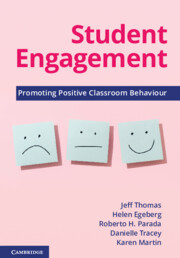
Student Engagement: Promoting Positive Classroom Behaviour encourages pre-service teachers in Australian primary and secondary schools to make choices about how best to design and manage their classrooms and schools to maximise productive behaviour and learning. The text explores numerous dimensions of student engagement from within and outside school settings, including verbal and non-verbal communication; disengaged behaviours and corrective strategies; trauma-informed practice; working with students with emotional and behavioural disorders; and bullying prevention and intervention strategies. Linking to the Australian Professional Standards for Teachers (APSTs), each chapter includes 'Embedding the theory' and 'Story from the field' boxes that discuss the theoretical research behind different approaches to engagement and explore their practical applications. 'Making professional decisions' boxes at the end of each chapter also provide further guidance on how to approach different situations and build a repertoire of resources for practice.
We are living in an era where global university schemes only offer narrow conceptions of quality, relying too heavily on international ranking systems. This timely book present an alternative perspective on evaluating 'world-class universities', showcasing how eight very different higher education institutions have defined and are pursuing excellence in their own way. Each case study highlights how institutions can align their work with shared values and goals, and strive to uphold these principles in all they do and say. The portraits offer insights into the ways institutions can create cultures of excellence tied to a vision of how to make a difference for their students and society. Their success suggest that policy makers should reward institutions that adopt and strive to fulfil particular educational purposes rather than continuing to perpetuate the status quo. It is essential reading for researchers and students of education research, education policy, and international education reform. This title is also available as Open Access on Cambridge Core.
The role that nurseries play in supplementing family care is an important subject - but in the UK, there is currently little consensus about what nurseries should provide, how they should be run, and who should pay for them. In this book, Helen Penn asks: is there a more considered way ahead?