To save content items to your account,
please confirm that you agree to abide by our usage policies.
If this is the first time you use this feature, you will be asked to authorise Cambridge Core to connect with your account.
Find out more about saving content to .
To save content items to your Kindle, first ensure no-reply@cambridge.org
is added to your Approved Personal Document E-mail List under your Personal Document Settings
on the Manage Your Content and Devices page of your Amazon account. Then enter the ‘name’ part
of your Kindle email address below.
Find out more about saving to your Kindle.
Note you can select to save to either the @free.kindle.com or @kindle.com variations.
‘@free.kindle.com’ emails are free but can only be saved to your device when it is connected to wi-fi.
‘@kindle.com’ emails can be delivered even when you are not connected to wi-fi, but note that service fees apply.
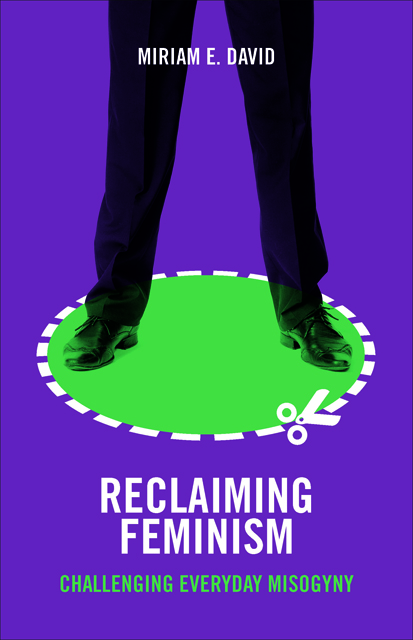
Miriam David celebrates the achievements of international feminists as activists and scholars and provides a critique of the expansion of global higher education masking their pioneering zeal and zest for knowledge.
This crucial contribution exposes the misconception that health research and health services are equally effective for all and highlights their failures in engaging with Black and Minority Ethnic (BME) groups. It provides essential case study examples on recruitment, engagement and partnerships with BME groups in research and public engagement.
Replication studies have become an emerging line of research in recent decades, including in computer-assisted language learning (CALL). Exact replication, which closely follows a study’s protocol, is rare as it is hard to recreate results without establishing a highly controlled environment. However, using data available online, we were able to conduct an exact replication of Łodzikowski’s (2021) study, which reported on the use of an allophonic transcription tool by 55 Polish learners of English. Allophonic features are used by native speakers to produce acoustic variants of the same phoneme. The original study offered learners an allophonic transcription tool, examined how they used it and considered its association with phonological awareness. This study extended the original research by addressing the limitations of its regression and transcription analyses. Our findings allowed us to offer several suggestions on (1) how an allophonic transcription tool can be better designed to help learners, (2) how CALL researchers can acquire more data for more useful research and (3) why more replication studies are needed in CALL.
This meta-analytic study explores the overall effectiveness of automatic speech recognition (ASR) on ESL/EFL student pronunciation performance. Data with 15 studies representing 38 effect sizes found from 2008 to 2021 were meta-analyzed. The findings of the meta-analysis indicated that ASR has a medium overall effect size (g = 0.69). Results from moderator analyses suggest that (1) ASR with explicit corrective feedback is largely effective, while ASR with indirect feedback (e.g. ASR dictation) is moderately effective; (2) ASR has a large effect on segmental pronunciation but a small effect on suprasegmental pronunciation; (3) medium to long treatment duration of ASR results in higher learning outcomes, but short duration offers no differential effect compared to a non-ASR condition; (4) practicing pronunciation with peers in an ASR condition produces a large effect, but the effect is small when practicing alone; (5) ASR is largely effective for adult (i.e. 18 years old and above) and intermediate English learners. Overall, ASR is a beneficial application and is recommended for assisting L2 student pronunciation development.
An important shift in language learning research is the understanding that pronunciation instruction is necessary to ensure learners’ balanced development in pronunciation and second language (L2) speech. Research focusing on understanding what types of pronunciation instruction are effective and what makes them most effective has grown dramatically over the past decade. Given the methodological heterogeneity apparent in this body of literature, however, many questions remain to understand the specific effects of pronunciation training paradigms on learners’ L2 development. In this article, we make the case that replication is a productive means of validating findings and assessing the strength of existing evidence in L2 pronunciation research. As prime targets for replication, we review three studies that offer different perspectives on how L2 pronunciation instruction can be optimized. We have chosen each of these studies because they significantly advance the field conceptually, have broken new ground empirically, and point to areas in which replication studies can have a large impact. We describe a series of close and/or approximate replications of each initial study that would add detail to existing knowledge and provide a more comprehensive understanding of how and why L2 pronunciation instruction is effective, for whom, and under what conditions.
Although research on the experiences of females on the autism spectrum is still developing, it is becoming increasingly apparent that their experiences are not comparable to their male counterparts. This scoping review aimed to collate research related to the peer interaction experiences of school-aged girls on the autism spectrum from their perspective. A database and journal search (2010–2020) found 21 studies. Key findings indicated that although school-aged girls on the autism spectrum generally desired friendship, they faced diverse peer interaction difficulties, including making and maintaining friendships, peer victimisation, and rejection. Given these challenges, appropriate peer interaction supports and further research into the complexities of their peer interaction experience is needed.
This article examines the relationship between gender and leadership in southern public Black colleges from the late nineteenth through the early twentieth century. Public colleges offer a unique view of this relationship because, in an era of disfranchisement, the political stakes of leadership were more obvious than in private schools. I argue that the gap between Black women's dynamic roles on public campuses and their marginalized representations in school reports reveals the processes that have obscured their public educational leadership in the American South. Analysis of images collected from college catalogs supplements my examination of documentary evidence from archives and published reports. State educational administration was one of the few remaining spaces where Black men could wield political influence. As they worked to produce institutional images that proclaimed their capacity for and right to public leadership, however, they minimized the contributions of Black women.
This study is a conceptual replication of Teimouri et al.'s (2022) investigation into the validity of the second language (L2) grit scale (the L2-Grit scale). There are several concerns about the generalizability of the findings of Teimouri et al. (2022), especially regarding the discriminant validity of the scale and the relation of L2 grit with language achievements. A conceptual replication study was conducted because these concerns could be addressed by using a different methodology. The main findings include: (a) the factor structure of L2 grit was supported in the replication sample (106 English majors at a Japanese university), (b) the results support the discriminant validity of L2 grit, but in a different way from the initial study, and (c) L2 grit was a consistent predictor of L2-specific Grade Point Average and standardized test score. The results obtained lend further support for the validity of the L2-Grit scale.
In the BBC show, The Repair Shop, members of the public bring their cherished but crumbling possessions into a workshop populated by expert craftspeople, who carry out restorations. These objects arrive as treasured possessions, which, despite their dilapidated state, still hold memories and meaning for their owners, albeit memories that may have faded as the object itself has aged. Something magical seems to take place after the objects are restored, however. The restored objects seem to reanimate and revive the memories that their owners have invested in them. How is it possible that this restoration can bring memories held by the objects back to life? What is special about The Repair Shop restoring objects to their former glory? We outline two ways in which objects can be evocative and embody emotion, memory, and meaning. We then outline the ways in which the restoration of these objects to something like their original form can improve scaffolded recall and bring memories back to life. For one class of evocative objects, the restoration enhances recall by reinstating details from the context in which the memories were encoded. For the second class of evocative objects, their restoration affords an imaginative connection to the past, which enables them to become powerful focal points of memory and shared narratives. In effect, The Repair Shop seems to work not only as a repair shop of objects but as a repair shop of memory too.
This review provides an account of salient research topics in current Swedish research in the field of foreign language (FL) education, with the aim of making locally published work available outside Sweden. A corpus of work on English and other FLs published between 2012 and 2021 has been scrutinized. Focus has been placed on research conducted and disseminated in Sweden, in some cases adding international publications, in order to portray the work in a wider context. Research on FL learning, teaching, and assessment is reviewed in light of recent policy changes as well as a changing linguistic situation characterized by a plethora of languages spoken in society, among which Swedish as majority language and English as lingua franca share indisputable sovereignty, but where a newly-born interest in the role of other background languages than Swedish can be discerned. The study ends with a discussion of trends observed in the reviewed material and considerations in view of future research.
This international replication study demonstrates how playing a video game is related to multiple dimensions of creativity in foreign language writing. In this research project, university students were asked to interact with a commercial murder mystery video game, Her Story, and produce a piece of creative writing, which was a replication with a new data collection of the original study by Lee (2019). The reason for using this digital game was to provide an authentic learning opportunity for students and analyze whether digital game-based learning facilitates creativity in EFL writing. This replication, involving 25 university students from Poland and 25 university students from Spain, is a media transfer study based on the students transforming one media format (video game) into another (writing). The results demonstrate that the use of a video game with an ambiguous storyline prompts discovery (specific curiosity) and could be the determining factor for producing original, quality ideas in writing even when holding a negative view of one’s creativity. The findings also indicate that the choice of genre and a viewpoint in writing may influence the level of elaboration in the texts produced by students.
The subject of environmental science (ES) was introduced into Bhutanese schools to educate students about sustainable environmental conservation. This study aims to answer the research question: What are the impacts of studying ES on Bhutanese students for environmental sustainability? The study employed mixed methods to draw data from interviews with six principals, 14 teachers and 189 students, and surveys with 14 teachers and 563 students from six secondary schools. Participants indicated the development of students’ Gross National Happiness value of sustainable environmental and socioeconomic development. However, an anthropocentric perspective appeared to be dominant among participants, suggesting a need to develop ecocentric worldviews to support sustainability. Most students noted their changed behaviours, development of optimism, stewardship and agency towards ecological sustainability from studying ES. To prepare students to take action to address sustainability issues, teachers could leverage students’ optimism, agency and stewardship through action-oriented approaches to teaching ES.
This study replicates the research conducted by Pérez-Paredes, Ordoñana Guillamón and Aguado Jiménez (2018) on language teachers’ perceptions on the use of OER language processing technologies in mobile-assisted language learning. It expands the initial research study by adding Polish, Portuguese, and Turkish educational contexts, surveying 239 English as a foreign language teachers in these three countries. The main findings indicate that there are several differences among the three countries, including institutional support regarding the use of mobile devices and the training provided to the teachers. Based on the data collected in these countries, it was found that mobile devices are mainly used for teaching and learning on online platforms. Smartphones were one of the most used devices in English language teaching, while computer labs at schools seem to have lost their popularity. Regarding the technologies available, the results of the study reveal that the participants are most familiar with online dictionaries, spell checkers, and online collocation dictionaries, and the participants’ qualifications are linked to certain differences in familiarity and use of technologies in the classroom. Variables such as gender, age, and years of experience do not show any difference in the familiarity or frequency of use of those technologies. The main findings of the study point out the importance of institutional support and training regarding the use of mobile devices and open educational resources, which are no longer a choice but a necessity in education.
Sino-American Relations brings together high-quality research articles in order to examine one aspect of the political mechanism of modern China, from empire to the PRC: political initiatives to root out corruption.
With the dramatic improvement in quality, machine translation has emerged as a tool widely adopted by language learners. Its use, however, has been a divisive issue in language education. We conducted an approximate replication of Lee (2020) about the impact of machine translation on EFL writing. This study used a mixed-methods approach with automatic text analyzer Coh-Metrix and human ratings, supplemented with questionnaires, interviews, and screen recordings. The findings obtained support most of the original work, suggesting that machine translation can help language learners improve their EFL writing proficiency, specifically in strengthening lexical expressions. Students generally hold positive attitudes towards machine translation, despite some skeptical views regarding the values of machine translation. Most students express a strong wish to learn how to effectively use machine translation. Machine translation literacy instruction is therefore suggested for incorporation into the curriculum for language students.