To save content items to your account,
please confirm that you agree to abide by our usage policies.
If this is the first time you use this feature, you will be asked to authorise Cambridge Core to connect with your account.
Find out more about saving content to .
To save content items to your Kindle, first ensure no-reply@cambridge.org
is added to your Approved Personal Document E-mail List under your Personal Document Settings
on the Manage Your Content and Devices page of your Amazon account. Then enter the ‘name’ part
of your Kindle email address below.
Find out more about saving to your Kindle.
Note you can select to save to either the @free.kindle.com or @kindle.com variations.
‘@free.kindle.com’ emails are free but can only be saved to your device when it is connected to wi-fi.
‘@kindle.com’ emails can be delivered even when you are not connected to wi-fi, but note that service fees apply.
The previous chapters examined the idea of a design brief and creating preferred futures. Design thinking that is supportive of the Design and Technologies subject was explored, and through a series of case studies children from birth to 12 years were shown engaging in design thinking to generate and produce solutions to problems they were interested in solving.
This research focus on the evaluation of the impact on students’ attitudes towards the environment, fostered by their involvement in an educational citizen science project related to the monitoring of physicochemical properties and the detection of (micro)plastics in Portuguese coastal waters. We developed an attitude scale, comprising four dimensions (Collective, Personal, Recycling and Reuse and Microplastics), which was applied, as a pre-test and post-test, to 574 middle school students (aged 12–14): 442 in the experimental group and 132 in the control group. Initially, based on pre-test results, both groups revealed positive attitudes. In the experimental group, the post-test results revealed that significantly positive attitude changes were promoted in all dimensions, whereas, in the control group, this occurred only in the Personal dimension. The control group also exhibited significantly negative attitude changes in the collective dimension. Students’ engagement in sustainability-related citizen science projects can enhance environmentally literate society.
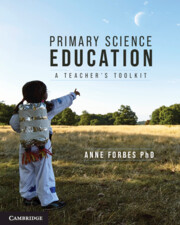
Primary Science Education: A Teacher's Toolkit is an accessible and comprehensive guide to primary school science education and its effective practice in the classroom. Primary Science Education is structured in two parts: Planning for Science and Primary Science in the Classroom. Each chapter covers fundamental topics, such as: curriculum requirements (including the Australian Curriculum and Australian Professional Standards for Teachers); preparing effective learning sequences with embedded authentic assessment; combining science learning with other learning areas, such as technologies and STEM; and critically analysing the teacher's role in the classroom. The text features short-answer and 'Bringing it Together' questions to encourage readers to consolidate their understanding of key themes. Case studies throughout provide guidance on the classroom experience and Teacher Background Information boxes explore topics where more in-depth knowledge is required. The book is supported by a suite of online resources, including interviews with Australian primary teachers and students, and downloadable activities.
Master all the skills you need to deliver a tabletop role-playing game programme in the library. For librarians or teachers who aren't players themselves, the scope of role-playing games can seem overwhelming. Starting from the basics, Let's Roll is a practical guide to delivering a tabletop role-playing game (TTRPG) in a school or public library, all within the time constraints imposed on library sessions. Coverage includes: A step-by-step guide to setting up a TTRPG programme in your school or public library including an example of a TTRPG proposal; Advice on bringing senior management on board to a TTRPG programme; How to attract players, basic table rules, and preparing as a game master; The health and learning benefits of TTRPGs including creativity, teamwork, cooperation, boosting confidence and encouraging reading; A comprehensive list of TTRPG games and how to implement them.
Featuring case studies from librarians around the world focusing on their experiences setting up TTRPGs, Let's Roll will help librarians, teachers and other educators deliver an engaging programme that results in significant benefits on a budget - and is a huge amount of fun!
This systematic review of 170+ journal articles showcases the current trends and developments in Turkey-based applied linguistics and language education research between 2016–2022. The current review presents similarities to the previous reviews (Alptekin & Tatar, 2011; Aydınlı & Ortaçtepe, 2018) in terms of trends and practices that indicate a vibrant research scene and a community of practice in Turkey within language education and applied linguistics research. While certain research areas such as instructional technologies remain widely popular among Turkey-based scholars, there has been growing interest in multiculturalism, social justice language education, critical pedagogy, and culturally responsive teaching. It was also clear in our analysis that the demands by the Higher Education Council for academic promotion exacerbated some of the already-existing challenges also noted in the previous reviews. Some of the concerns include pre- and post-test study designs that focus on practical concerns and outcomes rather than on processes that would lead to conceptual or theoretical development; and lack of engagement with broader (inter)disciplinary debates. We hope that this review will help establish conversations among fellow scholars in terms of future directions that applied linguistics and language education research in Turkey can take in order to contribute to the larger discussions in the field.
Ocean literacy (OL) proposes to include ocean and marine environment-related content in school curricula. Such a topic has been deemed effective for citizens to develop actions and attitudes towards the health of marine ecosystems. This study aimed to verify the presence and frequency of OL principles and concepts in the Brazilian high school curriculum at the federal (National Curricular Parameters-PCN) and regional (Rio de Janeiro - Curricular Reference-RC) levels. Both PCN and RC contained OL-related content. Moreover, Biology and Geography were the subjects with the highest numbers of OL concepts, both in the PCN (26 and 27, respectively) and in the RC-RJ documents (28 and 24, respectively), while OL concepts were very little represented in History subject. A Mann–Whitney U-test did not indicate statistically significant differences in the number of concepts between PCN and RC-RJ (p = 0.54). A principal component analysis discriminated the documents according to subjects, regardless of their origin (federal or regional). These results provide an unbiased assessment of the relationship between the curriculum and OL in a strongly affected area (Rio de Janeiro State coastal zone [CZ]). Therefore, these results provide valuable support for managers seeking to promote effective CZ management practices and public compliance.
The majority of research papers in computer-assisted language learning (CALL) report on primarily quantitative studies measuring the effectiveness of pedagogical interventions in relation to language learning outcomes. These studies are frequently referred to in the literature as experiments, although this designation is often incorrect because of the approach to sampling that has been used. This methodological discussion paper provides a broad overview of the current CALL literature, examining reported trends in the field that relate to experimental research and the recommendations made for improving practice. It finds that little attention is given to sampling, even in review articles. This indicates that sampling problems are widespread and that there may be limited awareness of the role of formal sampling procedures in experimental reasoning. The paper then reviews the roles of two key aspects of sampling in experiments: random selection of participants and random assignation of participants to control and experimental conditions. The corresponding differences between experimental and quasi-experimental studies are discussed, along with the implications for interpreting a study’s results. Acknowledging that genuine experimental sampling procedures will not be possible for many CALL researchers, the final section of the paper presents practical recommendations for improved design, reporting, review, and interpretation of quasi-experimental studies in the field.
This study traces the evolution of computer-assisted language learning (CALL) by investigating published research articles (RAs) in four major CALL journals: ReCALL, Computer Assisted Language Learning, Language Learning & Technology, and CALICO Journal. All 2,397 RAs published over four decades (1983–2019) were included in the pool of data, and the Google Scholar citation metric was adopted to assess the impact of the papers. By selecting the top 15% of widely cited papers from each individual year, we minimized the time bias between years, enabling a balanced narration of the history of CALL through a representative dataset of 426 high-impact RAs. To identify the evolution of research trends, the contexts, methodologies, theoretical underpinnings and research foci of all 426 RAs were investigated using NVivo 12 and AntConc. The analysis of the data yielded encouraging results such as the upward trend in the number of publications and the international reach of CALL in the last two decades, the physical or virtual presence of language learners with diverse language profiles, and the growing tendency to triangulate methodology for increased complexity. However, long-standing issues such as the heavy reliance on traditional research contexts, poor reporting practices of basic demographic information, the large number of atheoretical papers and the concentration on a limited number of research foci continue to pose challenges in CALL research. Based on the findings, the paper suggests solutions for the controversies and addresses key issues for future research in CALL.
This chapter focuses on the significance of ‘home’ for graduate mobility and the ways in which home contributes to capacities to navigate graduate futures. For young people who participate in higher education in England, the dominant narrative is one of leaving behind the family home and becoming geographically mobile. The ‘student experience’ is structured around a normative assumption of moving away to live in student accommodation and become immersed in university life (Patiniotis and Holdsworth, 2005; Christie, 2007; Holdsworth, 2009), despite the considerable number of students who do not leave the parental or guardian home to attend university (HESA, 2021). On completion of higher education study, there has been a similar normative expectation that graduates should be self-reliant and readily move away from their home place to locations where high-skilled work is situated (Christie and Burke, 2021). Yet, recent research indicates that it is those from privileged class backgrounds who move long distances for graduate employment (Hecht et al, 2020). Moreover, return migration to the parental home has recently become an accepted coping strategy for graduates from all social class backgrounds in a context of much less certain graduate futures (Sage et al, 2013; Stone et al, 2014).
The chapter examines how these dominant narratives of spatial mobility play out in the lives and experience of participants in the Paired Peers project. The project followed students studying at the two universities in Bristol from the start of their undergraduate degrees through to four years after graduation (2010– 17) (for further details on methods, see Chapter 2). The two graduates at the heart of the chapter both studied English: Ruby, from a working-class background, who studied at the mediumtariff modern UWE; and Elliot, from a middle-class family background, who attended the high-ranking and prestigious UoB. English is a ‘traditional’ university discipline in England, which is particularly popular with young women. There is a perception that those who choose it tend to do so because of their love of literature, rather than for career reasons, though many may have aspirations towards working in the media or becoming a writer, while others aspire to teaching. Ruby and Elliot reflect these contrasting career aspirations and subsequent occupational pathways.
Students with emotional and behavioural disability who receive their education in special settings often do not have access to the curriculum through evidence-based pedagogies, such as direct instruction, and instead complete packets of worksheets or participate in distance education. The current study was a collaborative action research project involving a special school for students with emotional disability and a local university to examine the effects of replacing online distance education with in-person direct instruction underpinned by Universal Design for Learning. Researchers sought to discover teacher and student perceptions of Universal Design for Learning, enablers and barriers to its implementation, and its effect on attendance and behaviour. Results suggested satisfaction on the part of both students and teachers and a positive effect of Universal Design for Learning on both attendance and behaviour.
In this chapter, we turn to a consideration of graduate pathways for those who had no clear and definite employment plan during their time at university and at the point of exit. In doing so, we consider the ways in which early experiences of transition from university are inflected by social class, race and gender. The chapter presents the narratives of two middle-class, white, male politics graduates – Oscar and Liam – and two working-class history graduates – one white male (Garry) and one ‘mixedrace’ (white Welsh and African-Caribbean heritage) female (Adele). We consider the development of their career pathways on leaving university and highlight the significance of the role of time in facilitating/shutting down opportunity. We compare the unplanned ‘serendipity’ of the middle-class graduates with the unplanned ‘fateful outcomes’ of their working-class counterparts. The chapter highlights that what can superficially appear to be luck or serendipity is, in fact, a manifestation of privilege and relies on the availability of stocks of capital. Moreover, outcomes that appear to be ‘fateful’ are actually mediated by classed, racialized and gendered forms of capital. The chapter concludes with consideration of graduate spaces as important components in the navigation of unplanned pathways in the ways in which they invite privileged bodies, while rendering ‘other’ bodies as trespassers (Puwar, 2004).
Like many UK graduates across higher education, there were a number of young people in our study who graduated with minimal plans for the immediate future and no clear employment pathway. We found no pattern in terms of strategic planning and institution attended, gender, or class or ethnic background. We did, however, discern that certain subjects, such as law, economics, engineering, accounting and finance, were more likely to produce graduates with direct career goals. It is obvious that these subjects are taken with particular careers in mind, and this observation is not surprising. However, in the current context where some university subjects are under fire for their apparent lack of employment opportunities, it is important for us to highlight that a significant number of graduates taking subjects that do not have an obvious employment outcome go on to develop successful graduate careers.
Throughout this book, we have considered how young graduates construct their transitions to future lives and work, and, at the same time, how they are constructed through those transitions. The making of graduate lives is about profoundly more than finding work. We have shown that there are many ways to be a graduate, and in doing so, we have considered the value that young people place on the work they do and the work to which they aspire. For some, success entailed finding work that required a degree qualification (for example, as a fund-raising officer or project manager in Chapter 8). For others, being a successful graduate entailed finding work that utilized skills and knowledge from their university degree (such as biological knowledge in Chapter 3 and engineering skills in Chapter 5). For yet others, the emphasis was on finding work that they found valuable or meaningful (care work and international development work in Chapter 7; teaching in Chapter 4). The rewards of work in terms of both remuneration and personal satisfaction varied, and there was sometimes a trade-off between the two. The work that graduates constructed as worthy and meaningful was not necessarily well paid, while particularly well-paid work was not often constructed in terms of social value; in one case, the lucrative career of banking was described as ‘selling youth’.
While the chapters in the book are based on the narratives of individual participants in the project, this is not merely a set of stories about graduate labour market transitions. Rather, the stories are located within their histories, which consider the connection between structural, institutional and subjective factors in understanding social action and the workings of inequality (Bathmaker, 2010; Burke, 2016; Tarabini and Ingram, 2018). Looking deeply at experiences at the individual level has provided important insight into the reproduction of structural inequalities and how they manifest through the habitus, embodied cultural capital and symbolic classifications that differentiate graduates’ value on the labour market.
Labour market futures were not the only consideration for participants in our study; they also talked about how they understood their futures as more than getting a job and achieving a successful career.
This chapter focuses on the male-dominated field of engineering and explores intersections of class and gender in relation to new graduates’ experiences of trying to establish themselves in this section of the labour market. Specifically, we draw upon the work of Bourdieu and his concepts of habitus, symbolic violence and misrecognition, as well as developing an understanding of symbolically recognized capital in the engineering field, which we suggest could be seen as a form of ‘engineering capital’ (an extension of Bourdieu's different forms of capital), to help us examine how and why young women access, participate in but then leave the field of engineering, while young men are supported to succeed. We start the chapter by locating the experience of those who studied engineering in the context of other participants in the Paired Peers study, showing how the graduate outcomes of most of the Paired Peers participants followed gendered patterns.
Different gender, different career aspirations and outcomes
The majority of young women in our study opted for femaledominated professions, such as teaching, administration and charity work (see Table 5.1). This included a number of female graduates who started with aspirations in traditionally male-dominated professions like law but opted out and switched to teaching. They said that they did so for the perceived compatibility of their chosen employment with motherhood, following the patterns found in other research of women choosing careers that reduce the likelihood of discrimination and are more ‘family-friendly’ (Chevallier, 2007).
The patterns of graduate career progression that we found among the participants in Phase 2 of our research could be seen to reflect understandings of the process of developing a career identity, where the way in which ‘individuals consciously link their own interests, motivations and competencies with acceptable career roles’ is considered to begin in childhood and is further developed throughout an agent's life course (Praskova et al, 2015: 145). Young children have been found to ‘identify caring tasks with women, machines and technology with men’, and as they begin to consider future career selves, few people stray from these and other hegemonic gendered ideas of what is considered a ‘suitable’ career for the ‘likes of them’ (Bradley, 2015: 111).