To save content items to your account,
please confirm that you agree to abide by our usage policies.
If this is the first time you use this feature, you will be asked to authorise Cambridge Core to connect with your account.
Find out more about saving content to .
To save content items to your Kindle, first ensure no-reply@cambridge.org
is added to your Approved Personal Document E-mail List under your Personal Document Settings
on the Manage Your Content and Devices page of your Amazon account. Then enter the ‘name’ part
of your Kindle email address below.
Find out more about saving to your Kindle.
Note you can select to save to either the @free.kindle.com or @kindle.com variations.
‘@free.kindle.com’ emails are free but can only be saved to your device when it is connected to wi-fi.
‘@kindle.com’ emails can be delivered even when you are not connected to wi-fi, but note that service fees apply.
Collaboration among groups occurs at multiple levels, from large international organizations consisting of multiple countries to small regional organizations within a country. International organizations promote collaboration among multiple nations that vary in scope from the global reach of the United Nations to the more specific objectives of the European Workplace Innovation Network. National organizations support innovation by providing guidance, partnerships, and financial assistance as exemplified in fighting the COVID-19 pandemic. National organizations can also encourage innovation by partnering with other organizations, as demonstrated by the Workplace Innovation Network for Canada. Government agencies work within countries but with a specific focus such as the United States Department of Energy and the National Aeronautics and Space Administration (NASA). Regional alliances help coordinate efforts by connecting communities and regions to government agencies. An example is the Science Action Network, which provides mechanisms to improve trust and communication among government administrators, industry representatives, and scientists.
Expertise implies that people are usually good problem solvers in their area of expertise but expertise doesn’t necessarily imply that they are creative. Creativity requires that the solutions are not only correct but also novel and useful. New solutions, such as using dental floss to hang objects on a wall, are needed in daily life when typical solutions are not readily available. One approach to studying creativity is to observe creative people such as artists, sculptors, jazz musicians, and actors. Another approach is to conduct controlled experiments such as evaluating the effectiveness of examples in producing creative products. The Geneplore model of thinking provides a helpful framework for dividing creative thought into generation and exploration phases. Broad states of mind – exploring the environment rather than exploiting accumulated knowledge – contribute to producing novel solutions. In contrast, anxiety can have a negative impact of creativity. Across many diverse content domains from the arts to the sciences, rated anxiety was greater for activities that required creativity.
This chapter frames the book as a whole by establishing the political and professional manifesto for the volume. It establishes the context for the book as one of contemporary policy and practice demands that place heavy expectations on leaders in early childhood education to work in ways that improve the quality of early childhood education programs. These demands are problematized through the think tank approach to the book, explained in this chapter, which seeks to remain open to multiple and multidisciplinary approaches to the scientific study of learning to lead. We argue this openness depends on avoidance of binaries, seeking multiple forms of professionalism, avoiding easy reference to crises, contestation of change, and an acknowledgment of the specialized forms of knowledge necessary for early childhood education practice. The chapter outlines the structure of the book around the pairs of theory–case study exemplars in the chapters that follow.
The development of cognitive skills depends on designing curricula based on theories of learning. A knowledge-building perspective utilizes technology to enable students, teachers, and administrators to become active participants in knowledge creation. One of the most important objectives in building knowledge is to establish connections among key concepts, key representations, and real-world contexts. Building knowledge should be a productive struggle so it is helpful to create learning environments that appeal to students’ interests. The ICAP learning theory predicts that learning should increase as students progress from passive to active to constructive to interactive engagement. There is evidence to support problem-based learning in which the curriculum focuses on solving problems in class. Self-regulated learning is promoted by teaching students to formulate goals for self-monitoring and to evaluate their performance. Although teachers should be aware of students’ strengths and limitations, their ultimate goal should be to empower their students to make their own decisions for regulating learning
This paper presents a learning journey about deepening capacity for teaching with Place through relational learning and shares three pedagogical ingredients that are integral in enacting more ethical, decolonial place pedagogies. We are three women, educators working in community and teacher education with interests in environmental education, decoloniality and indigeneity. We write from the position of people whose ancestry is not Indigenous to the places we were born, nor those where we live now. We bring diverse experiences, voices, bodies and memories of Place into productive conversations as we think and write together about how we are learning with Place, and our response-abilities for enacting regenerative place pedagogies. We situate our emergent and relational inquiry within our experiences and encounters with Place in solidarity with the call for the sharing of stories that “explore knowing and being as relational practices” (Bawaka Country et al.). Our paper is premised on the understanding that our ethical commitment to decoloniality involves learning to live and learn with and love the places we are now, and prioritising Indigenous philosophies, scholarship and ways of knowing Place throughout our education practices.
Home to nine Tribal Nations, the northeastern corner of Oklahoma (US) is a place of immense resilience, cultural beauty and attachment to place. Horrifically, however, this same area is also home to massive environmental assaults that have occurred as a result of decades of lead and zinc mining. The improperly managed mine waste that has accumulated since the late 1800s now severely contaminates the water, land and air, having adverse impacts on the health of the ecosystem and the local human community alike. Leading the fight for cleanup and support of place and people since 1997 is the non-profit organisation called Local Environmental Action Demanded (LEAD Agency). One of LEAD’s primary tools for education and advocacy has been leading toxic tours across these harmed lands and waters. This contribution draws upon the nearly three decades of toxic tours that Rebecca and Earl have led by sharing key stories and experiences of important sites visited along the way, offering a snapshot of toxic tour experience. Drawing on Indigenous storywork and autoethnographic methodologies, this contribution aims to spotlight the potential of Indigenous-led toxic tours for helping to (re)connect people — both locals and visitors — to place and a responsibility of stewardship.
Support teachers are responsible for educating students with disabilities who have complex needs and require additional resources. Because of the highly stressful nature of the role, support teachers are at greater risk of professional burnout, higher attrition rates, and impacts on wellbeing. There is a distinct lack of Australian or state/territory empirical evidence on strategies to promote support teacher wellbeing. In this exploratory qualitative study, we applied thematic analysis to interviews of Tasmanian support teachers to find that their wellbeing relies on principals’ and leadership staff’s support and implementation of wellbeing and inclusive education practices. Support teachers are experiencing stress, anxiety, emotional exhaustion, and depression caused by workload, accountability for funding, and poor leadership. School leaders who value wellbeing and inclusive practices foster a positive culture, demonstrating ecological theory. This study marks an initial step towards understanding how to nurture the support teachers of Tasmania.
Inclusive education is enshrined in law and supported by the literature as best practice in education. Inclusive education has been shown to provide better academic, social and behavioural outcomes for children with disabilities than segregated learning environments. In the Northern Territory, Australia, however, the dual system of mainstream and special education persists and so too does segregation and exclusion. The Northern Territory education strategy commits to strengthening inclusion and empowering families in educational decision-making by listening to their voices. In this paper, we highlight some of these voices, examining the experiences and perspectives of caregivers of children with disabilities as they participate in education in the Northern Territory. Caregivers’ experiences were coded into categories of inclusion and exclusion. Those that were not clearly inclusion nor exclusion were identified and the theme of non-inclusion was created. Non-inclusion was analysed thematically and is discussed as a nebulous space that exists for caregivers, presenting significant challenges that threaten their child’s inclusion at school as they navigate this dual system. If Australian education systems are to provide genuine inclusive education, we need to understand the experiences of caregivers better so we can remediate the issues creating non-inclusion for children with disabilities and caregivers.
'Encouraging Innovation: Cognition, Education, and Implementation' is of interest to people who desire to become more innovative in their daily lives and careers. Part I discusses the cognitive and social skills required for innovation – reasoning, problem solving, creativity, group decision making, and collaborative problem solving. The second part discusses education – the development of cognitive skills and talent, application of relevant learning theories, methods and curricula for enhancing creativity, creativity across disciplines, and design education. Part III discusses the implementation of these skills in society – the transition from theory to practice, business innovation, social innovation, and organizational support. Whereas business innovation is related to commercialization, market demands, and profitability, social innovation addresses fulfilling social needs and public demands. Organizational support for innovation occurs at international, national, agency, and regional levels.
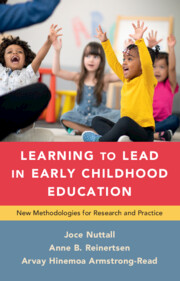
Learning to Lead in Early Childhood Education makes a major new contribution to the educational leadership literature in early childhood education. Three sharply contrasting theoretical and methodological approaches are explained, each with an accompanying case study as a separate chapter. This allows readers to clearly see the relationship between theory, research, and practice, including theory-driven approaches to analysis. By drawing the case studies from three countries – Australia, Norway, and Aotearoa New Zealand, including one involving Indigenous participants – this book allows readers to learn about early childhood leadership policy and cultures in settings with different languages, histories, and national contexts. It will appeal to early childhood centre leaders, early childhood education and leadership academics, and post-graduate students in educational leadership interested in the potential of – and for – multiple approaches to leadership research and learning in early childhood education.
Economic development and environmental development have been long-lasting debates between capitalists and environmentalists. It is also seen as a debate around modernization with globalization at one end and environmental justice at the other end. Our society today is moving rapidly toward development and increased industrial revolutions and globalization. Indigenous communities in Ogoniland are also experiencing such development due to multinationals’ exploration of crude oil in their communities. The exploration of oil has caused environmental, socioeconomic, health and political problems in indigenous communities in Ogoniland. These issues require a depth of understanding from all sectors (public, government and corporate sectors) to address them. Hence, through textual analysis and interviews from the government and environmental social movement organizations, this paper presents the types of environmental educatiSon programs carried out in indigenous communities in Ogoniland to address environmental issues and other socioeconomic issues due to oil exploration. These environmental education programs in indigenous communities contribute to environmental policy creation, the development of environmental curricula and pragmatic actions toward mitigating environmental degradation and socioeconomic issues in indigenous communities. Thus, revealing the significance of indigenous knowledge and practices in addressing contemporary environmental issues.
This Element explores ways to promote critical literacy in teacher education. First, the authors define critical literacy in the context of teacher education through established theoretical frameworks and models of critical literacy pedagogy and share their collective findings on critical literacy research over the course of a decade. Building from these theoretical understandings of critical literacy, they outline ways to actualize critical literacy in teacher education as a transformative pedagogy coupled with resources and activities that support equitable teaching practices. Next, they illustrate how adaptive teaching supports critical literacy pedagogy and underscore autoethnography as a reflective tool to engage pre-service teachers in critical literacy practice. They model this approach with mentor text analyses using critical literacy as a lens to facilitate critically-oriented mindsets in teachers through visioning. They conclude with implications for classroom practice at the intersections of critical literacy and teacher preparation and provide directions for future research.
In this study, we examined 535 primary classroom teachers’ causal attributions about challenging behaviour in West Bengal, India. The participants completed a questionnaire that collected information about their perceptions, causal attribution, and proposed strategies to address a range of challenging behaviours that were presented through five vignettes. The participants identified student-related and family-related factors as the main causes of challenging behaviour more frequently compared to teacher-related causes. They reported using proactive strategies more often than reactive strategies to address challenging behaviours in their classrooms. The findings provided insight into teachers’ causal attributions influencing their choice of classroom-management strategies, which helped to understand teaching practices and how they affect students. The implications of the study are presented to improve professional learning and practice for teachers and guide them to adopt strength-based strategies to address challenging behaviour in primary schools in West Bengal, India.