To save content items to your account,
please confirm that you agree to abide by our usage policies.
If this is the first time you use this feature, you will be asked to authorise Cambridge Core to connect with your account.
Find out more about saving content to .
To save content items to your Kindle, first ensure no-reply@cambridge.org
is added to your Approved Personal Document E-mail List under your Personal Document Settings
on the Manage Your Content and Devices page of your Amazon account. Then enter the ‘name’ part
of your Kindle email address below.
Find out more about saving to your Kindle.
Note you can select to save to either the @free.kindle.com or @kindle.com variations.
‘@free.kindle.com’ emails are free but can only be saved to your device when it is connected to wi-fi.
‘@kindle.com’ emails can be delivered even when you are not connected to wi-fi, but note that service fees apply.
The chapter discusses the influence of utilitarianism on education. It begins by introducing the core principles of utilitarianism. The chapter then argues that it is possible to distinguish between two major strands within the utilitarian view of education: one that focuses on promoting the happiness of each individual, and the other on enhancing the happiness of the greatest number by creating facilitating social conditions for it. Each of these two strands is separately examined. The chapter also maintains that the second strand had a lasting impact on education that finds its clearest current expression in the emphasis on education’s role in economic development. Finally, the chapter suggests that reviving certain traditional forms of utilitarianism has significant potential to improve education.
This chapter is organized according to two complementary sections. The first examines ethical practice as an extension of liberal humanism, a series of operating assumptions that present select claims of discrete subjects and individualized responsibility. Liberal humanism colludes with capitalistic claims of value and a foregrounding of articulated rights over and above any semblance of collective justice. From this frame extend a series of research practices that “make sense” in particular ways and according to procedurized claims of ethical practice. Part two engages with an alternative ethical practice that is termed “relational materialism.” Relational materialism refuses the governing processes endemic to liberal humanism in favor of an affirmative ethical practice animated by transformative potential – the resistive assumption that we might become otherwise through generating a future yet unknown. Rather than solely describing or reconstituting the normative status quo (as is seen in conventional research), relationally materialist inquiry begins with an ethic of refusal such that we might experiment with alternative ways of living that are not governed by the ubiquitous claims of liberal humanism.
Considering the increasing privatization of public schools in the United States, the authors of this chapter utilize contractarianism to critique neoliberal practices. Textual evidence is drawn on to show the influence of contractarian arguments on neoliberal thinkers such as Milton Friedman and Friedrich Hayek. After an explanation of the contractarianism of Thomas Hobbes and Jean-Jacques Rousseau, the authors show that the neoliberal versions of the social contract are both incompatible with the tradition writ large and internally inconsistent philosophically. Rather than a public characterized by privatization, and the undermining of public schools that results, the authors argue for a public in which responsibility, obligation, and freedom are not contradictory terms, and a vision of public schools in which teachers successfully bring about those ethical goals.
This chapter asks, How might racial justice be pursued in educational contexts? For example, do racial disparities in quality of treatment in schools require that all students experience the treatment previously reserved for the relatively (racially) advantaged, or should expectations be shifted toward some new standard for all? In order to better engage issues and appropriately address them with a mind to future interventions and continued progress, this chapter argues that it is necessary to clarify the confusions present in much of the discourse surrounding race and educational ethics.
In our contribution to the debate on African ethics and education, this chapter provides the reader with some insights into the interplay between African ethics and education through the fundamental principles of Ubuntu. Despite some of the criticism raised against Ubuntu as moral philosophy, this chapter shows how the principles of Ubuntu influence character formation in education in Southern Africa. It is through education that morally appropriate behavior is transmitted from one generation to the other. To avoid generalization on a culturally diverse continent like Africa, the chapter makes specific reference to the sub-Saharan countries of Zimbabwe and, to a lesser extent, Botswana and Zambia. The chapter claims that Ubuntu, as a conduit for moral development, has not been given adequate attention in the field of education. Ubuntu is important in creating the kind of citizens Africa needs, individuals who are critical thinkers, whose allegiance is to humanity rather than to personalities and localities. Transmitted through education, Ubuntu helps citizens to embrace democracy and diversity. Ubuntu principles of communalism, justice, love, humility, tolerance, and honesty can be used to address challenges besetting education in Africa and society in general and to promote national and human development.
In this chapter the author provides a summary of Colin Wilson’s new existentialism as distinguished from historical existential philosophies. Wilson’s “Outsider” becomes a prototype for freedom, in a heroic and individualistic vein. Next, the author examines Wilson’s emphasis on self-preoccupation and consciousness as a symptom of existentialism in general. Using the work of important Black existentialists, the author offers a relational rather than an individualist interpretation of new existentialism. By being concerned with social justice, the chapter utilizes what are known as pedagogies of discomfort and calls for critical action. In the third section, the chapter presents Whitehead’s rhythms of learning and radical empiricism of “style” as an alternative to Wilson’s outsider, who advances a mistaken Husserlian interpretation of Whitehead’s philosophy. Whitehead, alternatively, holds that experience is richer than consciousness achieved and accrued. Finally, in the last section, the author offers new existentialism’s revolutionary vision for a new university.
This chapter provides a rationale for, and outlines of, a democratic ethical framework for defining the moral responsibilities of school leaders working within political conditions of growing inequality, authoritarian state governments, and populist parental-rights movements. Facing these conditions, many leaders are tempted toward a position of liberal neutrality, a (false) removal of politics designed to minimize anger or retribution by parents and legislatures. A democratic, communal ethic orients the responsibilities of the school leader around democratic values, and the educational interests of the students. Moral responsibility requires leaders to embrace liberalism’s pluralism but also its strong egalitarianism, by educating students in both the hopeful and the tragic forms of knowledge and shared social existence that constitute the national democratic project.
African American teachers are in high demand in urban schools. Presupposing these spaces as operating within a matrix of domination for African Americans in the United States, in this chapter, two African American scholars of differing genders model womanist thinking as politic educational ethics and praxis. hooks, Fanon, and Lorde elucidate the Black subject’s ontological condition as a problem of spectatorship. Womanist theory responds to sociopolitical forces devaluing the self as minoritized subject. Through critical self-reflexivity that acknowledges the debilitating white normative gaze and the inner turmoil of its subjugation, womanist thinking offers a normative syntax of freedom. A womanist praxis of radical subjectivity and a pedagogy of love excavates one’s inner visions for oneself and for one’s students that engenders self-authorship.
Autobiographical memories play a vital role in shaping personal identity. Therefore, individuals often use various methods like diaries and photographs to preserve precious memories. Tattoos also serve as a means of remembering, yet their role in autobiographical memory has received limited attention in research. To address this gap, we surveyed 161 adults (68.9 per cent female, M = 26.93, SD = 6.57) to explore the life events that motivated their tattoos and to examine their most significant memories. We then compared these findings with significant memories of 185 individuals without tattoos (80.0 per cent female, M = 31.26, SD = 15.34). The results showed that the majority of tattoos were inspired by unique life events, including specific events about personal growth, relationships, leisure activities, losses, or diseases. Even when not directly tied to specific events in life, tattoos still reflect autobiographical content, such as mottos, beliefs, and values. Furthermore, the most significant memories of younger tattooed individuals (20–24 years) tended to be more normative and less stressful compared to those of their non-tattooed counterparts in the same age group, though the nature of these memories varied. This difference was not found among older participants (30–54 years). Additionally, those without tattoos indicated to use specific objects and methods for preserving important events, suggesting tattoos are only one of several ways to reminisce. However, tattoos uniquely allow for the physical embodiment of autobiographical memories, indicating that engraving significant life events in the skin aids in reflecting on one's life story.
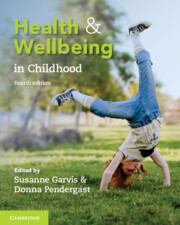
Health and Wellbeing in Childhood provides a fundamental introduction for educators in key priority areas of health and wellbeing education, including physical education, promoting health in childhood, and strengthening social and emotional learning in young children. It approaches each topic with childhood diversity and complexity in mind. The fourth edition has been comprehensively updated and continues to explore relevant standards and policies, including the revised Early Years Learning Framework. It includes a new chapter on executive functions in early childhood, focusing on the development of higher-order skills required for children to engage in purposeful and goal-directed behaviours. Each chapter features case studies that exemplify practice; spotlight boxes that provide further information on key concepts; and pause and reflect activities, end-of-chapter questions and learning extensions that encourage readers to consolidate their knowledge and further their learning.
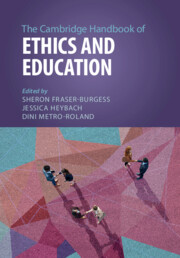
This Handbook provides an interdisciplinary discussion on the role and complexity of ethics in education. Its central aim is to democratise scholarship by highlighting diverse voices, ideas, and places. It is organised into three sections, each examining ethics from a different perspective: ethics and education historically; ethics within institutional practice, and emerging ethical frameworks in education. Important questions are raised and discussed, such as the role of past ethical traditions in contemporary education, how educators should confront ethical dilemma, how schools should be organised to serve all children, and how pluralism, democracy, and technology impact ethics in education. It offers new insights and opportunities for renewal in the complex and often contentious task of ethics and education.
In April 2022, journalists at the tech website 9to5Mac discovered that photographs taken at sites related to the Holocaust would no longer appear in the Memories feature of Apple's Photos app. This article examines how news of this decision was received by the public through analysis of the comment section that followed the original 9to5Mac post. The perspectives on display in this public forum provide insight into the evolving public perception of automated memory technologies and the potential consequences of their use. Through this analysis, several interrelated areas of public concern emerge. These include the boundaries of platform intervention for governing access to content, the subjective qualities of personal photographs, and the metrics upon which algorithmic memory systems operate. Though opinions vary, this comment section captures an illustrative range of sentiment towards Apple Memories and this intervention into the memories of its users. This range demonstrates a degree of scepticism, alarm, and dissatisfaction rising among users who are increasingly aware of how algorithms are influencing their memories.
Many studies have demonstrated that teaching a foreign language in settings outside of the classroom can improve the communicative use of the target language. However, many places remain inaccessible to learners due to physical limits of mobility and health, socioeconomic factors, or political or temporal restraints. Our previous studies have shown that telepresence robots are successful in immersing learners in remote places for learning a foreign language. The aim of this study is to analyze, through the theoretical lens of geosemiotics, how dialogic interaction between different semiotic systems emerges within the use of telepresence technology to understand how these systems shape discourse and meaning-making processes. It also considers what instructional strategies support such meaning-making with telepresence robotics, and what meaning-making principles can help improve the design of the robot. Initial findings show that properly planning the use of specific places provides ample opportunity for semiotic systems to shape the instructors’ and students’ meaning-making processes. Future research is needed to address some of the challenges to participants that are related to the design of the robot.
Ireland's 30,987 Traveller population was officially recognised as an ethnic minority on 1 March 2017. It was the culmination of a long campaign by Travellers to have their identity, culture and unique social position recognised by the Irish state as constituting a separate ethnic group. Public recognition was a mark of respect towards an ethnic minority that has long experienced discrimination and racism in Irish society. While it was symbolically a historic moment, it did not resolve the problems of poverty and social inequality that are at the core of the marginalised status of Travellers in Ireland. Nor did recognition as a minority ethnic group represent a qualitative change in the Traveller community's social status. Travellers and Roma continue to experience discrimination and racism in their everyday lives, as the comment by Maria Quinlan (following) clearly illustrates. There are no official statistics regarding the number of Roma in Ireland but the population is estimated to be between 3,000 and 5,000 people.
The president of Ireland, Michael D. Higgins, in a message for Traveller and Roma Day, 8 April 2021, declared:
The statistics are appalling in terms of what has persisted as exclusion. Today only 14 per cent of Traveller women have completed secondary education, compared to 83 per cent of the general population. Some 60 per cent of Traveller men have not progressed beyond primary education. This is compared to 13 per cent of the general population. Yes, it is true that the number of Travellers with third-level education has doubled in the last number of years, and that is to be welcomed – what a great achievement – it is ground-breaking and exemplary – but it represents just half of one per cent of the Traveller population. The figure for the general population with third-level qualifications is 47 per cent.
Maria Quinlan (2021: 60), in a report entitled Out of the Shadows, quotes ironically:
[W]e talk all the time [about] the assimilation policy, we see education and I’m sure the government sees education as another way of making us settled people.
Child-focused education programs have been developed in efforts to prevent child sexual abuse and to provide children who may already be experiencing abuse with strategies for seeking help. The design and delivery of these programs must be based on empirical evidence rather than ideology. Program evaluations have demonstrated that prevention education can provide children with knowledge and skills for responding to, and reporting, potential sexual abuse. Preschool and school-based programs are typically delivered to children in class groups via a series of lessons that convey core concepts and messages, and are best taught using engaging pedagogical strategies such as multimedia technologies, animations, theatre or puppet shows, songs, picture books and games. This chapter outlines the key characteristics of effective child sexual abuse prevention education and identifies directions for future research and practice.
The purpose of this chapter is to connect human movement theory with practice. Thus, the chapter answers the questions: What does human movement theory look like in practice? How can it be optimised for all children? Why is it vital for the advancement of health and wellbeing in childhood? The physical dimension is significant within children’s learning because it offers powerful and meaningful connections across all learning and development areas (Lynch, 2019). The socio-cultural perspective suggests that the curriculum ought to be connected to the child’s world and everyday interests (Arthur et al., 2020). Since children have a natural play structure, learning through movement heightens their interest.