To save content items to your account,
please confirm that you agree to abide by our usage policies.
If this is the first time you use this feature, you will be asked to authorise Cambridge Core to connect with your account.
Find out more about saving content to .
To save content items to your Kindle, first ensure no-reply@cambridge.org
is added to your Approved Personal Document E-mail List under your Personal Document Settings
on the Manage Your Content and Devices page of your Amazon account. Then enter the ‘name’ part
of your Kindle email address below.
Find out more about saving to your Kindle.
Note you can select to save to either the @free.kindle.com or @kindle.com variations.
‘@free.kindle.com’ emails are free but can only be saved to your device when it is connected to wi-fi.
‘@kindle.com’ emails can be delivered even when you are not connected to wi-fi, but note that service fees apply.
The introduction outlines four major tasks of this study: (1) to present evidence of disability-based intergroup economic disparity in the United States; (2) to engage the lived experiences of individuals and communities experiencing multiple simultaneous axes of oppression, including disability-based oppression; (3) to contribute to emerging understandings of the importance of intersectionality to economic research and policy; and (4) to contribute to stratification economics in applied terms through direct engagement with policy proposals for a federal jobs guarantee and federal “baby bonds” program. It provides an overview of disability and the US economy, disability and economic research methods, common models of disability, and the challenge of race/disability analogies.
The conclusion reflects on compatibilities and tensions within stratification economics, disability justice, and intersectionality. It points to additional areas of inquiry beyond the scope of this study, including state violence, sex and sexuality, climate change, built environment, voting, and reparations. In so doing it offers an outline of future work that might advance an agenda of disability justice within the work of stratification economics in the years ahead.
Chapter 5 identifies disability-based educational inequality, which occurs in teacher bias, social stigma, classroom access, disability diagnosis, and school discipline. It attends to the education policy demands of disability justice activists and identifies dis/ability critical race studies (“DisCrit”) and critical race spatial analysis (CRSA) as two emerging intersectional research methods that can contribute to the intergroup analysis of stratification economics. Chapter 5 considers proposals for a federal baby bonds program and identifies program mandates and antidiscrimination requirements that would be necessary to guarantee equitable designation of eligible funds for college and university tuition.
Economic study of inequality and stratification often disregards the lived experiences of multiply marginalized people and communities, in particular Black disabled people. Chapter 1 makes a case for a different form of economic analysis that follows the lead of Black disability justice activists working for social equality. The argument proceeds in three parts. The first section of the chapter explains stratification economics and positions disability-based inequality within contemporary accounts of intergroup economic disparity. The second section introduces disability justice and activists who use the term to mark an alternative to traditional rights-based theories of social progress. It subsequently offers a justification and theoretical framework for conducting intersectional economic research on racism, misogyny, and ableism. The third and final section outlines the necessary components of our strategy for integrating disability-based analysis into the work of stratification economics, identifying essential steps that will guide our analysis of employment, health, wealth, and education in subsequent chapters.
Chapter 2 considers the interaction of disability and other axes of discrimination and oppression in areas of the labor market, including employment status, benefits, and workplace environment. It outlines disability justice activists’ demands to increase employment access and economic stability for people with disabilities and identifies intersectional research strategies for incorporating multiple interacting statuses into economic analyses of labor market outcomes. Chapter 2 concludes with recommendations for guaranteeing equitable treatment of Black disabled people in proposals for a federal jobs guarantee, starting with the elimination of segregated facilities, trainings, and placements for disabled workers through Section 14(c) certificates.
Chapter 3 examines structural forces generating health disparities and ableist maldistributions of care in the United States, particularly for Black disabled people. It attends to Black disability justice activists’ demands for improved health policy, facilities access, and economic protections for care workers. In doing so, it elevates corrective research methods that stratification economics can embrace to better understand intersecting effects of race, disability, and gender on health outcomes. Chapter 3 considers proposals for a federal job guarantee and elevates ways that a federal health insurance program associated with it can meet the needs of Black disabled workers and their families.
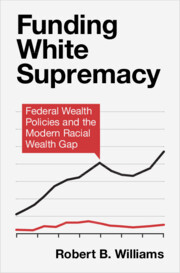
In Funding White Supremacy, Robert B. Williams shows how current federal policies have perpetuated and expanded the racial wealth gap in the United States. Through the lens of stratification economics, Williams explores how twelve tax expenditures buried in the federal tax code shower over $1 trillion annually to mostly wealthy, white households, while federal estate and gift taxes have been systematically dismantled. The book reveals how these policies originated in a period of overt racial oppression and have evolved in the modern, post-Civil Rights era, not only contributing to the expanding racial wealth gaps over the last fifty years but how they have also fostered the growth of white wealth at the expense of Black wealth. This book is a must-read for anyone seeking to understand how federal policies contribute to the vast and expanding racial wealth gap at the core of the American system of white supremacy.
Principles of Behavioral Economics, written by an acknowledged leader in the field, provides a comprehensive introduction to one of the most exciting areas of modern economics. It demonstrates how models of economic theory can be enriched by using interdisciplinary insights from psychology, sociology, evolutionary biology, and neuroscience to build the basis for a more empirically supported set of economic principles. Unique in its level of rigor and lucidity, the book highlights the important link between theoretical and empirical economics by demonstrating the usefulness of a range of data sources such as observational data, lab data, survey data, and neuroeconomic data. This field-defining textbook argues that behavioral economics is not just a supplement to mainstream economics. Taking behavioral economics seriously requires a total rethink, and eventual transformation, of every area of economics.
Behavioural economics and behavioural public policy have been fundamental parts of governmental responses to the Covid-19 pandemic. This was not only the case at the beginning of the pandemic as governments pondered how to get people to follow restrictions, but also during delivery of the vaccination programme. Behavioural Economics and Policy for Pandemics brings together a world-class line-up of experts to examine the successes and failures of behavioural economics and policy in relation to the Covid-19 pandemic. It documents how people changed their behaviours and use of health care and discusses what we can learn in terms of addressing future pandemics. Featuring high-profile behavioural economists such as George Loewenstein, this book uniquely uncovers behavioural regularities that emerge in the different waves of COVID-19 and documents how pandemics change our lives.
Economics equates rationality with the satisfaction of a set of axioms. We discuss these axioms and the associated empirical evidence. Topics discussed include completeness and transitivity of preferences, limited attention, overconfidence, and whether humans can successfully construct the full sampling distributions. We then consider procedural rationality and the unreasonable cognitive requirements for solving simple dynamic programming problems. We examine alternatives to mathematical optimization in which people use simple rules of thumb (heuristics) to make decisions. We highlight the heuristics and biases program which clearly shows that the “as if” assumption in neoclassical economics is routinely violated. These heuristics include the representativeness heuristic, the gambler’s fallacy, the hot hand fallacy, the conjunction fallacy, the availability heuristic, the affect heuristic, the anchoring heuristic, base rate underweighting in Bayes’ law, conservatism from underweighting the likelihood of a sample, hindsight-bias, confirmation-bias, false consensus, and regression to the mean. Incentives do not eliminate biases. We also discuss the “great rationality debate.”
In the early neoclassical era, the smooth adjustment of agents’ marginal utilities dampened the response of market prices to supply disturbances. But when agents do not make smooth trade-offs, they will tend consume goods in specific combinations, as in the model of safety bias. A negative shock to supplies can then send prices soaring, a common feature of energy markets for example. Postwar general equilibrium theory permits agents to be safety-biased but has dismissed these volatility scenarios on the grounds that they occur only at vanishingly unlikely output levels. The no-volatility conclusion fails to hold however once the production of goods is taken into account: the seemingly unlikely output levels arise systematically. Production on the other hand spells out countervailing forces that curb the most extreme cases of price volatility. Volatility is closely related to the indeterminacy of equilibria and the chapter critiques the claims of general equilibrium theorists that these phenomena are unlikely.