To save content items to your account,
please confirm that you agree to abide by our usage policies.
If this is the first time you use this feature, you will be asked to authorise Cambridge Core to connect with your account.
Find out more about saving content to .
To save content items to your Kindle, first ensure no-reply@cambridge.org
is added to your Approved Personal Document E-mail List under your Personal Document Settings
on the Manage Your Content and Devices page of your Amazon account. Then enter the ‘name’ part
of your Kindle email address below.
Find out more about saving to your Kindle.
Note you can select to save to either the @free.kindle.com or @kindle.com variations.
‘@free.kindle.com’ emails are free but can only be saved to your device when it is connected to wi-fi.
‘@kindle.com’ emails can be delivered even when you are not connected to wi-fi, but note that service fees apply.
The UK National Health Service (NHS) has committed £250 million toward the deployment of artificial intelligence (AI). One compelling use case involves patient-recorded cardiac waveforms, interpreted in real-time by AI to predict the presence of common, clinically actionable cardiovascular diseases. Waveforms are recorded by a handheld device applied by the patient at home in a self-administered “smart” stethoscope examination. The deployment of such a novel home-based screening program, combining hardware, AI, and a cloud-based administrative platform, raises ethical challenges, including considerations of equity, agency, data rights, and, ultimately, responsibility for safe, effective, and trustworthy implementation. The meaningful use of these devices without direct clinician involvement transfers the responsibility for conducting a diagnostic test with potentially life-threatening consequences onto the patient. The use of patients’ own smartphones and internet connections should also meet the data security standards expected of NHS activity. Additional complexity arises from rapidly evolving questions around data “ownership,” according to European law a term applicable only to the patient from whom the data originate, when “controllership” of patient data falls to commercial entities. Clarifying the appropriate consent mechanism requires the reconciliation of commercial, patient, and health system rights and obligations. Oriented to this real-world clinical setting, this chapter evaluates the ethical considerations of extending home-based, self-administered AI diagnostics in the NHS. It discusses the complex field of stakeholders, including patients, academia, and industry, all ultimately beholden to governmental entities. It proposes a multi-agency approach to balance permissive regulation and deployment (to align with the speed of innovation) against ethical and statutory obligations to safeguard public health. It further argues that a strong centralized approach to carefully evaluating and integrating home-based AI diagnostics is necessary to balance the considerations outlined above. The chapter concludes with specific, transferable policy recommendations applicable to NHS stewardship of this novel diagnostic pathway.
New health care devices, including at-home diagnostic devices, are generating and aggregating data on patients’ health at a staggering pace. Yet much of that data is inaccessible because it is held in data siloes, most often cloud services controlled by device manufacturers. This proprietary siloing of patient data is problematic from ethical, economic, scientific, and broad public policy perspectives. This chapter frames these concerns and begins to sketch a regulatory framework for patient access to health care device data. As with other consumer data, breaking down siloes and securing patients’ access to their device data safeguards patients’ ownership interests, promotes patients’ ability to maintain and repair their equipment, and encourages interoperability and competition. Yet, data access is especially important for health data: It allows patients to make informed decisions about their own care, and it enables motivated citizen-scientists to study their own conditions and innovate in response to them. Patient access to device data may also be a first step toward building publicly accessible, responsibly governed datasets of so-called “real-world evidence” – which are increasingly essential to validate the accuracy and reliability of current diagnostic devices – and to invent and validate future devices, drugs, and other precision medicine interventions. These interests motivate the development of our proposed framework. Drawing from related experiences with clinical trial data and electronic health records, this chapter identifies the key considerations for a framework that protects key interests, such as privacy and data security, while unlocking the benefits of broader data sharing.
Medical devices increasingly include software components, which facilitate remote patient monitoring. The introduction of software into previously analog medical devices, as well as innovation in software-driven devices, may introduce new safety concerns – all the more so when such devices are used in patients’ homes, well outside of traditional health care delivery settings. We review four key mechanisms for the post-market surveillance of medical devices in the United States: (1) Post-market trials and registries; (2) manufacturing plant inspections; (3) adverse event reporting; and (4) recalls. We use comprehensive regulatory data documenting adverse events and recalls to describe trends in the post-market safety of medical devices, based on the presence or absence of software. Overall, devices with software are associated with more reported adverse events (i.e. individual injuries and deaths) and more high-severity recalls, compared to devices without software. However, in subgroup analyses of individual medical specialties, we consistently observe differences in recall probability but do not consistently detect differences in adverse events. These results suggest that adverse events are a noisy signal of post-market safety and not necessarily a reliable predictor of subsequent recalls. As patients and health care providers weigh the benefits of new remote monitoring technologies against potential safety issues, they should not assume that safety concerns will be readily identifiable through existing post-market surveillance mechanisms. Both health care providers and developers of remote patient monitoring technologies should therefore consider how they might proactively ensure that newly introduced remote patient monitoring technologies work safely and as intended.
As technological improvements advance, the use of remote monitoring is among the new diagnostic tools that have become a growing part of medical care delivery. But reliance on technologies also challenges the traditional liability schemes that exist to deter negligent physician behavior and compensate injured patients. Liability can arise at each point in a remote monitoring system, from when information is gathered by a device, to when it is processed by an algorithm, and, finally, used by a physician. This chapter explores how different types of liability might arise for device manufacturers and physicians at each of these stages, outlining the main legal rules and complicating factors.
In the Chinese context, “internet plus health care” (IPHC) is introduced as an umbrella term to mean the use of digital technologies to support the delivery of health care and health-related services. IPHC holds great potential to strengthen China’s health system, transform the delivery of health services, and improve equitable, affordable, and universal access to health care. The Chinese government has adopted a variety of regulatory and policy instruments to facilitate the utilization of IPHC before, during, and after COVID-19. This article provides an overview of the development of IPHC in China, with a focus on the regulatory landscape. It then analyzes the challenges that remain in the regulatory framework and concludes with recommendations for furthering the development and utilization of IPHC in the post-COVID-19 era.
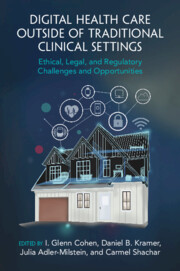
Health care delivery is shifting away from the clinic and into the home. Even prior to the COVID-19 pandemic, the use of telehealth, wearable sensors, ambient surveillance, and other products was on the rise. In the coming years, patients will increasingly interact with digital products at every stage of their care, such as using wearable sensors to monitor changes in temperature or blood pressure, conducting self-directed testing before virtually meeting with a physician for a diagnosis, and using smart pills to document their adherence to prescribed treatments. This volume reflects on the explosion of at-home digital health care and explores the ethical, legal, regulatory, and reimbursement impacts of this shift away from the 20th-century focus on clinics and hospitals towards a more modern health care model. This title is also available as Open Access on Cambridge Core.
This paper develops a multivariate filter based on an unobserved component model to estimate the financial cycle. Our model features: (1) a dynamic relationship between the financial cycle and key variables; (2) time-varying shock volatility for trend and cycle components. We demonstrate that our approach not only exhibits superior early warning properties for banking crises but also outperforms commonly used indicators in terms of data fit for decomposition exercises, as evidenced by the higher marginal likelihood. We document three important properties of the financial cycle. First, the sensitivity of the financial cycle to changes in real estate valuations increased during the post-90s period. Second, the sensitivity of the cycle to changes in financial conditions displays volatility and country specificities. Finally, our reduced form estimates suggest that the banking crisis of 1988 was preceded by positive contributions from the risk appetite shock, while the primary source of vulnerabilities emanated from the housing market in the run-up to the Global Financial Crisis.
Why are contracts incomplete? Transaction costs and bounded rationality cannot be a total explanation since states of the world are often describable, foreseeable, and yet are not mentioned in a contract. Asymmetric information theories also have limitations. We offer an explanation based on 'contracts as reference points'. Including a contingency of the form, 'The buyer will require a good in event E', has a benefit and a cost. The benefit is that if E occurs there is less to argue about; the cost is that the additional reference point provided by the outcome in E can hinder (re)negotiation in states outside E. We show that if parties agree about a reasonable division of surplus, an incomplete contract is strictly superior to a contingent contract. If parties have different views about the division of surplus, an incomplete contract can be superior if including a contingency would lead to divergent reference points.
Motivated by the sharp increases in public spending following the global financial crisis, we employ the GMM Panel VAR approach at annual frequency between 2004 and 2014 to investigate the dynamic response of alternative income distribution variables to shocks imposed on tax revenues and three key components of social expenditures: social protection, health, and education. We confirm the potential of fiscal policy to reduce income inequality in the medium to longer run, but point to the differential approaches to pursue such a goal in middle- versus high-income countries. We find that the particular expenditure component under consideration matters in terms of the dynamic effect on inequality and on different parts of the income distribution, as well as in terms of the implied time profile. In middle-income countries, positive education spending shocks are the most effective in achieving better distributional outcomes over a medium run of several years. By contrast, in high-income countries, positive health spending and tax shocks have a more pronounced favorable dynamic distributional effect.
Experimental evidence shows that human subjects frequently rely on adaptive heuristics to form expectations but their forecasting performance in the lab is not as inadequate as assumed in macroeconomic theory. In this paper, we use an agent-based model (ABM) to show that the average forecasting error is indeed close to zero even in a complex environment if we assume that agents augment the canonical adaptive algorithm with a Belief Correction term which takes into account the previous trend of the variable of interest. We investigate the reasons for this result using a streamlined nonlinear macro-dynamic model that captures the essence of the ABM.
We investigate the role and impact of household debt on the economic performance of European economies during the double-dip recession of 2008–2013. We use a loan-level data set of millions of residential mortgages originated between 2000 and 2013 to calculate regional indicators of household debt. The granular information allows us to construct a measure of interest rate mispricing during the housing boom that we use to identify the effect of a credit shock (CS) on household debt. Our analysis provides three main conclusions. First, in the period 2004–2006, the measure of CS was negative in most European regions which indicates that credit conditions were significantly relaxed relative to earlier years. Second, we find that regions in which household leverage increased more rapidly during the 2002–2007 period experienced a more severe decline in output and employment after 2008. Third, we find that the CS had the largest effect on increasing leverage for the low-income and the middle-income households, although the leverage of the high-income households represents a more powerful predictor of the decline in economic activity.
This Element offers a review and synthesis of the theoretical analysis of mixed oligopoly, that is a hybrid market structure in which public (state-owned) and private firms interact, using a variety of strategic variables. A distinguishing feature of a mixed oligopoly is that firms have different objectives. A public firm's objective is a notion of social welfare while a private firm is profit maximising. Privatisation and partial-privatisation of a public firm is also discussed, together with several applications from diverse subfields spanning industrial organisation, applied microeconomic theory, innovation, international trade and environment policy. The authors also discuss ways in which the original analysis has been enriched to study the interaction between providers of public sector services as opposed to traditional goods.
The chapter assesses empirical and theoretical descriptions of the transmission mechanism of monetary policy, and discusses why the concept of "R-star" is unlikely to provide a useful practical guidepost for monetary policy.