To save content items to your account,
please confirm that you agree to abide by our usage policies.
If this is the first time you use this feature, you will be asked to authorise Cambridge Core to connect with your account.
Find out more about saving content to .
To save content items to your Kindle, first ensure no-reply@cambridge.org
is added to your Approved Personal Document E-mail List under your Personal Document Settings
on the Manage Your Content and Devices page of your Amazon account. Then enter the ‘name’ part
of your Kindle email address below.
Find out more about saving to your Kindle.
Note you can select to save to either the @free.kindle.com or @kindle.com variations.
‘@free.kindle.com’ emails are free but can only be saved to your device when it is connected to wi-fi.
‘@kindle.com’ emails can be delivered even when you are not connected to wi-fi, but note that service fees apply.
This book aims to contribute to the EEE modelling resources in terms of the methodological approach, policy analysis, and implications for decision-makers. Each chapter of the book explains each stage of the process of framing development and mitigation pathways for India. The AIM/Enduse and IMACLIM-IND models are developed and explained in this book to illustrate the approach to framing low-carbon development pathways; however, the approach is valid for soft-coupling in the case of other bottom-up and top-down models with meticulous consideration of inconsistencies and assumptions.
The hybrid IOT (see Chapter 3) for India is constructed using the recent national statistics of the Central Statistics Office, energy prices for each of the 22 sectors, and energy balance information from the IEA and bottom-up model. This method has no impact on policy analysis, as evident from the literature. Also, we set up a social accounting matrix with institutional agent disaggregation by collecting data from various sources for analysing the distribution of money among different agents.
The hybridization procedure involves extensive data treatment process with many steps. It uses supply–use tables and energy balance for this purpose. The IOT describes the sale and purchase relationships between the producers and consumers within an economy. Energy balance is the statistical accounting of the production, transformation, and consumption of energy products.
IOTs are often used for studying the links between decarbonization and sustainable development; however, the issue is that national accounts do not provide a complete description of energy systems. Since the energy balance provides a more reliable and disaggregated picture of energy systems, the IOTs of India need to be reconciled with energy balance using the energy prices for incorporating the energy systems description.
Bottom-up models provide the technology details for modelling the long-term pathways. These models have rich information on technology types and their characteristics. Usually, these are based on linear optimization framework. It is important to use such models while determining the feasibility of deep decarbonization scenarios because they capture the technology explicitness that is not captured by the top-down models that focus more on macroeconomic context.
This chapter provides details on setting up these kinds of models through the case of the Asia–Pacific Integrated Model (AIM), which is a collection of computer simulation models used to evaluate policy alternatives for sustainable development in the Asia–Pacific area. Within this collection, AIM/Enduse is a model for technology selection that is used to analyse national plans for reducing GHG emissions and reducing local air pollution. An analysis of energy policy can benefit from it as well.
AIM/Enduse model replicates energy and material flows in an economy, from basic energy and material supply through secondary energy and material conversion and supply to end-use service satisfaction. AIM/Enduse simulates these energy and material fluxes using precise representations of technology. It began as a tool for evaluating policy options for mitigating climate change and its consequences, but it has since expanded its scope to include analysis of other environmental issues such as controlling air pollution, managing water resource flows, controlling land use, and growing environmental field.
There are more than 20 models that have been built thus far, and they can be divided into emission-focused models, climate change models, and impact assessment models that provide implications for climate policy.
Low-carbon pathways are modelled using various models mostly rooted in either of the two traditions—the macroeconomic approach is usually classified as top-down models or the energy engineering approach is referred to as bottom-up. ‘Hybrid’ models differ significantly from the conventional top-down and bottom-up models by capturing the technological details and economic richness in a single framework. This framework integrates the two approaches either as soft link, which represents a weak integration in the form of the exchange of shared variables with two separate mathematical formats for two approaches, or hard link, where the models are strongly integrated in a single mathematical format. In this chapter, we build on Chapter 5 by expanding the two-sector KLEM model to a multi-sector economy-wide model.
Evolution of top-down modelling approach
The two broad categories of EEE models—bottom-up and top-down—are distinguished based on the coverage of macroeconomic details and technology explicitness. Apart from this classification, the models are classified based on other parameters, such as economic coverage (that is, ‘full’ or ‘partial’ economy), foresight levels (that is, ‘perfect foresight’ or ‘recursive dynamic’); the economic representation of the substitutability of goods; flexibility levels (that is, scope of EEE system changes); regional, sectoral, technology, and GHG coverage; and the endogeneity level of the technological change.
Standard top-down models are based on the CGE setup. One such platform is IMACLIM modelling, which originated at the Centre for International Research on Environment and Development (CIRED), Paris, in the 1990s.
Energy systems in India are dominated by fossil fuels at present, and a major share, amounting to 48 per cent, of the total energy supply, is contributed through imports. Therefore, the dynamics of energy systems can have serious repercussions for the Indian economy. In this chapter, a methodology has been developed for providing a macroeconomic foundation for analysing development and mitigation pathways for India, which involves a two-sector KLEM (capital [K] and labour [L], energy [E], and non-energy goods [M]) model ‘soft-coupled’ with a bottom-up AIM)/Enduse. The insights from the analysis can further be used to set up a multi-sector economy-wide model.
Energy systems in India are hugely dependent on fossil fuel imports, with energy domestic production1 amounting to only 48 per cent of the total primary energy supply (IEA, 2019). Further, growing energy service demands are expected to cause a rapid rise in domestic energy consumption. Also, given the submission of NDCs, energy systems in India are in transition (MOEFCC, 2015). This scenario can lead to serious macroeconomic repercussions. Therefore, the economic set-up of energy systems is required to assess the development and mitigation pathways. This chapter aims to investigate the macroeconomic framing of energy systems under the BAU scenario, which is based on the current policy framework of the government. For this purpose, the method of ‘soft-coupling’ of the two-sector KLEM model and bottom-up AIM/Enduse model has been introduced.
The year 2015 marked the occurrence of two landmark events—signing of the Paris Agreement for limiting the temperature rise to below 2°C and adoption of 2030 Agenda for Sustainable Development. Further to this Intergovernmental Panel on Climate Change (IPCC), intergovernmental body of the United Nations, released the special report on global warming of 1.5oC that outlined the dire consequences of not taking timely action towards mitigating global emissions. Government of India has ratified the climate change agreement and is required to regularly update the long term low-emission development strategy in accordance with the Article 4 of the agreement. Energy sector is the major source of greenhouse gas emissions and therefore requires special attention so as to achieve the net zero emission targets for the economy. This will entail scenario planning and a rigorous approach to modelling the pathways so that they can represent reality to the extent possible.
Before the adoption of Paris agreement, national emission mitigation was determined using the global models. In other words, the national context played lesser role in estimating the long-term emission reduction rather reduction potential was imposed from the top. However, with the adoption of Paris Agreement, domestic context played a vital role and the proposed idea was that the reduction potential is better governed by the national models. This led to the call for strengthening the national modelling capacity that can provide national emission mitigation pathways under the constraint of global barriers and enablers. National accounts and energy balance derived from the bottom-up models should feed into the top-down domestic economy wide models rather than just relying on the global integrated assessment models.
The complex and multifaceted links between decarbonization and sustainable development have been the subject of numerous studies and analyses, each focusing on different aspects of the relationship. In the following sections, this chapter will explore some of these approaches to gain a comprehensive understanding of the research areas that employ energy–economy modelling to examine the pathways of development and mitigation. The research areas can be broadly classified into five themes: decarbonization, sustainable development, energy systems, energy policy, and the intricate connections that exist between decarbonization and sustainable development.
Decarbonization
Decarbonization is the process by which countries or other entities aim to achieve a low-carbon economy, or by which individuals aim to reduce their consumption of carbon (IPCC, 2014a).
The decarbonization theme can further be studied under two focus areas: strategies for mitigation and effective deployment of renewables. In the first focus area, which is strategies for mitigation, studies emphasize the importance of much more stringent action for mitigation than the currently proposed actions in order to meet 2oC target (Van Sluisveld et al., 2013). Other studies have suggested that shifting to renewable energy, carbon-negative technologies like carbon capture, and storage and energy efficiency technologies in end-use sectors like households and industries are critical for achieving mitigation (IEA, 2015b; Shukla and Chaturvedi, 2012). Under the second focus area of renewables, it is found that research and development (R&D) in these technologies, along with the transfer of technology from developed to developing countries, plays an important role in promoting the deployment of renewables (Kumar and Madlener, 2016). A recent study says that policies for renewables should be aligned with mitigation targets for cost-effectively achieving decarbonization (Mittal et al., 2016).
The green transition to reduce greenhouse gas emissions requires substantial investments in a narrow time window to avoid climate-related disruptions, adding two new dimensions for monetary policy and exacerbating the trade-offs that central banks face. First, climate-related physical disruptions lead to higher inflation (i.e., Climateflation). Second, the rush to green technology may result in inflation due to supply bottlenecks (i.e., Greenflation). As a consequence, central banks implement restrictive monetary policy that have a detrimental effect on the high up-front costs of renewable energy projects. This slows down the dynamics of green technologies adoption. We build a dynamic non-linear model to study these interactions under reasonable parameterizations. Both Climateflation and Greenflation are quantitatively significant, creating a dilemma for central banks between raising interest rates to counteract inflation and easing them to facilitate renewable investment. We further show that, under specific stochastic scenarios, the trade-off between inflation control and green transition can improve when structural costs for green technologies decrease or when supply-side constraints relax.
Banking supervisors rely on a set of indicators, such as the credit-to-Gross Domestic Product (GDP) gap, to evaluate the macro-financial environment and implement the countercyclical capital buffer. This paper proposes two supplementary indicators, based on forecast-based measures of the credit-to-GDP gap: forecast-augmented credit-to-GDP gaps and predicted credit-to-GDP gaps. While the former has already attracted attention from some banking supervisors, the latter represents a novel metric introduced here. These gaps are generated using singular spectrum analysis. We show that forecasting performance varies between countries and depends on credit market conditions. Furthermore, our results indicate that forecast-based credit-to-GDP gaps are effective in predicting the early stages of a credit boom.
This paper investigates the impact of environmental regulations on inward foreign direct investment (FDI) using a novel index that distinguishes between the implementation and enforcement of environmental policy across 111 countries from 2001 to 2018. Leveraging bilateral FDI data and a structural gravity model, we find robust evidence of a Pollution Haven Effect: weaker environmental regulations in host countries are associated with higher levels of inward FDI. The effect is more pronounced in emerging markets and in environments with higher corruption. Importantly, we show that FDI responds more strongly to policy implementation, capturing formal regulatory commitment, than to enforcement, measured as deviations between predicted and actual emissions. In addition, bilateral FDI patterns are shaped by the environmental stringency gap between source and host countries, consistent with regulatory arbitrage behavior.
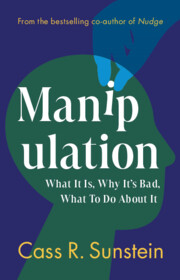
New technologies are offering companies, politicians, and others unprecedented opportunity to manipulate us. Sometimes we are given the illusion of power - of freedom - through choice, yet the game is rigged, pushing us in specific directions that lead to less wealth, worse health, and weaker democracy. In, Manipulation, nudge theory pioneer and New York Times bestselling author, Cass Sunstein, offers a new definition of manipulation for the digital age, explains why it is wrong; and shows what we can do about it. He reveals how manipulation compromises freedom and personal agency, while threatening to reduce our well-being; he explains the difference between manipulation and unobjectionable forms of influence, including 'nudges'; and he lifts the lid on online manipulation and manipulation by artificial intelligence, algorithms, and generative AI, as well as threats posed by deepfakes, social media, and 'dark patterns,' which can trick people into giving up time and money. Drawing on decades of groundbreaking research in behavioral science, this landmark book outlines steps we can take to counteract manipulation in our daily lives and offers guidance to protect consumers, investors, and workers.
It is time to recognize a moral right not to be manipulayed. At the same time, the creation of a legal right not to be manipulated raises hard questions, in part because of definitional challenges; there is a serious risk of vagueness and a serious risk of overbreadth. It is probably best to start by prohibiting particular practices – the most egregious forms of manipulators. The basic goal should be to build on the claim that in certain cases, manipulation is a form of theft; the law should forbid theft, whether it occurs through force, lies, or manipulation. Some manipulators are thieves. Examples include hidden terms and automatic enrollment in programs that take people’s money and time.
People buy some goods that they do not enjoy and wish did not exist. They might even be willing to pay a great deal for such goods, whether the currency involves time, commitment or money. One reason involves signaling to others; so long as the good exists, nonconsumption might give an unwanted signal to friends or colleagues. Another reason involves self-signaling; so long as the good exists, nonconsumption might give an unwanted signal to an agent about himself or herself. Yet another reason involves a combination of network effects and status competition; nonconsumption might deprive people of the benefits of participating in a network and thus cause them to lose relative position. Legal responses here, combating a form of manipulation, might be contemplated when someone successfully maneuvers people into a situation in which they are incentivized to act against their interests, by consuming a product or engaging in an activity they do not enjoy, in order to avoid offering an unwanted signal. Prohibitions on waiving certain rights might be justified in this way; some restrictions on uses of social media, especially by young people, might be similarly justified.
“Choice Engines,” powered by Artificial Intelligence (AI) and authorized or required by law, might produce significant increases in human welfare. A key reason is that they can simultaneously (1) preserve autonomy and (2) help consumers to overcome inadequate information and behavioral biases, which can produce internalities, understood as costs that people impose on their future selves. Importantly, AI-powered Choice Engines might also take account of externalities, and they might nudge or require consumers to do so as well. Nonetheless, AI-powered Choice Engines might show behavioral biases. It is also important to emphasize that AI-powered Choice Engines might be enlisted by insufficiently informed or self-interested actors, who might exploit inadequate information or behavioral biases, and thus reduce consumer welfare. AI-powered Choice Engines might also be deceptive or manipulative, and legal safeguards are necessary to reduce the relevant risks.
Manipulation is wrong for two reasons. On Kantian grounds, manipulation, lies, and paternalistic coercion are moral wrongs, and for similar reasons; they deprive people of agency, insult their dignity, and fail to respect personal autonomy. On welfarist grounds, manipulation, lies, and paternalistic coercion share a different characteristic; they displace the choices of those whose lives are directly at stake, and who are likely to have epistemic advantages, with the choices of outsiders, who are likely to lack critical information. Kantians and welfarists should be prepared to agree that manipulation is wrong, though on very different grounds.