To save content items to your account,
please confirm that you agree to abide by our usage policies.
If this is the first time you use this feature, you will be asked to authorise Cambridge Core to connect with your account.
Find out more about saving content to .
To save content items to your Kindle, first ensure no-reply@cambridge.org
is added to your Approved Personal Document E-mail List under your Personal Document Settings
on the Manage Your Content and Devices page of your Amazon account. Then enter the ‘name’ part
of your Kindle email address below.
Find out more about saving to your Kindle.
Note you can select to save to either the @free.kindle.com or @kindle.com variations.
‘@free.kindle.com’ emails are free but can only be saved to your device when it is connected to wi-fi.
‘@kindle.com’ emails can be delivered even when you are not connected to wi-fi, but note that service fees apply.
Inter-basin water transfers (IBWT) offer an approach to addressing water scarcity by confronting the mismatch between water supply and demand in the context of a sustainable development policy. However, IBWTs are often criticized – particularly when the water transfer involves crossing political boundaries. In those circumstances, the policy debate often tends to lose sight of important aspects that guarantee a rational water policy. This chapter addresses issues related to water transfers between river basins, not only in the hydrological term but also, quite frequently, over political boundaries (transboundary water transfer). We present a number of case studies chosen to provide a representative geographical view of IBWTs around the world and insights on the different aspects that involve IBWTs. Intelligent IBWT should be implemented in the context of more general sustainable development strategies and Integrated Water Resources Management.
In this article, we engage with environmental conflicts on indigenous land through a focus on an attempt to gain social licence to reopen and operate the Biedjovággi mine in Guovdageainnu/Kautokeino in Sápmi, Norway. We argue that mining prospects bring forth ontological conflicts concerning land use, as well as ways to know the landscape and the envisioned future that the land holds. It is a story of a conflict between two different ways of knowing. The paper explores the Sámi landscape through different concepts, practices and stories. We then contrast this to the way the same landscape is understood and narrated by a mining company, through the programmes and documents produced according to the Norwegian law and standards. We follow Ingold’s argument that the Sámi landscape practices are taskscapes, where places, times and tasks are interconnected. These were not acknowledged in the plans and documents of the mining company. We conclude by addressing the tendency of extractive industries to reduce different landscapes in ways that fit with modern understandings, which oppose culture to nature.
Water rights and water market mechanisms are key characteristics to describe water management and allocation in the Limarí Basin in Chile. The 1981 Water Code strengthens private water use rights and declares them freely tradable. Engineering infrastructure, climatic conditions, and institutional capacities in terms of tradable water rights and private water user associations allowed economic development in the Limarí Valley. However, the lack of governmental regulation has led to overexploitation of water resources threatening water security, such as environmental and agricultural sustainability. In the face of climate change and decreasing water availability, the current infrastructural and management system requires reforms.
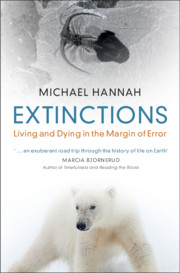
The first chapter introduces a new geological period – the Anthropocene – and explains its origins its timing and importance in emphasizing the current biotic crisis. The current idea that we are in the sixth extinction is criticized because (1) the current level of extinction isn’t high enough to justify it and (2) it limits today’s biotic crisis to just those species that have gone extinct and does not include those under threat. The term defaunation is used in preference because it provides a clearer picture of the situation we find ourselves in. It does this by including both species that have gone extinct and those under threat of extinction. The important concept of the Earth System is outlined and its role in maintaining planetary conditions explained. The link between sudden shifts in Earth System due to climatic forcings and mass extinctions is explained.
This chapter discusses both the role of irrigation in river basin development and closure and how its share in total water use can be reduced. It first briefly outlines the importance of unchecked irrigation development in the growing share of water consumption and the closure process of the basins examined in this volume. This understanding of how irrigation came to play a peculiar role in river basin development is important for discussing how its share can be reduced. The chapter recalls the diversity of policy options available to respond to imbalances between supply and demand and that supply augmentation is generally favored. Finally, the chapter focuses on the issue of "water savings," documenting various responses by the irrigated sector to shortages and exploring how policies to modernize irrigation technologies may inadvertently contribute to enhancing evapotranspiration and therefore undermine purported conservation objectives.
This chapter discusses the impact of river engineering on natural flow regimes and the attendant effects on ecosystems. Changes in flow regimes have resulted in huge ecological change, including the creation of exotic species that replace or compete with the native species. Many rivers in arid regions have growing populations and economic activity dependent on their water supplies. Restoring natural flows may not be possible.
The Rio Grande marks the border between the United States and Mexico, which makes its management particularly complex. A century of engineering and binational governance has shaped the region; today there are multiple reservoirs, diversion channels, and irrigation canals. International and national river managers consider challenges from reservoir sedimentation, population growth, and land use change. Climate change, on the other hand, is barely addressed. Managers must plan for a Rio Grande that by mid-century will have lost 40–50 percent of current water levels. Urban population will have doubled. Irrigated agriculture and cities will continue to use the bulk of available water. The most promising response to meet human and ecological water needs with reduced dependable yield is conservation. To address water scarcity, IBWC/CILA should develop a sustainability plan that balances reduced dependable yield with human and ecological needs. Progress should be reviewed and necessary changes to water allocations be negotiated at 5-year intervals. Irrigation districts, municipal utilities, and environmental stakeholders should work with IBWC/CILA to develop drought management for their sub-basins.
A reservoir is a replacement of a segment of the river with a watercourse that is quite different, a larger, more quiescent water body with different water quality and capable of stratification. This chapter describes design and functions of river reservoirs. The main challenges faced by SERIDAS reservoirs are highlighted. Special attention is given to a reservoir’s dependable yield, which can be maintained constantly without failure throughout the time history of reservoir storage. All reservoirs act as sediment traps and will eventually silt up unless special actions are taken to manage sediment. Reservoirs significantly alter the hydrology of the river downstream from the dam and can affect its water quality and its ecosystem. With increases in population and agriculture, water demands will increase, exacerbated by climate changes. Skillful management will be needed to temper conflicts that arise over how reservoirs will be operated under situations of incompatible objectives.
Drawing on an ethnographic survey in Svalbard before and during the coronavirus outbreak, this commentary reflects on the multiple dimensions of fieldwork highlighted by the pandemic. Firstly, the cancellation of many field campaigns has revealed the decisive role of personnel inhabiting scientific bases in the maintenance of scientific activities in Svalbard. Automatic and remote-controlled instruments are autonomous only in appearance as the crucial phases of data acquisition often call for human presence. Secondly, airborne remote sensing can be perceived as a response to fill data gaps. Although embedded in a long history, the use of remote sensed data has taken on a new meaning in the context of the pandemic. Finally, the fact that several researchers endeavour to go to the field whatever the travel conditions underlines a certain need of being in Svalbard as well as limitations of science performed remotely.
Are we now entering a mass extinction event? What can mass extinctions in Earth's history tell us about the Anthropocene? What do mass extinction events look like and how does life on Earth recover from them? The fossil record reveals periods when biodiversity exploded, and short intervals when much of life was wiped out in mass extinction events. In comparison with these ancient events, today's biotic crisis hasn't (yet) reached the level of extinction to be called a mass extinction. But we are certainly in crisis, and current parallels with ancient mass extinction events are profound and deeply worrying. Humanity's actions are applying the same sorts of pressures - on similar scales - that in the past pushed the Earth system out of equilibrium and triggered mass extinction events. Analysis of the fossil record suggests that we still have some time to avert this disaster: but we must act now.
Deception, Bridgeman and Penguin are the three most recently active volcanic islands in the South Shetland Islands. Since the discovery of the archipelago in 1819, Deception Island has erupted on frequent occasions, most recently in August 1970. A number of nineteenth-century observers reported fumarolic or volcanic activity from Bridgeman Island. No eyewitness accounts of activity from Penguin Island have been found. A chronological list detailing the historic reports from Bridgeman Island was compiled to compare and establish their veracity. This process revealed a consistency of observation from independent observers. An effort has been made to consider if any of these reports of activity may have belonged instead to Penguin Island volcano, 60 km (32 NM) away. A review of the timing of discovery and availability of the first charts of the South Shetlands was also examined to narrow the period when mariners might have mistaken one island for another. Only the three earliest observations of activity from an unnamed volcano, during the short period when no maps were available, may be questioned. A useful chart of the region was published in 1822, and all subsequent observations of activity were from Bridgeman, not Penguin Island.
This paper traces France’s role in the Antarctic from 1840, when explorer Jules Dumont d’Urville discovered the slice of the white continent he named Terre Adélie, to the present day. Since World War II, Terre Adélie has been the site of a host of performances of sovereignty: the French have built bases, drawn maps, conducted scientific investigations and erected plaques. But France’s commitment to Terre Adélie has been tested and has fallen into crisis several times. The history of France in Antarctica is a tale of ambition, ambivalence, trade-offs and political strategy. This paper aims to elucidate this story, focusing on the concept of sovereignty and the nexus of scientific and political interests. I argue that France’s relationship with the Antarctic has been characterised by continual tension, by peaks and troughs and by brinkmanship on the part of actors with their own stakes. While there is broad agreement that Terre Adélie serves a fundamental national interest, I show that France’s ambitions on the white continent are far from decided. With its focus on France, which has largely been left out of the growing body of literature on the Antarctic, this paper contributes to building a robust historical understanding of Antarctic claims.
Sir Douglas Mawson is a well-known Antarctic explorer and scientist. Early in his career, he recognised opportunities for commerce in Antarctic and sub-Antarctic regions. While at Cape Denison, Antarctica, in 1913 on the Australasian Antarctic Expedition (AAE), the Adelie Blizzard magazine was produced. Mawson contributed articles about Antarctic natural resources and their possible use. Later, he advocated Australia be involved in pelagic whaling. He collected seal skins and oil for their commercial value to be assessed by the Hudson’s Bay Company. During the AAE, Mawson visited Macquarie Island where an oiling gang was killing southern elephant seals and royal penguins. Mawson was concerned that they were over-exploited and lobbied successfully to stop the killing. His plans for Macquarie Island included a wildlife sanctuary, with a party to supervise access, send meteorological observations to Australia and New Zealand, and be self-funded by harvesting elephant seals and penguins. Macquarie Island was declared a sanctuary in 1933. Although Mawson has been recognised as an early proponent of conservation, his views on conservation of living natural resources were inconsistent. They should be placed in their historical context: in the early twentieth century, utilisation of living natural resources was viewed more favourably than currently.