To save content items to your account,
please confirm that you agree to abide by our usage policies.
If this is the first time you use this feature, you will be asked to authorise Cambridge Core to connect with your account.
Find out more about saving content to .
To save content items to your Kindle, first ensure no-reply@cambridge.org
is added to your Approved Personal Document E-mail List under your Personal Document Settings
on the Manage Your Content and Devices page of your Amazon account. Then enter the ‘name’ part
of your Kindle email address below.
Find out more about saving to your Kindle.
Note you can select to save to either the @free.kindle.com or @kindle.com variations.
‘@free.kindle.com’ emails are free but can only be saved to your device when it is connected to wi-fi.
‘@kindle.com’ emails can be delivered even when you are not connected to wi-fi, but note that service fees apply.
How does the Anthropocene change human stories? In a word, drastically. Many people don't want our altered planet to alter their stories. This group, in the spirit of "anything goes," ignores or attacks the science and sometimes the scientists as well. But more and more, writers, social scientists, and humanistic scholars are beginning to engage seriously with Anthropocene science and its radical vision. This engagement results in two new types of narrative. The first kind is the singular collective story of humans from our ancestral species moving out of Africa through all our evolutionary permutations until we became a global force, an Earth System agent, in the mid-twentieth century. The other way of telling human stories in response to Anthropocene science is to acknowledge our species as an Earth System agent, but to point to the many textured, contingent, and small-scale human stories. Some of these are congruent with the overall global narrative; others point to alternatives. This essay takes the reader on a tour of how humanists and social scientists are responding to the Anthropocene through three kinds of stories: those that deny scientific evidence; those highlighting humanity as a collective planetary force, and those focusing on diverse alternative histories within planetary limits.
This chapter argues that (1) explosive population growth is a major factor in the transition to the Anthropocene and (2) the control of infectious disease was the proximate cause of modern population growth. Thus, the changing patterns of mortality should be integrated into narratives of humanity’s takeover of planet earth. It also argues that human expansion (in both pre-modern and modern times) creates the ecological conditions for the emergence of new infectious diseases, and therefore the evolution of novel threats is likely to remain a dimension of life in the Anthropocene for the planet’s dominant species.
What does it mean for politics that human beings have transitioned, or are still transitioning, from the Holocene to the Anthropocene? The latter marks the rise of a new political actor, namely humanity as a whole. Although the disruption of the Earth System was not the result of a conscious decision, securing the habitability of the planet requires a concerted effort on the part of living humans. This chapter suggests that the shared vulnerability of human beings on an increasingly unstable planet may encourage a new self-understanding of the species as a global political agent. In the meantime, three approaches to the Anthropocene can be distinguished: liberal democracy, eco-authoritarianism, and green communitarianism. None of them is being globally implemented, and it would be naive to expect otherwise. They will most likely coexist in the future, thus expressing in different ways the common will to face the dangers of the Anthropocene.
This essay describes how the HKW (Haus der Kulturen der Welt) in Berlin was been transformed through its exploration of the Anthropocene. Originally an institution dedicated to showcasing non-European cultures, it now focuses on the new relationship between culture and the planet. The “Anthropocene-Project” began by asking how a cultural institution might approach the large-scale transformation confronting our societies? It soon became clear that the HKW must change its methods and processes. Instead of approaching the world via representations in exhibitions and talks, the HKW developed an experimental mode of active cultural production that called “curating ideas in the making.” This method combines aesthetic with scientific approaches, and reflects the fact that in the Anthropocene, knowledge production has to change: the categorical frameworks developed during the last 200 years are no longer adequate to confront the problems of the radically altered situation we find ourselves in.
This dark parable of the Anthropocene describes the terrible assault of the Anthropoi on the sacred Living Mountain and on those who once flourished in its shadow. The Anthropoi with their armies and their savants who justify their actions enter the Valley, and desecration follows. They force the Valley-dwellers to aid their assault on their revered Living Mountain. Worse, the Anthropoi's insatiable desire eventually infects the Valley-dwellers themselves until they too willingly join the assault, climbing, digging, and exploiting the heights, even as its snows melt, crevasses widen, and avalanches destroy the Valley floor. The lone exception is one old woman who can still feel the Mountain's heartbeat with the soles of her feet and knows no one can master it. "The Ascent of the Anthropoi" lays bare modernity's consoling lie that growth is the key to justice and that instrumental knowledge trumps the sensuous acceptance of life within the constraints of Earth's bounty.
Rich men in spaceships have become a meme. For some, they symbolise technological mastery and the will to exploration; for others, they represent the kind of hubris and indifference to nature that have brought us to a futural crisis. The Anthropocene’s arrival is intensifying the ethical chasm between two incompatible ways of seeing the Earth and the place of humans on it. With climatic tipping points approaching, the possibility that the Earth will become uninhabitable for humans within the next century or so is stimulating some thinkers to consider what it would mean for humans (at least, a few of them) to settle elsewhere in the universe, leaving the Earth in ruins. It may be the most profound decision humans (at least, a few of them) will ever make—civilizational phoenix or cosmic grave.
Climate change history often (and rightly) highlights the plight of the Global South and poorer countries, but zeroing in on the nuclear Anthropocene shows how ubiquitous were radioactive toxins especially in the northern hemisphere. This story has been largely missed because, as military leaders detonated 520 nuclear bombs into the atmosphere from 1945-1963, the fallout that settled down became part of “background” or “natural” radiation. In the same decades that manmade radioactive isotopes began to circle the globe, so too did new classes of pesticides, herbicides, and chemical pollutants from new industries producing plastics, aluminum and a host of goods that contaminated landscapes. The blanketing of the earth with anthropogenic toxins was so encompassing, the scale so grand, that this major change to the planetary eco-system has been hard to discern. A focus on the nuclear Anthropocene reconfigures our sense of scale, and with it, time and human agency.
Life relies on mutualistic relationships among species, and on the constant rejuvenation of Earth’s materials. Mutualistic cities would do the same thing, enhancing biodiversity, clean air, better soils, fresh water, and stronger communities. Today, however, cities are far from mutualistic. Currently, more than 4 billion people live in cities, and that number is rising quickly. These conglomerations of humanity consume vast Earth resources, and, worst yet, disgorge astonishing amounts of waste into the atmosphere, water, land and sea around them. Unlike "smart cities" that rely on sophisticated technology to monitor and respond to environmental conditions, and unlike "sustainable cities" that stress reduction and reuse, the concept of a "mutualistic city" emphasizes regenerative cycles and virtuous feedback loops. These cities are the key to our future.
Possibly the most important element in creating the Anthropocene is the evolution of knowledge, since it was knowledge that provided humanity with the tools to change the Earth System. As we have come to know more and more, we have gained powers that we are only now beginning to understand. As this book shows, many kinds of knowledge are also essential to understanding and confronting the Anthropocene, and this brief afterword takes up this central theme.
Geopolitical interventions since the end of the 1980s—such as the collapse of the Soviet Union, a decline in the activities of state-owned coal companies, and governmental initiatives to increase tourism activities—have affected the community viability of two main settlements on Svalbard: Barentsburg and Longyearbyen. This paper explores how the residents of these settlements (with different cultural backgrounds) perceive the effects of socioeconomic transitions on community viability. The analysis of qualitative interviews with residents of Barentsburg (n = 62) and Longyearbyen (n = 36) reveals the residents’ perceptions of the pace of the transition and the changing community composition. New types of commercial activities, such as tourism, contribute to local value creation and socioeconomic development but come with concerns grounded in community fluctuation, environmental protection, economic prioritisation, and power relationships. Compared to Longyearbyen, Barentsburg has undergone relatively minor demographic and social changes and remains stable in terms of culture, language, and management practices. We conclude that the viability of Longyearbyen and Barentsburg during the transition was affected by community dynamics and fluctuations, social relationships within and between communities, and local institutional practices.
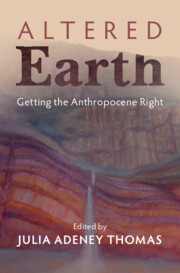
Altered Earth aims to get the Anthropocene right in three senses. With essays by leading scientists, it highlights the growing consensus that our planet entered a dangerous new state in the mid-twentieth century. Second, it gets the Anthropocene right in human terms, bringing together a range of leading authors to explore, in fiction and non-fiction, our deep past, global conquest, inequality, nuclear disasters, and space travel. Finally, this landmark collection presents what hope might look like in this seemingly hopeless situation, proposing new political forms and mutualistic cities. 'Right' in this book means being as accurate as possible in describing the physical phenomenon of the Anthropocene; as balanced as possible in weighing the complex human developments, some willed and some unintended, that led to this predicament; and as just as possible in envisioning potential futures.
Svalbard’s geographical positioning, environmental characteristics and multinational population make it conducive for considering informality and multinational cooperation in disaster risk reduction and response. Most research examining disaster risks and disasters for Svalbard has focused on Norwegian efforts in and for the main settlement of Longyearbyen, with none covering Svalbard’s second-largest settlement of Barentsburg. This paper addresses this gap by analysing how 21 Barentsburg residents deal with disasters. We conducted semi-structured interviews, visually aided by the revised PRISM (Pictorial Representation of Illness and Self Measure) tool, to examine interviewees’ disaster perceptions, sources for disaster-related information and learning, and formal and informal sources for dealing with disaster risks and disasters. Our findings suggest that, despite being risk-aware, Barentsburg interviewees consider the settlement, and Svalbard as a whole, to be safe. The explanation is their faith in the existing disaster-related mechanisms, made up of both local Russian entities and the Norwegian rescue services, especially Svalbard’s governor (Sysselmesteren). Interviewees rely significantly on Russian and Norwegian informal actors and relationships for disaster-related information. These findings suggest that alongside formal approaches, informality may play a significant role in dealing with disasters in Barentsburg, which itself might serve as a platform for international cooperation.