To save content items to your account,
please confirm that you agree to abide by our usage policies.
If this is the first time you use this feature, you will be asked to authorise Cambridge Core to connect with your account.
Find out more about saving content to .
To save content items to your Kindle, first ensure no-reply@cambridge.org
is added to your Approved Personal Document E-mail List under your Personal Document Settings
on the Manage Your Content and Devices page of your Amazon account. Then enter the ‘name’ part
of your Kindle email address below.
Find out more about saving to your Kindle.
Note you can select to save to either the @free.kindle.com or @kindle.com variations.
‘@free.kindle.com’ emails are free but can only be saved to your device when it is connected to wi-fi.
‘@kindle.com’ emails can be delivered even when you are not connected to wi-fi, but note that service fees apply.
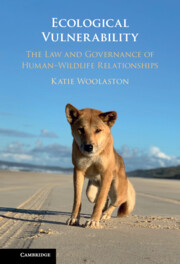
Humans are responsible for biodiversity loss in many related and sometimes conflicting ways. Human-wildlife conflict, commonly defined as any negative interaction between people and wildlife, is a primary contributor to wildlife extinction and a manifestation of the destructive relationship that people have with wildlife. The author presents this 'wicked' problem in a social and legal context and demonstrates that legal institutions structurally deny human-wildlife conflict, while exacerbating conflict, promoting values consistent with individual autonomy, and ignoring the interconnected vulnerabilities shared by human and non-human species alike. It is the use of international and state law that sheds light on existing conflicts, including dingo conflict on K'Gari-Fraser Island in Australia, elephant conflict in Northern Botswana, and the global wildlife trade contributing to COVID-19. This book presents a critical analysis of human-wildlife conflict and its governance, to guide lawyers, scientists and conservations alike in the transformation of the management of human-wildlife conflict.
Science diplomacy has been instrumental in facilitating cooperation in the Arctic region, yet through the projection of vast hydrocarbon potential in the region, it has also served to undermine the major transformation necessary in Arctic decision-making towards the goals of climate governance. This article surveys the translation of science from the United States Geological Survey (USGS) reports (i.e. the CARA study and Factsheet 2008-3049) on Arctic oil and gas and its transformation into common knowledge within Arctic discourse through repetition by the agents in between and its subsequent adoption into Arctic policy documents. In this process, we interrogate the production of the science underpinning US science diplomacy and the influence of this science on international Arctic discourse and policy use science diplomacy. This paper contributes to the literature of science diplomacy in the Arctic by examining the contributions of the USGS to Arctic policy discourses and its impact on Arctic governance at the nexus of science diplomacy on climate and energy.
Science diplomacy can be defined as “the use of scientific collaborations between countries to address joint problems and to build constructive international partnerships for delivering effective scientific advice for policy making”. During the last 10 years, the Institute for Atmospheric and Earth System Research (INAR) has been active in finding ways to solve global Grand Challenges, particularly climate change and poor air quality in polluted megacities, and at the same time, better bridge research to international climate policy and science diplomacy processes. INAR has introduced Pan-Eurasian Experiment programme running since the year 2012 (www.atm.helsinki.fi/peex) to better address the scientific challenge to understand Atmosphere – Earth Surface – Biosphere interactions and feedbacks in the Northern Eurasian context. INAR has also launched a measurement concept called the Global Network of Stations Measuring Earth Surface and Atmosphere Interactions (GlobalSMEAR) and has hosted the European Centre of the International Eurasian Academy of Sciences since 2015. Most recently, INAR has coordinated the Arena for the gap analysis of the existing Arctic Science Co-Operations (AASCO), 2020–2021, to promote research with a holistic and integrated approach in understanding feedbacks and interactions globally and locally at the Arctic and outside the Arctic environments.
The article analyses the experience of international scientific cooperation in the Arctic in organising and conducting an academic Swedish–Russian Arc-of-Meridian expedition to the Spitsbergen archipelago in 1898–1901. This was one of the largest projects of its kind in history. The military and naval government agencies of the two countries were extremely interested in measuring the meridian arc near the Geographic North Pole. The fulfilment of this task made it possible to more accurately determine the shape of the Earth as a geoid. This was the significant and fundamental result of testing the hypothesis of the Newton–Huygens spheroid and was of applied importance. Funding for the expeditionary activities was carried out on a parity basis from the budgets of the two nations. The study of archival documents from the collections of the Russian Academy of Sciences Archives enabled an understanding of the unprecedented financial and physical costs of preparing and carrying out expeditionary work. Analysing inter-academic research of the late nineteenth – early twentieth centuries is valuable for understanding the potential interactions between the government and academic structures of international scientific cooperation in the Arctic during the modern era.
When Sir John Franklin’s expedition ships, lost since 1845, were found in the Arctic in 2014 and 2016, respectively, they were referred to several times in the media as ghost ships. However, such a comparison is not new. In 1862, an article linking the disappearance of the Franklin expedition to that of a ghost ship in Antarctic waters appeared in a newly founded German geographic journal aimed at a general audience. The story of the ghost ship Jenny in the Drake Passage between South America and Antarctica would probably have been long forgotten had it not appeared again in this journal in English translation a century later. Since then, the story has appeared again and again in publications about mysterious phenomena, without succeeding in answering the question of whether such a ship ever existed at all. Instead of continuing to look for evidence of the actual existence of the ship, the following article not only presents the sources of the 1862 journal article but also examines how the story itself might have originated. In addition to a well-known legend about a ghost ship in the Arctic waters of Greenland, which will also be analysed in greater detail, oral tales and tradition about two almost forgotten voyages into Antarctic waters and a well-known one have probably also been incorporated into the tale of the ghost ship Jenny. All translations from German are by the author.
Scott Base was built in the summer of 1956/7 at Pram Point, Ross Island, initially to provide accommodation for the Ross Sea Support Party of the Commonwealth Transantarctic Expedition (NZ TAE) and for the New Zealand International Geophysical Year Antarctic Expedition (NZ IGY). It has generally been accepted that it was built primarily by and for the Ross Sea Support Party. This is reflected in naming one of the last, conserved, original huts (Hut A) after the NZ TAE and also in ignoring the existence of the other original huts (Hut G and H) still in use. The contribution of the NZ IGY programme to Scott Base (SB) has received little recognition. Furthermore, SB provided a presence in the Ross Dependency to support the New Zealand claimant position. The specifications for the base buildings were developed by a joint committee from both expeditions with final design by the Ministry of Works of the New Zealand Government. The base was constructed and largely paid for by the New Zealand Government. This note briefly reviews what occurred during the conception, design, construction and payment for the base.
As indications of ‘overtourism’ appear in the Arctic, tourism presents both management challenges and ethical dilemmas, applicable to broader discussions about sustainability within Polar tourism. I argue that mapping value relations can contribute to ongoing discussions for positive ways forwards and that the concept of degrowth holds promise in redirecting tourism to better serve the local community. Tourism has become the largest employer and most rapidly growing sector in Svalbard, taking over from coal mining. Longyearbyen is a small urban centre but nevertheless is the central hub where almost all tourism passes through. Indeed, tourism is how the majority of human relations with its lands, seas, human and non-human inhabitants will be enabled. This paper is centred on charting the transition of Longyearbyen to a ‘tourist town’. Drawing on local voices from 2013 to 2016 and 2019, I use a value-based analysis to assess the changes experienced in the context of wider systems of value at work in Svalbard.
Climate change has become significantly pronounced in the Arctic over recent decades. In addition to these climate effects, the environment has experienced severe anthropogenic pressure connected to increased human activities, including the exploitation of natural resources and tourism. The opportunity to exploit some of the natural riches of Svalbard was promptly grasped by the Soviet Union well before the 1940s. In this paper, we present the story of Pyramiden, a mining settlement in central Svalbard. The Soviet town experienced its golden age in the 1970–1980s but fell into decline in the late 1990s which corresponds well with the overall economic and geopolitical situation of the Soviet Union. The impacts of past mining activities and related urban infrastructure development are illustrated with the use of historic aerial photographs. The most pronounced changes in the terrain configuration were connected to adjustments of the river network, construction of roads, water reservoirs, and obviously mining-related activities. The natural processes overwhelmed the city infrastructure rather quickly after the abandonment of the town in 1998, though some traces of human activities may persist for decades or centuries. Nowadays, Russia has been attempting to recover the settlement especially through support of tourism and research activities.
This paper investigates how guides on Svalbard make sense of their relations to the environment whilst working with mass tourism. The Arctic is heating up more rapidly than any other part of the world, and over the last 30 years the effect of climate change has had a large impact on the environment in the Arctic. The guides as such find themselves living a paradox where their work destroys the nature that they care about and depend on. This paper analyses empirical data collected during four months of fieldwork amongst guides in Svalbard. Throughout the paper, two dimensions are explored: the guides’ relation to and understanding of the environment as well as their ways of caring for it. Building on illustrations of the guides’ preconceptions of the environment, it is shown how the guides in their everyday life are engaged in pro-environmental practices. These practices are embedded in the guides’ reciprocal relationship with the environment, where they negotiate between different trade-offs. The guides thus find a way to navigate the complexity of caring for the environment and working in tourism through their intimate relation to the environment.
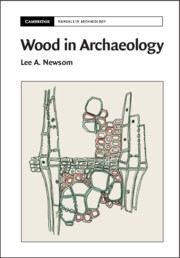
In this book, Lee A. Newsom offers an overview of wood in archaeology --how and where it is preserved and analyzed, its relevance to paleoecological and paleoenvironmental questions, as well as its role as an important source of information in modern archaeological science and related historical disciplines. Her book addresses a range of questions about wood reliance practices, sustainability, and the overall relevance of forest ecosystems to past cultures and cultural evolution. Newsom provides a step-by-step treatment of archaeological analysis with clear explanations and examples from various corners of the world. She also shows how the study of archaeological wood is relevant to modern restoration ecology and conservation biology that tracks long-term ancient ecosystems, including questions of global change. Demonstrating the vital role of wood and timber resources to past human societies, her book will interest scholars and students of archaeology, historical ecology, paleoecology, and wood science.
The Anthropocene concept was developed by Nobel laureate Paul Crutzen beginning in 2000 to reflect the realisation that human impacts had pushed Earth outside of the stable conditions of the Holocene Epoch. It quickly became a framing concept for the Earth System science community, with subsequent, ongoing analysis as a potential addition to the Geological Time Scale unit by geostratigraphers. The term's use then spreading widely to other disciplines. The Anthropocene may be described via striking, partly irreversible changes to the Earth’s physical surface (‘lithostratigraphic’), to its surface chemistry (‘chemostratigraphic’) and to its biology (‘biostratigraphic’). Its beginning is best placed around the mid-twentieth century at the same time as the sharp change in Earth System trajectory, driven by an expanding technosphere. Time will tell whether it becomes formalized, but its geological reality as the beginning of a major new chapter in Earth history is now beyond doubt.
This chapter engages with the complexities of Anthropocene politics and ecologies in Mexico’s Isthmus of Tehuantepec. Home to the densest concentration of wind turbines anywhere on earth, the Isthmus is a key site for climate change mitigation, but not without controversy. Working from the viewpoint of cultural anthropology, we show how local Indigenous and mestizo communities are contending with the massive transformation of their lands and livelihoods. We ask a central question for Anthropocenic times: what are the political forces that shape the possibilities for low carbon futures? Who sets the agenda for transitions and who—human and otherwise—is affected by enormous infrastructural shifts in energy systems? In this chapter, we show how various forces—political, economic and cultural—operate along with the wind itself to shape local futures in both positive and negative ways. We pay special attention to Indigenous philosophies and experiences because they help us see better possibilities at the nexus of energy, environment and human thriving.
This piece takes the reader on a virtual trip through the Earth System, using visualisations as a key tool to understand our home planet and our evolving knowledge about it. It begins and ends with trips between the Earth’s surface and space, experiencing the Earth System from above. In between, however, we take an historical tour of the planet, tracking the evolution of humanity’s growing understanding of the Earth and how it functions as a system. The tour wanders through the evolving scientific landscape, beginning with the famous ‘Blue Marble’ image of Earth taken by the Apollo 11spacecraft in 1972, continuing with James Lovelock’s Gaia hypothesis and John Schellnhuber’s second Copernican revolution, and finishing with Paul Crutzen’s confronting assertion that the Earth System is now in the Anthropocene, leaving humanity’s comfort zone of the Holocene as a receding memory.
This book aims to get the Anthropocene right in three senses. First, it conveys the scientific evidence of our altered Earth, showcasing how the concept of the Anthropocene captures the magnitude and complexity of the planet’s dangerous transformation. Second, we try to get the Anthropocene right in human terms, exploring the kaleidoscope of experiences, contingencies, and decisions that led to the Anthropocene, from the deep history of our relationship with infectious diseases to recent nuclear disasters. These histories are echoed and expanded through fiction with two short stories bringing the vast scales of geology and Earth System science “to earth” in emotional and ethical terms, especially around the issues of colonialism and inequality. Finally, we talk about what hope might look like in this pretty hopeless situation, proposing mutualistic cities, greater equity, and new political forms. “Right” in this book means being as accurate as possible in describing the physical phenomenon of the Anthropocene; as balanced as possible in weighing the complex human developments, some willed and some unintended, that led to this predicament; and as just as possible in envisioning potential futures.
After the 2019 Anthropocene Working Group vote to propose the Anthropocene as a geological epoch, the search began for a sequence of rock strata that could serve as the new epoch's marker. Canada's Crawford Lake has many characteristics that make it a potential candidate for this marker (known as the "geologic section," GSSP, or, more colloquially, the "golden spike.") This small, deep lake fills a karstic sinkhole on the Niagara Escarpment. The undisturbed sediment deep beneath its waters contains clear couplets called varves deposited seasonally (much like tree rings), recording annual environmental change. Core samples taken from the lake bottom tell the story of human disruption. Evidence of a nearby Iroquoian village, dating to the 13th – 15th century, illustrates human impact prior to the mid-20th century, but the magnitude of human impact in the mid-20th century is far greater, as the varves clearly show. We can read evidence of the Anthropocene in lake bottom deposits.