Refine search
Actions for selected content:
150168 results in Classical Studies
HERODOTUS’ CAMBYSES IN CONTEXT - (A.) Schwab, (A.) Schütze (edd.) Herodotean Soundings. The Cambyses Logos. (Classica Monacensia 55.) Pp. 429, ills, maps. Tübingen: Narr Francke Attempto, 2023. Paper, €98. ISBN: 978-3-8233-8329-1
-
- Journal:
- The Classical Review / Volume 75 / Issue 2 / October 2025
- Published online by Cambridge University Press:
- 14 July 2025, pp. 422-425
- Print publication:
- October 2025
-
- Article
- Export citation
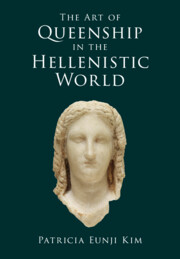
The Art of Queenship in the Hellenistic World
-
- Published online:
- 11 July 2025
- Print publication:
- 31 July 2025
A MULTI-FORM TRANSLATION OF NONNUS - (W.) Levitan, (S.) Lombardo (edd.) Tales of Dionysus. The Dionysiaca of Nonnus of Panopolis. Pp. xviii + 798. Ann Arbor: University of Michigan Press, 2022. Paper, US$39.95 (Cased, US$90). ISBN: 978-0-472-03896-1 (978-0-472-13311-6 hbk).
-
- Journal:
- The Classical Review / Volume 75 / Issue 2 / October 2025
- Published online by Cambridge University Press:
- 11 July 2025, pp. 470-473
- Print publication:
- October 2025
-
- Article
- Export citation
CHRISTIANITY AND PAGANISM IN PHRYGIA - (R.) Parker Religion in Roman Phrygia. From Polytheism to Christianity. Pp. x + 254, ills, map. Oakland, CA: University of California Press, 2023. Cased, £80, US$95. ISBN: 978-0-520-39548-0.
-
- Journal:
- The Classical Review / Volume 75 / Issue 2 / October 2025
- Published online by Cambridge University Press:
- 10 July 2025, pp. 586-588
- Print publication:
- October 2025
-
- Article
- Export citation
PSYCHOTROPICS IN ANCIENT GREECE AND ROME - (A.) Sumler Intoxication in the Ancient Greek and Roman World. Pp. x + 161. Lanham, Boulder, New York and London: Lexington Books, 2023. Cased, £73, US$95. ISBN:978-1-66692-014-7.
-
- Journal:
- The Classical Review / Volume 75 / Issue 2 / October 2025
- Published online by Cambridge University Press:
- 10 July 2025, pp. 588-590
- Print publication:
- October 2025
-
- Article
- Export citation
COLOURS IN THE ROMAN NOVEL - (B.) Klein Der bunte Roman. Der Farbgebrauch im antiken und christlichen Roman unter besonderer Berücksichtigung von Petrons Satyrica, den Metamorphosen des Apuleius und den pseudoklementinischen Rekognitionen. (Altertumswissenschaftliches Kolloquium 28.) Pp. 171. Stuttgart: Franz Steiner, 2022. Paper, €40. ISBN: 978-3-515-09046-9.
-
- Journal:
- The Classical Review / Volume 75 / Issue 2 / October 2025
- Published online by Cambridge University Press:
- 10 July 2025, pp. 504-506
- Print publication:
- October 2025
-
- Article
- Export citation
ANCIENT DIPLOMACY - (H.) Andres Bruderzwist. Strukturen und Methoden der Diplomatie zwischen Rom und Iran von der Teilung Armeniens bis zum Fünfzigjährigen Frieden. (Oriens et Occidens 40.) Pp. 559. Stuttgart: Franz Steiner, 2022. Cased, €94. ISBN: 978-3-515-13363-0.
-
- Journal:
- The Classical Review / Volume 75 / Issue 2 / October 2025
- Published online by Cambridge University Press:
- 10 July 2025, pp. 549-551
- Print publication:
- October 2025
-
- Article
- Export citation
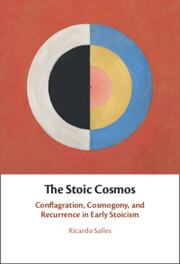
The Stoic Cosmos
- Conflagration, Cosmogony, and Recurrence in Early Stoicism
-
- Published online:
- 08 July 2025
- Print publication:
- 24 July 2025
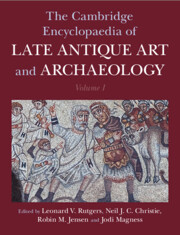
The Cambridge Encyclopaedia of Late Antique Art and Archaeology
-
- Published online:
- 04 July 2025
- Print publication:
- 31 July 2025
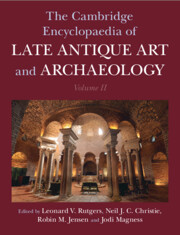
The Cambridge Encyclopaedia of Late Antique Art and Archaeology
-
- Published online:
- 04 July 2025
- Print publication:
- 31 July 2025
Chapter 5 - Religion and Cult in the Sanctuary of Artemis
-
- Book:
- The Temple of Artemis at Sardis
- Published online:
- 30 May 2025
- Print publication:
- 03 July 2025, pp 175-198
-
- Chapter
- Export citation
Dedication
-
- Book:
- The Temple of Artemis at Sardis
- Published online:
- 30 May 2025
- Print publication:
- 03 July 2025, pp v-vi
-
- Chapter
- Export citation
General Index
-
- Book:
- Ovid and Plato
- Published online:
- 19 June 2025
- Print publication:
- 03 July 2025, pp 192-194
-
- Chapter
- Export citation
Bibliography
-
- Book:
- The Temple of Artemis at Sardis
- Published online:
- 30 May 2025
- Print publication:
- 03 July 2025, pp 306-321
-
- Chapter
- Export citation
Chapter 3 - Turbulent Worlds
-
- Book:
- Ovid and Plato
- Published online:
- 19 June 2025
- Print publication:
- 03 July 2025, pp 43-60
-
- Chapter
- Export citation
Chapter 9 - The Afterlife of Ovid and Plato
-
- Book:
- Ovid and Plato
- Published online:
- 19 June 2025
- Print publication:
- 03 July 2025, pp 158-162
-
- Chapter
- Export citation
Chapter 7 - Architectural Analysis and Comparisons
-
- Book:
- The Temple of Artemis at Sardis
- Published online:
- 30 May 2025
- Print publication:
- 03 July 2025, pp 229-286
-
- Chapter
- Export citation
Plans
-
- Book:
- The Temple of Artemis at Sardis
- Published online:
- 30 May 2025
- Print publication:
- 03 July 2025, pp 287-292
-
- Chapter
- Export citation
Chapter 7 - The Philosophy of Desire
-
- Book:
- Ovid and Plato
- Published online:
- 19 June 2025
- Print publication:
- 03 July 2025, pp 114-140
-
- Chapter
- Export citation
Chapter 8 - The Exile of Philosophy
-
- Book:
- Ovid and Plato
- Published online:
- 19 June 2025
- Print publication:
- 03 July 2025, pp 141-157
-
- Chapter
- Export citation
