To save content items to your account,
please confirm that you agree to abide by our usage policies.
If this is the first time you use this feature, you will be asked to authorise Cambridge Core to connect with your account.
Find out more about saving content to .
To save content items to your Kindle, first ensure no-reply@cambridge.org
is added to your Approved Personal Document E-mail List under your Personal Document Settings
on the Manage Your Content and Devices page of your Amazon account. Then enter the ‘name’ part
of your Kindle email address below.
Find out more about saving to your Kindle.
Note you can select to save to either the @free.kindle.com or @kindle.com variations.
‘@free.kindle.com’ emails are free but can only be saved to your device when it is connected to wi-fi.
‘@kindle.com’ emails can be delivered even when you are not connected to wi-fi, but note that service fees apply.
Nonnus’ Paraphrase of the Gospel of John lacks a proem in which the author advances the main poetic aims of the poem and gives his intended audience a brief guide to its reading. On the contrary Juvencus’ Evangeliorum libri quattuor includes a number of programmatic spaces (especially the proem and final lines), which have been extensively analysed and related to similar paratexts in other Bible epics. This chapter proposes a new take on the question of the intended audience and possible proselytising aim of these two poems by means of a reading of the reactions to Jesus and his gospel as paradigms for how these poets related to their audiences. It pays special attention to their points of contact and divergences, on (1) symbolic images of the audience (Matthew’s parable of the sower, John’s initial Hymn of the logos), (2) introductions of choral characters as they interact with Jesus, and (3) divisions of the audience, which it relates to the specific context of creation of both poems: the Constantinian Latin-speaking West for Juvencus and 430–60 Alexandria, dominated by the figure of Cyril (bishop 412–44), for Nonnus.
This chapter discusses modern trends in the study of late antique Latin poetry, namely the aesthetics of the jeweled style and especially the scholarly discourse on ‘nonreferentiality’ in allusion, and seeks to apply the concepts underlying this scholarship to late antique Greek epic, in particular to Triphiodorus and Quintus of Smyrna. As a case study and the focus of the chapter, allusions to Apollonius’ Argonautica, previously noted but undiscussed in scholarship on Triphiodorus, are discussed at length. The chapter ends with a re-examination of the in-proem in Book 12 of Quintus’ Posthomerica, and argues, in a nuancing of recent scholarship, that the passage’s much-discussed allusion to Callimachus can be read as ultimately ‘nonreferential’ in function.
Paratexts of all kinds became more significant as antiquity wore on. The Homeric epics, for example, and Herodotus’ Histories were not originally divided into books; the canonical book divisions were made only in the Hellenistic period. Despite evidence for the spread of paratexts, editors and scholars often ignore them. They do so, in part, because paratexts are inherently unstable texts; and yet, as ephemeral products of their own literary culture, paratexts provide precious evidence for how poetry was read at any given time or place. The first goal of this chapter is to the collate evidence for section headings, illustrations, and prefaces being produced for poetic texts in the East and West in Late Antiquity in Latin and in Greek. The second goal is to compare their use in each tradition and to analyze where the cultures either converged or departed in their use of paratexts. The evidence collated reveals that new paratextual forms appear around the same time in Greek and Latin, but that there are also separate developments in each tradition.
The literary epigram is one of the most versatile ancient literary genres, and epigrammatists have often used it as a testing ground for the recollection and construction of their literary past. This chapter compares the corpus of Decimus Magnus Ausonius and Palladas of Alexandria, two eminent representatives of the epigrammatic genre from the later imperial period. Ausonius’ dialogue with the literary past is characterised by a discourse about the value, validity and reliability of classical authors and authorities from the Greek and the Roman world. For this purpose, Ausonius uses various techniques such as the juxtaposition of acknowledged and anonymous sources, the inclusion of ‘fake sources’, and a recurring discussion of Greek versus Roman authorities. In contrast, Palladas constructs a persona of himself which resorts to Greek authorities only and, especially, to Homer. Palladas appropriates Homer and the Homeric epics in order to construct his personal voice, whereas the actual discourse about classical authors and authorities remains comparatively flat and limited as compared to Ausonius.
Major developments in poetic genre happened in Late Antiquity: some genres such as biblical epic first occurred in that period, and the generic openness of other late antique poems seems to question the notion of genre as such. In this chapter I argue that the classical system of poetic genre imploded in Late Antiquity and transformed into a more flexible and open system in which classical understandings of genre coexisted with both generic innovations and a reduced importance of genre itself. After imploding, late antique poetic genre continued to use traditional genre markers such as appropriate subject matter, generic models, and metre, but it also introduced generic innovations in the form of generically unique works, genre mixing, and new genres while at the same time playing down the significance of genre as a category. This transformation of poetic genre took place in both halves of the Roman Empire, as evidence from Greek and Latin poetry will show. As a consequence, both Greek and Latin poets used genre more flexibly and relied less on it to communicate with their audiences.
This chapter examines late antique, Greek and Latin centos from the perspective of the poets who wrote them and the authors who read them, with specific attention given to Ausonius’ preface and epilogue to his Cento Nuptialis, Aelia Eudocia’s prefatory poem to her Homeric Cento, and proem of Proba’s Vergilian cento. The scope of this chapter also includes other treatments of centos, in particular that of Jerome. My reading of these paratextual and critical moments of Greco-Roman cento authors and readers highlights recurring themes which clarify the various ways that appropriating ‘canonical’ texts to create a new whole was viewed. This chapter contributes to the scholarly conversations about literary ownership, textual unity, and notions of the sacred and the profane by situating these themes within the context of (re)using Homeric and Vergilian verse in Late Antiquity.
This chapter examines the peculiar practice, common in late antique epic poetry, of comparing a character to a divinity stripped of their visual attributes. From the works of Claudian, Nonnus, and Colluthus it analyzes three case studies that epitomize this form of comparison and illustrate its use in a specific literary and cultural context. Such comparisons are shown to rely on the reader’s familiarity with visual representations of the pagan gods and to reflect a growing interest in and engagement with the visual arts in late antique literature. In defining characters by attributes they do not possess, the poets draw attention to their visual ambiguity and vulnerability, and allow internal and external audiences to gaze at them uninhibitedly. Female characters in particular are thus proffered as objects of the lusting gaze and are denied individual visual identities and narrative agency. This literary emphasis on artistic beauty, stripped of its attributes and, by extension, divine power, resembles contemporary Christian attempts to de-contextualize pagan artworks by removing their religious attributes and associations, reframing them as purely aesthetic objects.
In the past few years, it has been possible to notice parallel developments in the study of both Latin and Greek late antique poetry, two neighbouring and growing scholarly fields. Recently published studies reveal an increased focus on the contemporary context and, in relation to that, on the ‘otherness’ of late antique aesthetics, when compared with the poetics of earlier periods that classically trained scholars have been taught to admire.1 Long considered poetry of bad taste from a period of decline, late antique poetry fascinates classicists today mainly because of its otherness, its productive reception of the classical period, its innovations in terms of literary forms, and the creativity with which it responds to the ‘seismic cultural changes’2 of late antique society.
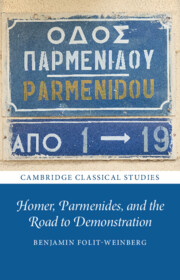
It is widely agreed that Parmenides invented extended deductive argumentation and the practice of demonstration, a transformative event in the history of thought. But how did he manage this seminal accomplishment? In this book, Benjamin Folit-Weinberg finally provides an answer. At the heart of this story is the image of the hodos, the road and the journey. Brilliantly deploying the tools and insights of literary criticism, conceptual history, and archaeology, Folit-Weinberg illuminates how Parmenides adopts and adapts this image from Homer, especially the Odyssey, forging from it his pioneering intellectual approaches. Reinserting Parmenides into the physical world and poetic culture of archaic Greece, Folit-Weinberg reveals both how deeply traditional and how radical was Parmenides' new way of thinking and speaking. By taking this first step toward providing a history of the concept method, this volume uncovers the genealogy of philosophy in poetry and poetic imagery.
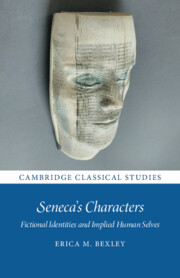
Seneca's Characters addresses one of the most enduring and least theorised elements of literature: fictional character and its relationship to actual, human selfhood. Where does the boundary between character and person lie? While the characters we encounter in texts are obviously not 'real' people, they still possess person-like qualities that stimulate our attention and engagement. How is this relationship formulated in contexts of theatrical performance, where characters are set in motion by actual people, actual bodies and voices? This book addresses such questions by focusing on issues of coherence, imitation, appearance and autonomous action. It argues for the plays' sophisticated treatment of character, their acknowledgement of its purely fictional ontology alongside deep – and often dark – appreciation of its quasi-human qualities. Seneca's Characters offers a fresh perspective on the playwright's powerful tragic aesthetics that will stimulate scholars and students alike.
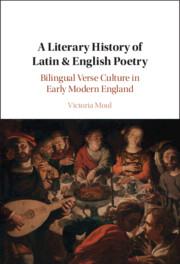
Victoria Moul's groundbreaking study uncovers one of the most important features of early modern English poetry: its bilingualism. The first guide to a forgotten literary landscape, this book considers the vast quantities of poetry that were written and read in both Latin and English from the sixteenth to the eighteenth century. Introducing readers to a host of new authors and drawing on hundreds of manuscript as well as print sources, it also reinterprets a series of landmarks in English poetry within a bilingual literary context. Ranging from Tottel's miscellany to the hymns of Isaac Watts, via Shakespeare, Jonson, Herbert, Marvell, Milton and Cowley, this revelatory survey shows how the forms and fashions of contemporary Latin verse informed key developments in English poetry. As the complex, highly creative interactions between the two languages are revealed, the work reshapes our understanding of what 'English' literary history means.
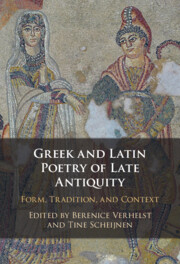
Although Greek and Latin poetry from late antiquity each poses similar questions and problems, a real dialogue between scholars on both sides is even now conspicuously absent. A lack of evidence impedes discussion of whether there was direct interaction between the two language traditions. This volume, however, starts from the premise that direct interaction should never be a prerequisite for a meaningful comparative and contextualising analysis of both late antique poetic traditions. A team of leading and emerging scholars sheds new light on literary developments that can be or have been regarded as typical of the period and on the poetic and aesthetic ideals that affected individual works, which are both classicizing and 'un-classical' in similar and diverging ways. This innovative exploration of the possibilities created by a bilingual focus should stimulate further explorations in future research.