To save content items to your account,
please confirm that you agree to abide by our usage policies.
If this is the first time you use this feature, you will be asked to authorise Cambridge Core to connect with your account.
Find out more about saving content to .
To save content items to your Kindle, first ensure no-reply@cambridge.org
is added to your Approved Personal Document E-mail List under your Personal Document Settings
on the Manage Your Content and Devices page of your Amazon account. Then enter the ‘name’ part
of your Kindle email address below.
Find out more about saving to your Kindle.
Note you can select to save to either the @free.kindle.com or @kindle.com variations.
‘@free.kindle.com’ emails are free but can only be saved to your device when it is connected to wi-fi.
‘@kindle.com’ emails can be delivered even when you are not connected to wi-fi, but note that service fees apply.
Socrates here draws on the cyclical and kinship arguments to further explain nearly every claim made earlier in the defense speech (Chapter 3). He provides an interconnected account of virtue, happiness, moral psychology, reincarnation, and soul–body interaction. He first describes how coming to know the divine will ultimately allow the philosopher’s soul to spend the afterlife with the gods, eternally happy. By contrast, non-philosophers reincarnate because their desire for the body-like pulls them into a new body after death. Understanding this mechanism requires clarifying how Socrates thinks of the impurities in non-philosophers’ souls. After examining this, the chapter turns to how the body deceives the soul into desiring things that are not good for it. Socrates develops the account of true courage and temperance from the exchange passage (69a–e) to explain how the philosopher avoids and resists the body’s insidious effects so that the soul can pursue wisdom and so be eternally happy.
Socrates argues here that the sole pursuit of philosophers is dying and being dead. In doing so, he introduces most of the key topics in the dialogue, including forms, inquiry, the soul, and the philosophical life. Nonetheless, this section of the dialogue is often overlooked, perhaps because it seems simply to assert many of its claims. I argue that we often must wait until later in the dialogue to find the explanation for these claims, as part of the Phaedo’s unfolding structure. Once we take this section seriously, we can appreciate its tight and careful argumentative structure. Moreover, Socrates’ accounts here, in particular his ethical account, are sophisticated theories in their own right. The section also introduces some unusual and important terminology that Socrates uses later in the dialogue, including “auto kath’ auto” (which I argue should be translated “itself through itself”) and terminology for identifying the forms. The chapter ends with a new account of the famous “exchange passage.”
Cebes’ challenge leads to what is typically called Socrates’ four “immortality arguments,” which structure the core of the dialogue. Despite this common label, Cebes’ challenge does not ask Socrates to show that the soul is immortal, and Socrates’ first three arguments do not claim to show immortality. Instead, Cebes challenges Socrates to address people’s fear that the soul disperses and so is destroyed when someone dies; not being destroyed upon death is, I argue, different from being immortal. After discussing Cebes’ challenge, the chapter turns to the cyclical argument, providing a new account of its basic structure. It is based on an agreement that does not require Socrates to say anything here about the nature of the soul. Nonetheless, the argument is important for aiming to show that a Pythagorean view is correct – reincarnation – by understanding death and rebirth as part of a much larger phenomenon: the coming to be and passing away of opposite things.
Focusing on the revelation of Epicurean thanatology in the third book of On the Nature of Things, this essay argues that the most vehement strains of Lucretius’ diatribe against the fear of death are a polemic against kitsch. It explicates the pervasively frank, anti-kitsch stance of Epicureanism and explores how Lucretius combats kitsch, even as kitsch was enthusiastically circulated in other Roman contexts in the form of Epicurean objects and clichés. In the vignettes of the departed father and the maudlin drinkers in DRN 3, Lucretius draws our attention to the way that kitsch (the image of the stereotypically sweet children, the trite lamentation, the pseudo-philosophy, the falseness) occludes reality. The denunciation of kitsch is fundamental to Epicurean teaching: to deny that our metaphorical city has penetrable walls and to bemoan the eventuality of one’s own death is to refuse the nature of things.
This chapter begins by arguing that to understand Socrates’ (alleged) autobiography, we need to appreciate that he distinguishes between the terms “aitios” (responsible) and “aitia” (cause). Socrates’ account should be understood against the backdrop of the sophisticated treatments of aitios and aitia and of hypotheses in fifth-century medical treatises. At the same time, the autobiography shows how Socrates – as portrayed throughout Plato’s dialogues – would engage with the natural scientific tradition: he shows his hallmark profession of ignorance; he becomes excited by the prospect of acquiring knowledge of the good; since he is unable to learn this from Anaxagoras or others, he proceeds in a way that does not require knowledge; instead, he hypothesizes the existence of the things sought by his typical “what is it?” question. I argue that Socrates might not be interested in teleology here, as opposed to simply being interested in knowledge of the good. Once we situate the method of hypothesis within the overall dialogue, we can see that it is supposed to help one slowly build rational trust in a theory, thereby avoiding the cycle of trust and doubt that leads to misology.
This chapter reexamines the question of Caesar’s putative Epicureanism. While there is no reason to believe that Caesar was a committed Epicurean, there exist tantalizing pieces of evidence that he may have adopted for himself a version of the tenet that “death is nothing to us.” These include his observation, in his speech about the convicted Catilinarians (as reported by Sallust), that death is not a punishment but the endpoint of all experience, and his late-in-life statement (versions of which are found in Cicero’s Pro Marcello and in Suetonius) that he had “lived enough.” The chapter concludes by considering the criteria scholars typically employ for gauging philosophical affiliation in antiquity, arguing for a broadening of definitions and for considering even a some-time Epicurean as Caesar as part of the history of Epicureanism.
This chapter argues that, just as the opening of the dialogue repeatedly alluded forward to the theories Socrates goes on to develop, Socrates’ death scene repeatedly refers back to these theories. It does so by showing Socrates living in accordance with the views he has defended over the course of the dialogue about the soul, courage, temperance, how to act toward the gods, and the correct way to interpret them. Scholarship on the death scene, especially in the last thirty years, has been dominated by Socrates’ famous last words: “Crito, we owe a cock to Asclepius. All of you must pay what is owed and not be careless” (118a7–8). Given its obscurity and the temptation to project our own desired message back onto these words, it is especially important to place them within their context in the death scene and the dialogue as a whole. My procedure is first to set up constraints within which an interpretation should operate, and then suggest a series of interrelated possibilities that fit within these constraints. Doing so provides the opportunity to review some of the dialogue’s major ideas.
This book examines the role and influence of Greek philosophy in the final days of the Roman republic. It focuses primarily (although not exclusively) on the works and views Cicero, premier politician and Roman philosopher of the day, and Lucretius, foremost among the representatives and supporters of Epicureanism at the time.
Though Cicero offers his most explicit, detailed critiques of Epicureanism in De Finibus and De Natura Deorum, his anti-Epicureanism consistently works itself into a wide swath of his theoretical writings over the last 13 years of his life. Therein Cicero consistently uses a rhetorical strategy whereby he avoids naming the Epicureans outright. Instead he employs a series of shorthand descriptions to attack the Epicureans for what he understands to be their basic tenets. In employing this tactic Cicero both slights the Epicureans by leaving them unnamed and reduces their philosophy to a set of behaviors that he thinks best encapsulate their beliefs. They fail by believing the soul to be mortal, by prioritizing an animal-like desire for pleasure over ratio and oratio, and by using quasi-commercial calculations to make ethical decisions. In each of these ways they fail most of all in Cicero’s eyes by representing a threat to the social fabric of the republic.
The Phaedo portrays Socrates in a long discussion with members of his inner circle, which leads the dialogue to portray a very different sort of conversation from those found in most of Plato’s other dialogues. The chapter begins by considering why Plato makes Phaedo the narrator of such a significant event: the death of Socrates. The chapter also discusses Socrates’ main interlocutors, Simmias and Cebes. I argue that both are skilled, both make mistakes, and both need to be cautious lest they fall into misology. They are sympathetic to a variety of Pythagorean and Orphic ideas, but are by no means committed followers of Philolaus, a Pythagorean. The end of the chapter turns to the portrayal of Socrates, arguing that Socrates seeks not to be treated as an authority and that the Phaedo presents Socrates’ questions and views as naturally emerging from those in the Socratic dialogues.
Catullus’ collection contains several clear echoes of the work of two contemporary Epicurean poets, Lucretius and Philodemus. Indeed, several of the neoteric poet’s central themes (the attractions of otium and disengagement from public life; patronage by members of the high elite and its pitfalls; dissatisfaction with the mos maiorum) bring him potentially into close alignment with Epicurean ideals. In this chapter, however, I argue that, on closer consideration, Catullus’ intertextual engagement with his two contemporaries points rather to a self-consciously antagonistic stance towards Epicurean ethics. Catullus’ attack on ‘Socration’ in Poem 47, combined with parodic echoes of Philodemus’ epigrams in Poems 13 and 43, bears comparison with Cicero’s deployment of anti-Epicurean clichés in the In Pisonem; similarly, Philodemean and Lucretian echoes underline a striking divergence both from Epicurean ideals of friendship and from the rejection of romantic love explicit in Lucretius and arguably implicit in Philodemus’ Xanthippe cycle.
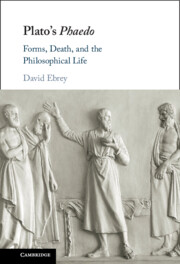
Plato's Phaedo is a literary gem that develops many of his most famous ideas. David Ebrey's careful reinterpretation argues that the many debates about the dialogue cannot be resolved so long as we consider its passages in relative isolation from one another, separated from their intellectual background. His book shows how Plato responds to his literary, religious, scientific, and philosophical context, and argues that we can only understand the dialogue's central ideas and arguments in light of its overall structure. This approach yields new interpretations of the dialogue's key ideas, including the nature and existence of 'Platonic' forms, the existence of the soul after death, the method of hypothesis, and the contemplative ethical ideal. Moreover, this comprehensive approach shows how the characters play an integral role in the Phaedo's development and how its literary structure complements Socrates' views while making its own distinctive contribution to the dialogue's drama and ideas.
Extensively trained as a philosopher, Cicero was also a working politician with a keen awareness of the distance between pure intellectual endeavor and effective strategies of persuasion. This volume explores a series of interrelated problems in his works, from the use of emotion, self-correction, and even fiction in intellectual inquiry, to the motives of political agents and the morality of political arguments, to the means of justifying the use of force in international relations. It features close readings of works from all periods of Cicero's philosophical career, from the threshold of Rome's civil war to the year following the assassination of Julius Caesar. For a richer body of evidence, the volume also makes use of material from Cicero's personal letters and political speeches. Power and Persuasion in Cicero's Philosophy will be essential reading not only in Roman philosophy but also for the political and rhetorical culture of the Roman Republic.