To save content items to your account,
please confirm that you agree to abide by our usage policies.
If this is the first time you use this feature, you will be asked to authorise Cambridge Core to connect with your account.
Find out more about saving content to .
To save content items to your Kindle, first ensure no-reply@cambridge.org
is added to your Approved Personal Document E-mail List under your Personal Document Settings
on the Manage Your Content and Devices page of your Amazon account. Then enter the ‘name’ part
of your Kindle email address below.
Find out more about saving to your Kindle.
Note you can select to save to either the @free.kindle.com or @kindle.com variations.
‘@free.kindle.com’ emails are free but can only be saved to your device when it is connected to wi-fi.
‘@kindle.com’ emails can be delivered even when you are not connected to wi-fi, but note that service fees apply.
Edited by
Ben Kiernan, Yale University, Connecticut,T. M. Lemos, Huron University College, University of Western Ontario,Tristan S. Taylor, University of New England, Australia
General editor
Ben Kiernan, Yale University, Connecticut
This chapter examines mass killing, ‘extermination’ and ‘genocide’ in Chinese history, focusing on the Warring States period and early empires. The Chinese language contains many words for ‘attack’, ‘kill’, ‘extermination’, ‘eradication’, and ‘destruction’ of the enemy. The concept of ‘genocide’ is rendered as ‘extermination’ of an ethnic group. Mass killing was facilitated by China’s precocious development of the technology of rule, especially national conscription and centralized administration. As early as 268 BCE, the state of Qin articulated and practiced an official policy of conquest by ‘attacking not only territory but also people’ to ensure that rival states and their populations could not recover. The Western Han dynasty massacred the Xiongnu in 133-91 BCE and beyond, while the Eastern Han dynasty exterminated the Qiang in 169. Ran Min of a later divided era launched ‘execution of the Jie and extermination of their kind’ in 350. The recurrence of mass killing did not end with the fall of the last dynasty in 1911. The ‘megamurderers’ Chiang Kai-shek and Mao Zedong created ‘China’s bloody twentieth century’ by killing 10.2 million in 1921-48 and 37.8 million in 1923-76, respectively.
Edited by
Ben Kiernan, Yale University, Connecticut,T. M. Lemos, Huron University College, University of Western Ontario,Tristan S. Taylor, University of New England, Australia
General editor
Ben Kiernan, Yale University, Connecticut
Edited by
Ben Kiernan, Yale University, Connecticut,T. M. Lemos, Huron University College, University of Western Ontario,Tristan S. Taylor, University of New England, Australia
General editor
Ben Kiernan, Yale University, Connecticut
Edited by
Ben Kiernan, Yale University, Connecticut,T. M. Lemos, Huron University College, University of Western Ontario,Tristan S. Taylor, University of New England, Australia
General editor
Ben Kiernan, Yale University, Connecticut
Edited by
Ben Kiernan, Yale University, Connecticut,T. M. Lemos, Huron University College, University of Western Ontario,Tristan S. Taylor, University of New England, Australia
General editor
Ben Kiernan, Yale University, Connecticut
Caesar’s conquest of Gaul makes for a fascinating study in mass-violence in the ancient world. Caesar’s own narrative of his conquest, the Bellum Gallcium, provides us with one of our few first-hand accounts of conquest. Caesar’s keen political eye means that the narrative must be one he considered would resonate with a significant proportion of Romans. As such, it provides perhaps one of our best guides not so much as to what happened, but as to the place of mass violence within Roman thinking. Within the text, Caesar clearly states what can be regarded as a genocidal’ desire, namely that the ‘the stock and name of the tribe’ (stirps ac nomen civitatis) of the Germanic Eburones might be destroyed for their role in ambushing Caesar’s forces (Bellum Gallicum 6.34), as well as narratives of other acts of mass-killing. In addition, Caesar narrates several instances of mass-enslavement – an action that, although not readily caught by modern legal definitions of genocide, would have the same effect by dispersing a people, and causing the cessation of that people’s existence as a distinct group of people. However, Caesar’s text also shows a concern to portray such events as justified as within a retributive framework of wrongs done to Rome.
Edited by
Ben Kiernan, Yale University, Connecticut,T. M. Lemos, Huron University College, University of Western Ontario,Tristan S. Taylor, University of New England, Australia
General editor
Ben Kiernan, Yale University, Connecticut
'Urbicide' is a Latin formation - as deployed in this chapter, it refers to the total or near-total destruction of cities (poleis) of the ancient Greek/Hellenic world between the 6th and the 4th centuries BCE. Urbicide was an extreme measure of interstate politics, but not as rare as one might have predicted - or hoped. It represented the other, dark side of the ancient Greeks' fierce attachment to their own native polis. In some cases a polis might be removed from the map once and for all (e.g. Arisba on the island of Lesbos). In others, it might be only temporarily annihilated (Thebes). In all cases, the possibility of largescale enslavement of formerly free Greek citizens was ever-present, and often was realised.
Edited by
Ben Kiernan, Yale University, Connecticut,T. M. Lemos, Huron University College, University of Western Ontario,Tristan S. Taylor, University of New England, Australia
General editor
Ben Kiernan, Yale University, Connecticut
Edited by
Ben Kiernan, Yale University, Connecticut,T. M. Lemos, Huron University College, University of Western Ontario,Tristan S. Taylor, University of New England, Australia
General editor
Ben Kiernan, Yale University, Connecticut
The article discusses the most consequential episodes of genocidal violence against the Jews in medieval Western Europe: the slaughter of Jews in the Rhineland during the First Crusade (1096), the massacres in England (1189-90), the Rintfleisch and Armleder massacres in Germany (1298, 1336-38), the Shepherds’ Crusade violence in France and northern Iberia (1320-21), attacks on Jews during the Black Death epidemic (1348-1351), and the anti-Jewish urban riots in Castile and Aragon (1391-92). While the massacres did not aim to eradicate Jews from the Western Christendom, by the end of the medieval period the violence expanded in scope, affecting entire regions and even kingdoms. Christians from all walks of life – not just lower-class people – participated in the assaults. They had a variety of motivations: while some wanted to take revenge on the supposed killers of Christ, others resented Jews’ association with royal power, or felt victimized by Jewish moneylenders. The dissemination of conspiracy theories about Jews committing ritual murder, desecrating the Eucharistic host, or causing the plague also led to violence. Jews were accused of plotting to destroy Christianity, inflict physical harm on Christians, and undermine their livelihood. In this sense, medieval and modern anti-Jewish violence have far more in common than many scholars are willing to admit.
Private associations abounded in the ancient Greek world and beyond, and this volume provides the first large-scale study of the strategies of governance which they employed. Emphasis is placed on the values fostered by the regulations of associations, the complexities of the private-public divide (and that divide's impact on polis institutions) and the dynamics of regional and global networks and group identity. The attested links between rules and religious sanctions also illuminate the relationship between legal history and religion. Moreover, possible links between ancient associations and the early Christian churches will prove particularly valuable for scholars of the New Testament. The book concludes by using the regulations of associations to explore a novel and revealing aspect of the interaction between the Mediterranean world, India and China. This title is also available as Open Access on Cambridge Core.
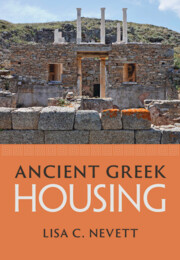
The temples and theatres of the ancient Greek world are widely known, but there is less familiarity with the houses in which people lived. In this book, Lisa Nevett provides an accessible introduction to the varied forms of housing found across the Greek world between c. 1000 and 200 BCE. Many houses adopted a courtyard structure which she sets within a broader chronological, geographical and socio-economic context. The book explores how housing shaped - and was shaped by – patterns of domestic life, at Athens and in other urban communities. It also points to a rapid change in the scale, elaboration and layout of the largest houses. This is associated with a shift away from expressing solidarity with peers in the local urban community towards advertising personal status and participation in a network of elite households which stretched across the Mediterranean. Instructors, students and general readers will welcome this stimulating volume.
Cultural memory is a framework which elucidates the relationship between the past and the present: essentially, why, how, and with what results certain pieces of information are remembered. This volume brings together distinguished classicists from a variety of sub-disciplines to explore cultural memory in the Roman Republic and the Age of Augustus. It provides an excellent and accessible starting point for readers who are new to the intersection between cultural memory theory and ancient Rome, whilst also appealing to the seasoned scholar. The chapters delve deep into memory theory, going beyond the canonical texts of Jan Assmann and Pierre Nora and pushing their terminology towards Basu's dispositifs, Roller's intersignifications, Langlands' sites of exemplarity, and Erll's horizons. This innovative framework enables a fresh analysis of both fragmentary texts and archaeological phenomena not discussed elsewhere.
This book presents a new history of the leadership, organization, and disposition of the field armies of the east Roman empire between Julian (361–363) and Herakleios (610–641). To date, scholars studying this topic have privileged a poorly understood document, the Notitia dignitatum, and imposed it on the entire period from 395 to 630. This study, by contrast, gathers all of the available narrative, legal, papyrological, and epigraphic evidence to demonstrate empirically that the Notitia system emerged only in the 440s and that it was already mutating by the late fifth century before being fundamentally reformed during Justinian's wars of reconquest. This realization calls for a new, revised history of the eastern armies. Every facet of military policy must be reassessed, often with broad implications for the period. The volume provides a new military narrative for the period 361–630 and appendices revising the prosopography of high-ranking generals and arguing for a later Notitia.
This introductory chapter presents the book’s themes and contents, taking up the topic of how we define the Roman Middle Republican period. While the periodization to which “Middle” Republic pertains is wholly modern, the essays in this book argue for a discrete unit of historical inquiry. Our “Middle Republican” period was transformative for the societies of Rome and Italy, while its full dynamism is best captured through an expansive and capacious approach embodied by this collection of chapters.
This chapter revisits the function of Rome’s earliest cast bronze coinages or aes grave (RRC 14, 18, and 19). Primary attention is given to the complex denomination system and new statistical analyses of the weights of known specimens. This new evidence is combined with known find spot data and comparative evidence from aes rude to suggest that the heaviness of these monetary objects met regional cultural expectations while also imitating Greek coinage styles. The chapter also demonstrates that these series are unlikely to conform to different weight standards, being all on a libral standard, with the existence of a so-called “supra-libral” standard being only a misinterpretation of the available data. The degree of variation in the data, with many “overweight” specimens among the lower denominations, strongly suggests that the intrinsic value of the raw materials was secondary to their face value.
The record for the consular fasti of the Mid-Republic, as one of our more reliable sources for the period, offers valuable insight into who was in power at a crucial time for the transition of Rome from city-state to territorial empire. It has been recognized at least since Münzer that many family names in the lists were not originally from Rome, but instead from other Italian communities. The chapter attempts to take systematic stock of this important phenomenon by means of an analysis of the origins of all the known consular families of the time in order to track the emergence, persistence, and long-term trajectory of each family. The ability of elite families to join the highest echelons of Roman politics from various parts of Italy can be seen as a key process that characterizes the early phases of Roman expansion. The quantity of new consular families arguably represents a measure of power-sharing arrangements that were put in place vis-à-vis other Italians, potentially illuminating diplomatic interactions that have often been underestimated. In short, an important flipside of this great historical transition can be revealed, emphasizing the role played by Italian elites in the Mid-Republican conquest.