To save content items to your account,
please confirm that you agree to abide by our usage policies.
If this is the first time you use this feature, you will be asked to authorise Cambridge Core to connect with your account.
Find out more about saving content to .
To save content items to your Kindle, first ensure no-reply@cambridge.org
is added to your Approved Personal Document E-mail List under your Personal Document Settings
on the Manage Your Content and Devices page of your Amazon account. Then enter the ‘name’ part
of your Kindle email address below.
Find out more about saving to your Kindle.
Note you can select to save to either the @free.kindle.com or @kindle.com variations.
‘@free.kindle.com’ emails are free but can only be saved to your device when it is connected to wi-fi.
‘@kindle.com’ emails can be delivered even when you are not connected to wi-fi, but note that service fees apply.
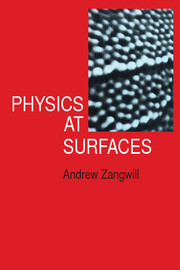
Physics at Surfaces is a unique graduate-level introduction to the physics and chemical physics of solid surfaces, and atoms and molecules that interact with solid surfaces. A subject of keen scientific inquiry since the last century, surface physics emerged as an independent discipline only in the late 1960s as a result of the development of ultra-high vacuum technology and high speed digital computers. With these tools, reliable experimental measurements and theoretical calculations could at last be compared. Progress in the last decade has been truly striking. This volume provides a synthesis of the entire field of surface physics from the perspective of a modern condensed matter physicist with a healthy interest in chemical physics. The exposition intertwines experiment and theory whenever possible, although there is little detailed discussion of technique. This much-needed text will be invaluable to graduate students and researchers in condensed matter physics, physical chemistry and materials science working in, or taking graduate courses in, surface science.
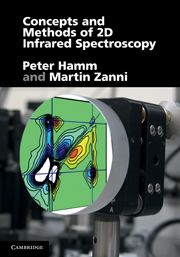
2D infrared (IR) spectroscopy is a cutting-edge technique, with applications in subjects as diverse as the energy sciences, biophysics and physical chemistry. This book introduces the essential concepts of 2D IR spectroscopy step-by-step to build an intuitive and in-depth understanding of the method. This unique book introduces the mathematical formalism in a simple manner, examines the design considerations for implementing the methods in the laboratory, and contains working computer code to simulate 2D IR spectra and exercises to illustrate involved concepts. Readers will learn how to accurately interpret 2D IR spectra, design their own spectrometer and invent their own pulse sequences. It is an excellent starting point for graduate students and researchers new to this exciting field. Computer codes and answers to the exercises can be downloaded from the authors' website, available at www.cambridge.org/9781107000056.
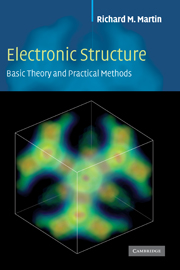
The study of the electronic structure of materials is at a momentous stage, with the emergence of computational methods and theoretical approaches. Many properties of materials can now be determined directly from the fundamental equations for the electrons, providing insights into critical problems in physics, chemistry, and materials science. This book provides a unified exposition of the basic theory and methods of electronic structure, together with instructive examples of practical computational methods and real-world applications. Appropriate for both graduate students and practising scientists, this book describes the approach most widely used today, density functional theory, with emphasis upon understanding the ideas, practical methods and limitations. Many references are provided to original papers, pertinent reviews, and widely available books. Included in each chapter is a short list of the most relevant references and a set of exercises that reveal salient points and challenge the reader.
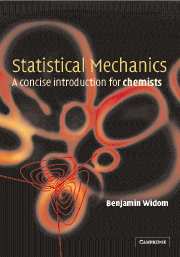
Statistical mechanics is the theoretical apparatus used to study the properties of macroscopic systems - systems made up of many atoms or molecules - and relates those properties to the system's microscopic constitution. This book is an introduction to statistical mechanics, intended to be used either by advanced undergraduates or by beginning graduate students. The first chapter deals with statistical thermodynamics and aims to quickly derive the most commonly used formulas in the subject. The remainder of the book then illustrates the application of these formulas in traditional areas such as the ideal gas and less traditional areas such as the quantum ideal gas. Highly illustrated with numerous exercises and worked solutions, it provides a concise treatise of statistical mechanics ideal for use on an 8-12 lecture course.
Now in paperback, this book provides an overview of the physics of condensed matter systems. Assuming a familiarity with the basics of quantum mechanics and statistical mechanics, the book establishes a general framework for describing condensed phases of matter, based on symmetries and conservation laws. It explores the role of spatial dimensionality and microscopic interactions in determining the nature of phase transitions, as well as discussing the structure and properties of materials with different symmetries. Particular attention is given to critical phenomena and renormalization group methods. The properties of liquids, liquid crystals, quasicrystals, crystalline solids, magnetically ordered systems and amorphous solids are investigated in terms of their symmetry, generalised rigidity, hydrodynamics and topological defect structure. In addition to serving as a course text, this book is an essential reference for students and researchers in physics, applied physics, chemistry, materials science and engineering, who are interested in modern condensed matter physics.
Electronic and photoelectron spectroscopy can provide extraordinarily detailed information on the properties of molecules and are in widespread use in the physical and chemical sciences. Applications extend beyond spectroscopy into important areas such as chemical dynamics, kinetics and atmospheric chemistry. This book aims to provide the reader with a firm grounding of the basic principles and experimental techniques employed. The extensive use of case studies effectively illustrates how spectra are assigned and how information can be extracted, communicating the matter in a compelling and instructive manner. Topics covered include laser-induced fluorescence, resonance-enhanced multiphoton ionization, cavity ringdown and ZEKE spectroscopy. The volume is for advanced undergraduate and graduate students taking courses in spectroscopy and will also be useful to anyone encountering electronic and/or photoelectron spectroscopy during their research.
The third edition of this text has been completely rewritten and revised. It is intended for first- and second-year undergraduates in chemistry taking physical chemistry courses, and for undergraduates in other science and engineering subjects that require an understanding of chemistry. The author gives more attention to the solid and liquid states than is found in other texts on this subject, and introduces topics such as computer simulation and quasicrystals. Each chapter concludes with a set of problems, to which there are solution notes, designed to lead the reader to familiarity with the subject and its application in new situations. Computer programs designed to assist the reader are downloadable from the World Wide Web, from the time of publication. Detailed solutions to the problems will also be available via the World Wide Web. See http://www.cup.cam.ac.uk/stm/laddsolutions.htm. This modern text on physical chemistry will be of interest to undergraduate students in chemistry and also students in other areas of science and engineering requiring a familiarity with the subject.
Motivating students to engage with physical chemistry through biological examples, this textbook demonstrates how the tools of physical chemistry can be used to illuminate biological questions. It clearly explains key principles and their relevance to life science students, using only the most straightforward and relevant mathematical tools. More than 350 exercises are spread throughout the chapters, covering a wide range of biological applications and explaining issues that students often find challenging. These, along with problems at the end of each chapter and end-of-term review questions, encourage active and continuous study. Over 130 worked examples, many deriving directly from life sciences, help students connect principles and theories to their own laboratory studies. Connections between experimental measurements and key theoretical quantities are frequently highlighted and reinforced. Answers to the exercises are included in the book. Fully worked solutions and answers to the review problems, password-protected for instructors, are available at www.cambridge.org/roussel.
Many elementary chemical reactions occur on extremely short time scales (down to femtoseconds). Special experimental and mathematical methods are required to study fast processes. Here, we will focus on reactions in solution. Some of the methods described here are also adaptable to gas-phase reactions, but there are also some gas-phase methods that are quite different from anything we would use in solution. Also note that this chapter does not provide a comprehensive survey of methods, even for reactions in solution. The intention is to discuss a few particularly important methods, which hopefully will give you a flavor of the various approaches available.
Flow methods
The continuous flow method
The basic idea behind the continuous flow method is very simple: the reactants are supplied at a constant rate into a tube where the reaction takes place. At constant flow velocity, positions in the tube correspond to specific times since mixing, the relationship between time and the distance from the mixing chamber L being t = L/v. By varying the flow speed or moving a detector along the length of the tube, we can therefore study the course of a fast reaction at our leisure.
A bimolecular elementary reaction requires that the two reactants meet. In solution, molecules are constantly bumping into other molecules, with the net effect that they wander randomly through the solution, which we call diffusion. In this chapter, we will study diffusion and its effect on chemical reactions, specifically focusing on the rate at which molecules meet each other. This will give us an upper bound on the reaction rate, which is useful for a number of purposes.
Diffusion
A molecule in solution is constantly surrounded by other molecules. All the molecules are constantly bumping into their neighbors. They move around the solution by sliding between their neighbors, much as you might slide between people tomake your way around a crowded room. This process is a form of diffusion, the random motion of molecules in space.
The central quantity in describing diffusion is the flux, which is the rate at which molecules cross an imaginary surface in space per unit area of this surface. The flux therefore has units of number per unit time per unit area (e.g. mol s-1 m-2). We're going to focus on diffusion in one dimension, where it's a little easier to picture what is going on. Imagine that we have a tube of cross-sectional area A. The tube is narrow enough that we can treat the concentration across the tube as being constant.
I have to admit that I wasn't fond of electrochemistry when I was a student. It has since grown on me. Looking back, I think that I was told too much in my first exposure to the subject. Electrochemistry is a fussy science, with all kinds of complications that can make it difficult to obtain reproducible data from experiments. If your professors tell you about all these complications up front, then it becomes difficult to appreciate the utility of the subject. You just lose track of the big picture in a haze of contact potentials and transference numbers. That being said, it's possible to go too far the other way and to leave out important details you ought to know about when studying electrochemistry. I'm going to try to steer a middle course, one that emphasizes that electrochemistry is one of the key ways to get thermodynamic data, but also one that points out some of the things you need to think about when you do electrochemistry. Hopefully, you'll come through this experience with more enthusiasm for electrochemistry than I had when I was in your place.
Free energy and electromotive force
In several of the problems in Chapter 7, we used the fact that the maximum electrical work can be calculated from the Gibbs free energy, the latter representing the maximum (reversible) non-pV work. Electrochemical cells convert chemical into electrical energy, or vice versa.
Chemistry is traditionally divided into a small number of subfields, namely organic, inorganic, analytical and physical chemistry. It's fairly easy to say what the first three are about, but it's much harder to define physical chemistry. The problem is that physical chemistry is all of the following simultaneously:
A discipline in its own right, with its own set of problems and techniques;
The source of the basic theory that underlies all of the chemical sciences;
A provider of experimental methods used across the chemical sciences.
Note that “chemical sciences” includes biochemistry and materials science, among other fields that depend on physical chemistry for at least some of their theory and methods. Physical chemistry's large mandate means that it's difficult to put a finger on what it is exactly. It's a bit like chemistry itself that way: every time you come up with a definition, you immediately think of half a dozen things done under that heading that don't fit.
Rather than trying to give a simple, neat definition of physical chemistry, I'm going to tell you about the big theories that make up physical chemistry. Hopefully, this will give you an idea of what physical chemistry is about, even if we can't wrap it up in a neat package as we can with the other subfields of chemistry.