To save content items to your account,
please confirm that you agree to abide by our usage policies.
If this is the first time you use this feature, you will be asked to authorise Cambridge Core to connect with your account.
Find out more about saving content to .
To save content items to your Kindle, first ensure no-reply@cambridge.org
is added to your Approved Personal Document E-mail List under your Personal Document Settings
on the Manage Your Content and Devices page of your Amazon account. Then enter the ‘name’ part
of your Kindle email address below.
Find out more about saving to your Kindle.
Note you can select to save to either the @free.kindle.com or @kindle.com variations.
‘@free.kindle.com’ emails are free but can only be saved to your device when it is connected to wi-fi.
‘@kindle.com’ emails can be delivered even when you are not connected to wi-fi, but note that service fees apply.
The Conclusion argues that, taken together, the AKP’s combined authoritarian securitisation state is predicated on five authoritarian securitisation logics:1) repressive protection of the state; 2) cruel retributive punishment; 3) centralised and mass lateral control; 4) self-regulation through informalised rule of law; and 5) biosecuritisation as a doubled form of civic death. I then examine present-day global empirics concerning the global system of securitisation to argue that the differences between democratic and authoritarian governance are increasingly more of degree than kind. Asking the question of what next, I look briefly at signs of democratic optimism visible in Turkish citizen’s capacity for resilience and innovative resistance.
This chapter covers the shift in metal procurement sites from the Carpatho-Balkans to the Caucasus during the Eneolithic of Europe, and the apparent demographic changes that resulted; the relationship to the Kura-Araxes phenomenon and the Khirbet-Kerak wares of Palestine; examines influences from the Near East and Anatolia on sites such as Leilatepe (Azerbaijan), Tekhuta (Armenia), Berikldeebi (Georgia), and Trialeti (Georgia); and describes the advent of steppe influences in the form of kurgan and wagon cultures.
This chapter reviews the faunal and paleobotanical characteristics of the Pleistocene Caucasus and their appeal to Miocene apes; the significance of H. erectus georgicus for models of hominin dispersal out of Africa; possible routes for hominin movements across the Caucasus mountains; the Lower Paleolithic sites of Kurtan and Nor Geghi I; Acheulean tool assemblages; geographic-cultural divisions during the Middle Paleolithic of the Caucasus; and local Mousterian industries.
Four texts drawn from Ibn Khaldûn’s History, especially the last volumes on the Maghreb and the Rihla gharbân wa-sharqân. The theory confronts the historical realities and their apparent resistance to universal schemes. In the last text, Ibn Khaldûn sums up the history of Islam as a passage of the Bedouin political force from the Arabs to the Turks, from the South to the North.
Cities and prosperity are what the state has been made for. Taxation is its main principle, as it piles up resources and encourages, through coercion, intensified working and gains in productivity.
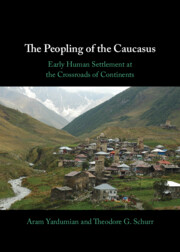
Located at the crossroads of Europe, Asia, and the Middle East, the Caucasus region has played a critical role in the dissemination of languages, ideas, and cultures since prehistoric times. In this study, Aram Yardumian and Theodore Schurr explore the dispersal of human groups in the Caucasus beginning in the Palaeolithic period. Using evidence from archaeology, linguistics, and anthropological genetics, they trace changes in settlement patterns, cultural practices, and genetic variation. Highlighting the region's ecological diversity, natural resources, and agricultural productivity, Yardumian and Schurr reconstruct the timings and likely migration routes for human settlement following the Last Glacial Maximum, as well as the possible connections to regional economies for these expansions. Based on analysis of archaeological site reports, linguistic relationships, and genetic data previously published separately and in different languages, their synthesis of the most up to date evidence opens new vistas into the chronology and human dynamics of the Caucasus' prehistory.
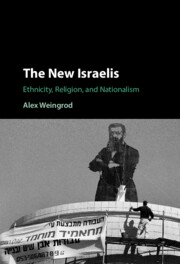
Following successive immigration waves, the military occupation of the West Bank and the emergence of a high-tech based economy, Israeli society has become increasingly complex and divided. In this timely study, Alex Weingrod utilizes ground-breaking ethnographic research to unpack Israel's diverse communities and cultures, arguing that there are several different versions of “being Israeli” that influence and contest with one another. Covering a fascinating range of topics from shifting ethnic group identities to the reinvented Hebrew language and Israeli popular music, Weingrod discusses minority groups including Ethiopian Israelis, the LGBTQ community, migrant workers and the growing, changing Ultra-Orthodox haredi communities alongside Israeli Palestinians who are marginalized and yet resilient. Culminating in an analysis of the unprecedented 2023 political-cultural schism that divided the society between supporters and protesting opponents of government legislation, Weingrod brings the discussion of Israeli divisions, discontents, and paradoxes up to date.
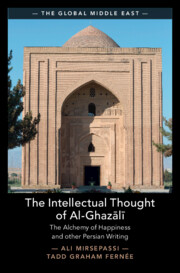
Abu Hamid Muhammad al-Ghazālī (1058–1111) was one of the most influential philosophers of the classical Islamic period, with his intellectual innovations spanning the fields of theology, logic, and law. Despite this, contemporary assessments of Ghazālī often present him as hostile to rationality, and a guardian of dogma and orthodoxy. This study provides an innovative reassessment of Ghazālī's legacy, offering a compelling depiction of a reformer in his own time with increasing relevance to the issues gripping multicultural and globalized societies today. Ali Mirsepassi and Tadd Graham Fernée closely study Ghazālī's major Persian-language text Kīmīyā-e saʿādat (The Alchemy of Happiness) and its scholarly reception, alongside his lesser-read works, arguing that Ghazālī shared a message of reform, and critique of Abbasid institutions. Ghazālī's critical stance is revealed as both pragmatic and cosmopolitan in its recognition of autonomy from religion in many aspects of life, and in the value placed upon scientific contribution.
Ibn Khaldūn is one of the outstanding thinkers about the nature of society and politics in the pre-modern Arab world. This volume presents the political writings of the fourteenth-century philosopher, stressing their enduring relevance. Arnold Toynbee used to say that Ibn Khaldūn's work was the most impressive endeavour to build a theory out of history ever undertaken before the nineteenth century. However, translators and historians discovered Ibn Khaldūn at the time when new revolutionary economic and political conditions were dismissive of his philosophy. In this edition, Gabriel Martinez-Gros brings Ibn Khaldūn's political thought to the forefront, exploring his theories in the context of his era, but also emphasizing their profound resonances with modern society. Far from the caricature of Ibn Khaldūn as a 'tribal philosopher', Martinez-Gros shows that Ibn Khaldūn's thought is about creating wealth in an agrarian society, concerned with economic concepts, demography, war and violence.
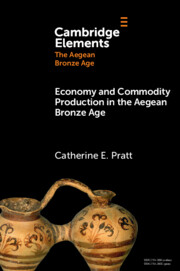
This Element does not discuss every aspect of the economy. Rather, it focuses on the first stage of an economic cycle − that of production. Two of the major guiding questions are: What products were the Bronze Age palatial states concerned with producing in surplus? And how did the palatial states control the production of these essential commodities? To answer these questions, the Element synthesizes previous work while interspersing its own conclusions on certain sub-topics, especially in light of recent archaeological data that help to fill out a picture incomplete based on textual evidence alone. With these goals in mind, this Element brings together both textual and archaeological data to reconstruct the internal economy and the production of commodities under the purview of Minoan and Mycenaean palatial states.
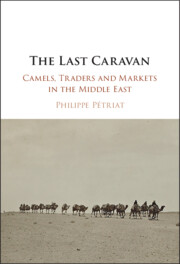
What can travelling camels tell us about the history of the interior of the Middle East? In this innovative book Philippe Pétriat demonstrates how caravans - groups of travellers, often on trade expeditions, journeying together for mutual protection in hostile regions - are essential to understanding the history of the inside territories of the Ottoman Empire with its neighbours. From the first use of camels in transport, through to the decline of the caravan from the 1930s onwards, Pétriat reconstructs the land routes of these travellers through vast steppes and deserts in captivating detail. Moving discussions of the political economy of the Ottoman and post-Ottoman Middle East beyond analysis of the coastal regions and maritime exchanges with Western countries, The Last Caravan instead reveals the pivotal importance of the Ottoman and Arab merchants in the suburbs of the cities and the rural markets and the travelling nomads and the animals that supported them.
What does it mean for a government to declare its citizens 'dead' while they still live? Following the failed 2016 coup, the Turkish AKP government implemented sweeping powers against some 152,000 of its citizens. These Kanun hükmünde kararnameli ('emergency decreed') were dismissed from their positions and banned for life from public service. With their citizenship rights revoked, Seçkin Sertdemir argues these individuals were rendered into a state of 'civic death'. This study considers how these authoritarian securitisation methods took shape, shedding light on the lived experiences of targeted people. Bringing together approaches from political philosophy, social anthropology, and sociology, Sertdemir outlines the approaches and justifications used by the Turkish government to dismiss opponents, increase surveillance, and brand citizens as 'terrorists'. At the same time, extensive archival research and in-depth interviews bring focus to the impact of these measures on the lives of women, and the disabled and LGBTQ+ communities.