To save content items to your account,
please confirm that you agree to abide by our usage policies.
If this is the first time you use this feature, you will be asked to authorise Cambridge Core to connect with your account.
Find out more about saving content to .
To save content items to your Kindle, first ensure no-reply@cambridge.org
is added to your Approved Personal Document E-mail List under your Personal Document Settings
on the Manage Your Content and Devices page of your Amazon account. Then enter the ‘name’ part
of your Kindle email address below.
Find out more about saving to your Kindle.
Note you can select to save to either the @free.kindle.com or @kindle.com variations.
‘@free.kindle.com’ emails are free but can only be saved to your device when it is connected to wi-fi.
‘@kindle.com’ emails can be delivered even when you are not connected to wi-fi, but note that service fees apply.
This article analyzes the urbanization and privatization of communal lands (ejidos) in Ciudad Juárez, Mexico, via a computer vision model that utilizes Google Street View (GSV) and Geographic Information System (GIS) imagery. Our innovative methodology reveals how processes of ejidal urbanization in Mexico’s northern borderlands contributed to the rise of multinational factories (maquiladoras) and geographies of inequality and violence. Past scholarship on the (d)evolution of ejidal land tenure details how periurban ejidal lands throughout Mexico were often sites of impoverishment and a lack of investment, featuring informal settlement and rapid or chaotic urbanization following the country’s 1960 urban turn. Through its use of novel sources and methods, this article demonstrates that the urbanization process in Juárez’s principal periurban ejidos diverged from this classic model in specific ways. By combining conventional historical sources with visual data like GSV and GIS imagery, Juárez’s former and current ejidal landscapes reveal high levels of investment, formal planning, and infrastructure. We argue that Juárez’s distinctive physical, political, and economic geographies shaped the overwhelmingly industrial, private, and invested character of the city’s (former and current) periurban ejidal lands. This process occurred via a globalized modernization regime that forged disparate landscapes of investment and inequality beginning in the 1950s.
Anticorruption audits may deter corruption and signal to citizens that institutions are proactively combating it. However, by detecting and reporting corruption, audits might also unintentionally erode trust in institutions. Therefore, the impact of audits potentially hinges on whether they uncover corruption. Audit institutions, not implicated in the corruption they uncover, might be less likely to experience a decline in trust compared to auditee institutions. This study uses survey and administrative data from Brazil, leveraging a federal anti-corruption program that randomly selects municipalities for auditing. Results do not support the claim that audits boost institutional trust. Individuals in audited municipalities show no different levels of trust in local government or the audit institution than those in non-audited municipalities, and the coefficients may even indicate a negative effect. Additionally, audit institutions may not be better insulated from the corrosive effects of uncovering corruption than the institutions they audit.
Studies of fatherhood in Latin America demonstrate an uneven shift from traditional, patriarchal fatherhood to a more reflexive version that incorporates elements of active, relational fatherhood. This hybrid fatherhood emerged from the transition of Fordism to flexible accumulation, a transformation that coincided with massive migration from Central Mexico to the United States. Migration scholars have demonstrated the fluidity of masculine identities, men’s strategies to father across borders, and how US immigration enforcement shapes gendered subjectivities and power relations in transnational families. Building off these insights, we examine how return migrant men in rural central Mexico navigated changing meanings and practices of fatherhood. Their hybrid strategies reflect the inherent contradictions of a border regime that limited circular migration to the United States and their interest in maintaining close emotional attachments to children. Transnational fathers’ connections to reproduction reveal another way that affect articulates with capital accumulation and borders.
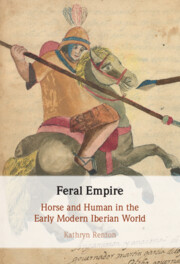
By tracing the dramatic spread of horses throughout the Americas, Feral Empire explores how horses shaped society and politics during the first century of Spanish conquest and colonization. It defines a culture of the horse in medieval and early modern Spain which, when introduced to the New World, left its imprint in colonial hierarchies and power structures. Horse populations, growing rapidly through intentional and uncontrolled breeding, served as engines of both social exclusion and mobility across the Iberian World. This growth undermined colonial ideals of domestication, purity, and breed in Spain's expanding empire. Drawing on extensive research across Latin America and Spain, Kathryn Renton offers an intimate look at animals and their role in the formation of empires. Iberian colonialism in the Americas cannot be explained without understanding human-equine relationships and the centrality of colonialism to human-equine relationships in the early modern world. This title is part of the Flip it Open Program and may also be available Open Access. Check our website Cambridge Core for details.
This article helps understand why locations close to strategic infrastructure to transport illegal drugs (seaports, airports, highways, and US ports of entry along the Mexico-US border) or to increase income (pipelines) experience different levels of violence due to DTOs operations. Our theory breaks down the impact of the geographical distance to these facilities on violence into two effects. The first effect is produced by the level of (violent) competition among DTOs, measured by the number of DTOs employing violence. We report that greater proximity to the U.S. ports of entry along the Mexico-US border, ports, and airports furthers the number of competitors, and such increase boosts violence. The second effect shapes the intensity of competition among DTOs. Reductions in the costs of excluding competing DTOs from using the facility could trigger greater confrontation among DTOs. We confirm the importance of this second effect in relation to ports and the U.S. ports of entry along the Mexico-US border.
Mounting evidence suggests that Latin American democracies are characterized by politics and societies becoming more divisive, confrontational, and polarized. This process, which we define here as the “new polarization” in Latin America, seems to weaken the ability of democratic institutions to manage and resolve social and political conflicts. Although recent scholarship suggests that polarization is integral to contemporary patterns of democratic “backsliding” seen in much of the world, this new polarization in the region has not yet received systematic scholarly attention. Aiming to address this gap in the literature, the different contributions in this special issue revise the conceptualization, measurement, and theory of a multidimensional phenomenon such as polarization, including both its ideological and affective dimensions, as well as perspectives at the elite and mass levels of analysis. Findings shed light on the phenomenon of polarization as both a dependent and an independent variable, contributing to comparative literature on polarization and its relationship to democratic governance.
In 2013, people in Michoacán and Guerrero, especially from rural areas, armed themselves against criminal cartels. Although their movements emerged from comparable contexts, their leaders and organizational forms differed in ways that affected their tactics and targets, as well as the timing of de-escalation. Whereas Guerrero’s leaders understood their struggle as defensive, Michoacán’s leaders were businessmen who saw themselves engaged in an offensive campaign. This partly explains why fatalities were greater there than in Guerrero. I further demonstrate that movement fragmentation led to lethal violence, and their organizational forms also contributed to dynamics of escalation or de-escalation in ways not fully appreciated by scholars. Specifically, the organizational form of Michoacán’s patron-sponsored autodefensas made them more vulnerable to lethal violence than were Guerrero’s community-sponsored organizations.
En este artículo se estudia la representación discursiva de las identidades no normativas en un producto paradigmático de la industria mediática colombiana, la revista SoHo. Las preguntas que guiaron esta investigación fueron: ¿Cómo la revista SoHo (1999–2014) representa a las mujeres trans y a las masculinidades no normativas, en particular al metrosexual?; ¿qué estrategias discursivas son usadas para construir dicha representación?; y, ¿cómo la revista SoHo contribuye a cuestionar o fortalecer la cisheteronormatividad? Se sostiene que en SoHo se construye discursivamente a dichos individuos desde una mirada espectacularizante, reivindicando la cisheterosexualidad como natural y normal, y la masculinidad como propia del cuerpo del hombre cisgénero. Para demostrar lo anterior, se examinaron las estrategias discursivas utilizadas para construir dichas identidades a través de un enfoque interdisciplinar que combina los estudios culturales (latinoamericanos) y de género/queer con la lingüística queer. Este trabajo es un aporte para nuevas investigaciones en torno a la representación de las identidades sexo-genéricamente marginalizadas en la industria mediática colombiana.
Brazil is among the few countries where income distribution has become fairer in recent decades. Its Gini coefficient fell significantly in the 2000s while the left-wing Workers’ Party government approved key equity-enhancing reforms in Congress. By analyzing hundreds of news pieces, legislative documents, and secondary sources, I show the strategies that incumbents from the left adopted to build and manage cross-party coalitions that allowed structural changes to materialize. This research is the first systematic effort to detail how three consequential redistributive policies in the areas of conditional cash-transfer programs, education, and minimum wages found their way through a fragmented legislature where the chief executive’s party was minoritarian. Findings add nuance to social policymaking and reveal that partisanship-based approaches to how inequality declined in Latin America require deeper complexification. In the Brazilian case, leftist presidents improved redistribution by investing in multiparty cooperative arrangements while ideology got diluted in the process.
The twentieth and twenty-first centuries have witnessed a literary revival in the Indigenous languages of the region known canonically as “Latin America.” Across this varied corpus, a major theme is the cultural significance of maize. This article compares the depiction of maize in four bilingual poems, each written in a different Indigenous language alongside Spanish: Nahuatl (Ethel Xochitiotzin Pérez), Yucatec Maya (María Dolores Dzul Barboza), Central Quechua (César Vargas Arce), and Southern Quechua (Emilio Corrales). Through close textual analysis and by recourse to theoretical perspectives such as “literary cartography,” the “textual continuum,” “deep mapping,” and “trans-indigeneity,” the article argues that each poem communicates culturally specific ways of understanding geography that, when set in dialogue, challenge hegemonic definitions of the Western Hemisphere such as North, South, or Latin “America.” Rather, the poems in combination weave an interconnected yet multiperspectival cartographic tapestry with maize as the common thread.
This chapter analyzes the historical legacies of union-founding to establish whether these legacies had enduring consequences for subsequent patterns of teacher mobilization. It examines the development trajectories of teacher organizations, from 1900 to 1979. It analyzes several themes: church–state conflict over mass public schooling in the early twentieth century; contrasts between the political incorporation of industrial workers and teachers; patronage politics in public schools and the education bureaucracy; teacher struggles for labor codes and professional autonomy; and restrictions on political rights under nondemocratic regimes. It is shown that corporatist legacies set unions on different paths, but these legacies do not fully account for contemporary patterns of teacher mobilization.
This chapter provides an overview of the literature on labor politics, social movements, and political parties, and locates the main argument in this literature. It operationalizes the two organizational traits, hierarchical relations and factionalism, to show how they produce three strategies. It concludes by laying out the research methods used to carry out the analysis and reach these conclusions.
This chapter analyzes the organizational prerequisites for the strategy of instrumentalism, by charting changes in the organizational structure of the National Educational Workers Union (SNTE) of Mexico in the 1980s and 1990s. It examines the threats to the corporatist model posed by the dissident movement and the regime response to help the union leadership regain control. President Carlos Salinas sheltered the union from the potentially disruptive effects of education decentralization policies and strengthened SNTE with policies to improve teacher pay. These concessions shaped the union’s internal organization, providing the resources Elba Esther Gordillo needed to build a dominant faction. The consolidation of power in the national union leadership was crucial for the strategy of instrumentalism.
This chapter shows how the bottom-up organization of CTERA was crucial for movementism. The mark of the activist base on protests is reflected in the fact that protests were organized primarily at the provincial and municipal levels, were widespread across provinces, and recurred over time. The chapter then examines the union’s role in electoral politics. While some union leaders became politicians, the union was not beholden to any political party and it lacked a coherent partisan identity. The last section analyzes the policy dynamics that ensued from movementism and the extent to which the creation of a new national institution of collective bargaining for teachers transformed the union’s political repertoire. It is shown that movementism remained largely in place.
This chapter considers insights from the argument that extend to a broader set of cases, given the global scope of teacher mobilization. It analyzes the shadow cases of teachers in Chile (leftism), Peru (movementism), and Indonesia (instrumentalism) to again demonstrate the crucial importance of union organizations. Finally, it considers avenues for future research on education policymaking, interest representation, and labor politics. A more comparative approach to the study of education is needed in political science to illuminate the different dynamics unfolding in public school systems in countries around the world.